Global Public Affairs Newswire – 4 October 2024
Welcome to the latest installment of FTI Consulting’s fortnightly Global Public Affairs Newswire. This week, we bring you the latest from the US Presidential Election, as we continue to count down to election day on November 5th, where, on Tuesday night, Sen. JD Vance and Gov. Tim Walz took part in the first, and only, Vice Presidential candidate debate.
Beyond this, we bring you our usual comprehensive market update, with analysis of the latest big public affairs developments across the world’s major markets. This week features updates covering developments in the EU, Brazil, Angola, China, the US, Colombia, the UK, South Africa, the Republic of Ireland, India, and Spain.
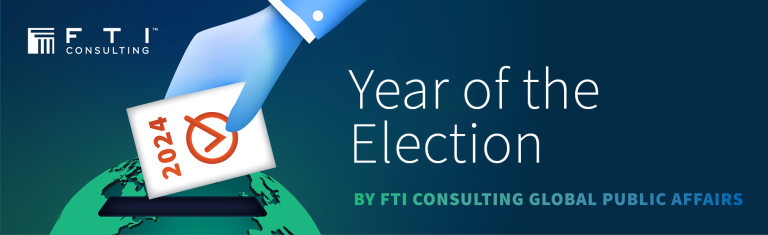
Our global team are closely tracking the key votes and contests in this worldwide ‘Year of the Election’. In each edition of the Newswire, we look to dive into the upcoming implications, considerations, and opportunities for business.

Sen. JD Vance and Gov. Tim Walz take part in Vice Presidential debate: On Tuesday night, U.S. Senator JD Vance (R-OH) and Governor Tim Walz (D-MN) took part in the first, and only, Vice Presidential candidate debate in New York City. Unlike the Presidential debate, the candidates were largely cordial and arguably more substantive, debating policies pertaining to the U.S. economy, foreign policy, reproductive rights, and immigration. However, Vance criticized Vice President Kamala Harris’s record on border security issues and Walz attacked former President Donald Trump’s stance on abortion rights. Both VP candidates spent the majority of their time speaking to the qualifications of their running mates rather than defending their own records in public office.
A POLITICO snap poll following the event found that when asked who won the debate, voters were unsurprisingly split 50-50. Democrats overwhelmingly sided with Walz, while Republicans chose Vance as the winner. While Walz had an advantage among independent voters (58% to Vance’s 42%), independents were also “far more likely” to say they didn’t watch the debate. To debate observers, Vance came across as more prepared of the two and Walz missed opportunities to be more critical of Vance and Trump. However, the debate’s most pivotal moment was Vance’s non-answer on whether Trump lost the 2020 election.
National polling between Harris and Trump continues to be close: According to Real Clear Polling, Harris holds an average 2% lead ahead of Trump in national polling – but polling between the candidates remains extremely close. Notably, CNN reported that Trump has gained further support among the working class – specifically, 17 points among non-white, non-college educated voters from 2020. This comes as The Hill reports that Trump now also holds a 7% lead over Harris among Florida Hispanics.
Trump criticizes Biden-Harris administration response to Hurricane Helene: On Monday, Trump visited a town impacted by Hurricane Helene in Georgia, where he launched a funding page for victims and their families. In doing so, the former President criticized Harris and President Joe Biden on their response to the crisis, stating that they are “very nonresponsive” – despite Georgia’s Governor stating that he was in communication with the President and “appreciated” his help. Trump’s accusations were refuted during Harris’ visit to Augusta, Georgia on Wednesday where she surveyed the damage caused by flooding from the hurricane and announced federal recovery efforts for those impacted by the hurricane. Harris also joined President Biden to visit the Carolinas to meet residents suffering some of the most devastating impacts. This comes as Trump and Elon Musk claimed they would use Starlink to help the areas impacted by the hurricane, despite the White House stating that FEMA already had a plan in place to deploy the systems.
Market updates

On October 2nd, the Conference of Committee Chairs of the European Parliament held an extraordinary meeting to prepare for the hearings of the new Commissioners-designate.
The meeting addressed the hearing timetable, common questions for candidates, and the division of committee responsibilities. Responsible committees have the authority to vote on the approval or rejection of a candidate, while invited committees submit a letter of opinion and have less time to ask questions during the hearings. It was suggested to hold the hearings from November 4th to 12th, as most committee chairs preferred more thorough preparation and scrutiny.
Common questions for candidates were discussed, focusing on general competence and cooperation with Parliament. Proposals to include questions on gender and youth mainstreaming and the use of emergency procedures were debated. The division of responsibilities among committees was complicated due to overlapping portfolios, leading many committees to request involvement in multiple hearings.
Members of the European Parliament will now draft written questions for the Commissioners-designate, which are negotiated by political groups and committees. The Conference of Presidents is expected to provide a precise agenda for the hearings soon. Following the hearings, Commissioners-designate must receive support from at least two-thirds of the committee responsible for their hearing. If not, more information or a follow-up hearing can be requested, potentially leading to changes in nominations. Once all hearings are complete, the Parliament will vote to approve or reject the College of Commissioners as a whole with a simple majority.

On October 1st, the credit rating agency Moody’s upgraded Brazil’s rating from Ba2 to Ba1, in a positive outlook. This decision brings the country one step closer to regaining its investment-grade status for the first time since 2015, when it lost the designation due to a severe political and governability crises that affected its economy, combined with an adverse international scenario. The news was welcomed by government officials, who emphasized Brazil’s significant credit and investment attraction improvement, including the government’s efforts to balance public accounts and a better GDP growth outlook for 2024 (3%) and 2025 (1,92%).
In its report, Moody’s stressed the importance of Brazil’s ongoing economic and fiscal reforms, as well as the government’s energy transition agenda, which could drive medium to long-term growth by attracting private investments in clean energy projects. Additionally, the rating agency also listed improvements related to the Central Bank of Brazil’s strengthened independence, better state-owned company governance, financial digitalization, and the country’s labor reform.
Although Moody’s announcement was celebrated, the new rating still reflects a “speculative grade,” indicating that Brazil remains vulnerable to adverse financial and economic conditions. In this sense, the agency noted concerns over the country’s fiscal framework, with public debt closing August at 78.5% of GDP. Over the past few months, financial market institutions have been raising concerns related to the potential risks of increased structural spending. This has led to renewed pressure on the government to cut spending and ensure balanced public accounts, with the Federal Court of Accounts questioning the feasibility of the government’s 2024 zero deficit fiscal target. This should be a positive incentive for Lula´s administration to regain their once positive international positioning towards international investors.
US President Joe Biden is scheduled to make an historic state visit to Angola from October 13th to 15th, 2024, marking a pivotal moment in the two countries’ bilateral relations. This visit is not only significant for US-Angola ties, but also crucial for the United States’ broader engagement with Africa, as it seeks to strengthen alliances on a continent where the influence of countries like China and Russia has been growing. The visit aims to build closer ties between the US and Angola, focusing on areas of longstanding cooperation, such as trade and security.
A key part of the discussions will centre on US investments in Angola’s strategic sectors, including oil, energy, agriculture, and infrastructure. Biden’s arrival will likely emphasize several priorities: reinforcing diplomatic relations, enhancing economic and security cooperation, promoting sustainable development, and supporting regional initiatives. The geopolitical implications will also be a central focus, particularly concerning Angola’s role as a regional leader. At the top of the agenda for the US will be securing its interests in Angola’s energy and oil sector, as well as advancing the Lobito Corridor project, a critical strategic economic corridor under the G7’s Partnership for Global Infrastructure and Investment. This corridor connects the Democratic Republic of Congo’s (DRC) southern regions and northwestern Zambia to global trade via Angola’s Lobito port, which is vital for US access to key raw materials from the DRC.
Security cooperation is expected to be another major topic of discussion, particularly in combating threats such as terrorism and transnational crime. Angola’s role in promoting regional stability will be crucial in these discussions, given its influence over neighbouring countries. Overall, the visit signals a US intent to deepen engagement in Africa, focusing on both economic opportunities and security partnerships in a bid to counterbalance the growing presence of other global powers. For companies eyeing opportunities in Angola and the wider region, this enhanced cooperation between the US and Angola could open doors for new investments and strategic partnerships.

The party conference season, which runs for three weeks in September and October each year while the House of Commons is in recess, concluded this week, with MPs due to return to Westminster on Monday. Party conferences provide a broad range of opportunities for the UK’s political community- a chance to celebrate victory or commiserate defeat, a platform to make or announce policy, and in the case of parties recovering from a major political trauma, the chance to reflect and decide on a new direction.
First up, the Liberal Democrats toasted their General Election success in Brighton, celebrating their return to their status as the third-largest political party in the House of Commons. The Liberal Democrats experienced a sharp downturn between 2015 and 2024 following their decision to participate in the 2010-2015 Conservative-Liberal Democrat coalition government, but elected 72 MPs in July- a record for the party. The mood of their conference was, accordingly, buoyant, though party leader Ed Davey warned delegates not to forget the “long road” they endured to reach this moment and the hard yards taken to “rebuild trust” in the party’s brand after the coalition years. With his new MPs sat behind him, Davey asserted that there is a clear space again for the Liberal Democrats and their values in mainstream political discourse. He called for a more “caring” politics that listens to people’s concerns, following what he called years of “neglect” by the Conservatives.
Next up was the Labour Party conference in Liverpool, the party’s first conference in government for 14 years. With a record number of delegates, activists and MPs gathering for Labour’s first party conference since returning to power, one might have expected the mood to be one of celebration. Yet after a bruising week in the build-up – with infighting in 10 Downing Street, a growing scandal over gifts to senior politicians from party donors, and the shadow of the Government’s controversial decision to scrap universal winter fuel payments for pensioners – this year’s conference proved more sombre. While enthusiastic party members remained optimistic, and the conference passed without major incident, Labour is rapidly rediscovering that the business of government is, by its nature, an altogether more serious and difficult affair than that of opposition.
Finally, the Conservatives gathered for their conference, the last of the season, in Birmingham. After 14 years in government, the Conservatives suffered one of the worst defeats in their party’s history in July, and delegates were welcomed to the conference by a banner promising to “Review and rebuild”. Perhaps surprisingly, the mood of the conference was relatively upbeat, with more focus on the future direction of the party than dwelling on what had gone so badly wrong for the Conservatives. Former Prime Minister Rishi Sunak, ostensibly still the party’s leader, made just one short appearance, with much of the attention being directed towards who will replace Sunak at the conclusion of the party’s ongoing leadership contest. MPs will vote to narrow the field from the four candidates who pitched their visions for the party to this year’s conference (Robert Jenrick, Kemi Badenoch, James Cleverly, and Tom Tugendhat) to a final two next week, before a ballot of party members.

Under persistent challenges to its economy and after more than two years of slow progress in policy easing, China’s leadership took a significant step forward last week, by loading a combination of supportive measures that surprised the market. This policy change was reaffirmed and strengthened by a surprisingly economy-focused Politburo meeting that took place shortly after, during which China’s leadership recognized the challenges and pledged proactive and forceful measures to attain the full-year growth targets.
Specifically on monetary policy, a 20bp policy rate cut was announced to further lower borrowing costs to the real economy and stimulate social financing. The Reserve Ratio Requirement (RRR) was cut by 50bp to provide about RMB 1 trillion (~USD 142 billion) in long-term liquidity to the banking system, with another 25-50bp cut in the plan by the end of the year. Considering the sluggish property sector and consumer sentiment, regulators announced a 50bp mortgage rate cut for existing borrowers to help relieve their debt burden and a 10 percent cut to the downpayment requirement for second-home buyers to stimulate housing demand. A RMB 500 billion (~USD 71 billion) asset swap facility and a RMB 300 billion (~USD 43 billion) re-lending program for corporate share buybacks were established to backstop China’s equity market. The central bank publicly confirmed that a National Stabilization Fund is under consideration for providing direct sponsorship to the markets.
While details of the implementation are yet to be released, markets responded positively to the announcement by soaring about 16% by the end of the week. As most analysts believe fiscal support is critical in addressing China’s challenges, focuses are now on the report of a possible issuance of RMB 1-2 trillion (~USD 142-285 billion) special central government bonds, reportedly to be expected in coming weeks, for local government debt de-leveraging and consumption stimulation.

In the last week of session before the November election, lawmakers in the US Congress passed a 12-week Continuing Resolution (CR) on Wednesday that funds the US government through December 20.
The House of Representatives passed the CR in a 341-82 vote, followed shortly by the Senate who approved the Bill 78-18. As anticipated, the CR process caused plenty of tension between parties and put Speaker Mike Johnson (R-LA) in a tight spot with his more conservative Members. With Republicans disjointed on the best path forward for funding, Johnson had to rely on Democratic support to get the Bill passed through the House. This was a tough political look for Johnson in the weeks leading up to the election, but relying on Democratic votes remained the only viable path forward to avoid a shutdown on October 1st. President Biden’s approval on Thursday officially punted the funding fight until the end of the year, setting the stage for a decision that will depend heavily on the outcome of the November 5th elections.
At that time, Congress will likely opt for either another CR into 2025 or to pass a bill that combines previously-passed Appropriations bills with a shorter-term CR. Also on Thursday, Biden met with Ukrainian President Volodymyr Zelenskyy at the Capitol, along with Senate Majority Leader Schumer (D-NY) and Minority Leader McConnell (R-KY). The meeting followed Biden’s commitment to sending Ukraine roughly $8 billion in aid through Presidential Drawdown Authority and the Ukraine Security Assistance Initiative.

In his third address to the United Nations General Assembly (UNGA), President Gustavo Petro delivered a strong critique of global powers and what he considers “indifference” towards the violence in Gaza and the ongoing climate crisis.
During his 18-minute speech, Petro called on the international community to act swiftly to halt what he determined as “violence against civilians in Gaza” emphasizing, in his opinion, the lack of attention given to poorer nations. Petro’s speech focused heavily on global issues, leaving many essential domestic topics unaddressed and raising concerns about Colombia’s leadership and its role in shaping regional discourse.
In fact, President Petro made no direct references to Colombia, nor did he address critical national issues such as drug trafficking, the Peace Agreement with the insurgency—topics previously discussed and of great importance for Colombia—or Venezuela’s political crisis, a matter of urgent humanitarian concern for the country. While he briefly mentioned sanctions on Venezuela, characterizing it as a “rebel” nation, he overlooked pressing issues such as the upcoming elections and allegations of electoral fraud.
Despite the prominence of climate issues in his speech, Petro also failed to mention the UN Biodiversity COP16, which is set to take place in Cali in less than a month—a key event in Colombia’s environmental agenda. This omission is particularly striking given that Colombia is striving to position itself as a leader in the transition to clean energy and environmental protection.

The Irish Government this week delivered its final national budget ahead of an upcoming general election. A first for recently appointed Minister for Finance, Jack Chambers, many of the measures announced in Budget 2025 focused on putting money back in people’s pockets, with adjustments to tax bands, increases in social welfare payments and supports for energy and rent payments. With an election required by March next year, it’s been widely viewed as a pre-election giveaway and speculation is now rife that an election could take place as soon as November on the back of recent positive polling in favour of coalition government partners Fine Gael and Fianna Fáil.
Tax revenue is forecast to reach €105.7 billion this year. In his speech, Minister Chambers acknowledged that Ireland’s public finances heavily rely on corporation tax, which he described as windfall in nature and not linked to Ireland’s domestic economy. He announced that his Department is working on a framework for the use of the Apple Tax fund, which is intended for large-scale infrastructure projects including water, energy, housing and transport.
International investors and multinationals have been vocal in recent months about the impact of Ireland’s infrastructure challenges, which are viewed as a threat to future investment and Ireland’s FDI strategy. Minister Chambers acknowledged these concerns in his budget speech: “We are in a global environment where competition for attracting foreign investment is intensifying. Infrastructure is a fundamental component of Ireland’s competitiveness, and is vital to businesses, large and small, and to attracting new foreign investment into the State.” Budget 2025 included €3 billion for upgrades to the electricity grid and water infrastructure as well as housing.

Prime Minister Narendra Modi concluded a significant visit to the United States from September 21-23, 2024, focusing on enhancing trade and technological partnerships. Key highlights included his participation in the QUAD Summit and the United Nations’ ‘Summit of the Future,’ where he engaged with CEOs from major US corporations to foster collaborations in AI, quantum computing, and biotechnology.
During his meeting with President Joe Biden, both leaders emphasized the ‘Initiative on Critical and Emerging Technologies’ (iCET), aiming to bolster cooperation between the US and India in sectors like space and semiconductors. They also agreed on strengthening cybersecurity measures, with a dialogue scheduled potentially for November 2024 to discuss threat information sharing and training.
A pivotal outcome was the mutual commitment to removing trade barriers and enhancing technology transfer, particularly through platforms like the India-U.S. Strategic Trade Dialogue. This effort aims to address export controls and foster high-tech commerce between the nations. PM Modi also signed multiple agreements under the Indo-Pacific Economic Framework, focusing on clean energy and climate technologies. He also sought to promote India as a hub for semiconductor manufacturing and ethical AI development.
As geopolitical dynamics shift, India remains a crucial strategic partner for the US, with bilateral trade nearing $120 billion in FY24. The visit underscores a commitment to strengthening ties amid growing competition from China, reinforcing the significance of the U.S.-India partnership in the Indo-Pacific region.

Last week, the Council of Ministers approved the update of the National Integrated Energy and Climate Plan (PNIEC), which sets out Spain’s new targets for emissions reduction and energy transition from 2023 to 2030. The plan raises more ambitious climate targets focused on greenhouse gas reductions, giving a greater role to the renewable energy industry and the need to invest in the decarbonization of the industry.
Under this compromise, the PNIEC states a 55% reduction in greenhouse gas emissions by 2030 and an increase in the share of renewable energies in the energy mix, which should reach 81%. All against the backdrop of one of the plan’s most significant goals: reducing Spain’s energy dependency and strengthening its strategic autonomy.
Accordingly, this plan reinforces the opportunity to stimulate long-term economic resilience by setting the green transition as a key driver of economic growth, reindustrialization, and job creation. With an expected mobilization of €308 billion in investments by 2030, 82% of which will come from private sector investments, the Plan envisions enhancing Spain’s industrial base and competitiveness by fostering innovation in renewable energy, storage, and hydrogen technologies.
However, to achieve these objectives, which will have to be translated into specific regulation, Spain will have to promote greater attraction of investment and address some challenges such as preparing the energy grid for future demands and electrification, storage incentives and demand flexibility.

President Ramaphosa is ramping up his investment drive through official visits to South Africa’s key trading partners, including the United States and the United Kingdom. The message is clear: South Africa is Open for Business.
Senior government officials, including Minister of International Relations and Cooperation Ronald Lamola and Minister of Trade, Industry and Competition, Parks Tau, have used these visits to reassure trade partners and investors that South Africa remains an attractive investment destination.
Their efforts have been focused on strengthening the country’s strategic economic ties, particularly with the US, a critical player in South Africa’s economic and political landscape. Recently, Deputy President Paul Mashatile led a delegation to the UK, aiming to deepen trade and investment ties and reinforce bilateral relations, following President Ramaphosa’s investment campaign during the United Nations General Assembly in New York. Domestically, the President continues to push his reform agenda through Operation Vulindlela, a program launched in 2020 aimed at modernizing critical network industries—electricity, water, and transport—which are expected to boost GDP growth. Additionally, Ramaphosa’s collaborative approach is evident in the second phase of the Business and Government Partnership, aimed at driving progress in energy, transport, and logistics, while addressing crime and corruption as enablers of economic growth and job creation. This reform agenda complements the broader investment drive, creating a more favourable environment for business and foreign investments.
This sustained momentum of reforms and high-level engagements signals a government dedicated to enhancing infrastructure, transparency, and investor confidence—positioning South Africa as a stable and attractive destination for foreign direct investment.
Expert Analysis

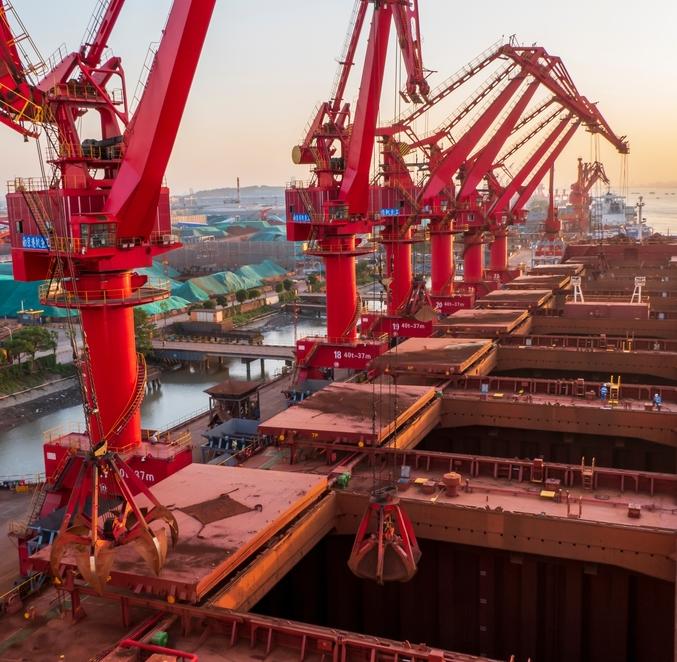
The Future of EU Payment Policy
What’s next for the future of EU payment policy? FTI Consulting’s digital payments experts Robrecht Vandormael and Maxence Favaletto recently shared their insights with the members of The Payments Association EU. Check out their insights here.
CBAM at a Crossroads
The implementation of the European Union’s new carbon border adjustment mechanism (CBAM) poses significant challenges for businesses across multiple sectors.
Our experts Pierre Dechamps, Suparna Arora, and Job Boonstra identify the most critical challenges and outline ways in which businesses can navigate these critical risks.

Labour party Conference 2024
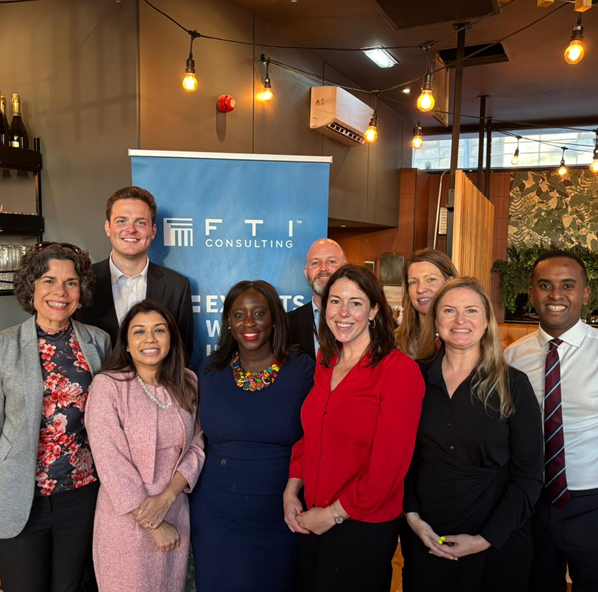
FTI Consulting’s UK Public Affairs team hosted clients for pizza and prosecco in Liverpool following the Prime Minister’s speech at Labour party Conference 2024.
They were joined by special guests including Treasury Minister Tulip Siddiq, Cabinet Office Minister Abena Oppong-Asare, Deirdre Costigan MP, Alice McDonald MP, Oliver Ryan MP, Kevin Bonavia MP, Douglas MacAllister MP and the Labour Party’s COO John Lehal.
Conservative party Conference 2024
Our UK Public Affairs team also hosted a drinks reception at Conservative party Conference 2024 in Birmingham last week.
They were joined by several special guests, including Rt Hon Claire Coutinho MP, Shadow Secretary of State for Energy Security and Net Zero; Rt Hon Mel Stride MP and Shadow Secretary of State for Work and Pensions; Kevin Hollinrake MP.
Upcoming Conferences, Elections and Webinars
- October 06: Presidential election, first round (Tunisia)
- October 09: General election (Mozambique)
- October 24: Parliamentary election (Uzbekistan)
- October 26: Parliamentary election (Georgia)
- October 27: Parliamentary election (Bulgaria)
- October 27: General election, first round (Uruguay)
To be added to the distribution list for the Global PA Newswire, or for further information on the dedicated Public Affairs team at FTI, please contact [email protected]. |
The views expressed in this article are those of the author(s) and not necessarily the views of FTI Consulting, its management, its subsidiaries, its affiliates, or its other professionals.
©2024 FTI Consulting, Inc. All rights reserved. www.fticonsulting.com