Global Public Affairs Newswire – 4 April 2025

Welcome to the latest instalment of FTI Consulting’s fortnightly Global Public Affairs Newswire.
This week, we bring you updates from FTI Public Affairs teams across the world’s major markets, including the United States, Australia, China, the United Kingdom, India, France, South Africa, Spain, Germany, Brazil, and Colombia. This week’s update also brings readers market insights from FTI Public Affairs experts from around the world, explaining what these updates mean for your business.
Market updates
Live, from the Rose Garden: President Trump laid out his reciprocal tariff scheme Wednesday from the White House, announcing 10% tariffs on all imports beginning April 5 with additional tariffs on certain countries at varying rates being levied on April. The President excluded certain items that are subject to other statutory actions, investigations, or potential investigations including: copper, pharmaceuticals, semiconductors, lumber, steel, aluminum, autos, and auto parts. Furthermore, the President said he may raise the tariff rate for trading partners who retaliate or, conversely, lower the rate for partners who reduce their barriers, setting the stage for bilateral negotiations.
“My understanding is there would be no math”: The size and scope of the tariffs surprised political observers and market watchers, contributing to significant and immediate declines in stock indexes and oil markets the following day, and reigniting speculation of a possible recession. The Vice Chair of the Federal Reserve signaled that it would respond to the cumulative impact of the tariffs, and did not anticipate an immediate change in policy. Washington is watching for other nations to respond: China and the EU publicly indicated they are looking at counter measures, while reactions from Spain and Japan focused on supporting affected businesses domestically.
So, win some, lose some: Special elections across the country this week had mixed results. Republicans retained two seats in deep red districts in Florida, although the margins of victory were smaller than expected. In Wisconsin, a closely watched race for a seat on the State Supreme Court resulted in a resounding 10-point win for the Democratic candidate. The state-level race received disproportionately more media coverage than usual given the significant involvement of Elon Musk, who had contributed millions of dollars into the Republican effort to secure the seat.
For more information about FTI’s Public Affairs services in the Americas, please contact [email protected].
The Australian federal election campaign kicked off on March 28 , with Prime Minister Anthony Albanese calling the election for May 3 2025.
The election will deliver government to the party that wins a majority of seats in the House of Representatives, the leader of which will become Australia’s next Prime Minister. The incumbent centre-left Australian Labor Party (ALP), led by Anthony Albanese, will face a tough contest in the coming weeks against the centre-right Coalition of the Liberal and National Parties, led by Peter Dutton, with high profile independent candidates running in key seats.
Both major parties have already announced policies targeting cost of living pressures, with the ALP committing to establishing a taskforce to address price gouging by supermarkets, and the Coalition committing to implement divestiture legislation against supermarkets guilty of uncompetitive behaviour. Both major parties have also announced policies to address energy prices, with the ALP extending energy bill relief for every household, and the Coalition committing to a gas reservation policy.
Recent trends indicate growing support for minor parties and independent candidates, and this is likely to be reflected in the upcoming poll. The Green party is looking to expand on the current 4 lower house seats it holds, and there is potential for the community independent ‘Teal’ movement to expand its presence in Parliament.
The polls are tipping a close race, with a number of seats too close to call. With the ALP currently holding a one seat majority, there is a significant chance the winning party will be a ‘minority’ government, requiring a supply deal struck with a number of the minor parties and independents.
For more information about FTI’s Public Affairs services in Australia, please contact [email protected]
China’s top four state-owned banks – China Construction Bank (CCB), Bank of China (BOC), Bank of Communications (BOCOM), and Postal Savings Bank of China (PSBC) – announced on March 30th that they would raise a total of RMB 520 billion (USD 71.6 billion) from new share sales to the government. China’s Ministry of Finance will subscribe to the shares of all four banks, while China Tobacco will purchase BOCOM’s shares, and China Mobile, along with China State Shipbuilding Corp, will acquire shares of PSBC, with the proceeds to be used to replenish tier-one capital, according to the banks’ statements.
This follows the 2025 government work report delivered by Chinese Premier Li Qiang on March 5th, which outlined plans for China to issue RMB 500 billion in special treasury bonds to support large state-owned commercial banks in replenishing their capital. Analysts anticipated that this action, the first capital injection into China’s major state-owned banks since 2010, aims to significantly strengthen the banks’ risk-bearing capacity and, more importantly, enhance their credit support for emerging industries.
China intends to satisfy robust investment and credit demand in rapidly growing industries that capitalize on the next wave of global technological and industrial change. Chinese policymakers envision China as the application ground of such evolving technologies – as President Xi Jinping put forward during a collective meeting in Beijing on March 28th with global CEOs – “investing in China is investing in the future.”
For more information about FTI’s Public Affairs services in China, please contact [email protected]
President Trump has imposed a 10% tariff on the majority of UK exports to the US as part of his “liberation day” tariff package. The 10% tariff is half the amount anticipated and among the lowest rate afforded US trade partners. This is likely to embolden the UK Government in continuing to seek a deal with the US.
On balance, the 10% tariff on the UK is being considered a success by 10 Downing Street, and suggests the restraint shown by the Prime Minister, Sir Keir Starmer, to avoid public criticism of the Trump administration, whilst seeking to negotiate a deal with the US, has paid off. Nevertheless, the UK Government is clear that all options remain on the table; on April 3rd, the Secretary of State for Business and Trade, Jonathan Reynolds, announced a consultation on the potential impact of retaliation on UK businesses. Last week’s forecast, by the Office for Budget Responsibility, that retaliation could reduce UK economic growth by 1% is likely to be an additional concern for Ministers.
Hopes of further cutting the 10% rate on all imports and the 25% tariff on steel, aluminium and autos, therefore now rest on securing an economic deal with the US. As part of negotiations, UK officials have already signalled the Government’s willingness to compromise on the rates paid by US tech firms under the UK’s Digital Services Tax (DSIT) regime, which the US perceives as a protectionist attack on its technology sector. Difficult choices are likely to lie ahead; following last week’s Spring Statement from UK Chancellor Rachel Reeves, offering tax breaks for big US tech companies whilst cutting public spending and welfare support is unlikely to be received well by the public.
For more information about FTI’s Public Affairs services in the United Kingdom, please contact [email protected]
India’s top telecom operators Reliance Jio and Bharti Airtel, who command 73% of India’s mobile telephony market, have signed a deal with Elon Musk’s SpaceX to bring Starlink satellite internet services to the country. Starlink has 4.6 million subscribers worldwide, and India could add as many as 5.7 million new subscribers by 2030, a Jeffries research note says.
The March announcements of the deal by Airtel and Jio were a surprise. The duo had resisted Starlink’s entry, seeking auctions for spectrum against Musk’s demand of administrative allocation. And they have their own satellite interests: Airtel owns 21% of Eutelsat OneWeb, and Jio has a deal with Luxembourg-based SES.
The agreements followed prime minister Modi’s meetings in Washington with Musk and president Trump, where they discussed space, mobility, and technology collaboration.
India is a big market: internet penetration is at 55%, and over 700 million people lack reliable access in remote areas where laying fiber and building mobile towers is costly. About 5% of villages, over 30,000 of them, don’t have mobile internet. Satellite internet will help, but pricing will be key.
Starlink’s plans globally range from $50-500 per month, with hardware costing $250–$500. A few markets such as Bhutan have seen monthly prices start at $35, still higher than Indian broadband plans, which start at $5 a month. Airtel and Jio would need to keep prices low, target business use cases, and explore working with government initiatives focused on digital inclusion for rural India.
Both deals depend on government approvals. New Delhi will likely allot satellite broadband spectrum for five years, though Musk has been pitching for a 20-year permit.
India’s strict telecom and space regulations previously blocked Starlink’s attempt at pre-bookings without a license. And the service will need an India-based ‘control center’ and must facilitate call interceptions. But with Airtel and Jio on board, SpaceX is expected to get those approvals, which could also ease the path for Amazon’s Kuiper in India.
For more information about FTI’s Public Affairs services in India, please contact [email protected].
A court has found Marine Le Pen, long-time leading figure of the far-right National Rally (RN), and 20 other party members guilty of misusing EU funds by employing parliamentary assistants at the European Parliament, who were instead assigned to party work. She was barred from running for public office for 5 years with immediate effect, effectively ruling her out of the 2027 presidential race, although she is allowed to remain an MP. The court also imposed a €100,000 fine and a four-year deferred prison sentence (two years under house arrest and two with an electronic bracelet). Marine Le Pen is almost certain to appeal, and the prison penalty and fine would not be applied until her appeals are exhausted. However, she will remain ineligible to run for office during this period. The Paris Court of Appeal stated on 1 April that this second trial could take place by early 2026 at the latest, with a ruling expected in the summer. This leaves a slight glimmer of hope for Le Pen ahead of the 2027 presidential election.
In the short-term, the court’s decision is expected to increase political tension in France, with the RN framing the ruling as an example of the “politicisation of justice”, and Le Pen comparing herself to deceased Russian opposition figure Alexei Navalny. This could destabilise François Bayrou’s government, with some speculating that the RN may back a no-confidence motion to signal their discontent, something they’ve resisted doing until now. This is rendered more likely given the party was already issuing such threats in the days prior to the ruling, on the issue of the government bypassing Parliament on key energy measures.
Le Pen’s conviction deals a significant blow to the National Rally, especially considering its past rhetoric against corruption, damaging the party’s image. Moreover, while popular among RN voters, her likely successor, 29-year-old party president Jordan Bardella, is often criticised for his youth and inexperience, having neither completed tertiary education nor had any professional experience outside of politics. This could trigger internal disagreements ahead of the next major elections, and lead to a restructuring of the far-right in France.
For more information about FTI’s Public Affairs services in France, please contact [email protected]
South Africa’s Government of National Unity (GNU) is facing its most serious challenge since its formation in June 2024. The country’s national budget has been a point of contention between coalition partners within the GNU resulting in the first presentation of the budget being delayed by 2 weeks, and horse-trading continuing on the April 2nd, the day the budget report is formally tabled in Parliament. A 1% increase to Value-Added Tax over 2 years is at the heart of the disagreement, with the Democratic Alliance, the second largest party in the GNU rejecting the proposal put forward by the African National Congress, formally the governing party. If the DA fails to agree with the final proposal being tabled, it will set the stage for its exit from the GNU with several implications beyond just the National Budget. It is expected that the DA will be heading to court in order to halt the implementation of the VAT hike and is touting around the idea of possibly leaving the GNU, the next few weeks will provide a clearer picture of the stability and longevity of the GNU, as the DA considers its options. The ANC has already made it clear that no political party can implement a budget that they have rejected, leading to speculations on the continued inclusion of the DA in the GNU. On Wednesday evening, the Budget was eventually passed with the support of other smaller political parties, which might be considered for government positions if the DA opts to leave.
"With South Africa facing serious policy and trade challenges due to geopolitical tensions with the US, a failed GNU will lead to both fiscal and political instability for South Africa. While the GNU has made efforts to seek to align on foreign policy as well as contentious topics including the National Health Insurance, the fiscal framework threatens to undermine the young coalition”

For more information about FTI’s Public Affairs services in South Africa, please contact [email protected]
In a landmark address to Congress, Spanish Prime Minister Pedro Sánchez announced a bold new direction for the country’s defence policy, calling for the creation of a European army “under a single flag with the same objectives.” He framed this move as essential in an era of global uncertainty, especially in light of weakening transatlantic ties and the rise of hybrid threats. Sánchez insisted that defence investment must not come at the expense of social or environmental priorities, pledging that “not a single euro will be cut” from existing welfare programs. Emphasising innovation and resilience, he announced a forthcoming national plan to boost defence technologies, signalling that Spain’s pivot to strategic autonomy is as much about industrial strength as it is about security.
At the heart of this initiative is a call for European strategic autonomy. Sánchez urged the European Commission to develop new financing tools and proposed a mutualised approach to defence spending, highlighting the need for collective investment and industrial integration across member states. His message aligns with growing sentiment in Europe that the continent must assume greater responsibility for its own defence. While ambitious, the proposal reflects a shift in strategic thinking. One that views European defence not merely as a military necessity, but as a pillar of economic sovereignty and geopolitical leverage.
Despite the ambition, Sánchez faces significant national constraints. Without an approved 2025 budget and amid political fragmentation at home, the Spanish government’s capacity to advance this agenda remains uncertain. Still, the Prime Minister has clearly positioned Spain as a proactive voice in shaping the EU’s defence future. By championing a unified European military framework, Spain is not only seeking to elevate its influence in Brussels but also asserting itself as a key driver of Europe’s response to evolving global threats.
For more information about FTI’s Public Affairs services in Spain, please contact [email protected].
Currently, the core negotiating team—made up of senior politicians from CDU/CSU and SPD—is working to resolve the remaining contentious issues. Key disputes include fiscal policy, particularly the significant gaps in the 2025 federal budget. In addition, migration policy remains a major sticking point, especially regarding the rejection of asylum seekers at the borders. In this context, both Friedrich Merz and SPD leader Lars Klingbeil have stressed that thoroughness must take priority over speed. To adhere to the original plan of electing Merz as Chancellor on April 23rd, a coalition agreement would need to be finalised this week, as the SPD still requires a membership vote. The party has set ten days for this process. Given the current state of negotiations, it now appears more likely that the final draft of the coalition agreement will be concluded by Easter. The SPD vote would follow by the end of April, paving the way for the Chancellor to be elected in early May.
Brazil’s trade relations with the United States remain under pressure as Washington escalates tariff measures. In a formal response to the U.S. Trade Representative (USTR), the Brazilian government has argued that these measures violate World Trade Organization (WTO) commitments and could significantly impact economic ties.
Rather than relying solely on WTO appeals, Brazil is moving forward with domestic legislation to enable swift retaliation. Congress is advancing the Reciprocity Bill (PL 2088/23), which would grant the government a legal framework to impose countermeasures when foreign policies harm national competitiveness. The bill, already approved by the Senate’s Economic Affairs Committee, now heads to the Chamber of Deputies, where it is expected to pass quickly.
Beyond U.S. tariffs, the bill also addresses trade challenges posed by European Union environmental policies, such as the anti-deforestation law, which affects Brazilian agricultural exports. It would authorize retaliatory taxes, trade restrictions, and the suspension of intellectual property concessions in response to unfair trade barriers. Senator Tereza Cristina (PP-MS), the bill’s rapporteur, emphasizes that the measure is intended to protect national production rather than target specific countries.
Despite ongoing economic challenges—including high inflation, rising food prices, and low approval ratings for the government—Brazil’s political landscape has seen an unusual alignment on this issue. The Reciprocity Bill has brought together the administration and the influential agribusiness sector in a rare show of unity, reflecting growing concerns over the country’s trade exposure and the need for new defensive tools.
For more information about FTI’s Public Affairs services in Brazil, please contact [email protected].
On March 27th, Minister of Foreign Relations, Laura Sarabia, and U.S. Secretary of Homeland Security, Kristi Noem, signed a letter of intent to enhance biometric data-sharing for migration control and security cooperation. The agreement, part of the U.S. Biometric Data Exchange Program (IBIS), marks a significant shift in Colombia’s approach to U.S. relations.
The signing took place during Noem’s visit to Bogotá, making her the highest-ranking official from the new U.S. administration to visit Colombia following the most severe diplomatic crisis between the two countries in 30 years. With the document still undisclosed, the extent of Colombia’s concessions remains unknown.
Although Sarabia’s diplomacy opened the door for collaboration, the deal raises concerns about data privacy. It remains unclear which biometric records will be shared; whether only criminal records, or also data from the national registry. If the latter, millions of Colombians and Venezuelan migrants could end up in U.S. databases without clear guidelines. Experts also warn about the lack of transparency on how long the data will be stored, who will have access, or whether individuals can challenge its use.
For more information about FTI’s Public Affairs services in Spain, please contact [email protected].
Expert Analysis |
FTI Consulting’s Modern General Counsel campaign
Our new Modern General Counsel Hub is now live!
With over 70 national elections in 2024, 2025 marks a significant shift from campaigning to policymaking, from discussion to action and from theory to practice. As corporations begin to assess their unique risks and opportunities, they are looking to their general counsels to help them stay ahead of shifting political landscapes, trade tensions and evolving regulations.
Today’s general counsels are not just responding to change, they are proactively managing risk and seizing opportunities for transformation.
Take a look at our new hub here, which features expert insights through thought leadership, videos, and case studies.
New EU-US-NATO Dynamics: Challenges and Opportunities for the Defence Industry
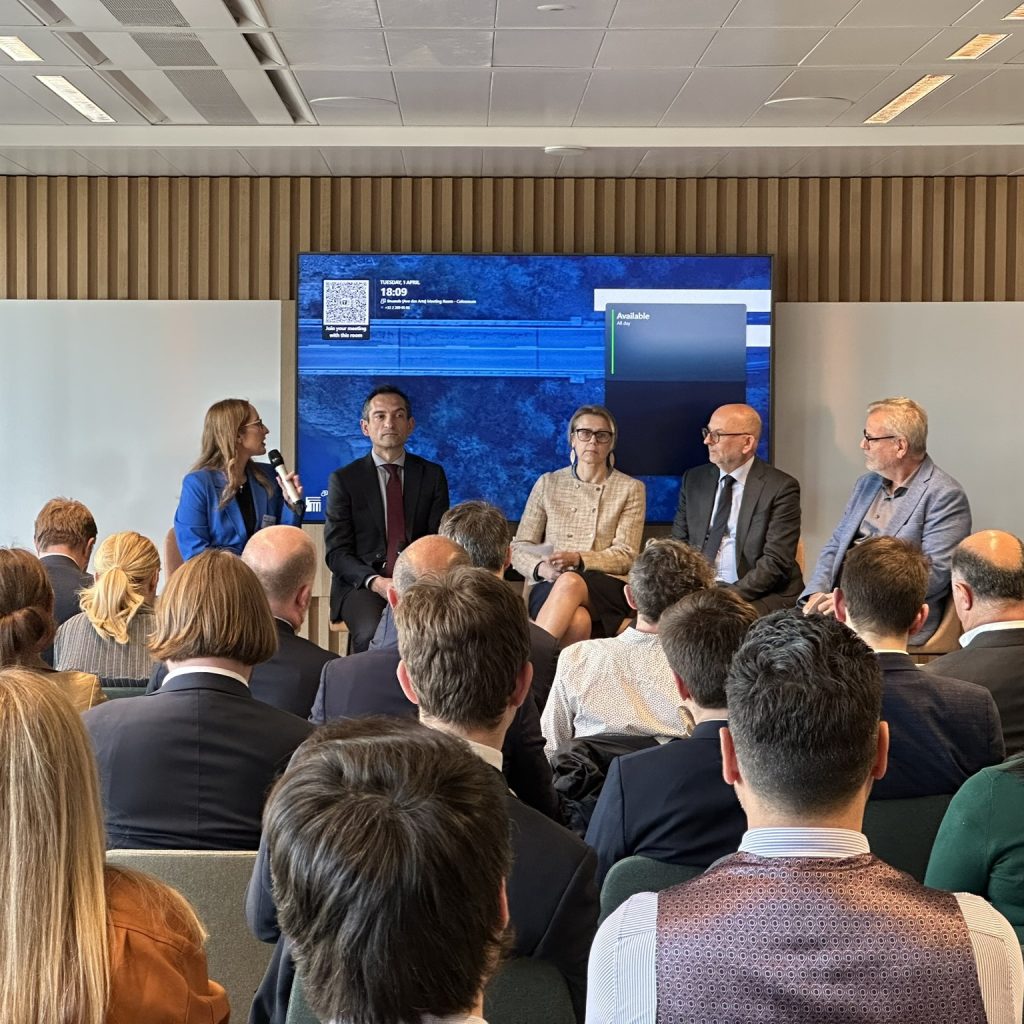
We were delighted to host a defence policy event at our Brussels office yesterday, focusing on ‘New EU-US-NATO Dynamics: Challenges and Opportunities for the Defence Industry!’.
We were joined by EU officials and representatives from the defence industry, as well as FTI Consulting experts from France and Spain. The panel included speakers from the European Commission, European External Action Service, Aerospace, Security and Defence Industries Association of Europe (ASD) and the NATO Defence Investment Division.
FTI Consulting ‘Liberation Day’ Expert Panel on Geopolitics and International Trade
On the morning after President Trump announced a colossal new wave of tariffs, our UK Public Affairs team hosted an expert panel which explored the implications of “Liberation Day” for UK businesses and investors.
Moderated by Alex Deane, head of UK Public Affairs at FTI Consulting, the panel included expert insights from Sir Crawford Falconer, former UK Chief Trade Negotiator, and Cory Fritz, Senior Managing Director in FTI Consulting’s US Public Affairs practice.
UK Public Affairs Snapshot- Spring Statement 2025: A new type of ‘securonomics’
Rachel Reeves’ first Spring Statement as Chancellor of the Exchequer that she delivered last week was not the statement she would have hoped to deliver. No Chancellor likes announcing the loss of fiscal headroom and forecasts of declining growth – or indeed the policies necessary to restore fiscal balance.
Read the latest snapshot from FTI Consulting’s UK Public Affairs team, which outlines their analysis of the 2025 Spring Statement.
The UK’s deregulation overtures to attract investment
Realising that the UK Government’s challenging fiscal position will limit its ability to tax-cut its way to growth, the Chancellor of the Exchequer, Rachel Reeves, has set her eyes on another path for the growth mission: deregulation.
Our expers highlight the Government’s Regulatory Action Plan and shed light on whether it is expected to deliver a new pro-growth culture at the CMA and other regulators.
Upcoming Conferences, Elections and Webinars
- 12 April: General election (Gabon)
- 13 April: Local elections (Finland)
- 27 April: State election (Vienna, Austria)
- 01 May: Local elections (United Kingdom)
- 04 May: Presidential election (Romania)
- 11 May: Parliamentary election (Albania)
- 11 May: Local elections (Uruguay)
- 12 May: General election (Philippines)
- 18 May: Presidential election (Poland)
- 25 May: Parliamentary elections (Venezuela)
- 25 May: General election (Suriname)
To be added to the distribution list for the Global PA Newswire, or for further information on the dedicated Public Affairs team at FTI, please contact [email protected]. |
The views expressed in this article are those of the author(s) and not necessarily the views of FTI Consulting, its management, its subsidiaries, its affiliates, or its other professionals.
©2025 FTI Consulting, Inc. All rights reserved. www.fticonsulting.com