Global Public Affairs Newswire – 31 October 2025

Welcome to the latest instalment of FTI Consulting’s fortnightly Global Public Affairs Newswire.
This week, we bring you updates from FTI Public Affairs teams across the world’s major markets, including the United States, Ireland, the European Union, the United Kingdom, China, Spain, India, Germany, Australia, France, Brazil, Colombia and the United States. This week’s update also brings readers market insights from FTI Public Affairs experts from around the world, explaining what these updates mean for your business.
Market updates
- U.S.-China Truce Extension: A Fragile but Pivotal Reset: The Trump-Xi summit adds an element of medium-term stability to the relationship, as both sides back down slightly from previous disruptive threats. While President Trump declared the trade dispute “settled,” the agreement is a one-year arrangement, and will be constantly revisited by new developments as both the U.S. and China continue positioning. This reset offers short-term relief to global markets but leaves open questions about long-term strategic competition and enforcement.
- Southeast Asia: Strategic Trade Partner or Geopolitical Pawn?: The U.S. finalized trade deals with Malaysia and Cambodia and reached framework agreements with Thailand and Vietnam. These pacts aim to deepen cooperation on critical minerals, export controls, and tariff evasion—directly aimed at reducing China’s influence in the region. While the deals open new markets for U.S. goods and secure supply chain resilience, they also risk fragmenting ASEAN unity. Countries like Vietnam are walking a tightrope, balancing U.S. demands with regional stability and Chinese relations. The agreements are just the latest in a continued trend in Washington in favor of bilateralism and economic statecraft in the Indo-Pacific.
- Domestic Trade Policy: Tariffs as a Tool for Economic Rebalancing: Domestically, the Trump administration has embraced aggressive tariff actions under Section 232, targeting sectors like pharmaceuticals, trucks, and furniture. These moves are framed as national security imperatives but have sparked concern over inflationary pressures and supply chain disruptions. The broader trade policy agenda emphasizes “America First” principles, aiming to reduce trade deficits while bolstering domestic manufacturing. However, the structural shift away from liberalization raises questions about long-term competitiveness and global leadership.
For more information about FTI’s Public Affairs services in the Americas, please contact [email protected].
- Independent candidate Catherine Connolly is set to become Ireland’s tenth President next month following a landslide election victory. In an unprecedented show of unity, Connolly—a left-leaning member of the Dáil—secured backing from a broad alliance of parties on the left, including Sinn Féin, Labour, the Social Democrats, and the Green Party.
- The election became a two-candidate race between Connolly and Fine Gael’s Heather Humphreys after Fianna Fáil’s candidate, Jim Gavin, suspended his campaign amid revelations of unpaid debts to a former tenant dating back nearly two decades. Despite remaining on the ballot, Gavin won just 7% of the vote, while Connolly received 63%, more than double Humphreys’ 29%.
- Connolly’s victory is widely viewed as a continuation of the vision and values championed by outgoing President Michael D. Higgins, particularly her emphasis on social justice, equality, civic engagement, and stance on Ireland’s neutrality and international relations. The election also recorded the highest proportion of spoiled votes in Irish history – 13%, compared with just 1% in the 2018 Presidential Election – reflecting a segment of the electorate who felt underrepresented by the candidates and disenfranchised with the political system.
- In the aftermath, long-time Fianna Fáil leader and Taoiseach Micheál Martin has faced internal criticism for his management of the campaign and endorsement of Gavin, while Fine Gael members have also questioned their party’s candidate strategy and messaging.
For more information about FTI Consulting’s Public Affairs services in Ireland, please contact [email protected].
- On 22 October, the Plenary voted against granting a mandate to the rapporteur, Jorgen Warborn (EPP, SE), to commence trilogue negotiations with the Council on the Omnibus I proposal, which amends the Corporate Sustainability Reporting Directive and the Corporate Sustainability Due Diligence Directive.
- The vote was a secret ballot, and it was rejected with 318 against, 309 in favour, and 34 abstentions. This means that the file will be reopened, and during the upcoming mini-Plenary session on 12-13 November, the vote will take place on an amendment-by-amendment basis.
- In the meantime, more interestingly, we can expect the right-wing groups to continue to push for the removal of the obligation for companies to adopt climate transition plans, while the left-wing groups demand a reintroduction of the civil liability regime for damages caused by lack of due diligence.
For more information about FTI’s Public Affairs services in the EU, please contact [email protected]
- The UK’s Prime Minister, Sir Keir Starmer, this week declined to reaffirm his 2024 General Election pledge not to raise income tax, National Insurance, or VAT. The commitment was challenged by Opposition Leader Kemi Badenoch during Prime Minister’s Questions, prompting renewed scrutiny of Labour’s fiscal stance.
- Starmer refused to rule out tax increases in the Autumn Budget on 26 November, despite having reiterated his tax pledges as recently as July 2025. A Downing Street spokesperson later declined to confirm that the Government still intended to honour its manifesto promise not to raise taxes on “working people.”
- The intervention comes amid mounting speculation about the Budget’s contents. Treasury officials are understood to be considering a 2p rise in income tax, potentially offset by a 2p cut in National Insurance contributions. The move would leave most workers unaffected but increase the tax burden on pensioners and landlords, who do not pay National Insurance.
For more information about FTI’s Public Affairs services in the United Kingdom, please contact [email protected].
- The fifth round of China-U.S. economic and trade talks in Malaysia saw candid discussions on key issues, including U.S. Section 301 measures, tariff suspensions, fentanyl enforcement, agricultural trade, and export controls, notably on rare earths. A preliminary consensus was reached, with both sides agreeing to refine details and complete internal approval processes.
- Following the talks, Chinese Foreign Minister Wang Yi spoke with U.S. Secretary of State Marco Rubio, stressing the importance of both sides “meeting each other halfway” and preparing for high-level interactions. Beijing emphasized the strategic value of the longstanding relationship between the two leaders, underscoring the need for Washington to avoid exacerbating tensions at this crucial juncture.
- The upcoming Xi-Trump meeting at APEC represents a crucial moment in managing bilateral relations. Trump, speaking at the ASEAN summit, expressed confidence in reaching “a very comprehensive agreement” with China and hinted at the possibility of reciprocal visits. U.S. media also reported that the two leaders may discuss a “global peace plan”, with Trump seeking China’s assistance in brokering dialogue on Ukraine.
For more information about FTI’s public affairs services in China, please contact [email protected].
- This week, Extremadura’s president called snap elections for 21 December after the PP–Vox coalition collapsed over disagreements on social and infrastructure spending. The failed 2026 budget left the regional government without fiscal continuity, prompting the early vote and marking the first major political test ahead of 2026.
- On 29 October, Junts per Catalunya, a key ally of Prime Minister Pedro Sánchez, withdrew its support over alleged breaches of the 2023 Brussels Agreement on fiscal transparency and Catalan governance. The move leaves the government without a majority, casting doubt on the 2026 State Budget and legislative stability.
- Meanwhile, Andalusia and Castilla y León will celebrate regional elections for 2026. Both regions have already entered an early pre-electoral phase, with local governments seeking to consolidate power as national parties test alliances ahead of the 2027 general election.
For more information about FTI Consulting’s Public Affairs services in Spain, please contact [email protected].
- Draft amendments released by New Delhi on October 22 propose mandatory labeling of AI-generated content—especially deepfakes and synthetic media. The labels must cover 10% of any image or video, or audio duration. Tech firms must proactively identify and tag AI content, implement user declarations, and maintain audit logs. Companies like OpenAI, Meta, Google and X must ready content-detection architectures, policy disclaimers, and India-specific guardrails. Non-compliance risks penalties, forced removal, or operational restrictions under India’s IT Act and other regulations.
- With nearly a billion online users, a key state election in November, and five state assembly elections in 2026, India is tightening oversight on misinformation, algorithmic opacity, and AI-driven influence campaigns. In a trend toward regulated AI sovereignty, New Delhi’s draft rules have precedents in the EU’s AI Act and China’s synthetic content regime, though Beijing goes much further, requiring platforms to verify users’ identities and to inform people whose faces or voices have been altered or used for deepfakes.
- Meanwhile, in some possible relief to social media and tech platforms, India has narrowed the authority to issue online content removal and takedown orders to senior officials and police officers, reversing a 2023 expansion that had empowered thousands of lower-level officers of issue takedown orders. This signals a partial recalibration of its digital governance framework after a high-profile legal clash with Elon Musk’s X over government censorship powers, and a move toward greater procedural control, accountability, and reduced operational uncertainty for global platforms, even though it still leaves takedown powers in the hands of hundreds of officers.
For more information about FTI’s Public Affairs services in India, please contact [email protected].
- Frosty Reception in Beijing: German Foreign Minister Johann Wadephul has postponed his planned 26–27 October visit to Beijing after China confirmed only one of several requested meetings. Officially described as a “postponement,” the move highlights growing diplomatic friction and signals that “business as usual” in Sino-German relations may be over. The delay also exposes Berlin’s challenge in balancing EU-level political firmness with the protection of Germany’s deeply intertwined industrial interests.
- Europe Sharpens Its Tools: Days before the announcement, European Commission President Ursula von der Leyen unveiled “RESourceEU” in Berlin; a new initiative to reduce the EU’s dependence on Chinese critical minerals. She cautioned that Brussels is “ready to use all instruments” if export curbs persist. Meanwhile, President Emmanuel Macron urged activation of the EU Anti-Coercion Instrument (ACI), and the Dutch government’s decision to nationalise Nexperia, a Chinese-owned chip producer, underscored Europe’s shift toward a more assertive, defensive economic stance vis-à-vis Beijing.
- Stuck in the Middle: For German industry, especially automakers, the timing is difficult. China refines around 90% of global rare earths, materials critical for electric vehicles and clean-tech production. As Chinese export restrictions tighten and Brussels steps up trade defences, German carmakers are caught between a rock and a hard place. Already squeezed by weak demand, high energy costs, and geopolitical risk, they now find themselves caught between an emboldened EU trade agenda and a more protectionist China.
For more information about FTI’s Public Affairs services in Germany, please contact [email protected].
- This week, Prime Minister Anthony Albanese arrived in Malaysia for the ASEAN (Association of South East Asian Nations) Summit and the East Asia Summit. He recognised Australia’s presence at the summits as seizing “the proximity of opportunity” after speaking of the “tyranny of distance” from markets in the United Kingdom, United States and in Europe.
- While in attendance, the PM announced two major investments under the Southeast Asia Investment Financing Facility, including $175 million in the IFM Investors’ Asia Pacific debt fund and $50 million towards Plenary’s new South East Asia Public Private Partnership Investment Fund. The investments signal Australia’s strong commitment to trade and economic growth in the region, supporting Australian companies’ growth and create more jobs domestically.
- President Trump also spent time in Malaysia this week, attending the same ASEAN leader’s dinner, before travelling to Tokyo and joining Albanese in South Korea for a meeting with Chinese President Xi Jinping on the sidelines of the APEC summit.
- Albanese played a delicate balancing act as tensions between the US and China have continued. Asia, China in particular, represents a significant source of Australian trade, and the US is a major Australian defence ally.
For more information about FTI’s Financial Services Public Affairs support in Australia, please contact [email protected].
- MPs in France’s National Assembly have begun debating the first part of the 2026 Budget Bill, focused on state revenues. Empowered by Prime Minister Sébastien Lecornu’s pledge not to use special constitutional powers to force the bill through, lawmakers have taken a more assertive and creative approach in tabling amendments.
- Several surprise tax hikes targeting multinationals were adopted, including a new levy based on global revenues and a doubling of the digital services tax from 3% to 6%. Similarly, several amendments were tabled by MPs from across the political spectrum to increase the financial transactions tax.
- The government’s position remains fragile as Prime Minister Lecornu seeks Socialist support to pass the budget. However, compromises with the left might prove unacceptable for pro-business lawmakers within the government coalition and could jeopardise chances of conservative MPs supporting the budget.
For more information about FTI’s Public Affairs services in France, please contact [email protected].
- On October 26, Presidents Lula and Trump held their first formal bilateral meeting on the sidelines of the ASEAN Summit in Malaysia — a one-hour conversation that marked a turning point after months of tension. The encounter, described by both sides as positive, opened the door for further negotiations aimed at revising the U.S. tariffs imposed on Brazilian exports earlier this year. Another key issue was the crisis in Venezuela, where Lula positioned himself as a mediator and advocate for regional stability. The meeting symbolizes a pragmatic reset in Brazil–U.S. relations, driven by dialogue and diplomacy taking precedence over ideology.
- Brazil and the United States administrations are planning further meetings to consolidate the dialogue initiated in Malaysia. Technical teams from both countries will meet in Washington in the coming weeks to advance negotiations on tariffs imposed on Brazilian products. The focus will be on creating a work schedule that addresses the most affected sectors and promotes the expansion of bilateral trade. Brazil is also aiming to strengthen technological and industrial partnerships, diversifying its economic and diplomatic relations.
- Lula used his Asian trip to confirm that he will run for a fourth term in the 2026 presidential election. The announcement, though widely anticipated, formalizes the political horizon for the ruling Workers’ Party and underscores the absence of a clear successor within the left. The right, meanwhile, remains fragmented and without a defined candidate or cohesive platform, as party leaders continue to test polling scenarios and negotiate internal alignments rather than consolidate around a national figure. Although there is still a year to go before the election, current polling suggests that Lula would decisively win against all potential opponents.
For more information about FTI’s Public Affairs services in Brazil, please contact [email protected].
- Amid rising diplomatic tensions and Washington’s announcement of new trade tariffs and the suspension of aid, U.S. President Donald Trump placed Colombian President Gustavo Petro, his wife, son, and Interior Minister on the Office of Foreign Assets Control (OFAC) sanctions list for alleged counternarcotics-related activities—commonly referred to as the “Clinton List,” a mechanism designed to target individuals suspected of ties to narcotics trafficking.
- The Colombian government formally rejected the measure, describing it as an unprecedented action with political motives that undermines diplomatic norms. The Petro administration argues that the sanctions are not solely linked to recent disagreements over counternarcotics policy, but also to Washington’s growing strategic focus on Venezuela, Petro’s reluctance to condemn the Maduro regime, and U.S. military expansion in the Caribbean—developments Bogotá considers destabilizing for regional security.
- The decision further strains an already fragile bilateral relationship, intertwining counternarcotics cooperation, trade disputes, and regional defense priorities. Analysts warn that it could redefine the framework of engagement between both nations and test the resilience of their long-standing alliance. Domestically, among his followers, the move may bolster Petro’s sovereignty-focused and anti-interventionist narrative ahead of the 2026 elections.
For more information about FTI Consulting’s Public Affairs services in Colombia, please contact [email protected].
Expert Analysis |
W@LifeSciences event
We were pleased to host an event with W@LifeSciences last week to discuss ‘Women in Conflict Zones: Enhancing Healthcare Access’.
The expert panel explored key themes including the experiences of women and girls in conflict, NATO’s role in safeguarding access to healthcare, and the goals and expected impact of EU and international policy initiatives.
CEDPO DPO Conference
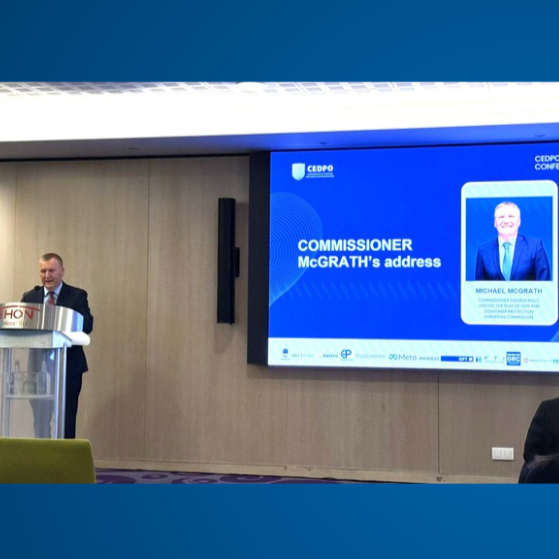
This week our experts Emmanouil Patavos and Amber Gosney attended the ‘CEDPO DPO Conference: Europe: On the Verge of Digital Transformation?’ of which FTI Consulting was a sponsor.
The conference started with an address by Commissioner Michael McGrath – responsible for democracy, justice, the rule of law and consumer protection – and brought together regulators, EU institutional representatives, academics and top voices from the professional world to discuss the key digital laws underpinning the EU’s Digital Strategy.
How to Thrive 2025
Our UK Head of Public Affairs, Alex Deane, recently took to the stage at Being Human Consulting Ltd’s ‘How to Thrive 2025’ event in London with a session on lessons from history- taking the group on a vivid journey through the lesser-known stories that shaped the modern world.
UK Public Affairs Snapshot
Read FTI Consulting’s UK Public Affairs team’s latest snapshot, with its assessment of the Labour Party’s deputy leadership election, what the result will mean in practice and what we can expect next.
Upcoming Elections
- 26 October: Legislative elections (Argentina)
- 29 October: General elections (Netherlands)
- 4 November: State legislative elections (United States)
To be added to the distribution list for the Global PA Newswire, or for further information on the dedicated Public Affairs team at FTI, please contact [email protected]. |
The views expressed in this article are those of the author(s) and not necessarily the views of FTI Consulting, its management, its subsidiaries, its affiliates, or its other professionals.
©2025 FTI Consulting, Inc. All rights reserved. www.fticonsulting.com