Public & Government Affairs

Global Public Affairs Newswire – 3 October 2025

Welcome to the latest instalment of FTI Consulting’s fortnightly Global Public Affairs Newswire.

This week, we bring you updates from FTI Public Affairs teams across the world’s major markets, including the United States, the United Kingdom, the European Union, China, Germany, India, Spain, Malaysia, Australia, Brazil, Colombia, and South Africa. This week’s update also brings readers market insights from FTI Public Affairs experts from around the world, explaining what these updates mean for your business.

Market updates

Week in U.S. Politics: Shutdown, Gaza Backlash & Military Reset
  • The U.S. government shut down at 12:01 a.m. on October 1. Senate leaders spar over blame and strategy: “Democrats need to decide if they’re going to support funding legislation … or if they’re going to shut down the government,” said Sen. John Thune. “Donald Trump is causing the shutdown … he knows he is going to be blamed for the shutdown,” countered Sen. Chuck Schumer.

  • Trump’s 20-point Gaza plan has drawn fierce criticism from the U.S. left, arguing it privileges security over Palestinian rights and skirts accountability.

  • Defense Secretary Pete Hegseth used a speech at Quantico to announce sweeping reforms, declaring the Pentagon’s singular mission is “warfighting.” He also blasted the physical condition of some top commanders and told officers who disagreed with his agenda they should “do the honorable thing and retire.” The fiery remarks drew cheers from Trump loyalists but alarm from Democrats and veterans groups who warned of politicizing military leadership.

“This government shutdown has the potential to challenge records for duration or be over in a week. Both parties believe they have the political high ground with their voters which could lead to a long shutdown. However, there is a group of Democratic Senators that could join Republicans to reach the required 60 votes to pass a short term extension. Those Senators believe a shutdown in November will more clearly demonstrate what this fight is about when health care subsidies go away due to the passage of the Big Beautiful Bill and millions of people will see a large increase in the cost of their health care plans.”

Greg Mecher
Managing Director, US Public Affairs

For more information about FTI’s Public Affairs services in the Americas, please contact [email protected].

Starmer’s Labour Party gathers for National Conference
  • Earlier this week Labour Party Conference returned to Liverpool, the second Conference held since Labour entered Government last July. The conference came at a challenging time for the Government – with a significant change in senior personnel following former Deputy Prime Minister Angela Rayner’s resignation and the dismissal of Peter Mandelson as British Ambassador to the United States.  Speculation was also rampant about a potential leadership challenge from Manchester Mayor Andy Burnham, as Labour’s poll numbers continue to decline.

  • Prime Minister Sir Keir Starmer made a progressive Leader’s speech, focused on a pledge to ‘renew Britain’. He took the fight to Reform UK, arguing that Britain faces a decision between “decency or division”. He acknowledged that the path forward will not be “cost-free”, nor easy – an admission that optimism must be balanced against the hard realities of the UK’s public finances. 

  • The speech included several key policy announcements, including the introduction of a new Digital ID programme, which will be mandatory for the right to work. Wider policies announced included adjustments to “indefinite leave to remain” status, led by the new Home Secretary Shabana Mahmood, and the replacement of a target for 50% of young people attending university with more apprenticeships – both of which were geared towards stemming the loss of votes to Reform. 

  • While the speech was well received by party members, and Labour Party Conference closed on a high, it remains to be seen if the message of ‘renewal’ cuts through to the wider electorate.

“The Prime Minister went to his annual party conference with many wondering if he would speak to the party faithful or the public. In the end he did both, setting out more of his vision for the country and taking the fight to the insurgent Reform UK party.”

Gemma Doyle
Senior Managing Director, United Kingdom

For more information about FTI’s Public Affairs services in the United Kingdom, please contact [email protected].

State of Play of EU Trade Policy
  • The main trade priority of the EU remains the implementation of the new EU-US “Framework Agreement.” The agreement caps most U.S. tariffs on EU goods at a 15% ceiling notably for key industries like autos and pharmaceuticals and provides space for negotiations on steel and aluminium tariff rate quotas (TRQs) and further exemptions from the U.S. reciprocal tariffs for key industries like aircrafts and generics. 

  • The key priority for the EU is now to secure more exemptions from U.S. reciprocal tariffs, notably for wine and spirits and medical devices and secure TRQs for steel and aluminium. In parallel, the EU has finalised the EU-Indonesia trade agreement on 23 September and taken further steps towards the ratification of its interim trade agreements with Mercosur and Mexico on 3 September. 

  • Finally, the EU is also addressing overcapacity issues in the steel sector with an announced ‘long-term trade instrument’ likely to be proposed on the 7 October. The instrument will reportedly reduce foreign steel quotas by almost half, set TRQs on steel for EU’s trading partners individually and potentially impose high tariffs (up to 50%) above a certain quota for certain trading partners. 

“The global trade environment remains highly volatile. The EU is navigating this complex period by stabilising its trade relations with the US, continuing its trade diversification efforts and reinforcing its trade tools to level the playing field for some of its key sectors like steel.”

Danesh Kermabon-Haq
Director, Brussels
For more information about FTI’s Public Affairs services in the EU, please contact [email protected]

China highlights global governance in addressing the UNGA
  • Chinese Premier Li Qiang announced at the High-Level Meeting on the Global Development Initiative at the UN headquarters in New York that China will no longer seek new special and differential treatment in current or future WTO negotiations, signalling a willingness to adapt to evolving global trade norms while maintaining its core interests as a developing country.

  • China used the UNGA platform to propose the “AI+” International Cooperation Initiative, following its July proposal to establish a World AI Cooperation Organization. The initiative invites broad international participation to advance AI development, capacity-building, and responsible use, reflecting China’s aim to play a more prominent role in shaping global AI governance.

  • China will establish a China-UN Global South-South Development Support Mechanism with an initial USD 10 million budget and partner with UNDP to open a Global Sustainable Development Center in Shanghai – initiatives aiming to expand practical international cooperation on sustainable development

“The Chinese Premier’s visit to the United Nations underscores China’s continued strategic engagement with multilateral institutions amid rising global uncertainty and intensifying debates over the relevance of international organizations. While some Western actors have been criticizing the UN and questioning its effectiveness, China is doubling down on institutional participation to assert leadership and influence global norms. By combining development finance, technological initiatives, and South-South cooperation, China positions itself as a pragmatic partner in addressing global challenges, seeking both to project a responsible image and expand influence in the post-pandemic international order marked by geopolitical frictions.”

Xu Zheng
Director, Public Affairs, China

For more information about FTI’s Public Affairs services in China, please contact [email protected]

Germany’s “Autumn of Reforms”: Promises under Pressure
  • Many promises. Like many European countries, Germany faces major challenges in budget planning: strong tax revenues contrast with high spending needs driven by its identity as a welfare state. With a projected budget gap of €172 billion between 2027 and 2029, pressure within the coalition is rising. In August 2025, Chancellor Friedrich Merz (CDU) announced an “autumn of reforms” to restore fiscal stability and push forward structural changes, with a particular focus on social policy.
  • Coalition tensions. While there is broad agreement on the need for reforms, the SPD and CDU/CSU remain divided on the core questions of implementation. The SPD rejects major cuts to social spending and calls for tax increases on high earners. The CDU/CSU opposes tax hikes and advocates wide-ranging welfare reforms, starting with the citizen’s benefit. Although the parties have moved closer together, the only consensus so far has been to establish two commissions — one on welfare reform and another on pension proposals. Results are not expected until next year.
  • The end of autumn? Merz continues to present himself as determined in decision-making and has declared the autumn of reforms a matter of personal priority. However, expectations for major reforms by the end of the year have faded within the CDU/CSU. Parliamentary group leader Jens Spahn has even recommended dropping the term “autumn of reforms” altogether. Many in the coalition now expect that a major reform package will not be introduced before the beginning of next year.
“With the announcement of an “autumn of reforms”, Chancellor Merz has placed himself under significant pressure to deliver results. If he fails to do so, both he and the coalition government risk a serious credibility problem.”

Claas Bansemer
Senior Director, Germany

For more information about FTI Consulting’s Public Affairs services in Germany, please contact [email protected]

SEMICON India: India’s Push into the Semiconductor Ecosystem
  • On 29 September 2025, UST, a California-based technology firm, announced a partnership with Indian semiconductor manufacturer Kaynes Semicon to establish USD 375 million joint venture in Sanand, Gujarat. The venture will develop an Outsourced Semiconductor Assembly and Test (OSAT) facility serving sectors including electronics, electric vehicles, renewable energy, and consumer technology. This move marks a significant step toward positioning India as a leading hub for semiconductor manufacturing. Rising domestic demand—from EVs, 5G devices, and IoT—further strengthens the case for this push, driving states like Gujarat, Odisha, and Uttar Pradesh to actively compete in building local policies and the investing in semiconductor park infrastructure.

  • The recently concluded SEMICON India 2025, India’s flagship semiconductor event, saw the launch of ‘Vikram’, India’s first fully indigenous 32-bit microprocessor, developed by ISRO’s Semiconductor Laboratory. With five semiconductor units under construction and production beginning soon, the unveiling marks a key milestone toward India’s semiconductor self-reliance.

  • India’s push into the semiconductor industry has become even more critical in the context of evolving global tariff agreements and trade realignments. With global supply chains shifting and advanced chips increasingly caught in the crossfire of tariff wars between major economies, India risks long-term vulnerability if it remains heavily dependent on imports. A strong domestic semiconductor ecosystem would not only reduce India’s exposure to tariff shocks but also give it greater strategic autonomy in critical technologies that underpin defence, telecom, automotive, and electronics manufacturing. Further, while state governments are using targeted policies—covering fiscal incentives, infrastructure development, and regulatory facilitation—to position themselves as competitive hubs; strategically, they face the challenge of aligning local capabilities with national priorities, ensuring availability of critical resources, and creating an ecosystem that balances long-term talent development, investment security, and technological self-reliance to attract and sustain high-value semiconductor projects. For India, success will hinge on pairing domestic investments with trusted international partnerships to build resilient supply chains while safeguarding national security and trade interests.

“As tariff realignments and global supply chain disruptions reshape the semiconductor landscape, India cannot afford to remain dependent on imports. Building a strong domestic semiconductor ecosystem is a strategic necessity—to secure technologies vital for defence, telecom, mobility, and electronics. Through the Semicon India program and supportive trade policies, India is aiming to position itself as a resilient manufacturing hub and a trusted global partner. Success will depend on aligning national priorities with state capabilities, developing talent, securing critical resources, and forging international partnerships to create resilient, future-ready supply chains.”

Kerban Rajdeo
Senior Director, India

For more information about FTI’s Public Affairs services in India, please contact [email protected].

2025–2030 Grid Planning: Setting the Ground for Spain’s Energy Future
  • The Ministry for the Ecological Transition has launched a public consultation on the 2025–2030 electricity grid plan, which allocates €13.59 billion to strengthen the national transmission network. The proposal sets out how capacity will be distributed among industrial, hydrogen, residential and digital uses, with final approval expected by the Council of Ministers in 2026.

  • Updating grid planning has become urgent. More than 80% of connection nodes are already saturated, limiting new projects. The April 2025 blackout underscored the fragility of the system, while rising electrification and renewable integration demand a more resilient, flexible grid to ensure security of supply and economic competitiveness.

  • The government has initiated dialogue with Spain’s autonomous communities to gather input, but positions diverge. Some regions criticize the limited allocation for data centers versus other industrial projects, while others welcome increased capacity. This disparity foreshadows political debate during consultation, with territorial weight emerging as a central theme before the final plan is approved.

“Spain now enters a decisive negotiation on the future of its transmission grid. The process will involve government, regulator, system operator, regions, and other interested parties, whose perspectives will all shape the outcome which will in turn deeply influence timelines, costs and viability for electrified industry, distributed storage or flexible demand. The Plan will determine whether Spain can position itself as a leading hub for energy-intensive industries, green hydrogen, and digital infrastructure. It is therefore essential that the final agreement is grounded in technical legitimacy, broad political support and social consensus, enabling grid investment to translate into competitiveness, resilience and a just transition across all territories”

Marina Cubedo Vicén
Senior Director, Spain

For more information about FTI Consulting’s Public Affairs services in Spain, please contact [email protected].

Malaysia advances Malaysia-EU FTA negotiations, to be finalised by 2026
  • Negotiations on the Malaysia-European Union Free Trade Agreement (MEUFTA), are set to resume, with European Commissioner for Trade & Economic Security Maros Sefcovic saying he expects the Agreement to be finalised by 2026. Talks on the agreement were first launched in 2010, and suspended in 2012, before resuming in January this year.

  • Expressing confidence that strong ties will provide the needed momentum to cross the finish line, Second Finance Minister Amir Hamzah Azizan said he expects the trade deal to open “fresh opportunities in digital trade, green technology transfer, and sustainable value chains”. The EU was Malaysia’s fourth largest trading partner in 2024, with bilateral trade totalling USD54.5 billion, placing it just behind China, Singapore, and the US. Additionally, the EU was Malaysia’s fourth largest export destination with exports totalling USD33.6 billion, and the third largest source of imports valued at USD20.9 billion.

  • Sefcovic affirmed that Malaysia and EU have acquired considerable experience, expertise, and insight into dealing with matters such as public procurement, agricultural sensitivities, and non-tariff barriers – all of which would contribute to discussions and building consensus ahead of conclusion

“The resumption of MEUFTA negotiations comes as Malaysia seeks to recalibrate its trade posture by reducing dependence on the US amid Washington’s high “reciprocal” tariffs. But this is also part of a broader trend: the EU is simultaneously advancing trade talks with the Philippines and Thailand and concluded an FTA with Indonesia at the end of September. This underscores a renewed push to deepen economic ties across Southeast Asia as the European bloc also looks to diversify its trade relations. For Malaysia, a successful MEUFTA would not only strengthen bilateral cooperation but also attract higher levels of European investment in manufacturing, green technology, and the digital economy, supporting ambition to position itself as a regional hub for sustainable advanced manufacturing and technology.”

Rachel Yeo
Director, Singapore

For more information about FTI’s Public Affairs services in Malaysia, please contact [email protected] 

Albanese’s international tour
  • Australian Prime Minister Anthony Albanese made global headlines when he formally recognised the State of Palestine while visiting the United States, advocating for peace and renewed progress in the Middle East. He reaffirmed that commitment in an address the 80th UN General Assembly in New York, where he also participated in key forums on climate action, economic security, peacekeeping and global digital safety.

  • In his address to the General Assembly and the Climate Summit, Albanese promoted Australia’s 2035 target of 62–70% reduction in emissions from 2005 levels as ‘ambitious’ and reaffirmed that Australia will meet its 2030 goal of a 43% reduction. He highlighted Australia’s leadership role in Indo-Pacific region’s transition to net zero. Albanese called for international cooperation, noting that no country can succeed alone in tackling climate crisis and urged fellow UN members to choose shared success over individual failure.

  • The Prime Minister also addressed the UK Labour Party conference in Liverpool where he focused on the importance of progressive parties adapting to current challenges while staying true to their core values. He urged both the Australian and UK incumbent governments to embrace the responsibilities of government, take tangible action, and deliver real benefits for citizens, especially during times of technological upheaval, inflation, and global uncertainty. The speech reaffirmed the longstanding ties between the Australian Labor Party and the UK Labour Party and the importance of working together on global issues, including the AUKUS security agreement, support for Ukraine, recognition of Palestinian statehood, and addressing violence in the Middle East.

“Prime Minister Albanese is walking a fine line between standing up for progressive values on the global stage, while navigating the increasingly complex relationship with the United States Administration. His speeches to the UN and the UK Labour Party conference, while attracting some criticism at home, have positioned him as a leading figure amongst progressive allies.”

Shannon Walker
Managing Director, Australia

For more information about FTI’s Financial Services Public Affairs support in Australia, please contact [email protected].

Tensions Ease and Elections are Back in Focus
  • After Congress attempted to pass the Amnesty Bill — pardoning those involved in the January 8 coup attempt — and the Shielding Amendment, which would have allowed lawmakers to block criminal cases against themselves, protests erupted across dozens of cities and online. Seen as institutionalizing impunity, the proposals drew fierce backlash. Facing mounting pressure, senators shelved the amendment, and several deputies reversed course. While the Amnesty Bill remains under discussion, it’s likely to be softened, limited to sentence reduction. The episode forced Congress to retreat and pivot to less controversial agendas. 

  • After weeks of tension between the branches of Brazilian government due Bolsonaro’s conviction, the Senate is expected to conclude the second phase of tax reform regulations within the next few weeks, while the House advances a proposal to exempt income tax for those earning up to R$5,000 per month. The reforms have drawn resistance, particularly over higher-earner taxation to offset revenue losses, but both measures are central to Lula’s agenda. With elections approaching, delivering on these reforms is seen as crucial for consolidating support among his electoral base and shaping the debate around his potential re-election bid.

  • The brief backstage meeting between Lula and Trump at the UN General Assembly signalled a potential shift in months of diplomatic stalemate – the clear result of diplomatic and private sector’s efforts to address tariffs and overall political tensions. With trade barriers hurting U.S. importers and Brazilian exporters alike, economic pragmatism is likely driving re-engagement. However, the agenda remains contentious: Trump is expected to raise Bolsonaro’s imprisonment and sanctions on Justice de Moraes – issues Lula has firmly ruled out – but the agenda is clear on economic priorities: critical minerals, big techs and ethanol. The meeting’s outcomes will test whether economic interests can override political grievances.

“Bolsonaro’s conviction triggered friction with Washington and pushed the opposition in Congress into a stance of sharp resistance, at times signalling it could paralyze proceedings in pursuit of amnesty. For a time, businesses froze to watch outcomes, some mobilizing through associations and foreign counterparts to press for a thaw on all sides. That knot now seems to be loosening: Lula’s meeting with Trump, the opposition gradually adjusting to Bolsonaro’s conviction, and Congress recognizing the weight of public opinion all suggest the steam is blowing off. Institutions appear to be recalibrating and edging back toward ‘business as usual’ — and in Brasília, that means the 2026 electoral horizon.”

Raquel Rocha
Head of Public Affairs, Brazil

For more information about FTI Consulting’s Public Affairs support in Brazil, please contact [email protected].

U.S. revokes visa of Colombian President Gustavo Petro amid escalating tensions
  • The U.S. revoked President Petro’s visa after he publicly urged American soldiers to defy President Trump during a pro-Palestinian protest in New York. The State Department cited “incendiary actions” and accused him of undermining national leadership. The episode marks a sharp escalation in bilateral tensions with potential diplomatic and economic consequences. 

  • In response, President Petro ordered all Colombian embassies and consulates to campaign globally for a “yes” vote to liberate Palestine. He also announced plans to register military-trained volunteers in Colombia to support the Palestinian cause. During his UN speech, he accused Trump of genocide complicity and condemned U.S. military actions in the Caribbean.

  • The rupture, which also saw U.S. visas revoked for several senior Colombian officials and the foreign minister’s resignation of her visa, follows earlier disputes over chained deportees, U.S. naval operations near Venezuela, and Colombia’s conditional decertification in anti-narcotics cooperation. Business leaders and opposition figures have called for restraint and renewed diplomatic engagement to preserve the strategic U.S.–Colombia partnership, which underpins trade, security, and regional stability across multiple sectors.

“Amid a global reconfiguration of international relations and growing uncertainty over the future of U.S.–Colombia ties, the private sector must adopt proactive, multilevel governance strategies to navigate emerging risks. The revocation of President Petro’s U.S. visa underscores the fragility of diplomatic channels and the urgency for companies to develop scenario-based methodologies, impact metrics, and corporate diplomacy frameworks that safeguard strategic interests. Beyond political volatility, preserving bilateral cooperation in trade, investment, and regulatory alignment requires business actors to engage constructively, anticipate disruptions, and reinforce institutional bridges that transcend electoral cycles and ideological shifts.”

Julia Gomez
Head of Public Affairs, Colombia

For more information about FTI Consulting’s Public Affairs services in Colombia, please contact [email protected].

AGOA Uncertainty: African Leaders Urge Renewal as Duty-Free Access to US Market Hangs in the Balance"
  • The African Growth and Opportunity Act (AGOA), which expired on September 30, provides eligible sub-Saharan African nations with duty-free access to the U.S. market for thousands of products, serving as a critical mechanism to foster economic growth, diversify trade, and create hundreds of thousands of jobs, particularly in the textile and apparel sectors.

  • Despite the lapse, White House officials have given their last-minute support for a one-year extension, though this remains unlegislated, and uncertain due to the US government shutdown. The loss of AGOA would immediately subject African exports to higher US Most-Favoured-Nation (MFN) tariffs, an economic blow compounded by the unilateral tariffs the Trump administration had already imposed. 

  • African leaders have reacted with urgent calls for renewal: South Africa’s Trade Minister Parks Tau expressed optimism for a short-term renewal of one to three years, in addition to a bilateral trade deal, and Kenya’s President William Ruto is pushing for a five-year extension to save jobs and has simultaneously sought a bilateral trade deal. Minister Tau is confident that there is bipartisan support for the renewal.  

“AGOA is more than a trade agreement. It is the cornerstone of the US’s diplomatic toolkit in Africa. Allowing it to lapse, especially amidst a government shutdown, risks undermining years of goodwill and creating a strategic vacuum that geopolitical rivals like China are eager to fill. Its renewal is a high-stakes test of the reliability and commitment of the US to the continent.”

Deerah Pillay-Lungoomiah
Senior Director, South Africa

For more information about FTI Consulting’s Public Affairs services in South Africa, please contact  [email protected].

Expert Analysis

UK Public Affairs Snapshot: Labour Party Conference 2025

Labour Party conference took place this week against a challenging backdrop for the Prime Minister, Sir Keir Starmer, following a turbulent period for the party. Goodwill among the party membership has been wearing thin, and while there is support for a number of Labour’s individual policies, they are impatient for the delivery the country has been promised. Read our summary from the team on the ground in Liverpool. 

View here >>

European Content: Rescuing Europe’s Industrial Base

How is Europe planning to shield its industrial base, following a surge in imports from Asia? 

The European Commission is exploring new tools, and one of them is the introduction of European content requirements. Our experts Kerstin Duhme and Arne Koeppel unpack the rules that could reshape entire value chains, making their design and scope crucial for Europe’s future competitiveness. 

View here >>

Association of Institutional Relations Professionals Event

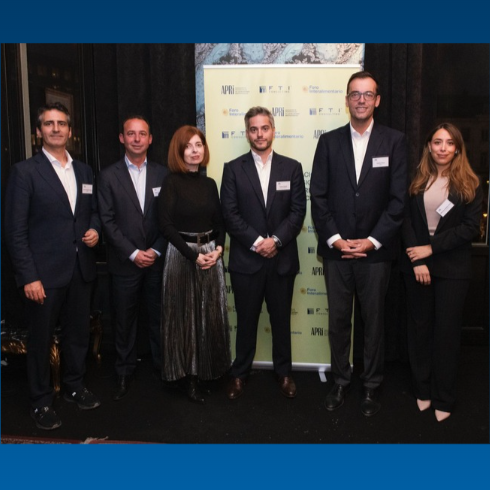
Our Public Affairs experts in Spain recently co-hosted an event with the Association of Institutional Relations Professionals (APRI) in Brussels. 

The event brought together parliamentary advisers from the European Parliament, MEPs and public affairs professionals for an evening of networking and connection-building.

View here >>

M&A in the Balance: An FTI Consulting and Politico survey

The increasingly polarized U.S. political environment and the flux of protectionist policies put the M&A market in a constant state of uncertainty. How does M&A fit into the new American political dynamic and what should business leaders do to successfully navigate the changing landscape?

Get the findings and insights from a new FTI Consulting and POLITICO Insiders survey.

View here >>

Upcoming Elections

  • 27 September: General election (Seychelles)
  • 11 October: Local elections (New Zealand)
  • 26 October: Legislative elections (Argentina) 

To be added to the distribution list for the Global PA Newswire, or for further information on the dedicated Public Affairs team at FTI, please contact [email protected].

The views expressed in this article are those of the author(s) and not necessarily the views of FTI Consulting, its management, its subsidiaries, its affiliates, or its other professionals.

©2025 FTI Consulting, Inc. All rights reserved. www.fticonsulting.com
Related Articles

4th Annual Shareholder Activism State of the Market

September 8, 2025—4th Annual Shareholder Activism State of the Market Request Report The 4th Annual Shareholder Activism State of the Mark...

Use It or Lose It: U.S. Hydrogen Industry Must Act To Maintain Momentum

July 12, 2025—Key takeaway: Following the passage of the “One Big Beautiful Bill Act”, time is of the essence for hydrogen produce...

Quick Analysis: ‘One Big Beautiful Bill’ Drives More Gas and Batteries, Less Renewables

July 3, 2025—With the recent passage of the “One Big Beautiful Bill” (“OBBB” or the “Legislation”),[1] FTI Consulting’s...

FTI Consulting Appoints Dilip Kejriwal as Managing Director in Capital Markets Practice

July 6, 2026—London, 6 July 2026 — FTI Consulting, Inc. (NYSE: FCN) today announced the appointment of Dilip Kejriwal as a Managing...

FTI Consulting News Bytes – 3 July 2026

July 3, 2026—FTI Consulting News Bytes This week’s TMT headlines draw attention to several dominant themes across the sector with A...

FTI Consulting UK Public Affairs Snapshot – The Defence Investment Plan – ‘A DIP into the unknown’

July 3, 2026—Autumn 2025. That was supposed to be the date when the Defence Investment Plan (DIP) would detail how the Ministry of De...