Public & Government Affairs

Global Public Affairs Newswire – 21 March 2025

Welcome to the latest instalment of FTI Consulting’s fortnightly Global Public Affairs Newswire.

This week, we bring you updates from FTI Public Affairs teams across the world’s major markets, including the United States, China, the United Kingdom, South Africa, Brazil, Singapore, France,  Colombia, Spain and Malaysia. This week’s update also brings readers market insights from FTI Public Affairs experts from around the world, explaining what these updates mean for your business. 

Market updates

Trump remains popular, moving ahead with domestic and foreign agenda

Continuing resolution, continuing friction: The Senate joined the House in passing a vote allowing Congress to fund the government until a full budget can be debated and passed, presumably later this year.  For procedural reasons, the “continuing resolution” needed support from Democrats in the Senate, or funding for the government would cease almost immediately resulting a government shutdown. Democratic support was led by Senator Charles Schumer (D-NY), the upper chamber’s minority leader. The reaction from his party’s base was immediate and harsh, many calling for his ouster for supporting a bill interpreted as support for the Trump agenda. The controversy was another reminder of the continuing friction within the Democratic Party, still seemingly rudderless five months after the general election.  

About that soft landing: Citing that economic uncertainty was “unusually elevated”, Federal Reserve Chair Jerome Powell announced this week that it would keep the tax rate at the current rate. Widely (and correctly) interpreted as a comment directed at President Trump’s trade policies, the president went to his social media feed to denounce the decision as harmful to U.S. economy. Still, the Federal Reserve is expected to cut rates twice more before the end of the year.  

Remember, it’s a long-distance call:  Within a week of the scuttled meeting of President Trump and President Zelenskyy in Washington, work resumed towards a negotiated settlement in the crisis in Ukraine. This week, President Trump held separate calls with President Putin (two hours!) and President Zelenskyy, resulting in an agreed and partial cease-fire in the conflict.  

Paging Andrew Jackson: Controversy erupted this week as a federal judge ordered that a Trump administration-directed outbound flight of detained immigrants be returned to the United States for due process. The Trump administration argued that the order was not issued in time and could be ignored. This tension between the judicial and executive branches was escalated by Republican members of Congress joining President Trump in calling for the impeachment of several federal judges seen as antagonistic to the Trump agenda. Supreme Court Chief Justice John Roberts weighed in with a rare public statement to rebuke calls for impeachment as outside the constitutional norm.  

And look, new polls!: In a recent NBC News poll, President Trump received his highest approval rating ever among registered voters (47%). Furthermore, more Americans feel positive about the direction of the country since at any point since 2004. The president’s approval ratings are buoyed by strong support from Republicans as well as his handling of border security. Concerns still linger about the health and prospects of the U.S. economy, however, with 18% saying the economy is “strong” or “good”. President Trump’s numbers for handling the economy are slightly lower than his overall approval ratings.

"President Trump continues to pursue his America First policies, using his executive authorities and barreling through the courts and the Congress. And so far, Americans are generally supportive of the change Trump is leading.”

Jackson Dunn
Head of Public Affairs, Americas
For more information about FTI’s Public Affairs services in the Americas, please contact [email protected].

China prioritizes domestic consumption and tech self-reliance with a calculated balancing act in foreign strategy during the Two Sessions

China’s Two Sessions refers to the annual plenary meetings of China’s National People’s Congress (NPC) and the Chinese People’s Political Consultative Conference (CPPCC), the country’s top legislative body and political advisory body, respectively. As one of the most important political events in the country, China’s 2025 Two Sessions reaffirm stability, strategic recalibration, and controlled openness. Below are the major points that can help shed light on the event – 

  • Economy: Stability remains China’s primary theme in 2025, which is signaled by its goals, including a 5% GDP growth. In order to maintain the growth momentum amid growing external pressures, China has adopted a more proactive fiscal policy to help ease local government debt and stabilize the property market while boosting domestic demand via consumption and effective investment.
  • Foreign Affairs: The “One China” principle is the bottom line that cannot be challenged. Despite Chinese leadership downplaying the implications of the recent U.S. tariffs, China-Europe relations may see recalibration as Beijing seeks stronger economic ties amid shifting U.S. priorities. In addition, China’s continuous commitment to the Global South showcases its entrenched attitude to stand with the developing economies.
  • Technology: China is eager to build a modern industrial system driven by innovation and foster technology self-reliance, especially in key strategic sectors such as integrated circuits, AI, and quantum tech. In the meantime, long-term capital is introduced to inject into the capital market to support technology innovation as well.
  • Market: A supply-side structural reform is likely to sustain as China is calling on the market to remedy “involutionary competition,” which could end low-price competition and further nurture innovations. Furthermore, policymakers also send a positive signal by opening up the previously strictly regulated sectors, namely internet, telecoms, and healthcare, to foreign investment.
  • Sustainability: China has gradually developed a more comprehensive sustainability framework to assist with the country’s green transition. There is an increasing focus on ecological compensation and biodiversity on the government’s agenda, while carbon and pollution reduction are still under the spotlight.

Detailed measures and implementation plans inheriting the principles and priorities from the Two Sessions, such as the Special Action Plan to Boost Consumption and the 2025 Action Plan for Stabilizing Foreign Investment, have been rolled out prior to and after the event.

"For businesses, China’s 2025 Two Sessions reaffirm stability as the central priority—anchoring both economic and social resilience while shaping new pathways for growth. Alongside this, the emphasis on patient capital highlights China’s long-term approach to investment, where sustainability, gradual market reforms, and strategic sectoral development take precedence over short-term volatility. At the same time, the shift toward technological self-sufficiency—driven by shifting geopolitical realities—presents both a challenge and an opportunity for international businesses. While competition in core technologies intensifies, foreign companies that align with China’s long-term economic vision and leverage policy incentives will find themselves well-positioned in this evolving landscape."
Rachel Hsueh
Head of Strategic Communications, China

For more information about FTI’s Public Affairs services in China, please contact [email protected]

UK forges ahead with anti-regulation drive

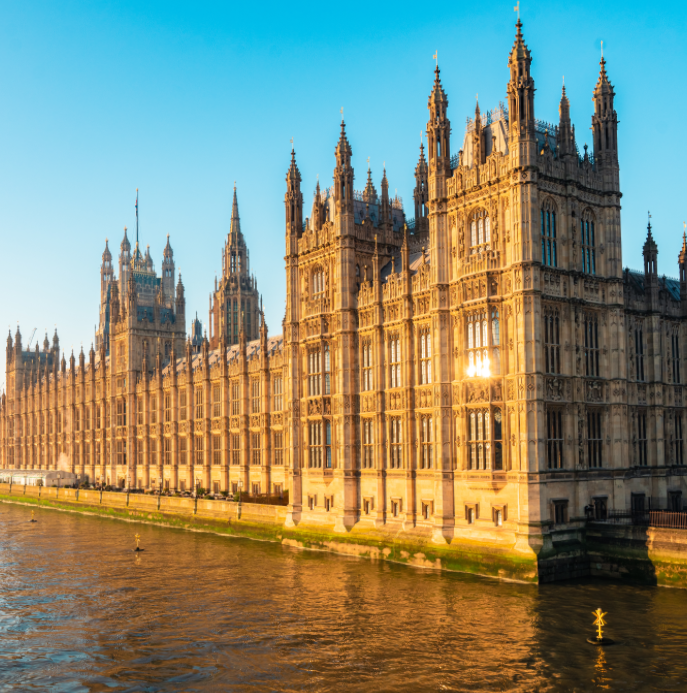
The United Kingdom is undergoing a deregulatory movement across all major sectors, as part of the Government’s wider efforts to boost growth. This week, HM Treasury published a ‘Regulatory Action Plan’, with a headline pledge to reduce the administrative costs for businesses by 25% by the end of the Parliament. This involves a focus on streamlining regulatory processes, promoting innovation, and ensuring regulators are accountable and responsive to the needs of business.  
 
The goal, to make Britain the best place to do business and drive economic growth, will be facilitated by 60 major measures from current regulators, all designed to streamline, cut red tape, and decrease complexity in the current regulatory system. Sectors including financial services, healthcare and life sciences, planning and infrastructure, and energy can expect a sleuth of consultations and calls to evidence as the regulators consolidate their deregulatory plans, with government departments and regulators alike eager to hear views from businesses on how they can make the UK a more attractive investment destination.   
 
The Regulatory Action Plan follows last week’s announcement that the Payment Systems Regulator (PSR) will be abolished and consolidated into the Financial Conduct Authority (FCA), and NHS England, “the world’s largest quango”, will be scrapped and brought under direct control of the Department of Health and Social Care. The question however remains as to whether these reforms will lead to tangible benefits for businesses, many of whom are still recovering from the Chancellor of the Exchequer’s last fiscal statement which saw an increase in National Insurance Contributions for employers. In keeping with many of the Government’s recent announcements, industry is questioning if the proposals will turn Labour’s Plan for Change into action, and how soon we can expect to see these announcements implemented across the different sectors.

"The Government’s move to ensure a more favourable regulatory environment has certainly been welcomed by businesses across all sectors. However, industry will now be watching closely to see how these changes will be implemented. As with all regulatory debates, the devil is in the detail, and without sufficient certainty, the UK may find that businesses seek to invest elsewhere. In order to remain internationally competitive, and encourage growth domestically, the Government must be clear in its next steps, and industry in turn clear with the Government on its preferred direction of travel, as these reforms are rolled out.”
Alex Deane
Head of Public Affairs, United Kingdom

For more information about FTI’s Public Affairs services in the United Kingdom, please contact [email protected]

South Africa strengthens ties with strategic allies amid growing US tensions

On the 13th of March, South African President, Cyril Ramaphosa hosted the President of the European Council, António Costa, together with European Commission President Ursula von der Leyen for the 8th South Africa-European Union (EU) Summit. The Summit comes at pivotal juncture as South Africa hosts the 2025 G20 Presidency while also experiencing a diplomatic fall-out with the United States (US), which snubbed South Africa by not attending both the Foreign Ministers and Finance Ministers and Central Banks Governors’ Meetings due to South Africa’s G20 Presidency theme, “Solidarity, Equality, Sustainability”, which has interestingly been supported by EU partners. Over the past few months, the US has become increasingly critical of South Africa due to its land reform through its Land Expropriation Act, its International Court of Justice (ICJ) case against Israel, and its close relations with China, Russia and Iran.

The SA-EU Summit marked a significant shift in trade and investment relations, with the EU committing a €4.7 billion (R90 billion) investment package to support South Africa’s green energy transition, infrastructure, and vaccine production, while President Trump has halted aid to South Africa’s ailing health care system and withdrew from the Just Energy Transition Partnership (JETP), to which it had initially pledged more than $1.5-billion of grant and commercial funding. A key outcome of the Summit was the launch of negotiations for a Clean Trade and Investment Partnership, focusing on sustainable value chains, regulatory cooperation, and exports of low-carbon products. The summit also reinforced multilateralism, United Nations (UN) reforms, and global governance cooperation, aligning South Africa and the EU on global diplomatic issues. 


"The recalibration of South Africa’s bilateral engagement with the European Union is unfolding against the backdrop of a markedly volatile and rapidly evolving geopolitical landscape. While the United States remains an indispensable economic and strategic partner, the EU’s backing serves as a critical diversification of South Africa’s geopolitical alignments. Additionally, this strengthened EU engagement amplifies South Africa’s multilateral influence, positioning the country as a pivotal player within global governance structures such as the United Nations and the G20.

With the US, the South African government has adopted a measured and strategically patient posture, prioritising the restoration of constructive relations through a calibrated diplomatic process rather than rushed, public responses. This approach reflects both confidence in South Africa’s international standing and a sober recognition of the enduring importance of balanced, diversified global partnerships in securing the country’s long-term economic and political interests”.

With the US, the South African government has adopted a measured and strategically patient posture, prioritising the restoration of constructive relations through a calibrated diplomatic process rather than rushed, public responses. This approach reflects both confidence in South Africa’s international standing and a sober recognition of the enduring importance of balanced, diversified global partnerships in securing the country’s long-term economic and political interests.”

Deerah Pillay Lungoomiah
Senior Director, South Africa

For more information about FTI’s Public Affairs services in South Africa, please contact [email protected]

Lula’s political crossroads: seeking stability with no clear agenda

As Brazil moves closer to the 2026 presidential election, the political landscape is becoming increasingly unpredictable. The current government faces rising inflation, increasing food prices, and declining approval ratings as President Lula decides if he will remain the main figurehead for the Left and run for office once again. In response, the administration is pushing for quick legislative wins, with the tax reform emerging as a critical battleground. Internal disagreements within Lula’s Workers’ Party (PT) over economic policy and internal elections, further complicate these efforts. Adding to the complexity, a 25% tariff on all Brazilian steel and aluminum imports to the United States came into effect on March 12th. While the overall economic impact of this measure may be limited, the United States is now targeting other products such as ethanol, further heightening tensions in bilateral relations and adding another layer of strain to the President’s agenda. 
 
Meanwhile, the right-wing opposition is struggling to find a clear presidential candidate for 2026. Former President Bolsonaro remains a significant figure but is currently ineligible to run until 2030 after a ruling by the Superior Electoral Tribunal. A recent pro-Bolsonaro rally on Copacabana beach, which aimed to advocate for amnesty for those arrested after the events of January 8th—viewed by some as a riot and by others as an attempted coup—had low attendance, reflecting the opposition’s current challenges. Although São Paulo Governor Tarcísio de Freitas is emerging as a potential alternative candidate, and is gaining public support, the situation remains complex, as Bolsonaro has not officially endorsed him or signaled willingness to pass on his political leadership. For now, it seems unlikely that the right will unite around a single new figure. 
 
With both major political forces facing uncertainties, the coalition of centrist parties known as the “Centrão” is increasing its influence as the government relies on them to pass legislation. This dependency may lead to more policy fragmentation, as the government makes concessions to secure legislative victories. Although the administration has successfully passed tax reform, its focus has shifted to regulating its implementation, with little political capital left for broader structural reforms. For businesses, this means navigating a largely stagnant reform agenda while remaining alert for possible abrupt regulatory changes driven by political pressure.

“As the government grapples with rising inflation, a fragmented policy environment and fiscal pressures, Brazil's uncertain environment offers opportunities for businesses with greater appetite for risks. The administration's popularity crisis may result in a stalled legislative agenda while also prompting sudden regulatory changes aimed at securing quick public approval. To stay ahead, companies should closely monitor legislative and regulatory developments and be prepared to adapt quickly.”

Raquel Rocha
Senior Director, Brazil

For more information about FTI’s Public Affairs services in Brazil, please contact [email protected]

Road to 2025 general elections

Although yet to be called, the race ahead of Singapore’s upcoming general election is beginning to heat up. The latest electoral boundary changes, announced on 11 March, will see 97 MPs elected, up from 93 in 2020. Some observers accuse the ruling People’s Action Party (PAP), which suffered its worst ever result at the last general election in 2020, of gerrymandering. Adding to the intrigue, two senior civil servants have resigned, sparking speculation they may run under the PAP banner. 

The opposition Progress Singapore Party (PSP), which narrowly lost West Coast GRC in 2020, argues that boundary changes will make it harder for rival parties to enter Parliament. West Coast has now been merged with Jurong, a PAP stronghold where now-President Tharman Shanmugaratnam served as MP for over two decades. The former West Coast GRC saw a tight 51.69% PAP win, led by then-Transport Minister S. Iswaran, who later pleaded guilty to “accepting gifts” as a public servant and resigned from the Government in one of Singapore’s biggest ever political corruption scandals.  
 
The Workers’ Party (WP), Singapore’s main opposition party, has yet to reveal its strategy. WP leader Pritam Singh was recently fined $7,000 for lying under oath in Parliament, casting uncertainty over the party’s prospects. While he remains eligible to run in the election as WP’s secretary-general and Leader of the Opposition, the case has cast a shadow over the party ahead of the election. Whether it affects public confidence in WP remains to be seen.

“This election, due by November 2025, is a key test for new Prime Minister Lawrence Wong’s leadership. The PAP, in power for 66 years, is likely to campaign on its stewardship of the economy and steady governance amid global uncertainty and geopolitical tension. With speculation mounting as to when an election may take place, these changes suggest that although the PAP is almost certain to win this year’s election, the governing party is nonetheless concerned by the prospects of Singapore’s opposition parties."

Rachel Yeo
Director, Singapore

For more information about FTI’s Public Affairs services in Singapore, please contact [email protected].

Defence financing on top of the French political agenda

Since President Macron’s televised address on March 5, where he pledged to boost defence spending without raising taxes, the French government has been seeking viable solutions. France is already in a precarious fiscal situation, with the highest budget deficit in the EU for 2024 and the highest tax-to-GDP ratio in the OECD.

To meet its defence commitments, the government is looking to mobilize both public and private resources. A key initiative involves tapping into French savings. Initially, Finance Minister Éric Lombard suggested redirecting funds from the Livret A savings account, which traditionally supports social housing and public infrastructure, to help finance defence spending. 

However, Lombard announced on 20 March  in a meeting alongside Defence Minister Sebastien Lecornu and key finance and defence stakeholders that this would not be the case. Instead, a new investment product will be created, allowing French citizens to become “indirect shareholders” of defence companies with a minimum investment of 500 euros. The product, offered through Bpifrance, the public investment bank, aims to encourage long-term investments for France’s rearmament strategy. Lombard emphasized that this product would provide “good returns”.

While 70% of French citizens agree that defence should be a budgetary priority, fewer than half are willing to invest their savings in a dedicated defence fund. Support for using Livret A funds stands at 47%, but only if returns remain unchanged, while 43% oppose the idea outright. This opposition might explain the government’s decision to create a new product.

For its part, the French Banking Federation (FBF) reaffirmed its support for the defence sector on March 18, stating that French banks currently provide €37 billion in financing, with a significant increase since 2021. The FBF maintains that banks are prepared to work with industry and public authorities to strengthen financial backing and address sector-wide challenges.

“With limited fiscal space, France must rely on private funding to meet its defence commitments. The speed at which the government has moved since Macron’s address highlights the perceived urgency of strengthening national security, especially in light of what is considered to be a disengagement from Europe by the Trump administration. However, the government’s decision to abandon the idea of repurposing Livret A funds for defence, which would likely have faced strong opposition, demonstrates the complicated situation the government finds itself in. While politicians push for a boost in defence spending, it remains unclear to what extent the French and European public are ready to make sacrifices to achieve this goal"

Augustin Gosset
Senior Director, France

For more information about FTI’s Public Affairs services in France, please contact [email protected]

Petro Government’s labor reform collapses: the beginning of the end in the Congress-Government relationship

On March 18, in a move that marks a turning point in the relationship between Congress and the Government, the labour reform proposed by Gustavo Petro’s administration was shelved. The initiative, designed to transform the regulatory framework and nation’s labour conditions, sought to enhance worker protection. From its announcement, the proposal generated polarized reactions: while union sectors applauded measures such as a 100% surcharge for work on Sundays and public holidays, along with modifications to the night shift, various business associations welcomed the shelving of the reform, arguing that it would have eliminated approximately 452,000 jobs by adversely affecting job creation and increasing operating costs amid mounting economic pressures. 
 
President Petro defended the measure, emphasizing that its objective was to improve labor rights and provide greater guarantees to workers. In this regard, he announced an upcoming popular consultation in which citizens will decide on both this reform and the complementary health reform. Simultaneously, on March 18, during a Civic Day marked by marches in support of union initiatives, the Government unilaterally advanced its agenda by issuing nine regulatory decrees. These decrees target crucial aspects such as union protection, the consolidation of collective bargaining, and the strengthening of labor intermediation. 
 
This evolving climate surrounding national labor issues and the shelving of the reform could signal the beginning of the end of the strained relationship between Congress and the Executive, increasingly exposing the legislature’s opposition to the government and the obstruction of its initiatives. At the same time, it is seen as the prelude to the 2026 pre-campaign period, reflecting the deep mistrust that both Congress and the country’s business associations harbour regarding the administration’s fiscal and regulatory management. Critics suggest that, rather than fostering a stable investment ecosystem, the government’s policies may negatively impact business development.

"The shelving of the labor reform marks a turning point in the relationship between Congress and the Executive, with direct implications for the country’s institutional and regulatory climate. While the Government maintains that its initiatives aim to expand labor protections, the growing mistrust between branches of power and key economic sectors reflects deeper structural tensions that may influence regulatory stability and the quality of democratic dialogue in the years ahead."

Juliana Gómez
Head of Public Affairs, Colombia

For more information about FTI’s Public Affairs services in Spain, please contact [email protected].

Spain’s economic resilience amid global slowdown

Spain continues to stand out as one of the eurozone’s fastest-growing economies, emerging as a beacon of resilience and growth amid global economic uncertainty.  The Bank of Spain has revised its 2025 GDP growth forecast upward to 2.7%, attributing this positive adjustment to robust private consumption and a strong labor market. The Organization for Economic Co-operation and Development (OECD) echoes this optimism, forecasting a 2.6% GDP growth for Spain in 2025.

This momentum sets Spain among the top performers in the eurozone, particularly as the OECD has revised growth forecasts downward for several G20 countries due to escalating trade tensions and higher tariffs. While major eurozone economies like France, Germany, and Italy anticipate growth rates around or below 1%, Spain’s steady expansion places it among the region’s top economic performers.

Several factors contribute to Spain’s economic strength. The resilience of domestic consumption, a thriving tourism sector, and dynamic technological and industrial sectors play pivotal roles. Additionally, increasing foreign investment highlights Spain’s appeal as a prime business destination.

"Spain's consistent growth trajectory amidst a global slowdown presents a compelling case for businesses and investors considering opportunities in the region. For companies navigating uncertainty, Spain’s steady expansion offers a stable and strategic entry point. Now is the time for businesses to evaluate how they can leverage this momentum."

Carlos Ochoa
Head of Public Affairs, Spain

For more information about FTI’s Public Affairs services in Spain, please contact [email protected].

Government pre-empts potential US trade tariffs by diversifying exports, emphasizing ASEAN’s need for greater intra-regional trade

The Malaysian government is taking steps to mitigate the risk of US tariffs should pending negotiations to avoid them fail, given Malaysia’s trade surplus with the US, which totals USD24.8 billion. Deputy Minister of Investment, Trade & Industry (MITI) Liew Chin Tong has told Senate lawmakers that the Malaysian government is working to intensify exports to high-growth emerging markets across South Asia, the Middle East, Latin America, and Africa to further diversify Malaysia’s exports, though he did acknowledge that US tariffs would inevitably increase competition among domestic producers, if implemented. 

Meanwhile, MITI Minister Tengku Zafrul Abdul Aziz has called on ASEAN member states to ensure intra-regional trade “grows faster” and work towards deeper economic integration to “build economic resilience from within while remaining indispensable to global trade”. His statements follow lawmakers’ concerns of increased trade tensions in the Asia Pacific, as US President Trump in early March placed 20% tariffs on imports of Chinese electronics that were not subject to prior duties. Tengku Zafrul added that, simultaneously, ASEAN must “engage the US strategically, ensuring (Malaysia) remains an investment hub rather than a target of protectionist policies”.

"While Malaysia works to futureproof the country’s exports against intensifying geopolitical headwinds, of large concern will be protecting its semiconductor industry, which accounts for 13% of global trade. The stakes for Malaysia on this front are even higher, now that it has ambitions to transform itself from a key regional manufacturing and assembly hub to a major chip producer after signing a deal to pay UK chipmaker Arm USD250 million over ten years to allow Malaysian chip designers’ access to Arm’s semiconductor IP. Additionally, as ASEAN Chair, it will be key to monitor how Malaysia translates its rhetoric for ASEAN’s economic integration into policy, if the bloc is to truly leverage increased intra-regional trade to build economic resilience."

Kai Blaisdell
Managing Director, Singapore
For more information about FTI’s Public Affairs services in Malaysia, please contact [email protected].

Expert Analysis

From fringe to frontline: Navigating the rise of Reform UK

Love them or loathe them, Reform UK’s populist policies have successfully tapped into the concerns of many disillusioned voters. The past year has seen Reform emerge as a real player in British politics, with polls frequently placing them ahead of both Labour and the Conservatives.  

Read the latest snapshot from FTI Consulting’s UK Public Affairs team which examines Reform’s disruptive impact on Britain’s political landscape and the possible electoral implications.

Read here >>

The effect of Global Pressures on the Role of the General Counsel

If 2024 was the year of politics, 2025 is the year of policy. In 2025, more than ever, the success of a general counsel will not only be measured by capacity to mitigate risks, but also by the ability to turn global pressures into a strategic and tangible advantage.

Our Public Affairs experts emphasise why, in this new scenario, anticipation and global intelligence are no longer a luxury, but an imperative for business competitiveness.

Read here >>

How to Capture the Bi-partisan CCS Opportunity

Carbon capture and storage (CCS) has emerged as a critical technology for reducing emissions, particularly hard-to-electrify sectors like manufacturing, chemicals, and cement. The U.S. has been a leader in deploying CCS, and the technology has historically enjoyed strong bipartisan support.

To dig deeper, FTI Consulting conducted research across five U.S. states where CCS investment is occurring, in an effort to better understand the challenges and opportunities for CCS.

Read here >>

Notes from Strasbourg

Our Brussels colleagues went to Strasbourg last week to attend the 8th session in the 10th Legislature.

Take a look at their key takeaways from the session that covered the future of European defence, the EU’s strategy for the automotive industry and the commission’s proposal for a critical medicines act.


Read here >>

Upcoming Conferences, Elections and Webinars

  • 23 March: Snap regional election (Madeira, Portugal) 
  • 12 April: General election (Gabon) 
  • 13 April: Local elections (Finland) 
  • 27 April: State election (Vienna, Austria) 
  • 01 May: Local elections (United Kingdom) 
  • 04 May: Presidential election (Romania) 
  • 11 May: Parliamentary election (Albania) 
  • 11 May: Local elections (Uruguay) 
  • 12 May: General election (Philippines) 
  • 18 May: Presidential election (Poland) 
  • 25 May: Parliamentary elections (Venezuela) 
  • 25 May: General election (Suriname) 

To be added to the distribution list for the Global PA Newswire, or for further information on the dedicated Public Affairs team at FTI, please contact [email protected].

The views expressed in this article are those of the author(s) and not necessarily the views of FTI Consulting, its management, its subsidiaries, its affiliates, or its other professionals.

©2025 FTI Consulting, Inc. All rights reserved. www.fticonsulting.com

Related Articles

4th Annual Shareholder Activism State of the Market

September 8, 2025—4th Annual Shareholder Activism State of the Market Request Report The 4th Annual Shareholder Activism State of the Mark...

Use It or Lose It: U.S. Hydrogen Industry Must Act To Maintain Momentum

July 12, 2025—Key takeaway: Following the passage of the “One Big Beautiful Bill Act”, time is of the essence for hydrogen produce...

Quick Analysis: ‘One Big Beautiful Bill’ Drives More Gas and Batteries, Less Renewables

July 3, 2025—With the recent passage of the “One Big Beautiful Bill” (“OBBB” or the “Legislation”),[1] FTI Consulting’s...

Done Deal – Insights from our M&A and Activism team – June 2026

June 24, 2026—Insights from our M&A and Activism team Welcome to the latest installment of Done Deal. This month, Senior Consultan...

IR Monitor – 24 June 2026

June 24, 2026—In this week’s newsletter: The stories that investor relations professionals need to read this week: IR in Kazakhstan:...

Mehr als nur Zahlen: Social Media und die Kunst der Ergebniskommunikation

June 24, 2026—Social Media Monitor 2026: Eine Analyse der Nutzung von Social Media durch DAX-40-Unternehmen in der Finanzkommunikation...