Global Public Affairs Newswire – 18 October 2024
Welcome to the latest installment of FTI Consulting’s fortnightly Global Public Affairs Newswire. This week, we bring you the latest from the US Presidential Election where Kamala Harris sat for an interview on Fox News and Donald Trump attended an all-women town hall.
Additionally, we bring you our usual comprehensive market update, with analysis of the latest big public affairs developments across the world’s major markets. This week features updates covering developments in the EU, India, the UK, China, France, Brazil, Spain, the African Continental Free Trade Area, and Colombia.
Our global team are closely tracking the key votes and contests in this worldwide ‘Year of the Election’. In each edition of the Newswire, we look to dive into the upcoming implications, considerations, and opportunities for business.
Harris interviewed on Fox News: On Wednesday, Harris sat for an interview on Fox News with Bret Baier in the battleground state of Pennsylvania. The Vice President notably remarked that should she be elected, her presidency “would not be a continuation of Joe Biden’s presidency” – adding that she represents a “new generation of leadership”. Her remarks labelled Trump as “unfit to serve” and a threat to U.S. democracy. Ahead of the interview, the Harris campaign released a statement outlining: “The vice president, Governor Walz and our campaign believe it is important to speak to all Americans, wherever they are getting their information or entertainment, so they can hear directly from us — not through a filter…”
National polls tighten as Trump leads in swing state early voting: With three weeks to go until election day, Real Clear Polling averages of national polling indicate Vice President Kamala Harris is leading former President Donald Trump by just 1.6%, with wider polls indicating a dead tie between the two candidates. Trump is now leading Harris in all key battleground states aside from Wisconsin – albeit by razor tight margins. With early voting already starting, a new NBC News poll finds that 5% of registered voters said they have already cast their ballots in the 2024 presidential election – with the majority of which voted for Harris (57% to 40%). Similarly, a new Marist National poll found that Harris leads Trump by 5% among likely voters, including those who are undecided yet leaning toward a candidate.
Trump and Harris campaigns seek support from Black men: New York Times/Siena College polling has suggested that while an estimated 90% of Black men voted for President Joe Biden in 2020, 78% are planning to vote for Harris now, with 15% supporting former Trump. In response, both candidates have directed resources towards widening their appeal to Black male voters. While Trump appeared at the start of early voting in Georgia, Harris made a town hall appearance in Detroit with podcast host, Charlamagne tha God, and unveiled an “Opportunity Agenda for Black Men”, which calls for $20,000 in forgivable government loans for one million minorities to start businesses. This comes as Former President Barack Obama urged Black men to support Harris, stating that male voters were “coming up with all kinds of reasons and excuses” not to support a woman for president – remarks which were criticized by national press as a ploy which “could backfire”, according to The Washington Post.
Candidate medical records in the spotlight: Harris and Trump have both sought to paint each other as unfit for office on medical grounds this week. This follows Harris’ doctor releasing a summary of her medical history and status, which described her as being in “excellent health” and possessing “the physical and mental resiliency” required to serve as president. In response, the Trump campaign shared a statement saying that he is in “perfect and excellent health to be Commander in Chief”.
U.S. Elections Impact on Europe – Webinar Briefings
Leveraging our global platform, we are hosting a series of exclusive pre-Election Day briefings on the U.S. elections for European markets via webinar format between October 28 and 31.
Please join FTI Consulting’s Jackson Dunn, Head of Public Affairs Americas, Brent McGoldrick, Head of Digital, Analytics and Insights Americas , as well as Wells Griffith, a U.S.-based Managing Director in the Strategic Communications segment for the latest developments in the U.S. and what the impact may be on businesses and politics in Europe. Collectively, they have over 50 years’ experience working in U.S. political and public affairs arenas, including working on numerous U.S. presidential campaigns and at the White House for both Democrat and Republican Presidents. They will be joined by FTI Consulting’s political experts from each market.
The geography-focused briefings will be delivered in webinar formats at the following times:
- UK: Monday, October 28, 1-2pm UK / 9-10am ET
- Brussels: Monday, October 28, 4-5pm Brussels
- France: Tuesday, October 29, 2-3pm France / 9-10am ET
- Germany: Wednesday, October 30, 4-5pm CET / 11am-noon ET
- Spain: Thursday, October 31, 5-6pm CET / Noon-1pm ET
Market updates

On 17 and 18 October, EU leaders met at the European Council in Brussels to focus on several key issues. In the presence of Ukrainian President Volodymyr Zelenskyy, they reaffirmed their strong support for Ukraine, pledging continued political, financial, and military aid, including the accelerated delivery of defence systems and ammunition. The Council also emphasized sanctions enforcement and Ukraine’s energy security.
Regarding the Middle East, EU leaders expressed deep concern over the escalating violence, condemned Hamas’ actions, and supported Israel’s right to self-defence. They called for an immediate ceasefire, the release of hostages, and increased humanitarian aid for Gaza.
On competitiveness, the Council reviewed strategies to enhance the EU’s economic resilience and progress toward the 2024-2029 Strategic Agenda, with further discussions planned for an informal meeting in Budapest. Lastly, in preparation for the COP29 climate conference, the Council reaffirmed its commitment to ambitious global climate action, focusing on climate change, biodiversity loss, and pollution.

In a sharp escalation of tensions, Canada has expelled India’s top diplomat in Ottawa and five others, saying they were involved in an assassination. India reciprocated, expelling six Canadian diplomats including their top diplomat in New Delhi.
Canada accused the Indian government of trying to silence critics of India living in Canada. Diplomatic relations plunged after prime minister Trudeau said last year that there were “credible” links between Indian agents and the killing of Canadian citizen Hardeep Singh Nijjar, a prominent Sikh cleric whom India had accused of leading a secessionist movement that seeks to carve a Sikh homeland known as Khalistan out of India. This development raises concerns about the impact on bilateral business engagements, including Canadian pension fund investments worth $75 billion in India, trade negotiations, and remittance inflows.
India and Canada have enjoyed a strong relationship with robust trade ties, a commitment to democratic principles, and commercial relations in sectors such as technology, agriculture, and renewable energy. Though bilateral trade with Canada accounts for just 0.7% of India’s total trade, Canada is of the top 10 sources of remittances in India, and Indian students make up nearly 40% of Canada’s international students. A concern for New Delhi is the potential closure of Canadian consulates in India, which would lead to visa delays and frustrate Indian students and diaspora traveling between the two countries.
Like several Western nations, India has attempted to reduce dependence on China and pursue closer economic integration with others—and is actively seeking to negotiate free trade agreements with multiple economic blocs and countries, including the EU and the UK.

On October 14, the UK’s new Labour Government held its first International Investment Summit, which took place in the Guildhall, in the City of London. The summit, which hosted over 200 business leaders, with combined assets worth over £40 trillion, has raised a total of £63 billion of investment into the UK with nearly 38,000 UK jobs set to be created, according to a Government press release.
Prime Minister Sir Keir Starmer opened the Summit with a keynote address, stating that he would do everything in his power to “galvanise growth” and deliver Labour’s mandate for change. Sitting in stark comparison to the PM’s wary Downing Street rose garden speech in August where he told the general public that “things will get worse before we get better”, today’s keynote was upbeat and hopeful of the opportunities to come, telling business leaders that “it’s time to back Britain”. Starmer set out the Government’s four key focuses for ensuring investor confidence in Britain: stability, strategy, Britain’s global standing and regulation. On regulation, the Prime Minister vowed to “upgrade the regulatory regime to make it fit for the modern age” and no longer hold back investments in key infrastructure projects such as housing, grid connectors and data centres. Addressing concerns over the Government’s labour market policies introduced last week, the PM stated that these were “pro-growth” policies, which would benefit workers, businesses, and the country.
Speaking at the conclusion of the summit after a series of private breakout sessions with ministers and guests, the Chancellor of the Exchequer closed the Summit with a keynote speech, setting out how the National Wealth Fund, (which will be operated by the UK Infrastructure Bank and given a broader mandate than infrastructure) and the British Growth Partnership (acting as part of the British Business Bank) will drive long term investment in Britain. Crucially, the investment figures announced today will allow the Chancellor further fiscal headroom in the lead-up to the much anticipated Autumn Budget taking place on October 30, which she stated will have restoring fiscal stability at its centre. Writing for the Sunday Times ahead of the summit, Reeves stated that “if growth is the challenge, investment is the solution” and vowed to “lead as a pro-business government”.
Published by the State Council on September 30 and expected to be effective from January 01 2025, the Network Data Security Management Regulations is one of the most important regulatory updates on cybersecurity following the Three Laws governing China’s cyberspace (the Cybersecurity Law, the Data Protection Law, and the Personal Information Protection Law) and the Provisions to promote and regulate cross-border data flows.
The regulations ease some rules proposed in the previous drafts but in general raise the compliance requirement with the introduction of “Gatekeeper” provisions, specifically applying to “large-scale network platforms”, as the similar provisions in the EU’s Digital Market Act. The regulations cover cybersecurity, data protection, personal information protection (including privacy), platform regulation, and improvement in regulatory supervision, by reiterating the general rules on network data security management from existing legislation, stressing the protection of important data and personal information, harmonizing the differences among existing cyber rules therefore enhancing its compatibility with them, and simplifying regulatory requirement for corporate compliance.
One particular change that may benefit many corporates is that the regulations greenlight personal data cross-border data transfer on the ground of “performing statutory duties or obligations”, which may ease compliance burdens to some extent, depending on each company’s specific business model and the nature of the cross-border data transfer. Given the regulations’ significance and how they crosscut with the existing cyberspace governance, a reassessment of internal compliance procedures based on the regulations may be necessary to see if any changes or improvements will be required.

Michel Barnier, recently appointed as France’s Prime Minister amid a fiscal and political crisis, announced his new government’s formation on September 21. His cabinet includes members from the conservative right to the centre-left and has garnered support from the three main parties in the presidential coalition, along with the Republican Right parliamentary group.
In his much-anticipated address on October 1, Barnier outlined his government’s key priorities, including plans to reduce the budget deficit to 5% by 2025 and 3% by 2029. He proposed a strategy that combines public spending cuts, enhanced efficiency, and temporary tax increases on corporations and high-income earners. Additionally, he pledged to strengthen security and immigration measures, expressed a willingness to revisit the controversial 2023 pension reform, and indicated interest in reforming the voting system. Following his speech, Barnier faced a no-confidence vote from the left-wing alliance, the New Popular Front. This failed due to the far-right National Rally’s decision not to vote down the government. The far-right party now holds a pivotal position in the lower house of Parliament, meaning Barnier’s government will require their tacit approval to survive any future no-confidence votes.
On October 11, the government presented its 2025 Draft Budget Bill, which proposed €60 billion in savings. The draft bill has faced criticism across the political spectrum, including from members within Barnier’s coalition. The left condemned the spending cuts and advocated for more substantial tax hikes, while the centrist presidential party, Together for the Republic, Barnier’s primary backer in the National Assembly, criticised what they viewed as excessive tax measures. The far-right also voiced objections to the various tax proposals and presented their own “counter-budget.”
Lawmakers began debating Barnier’s high-stakes budget bill on October 16, with over 1,700 amendments already proposed. The legislative process is expected to continue until mid-December. Without a majority in the National Assembly, Barnier may need to invoke special constitutional powers to push the bill through parliament without a vote, a move that would trigger another no-confidence vote against his government.

In recent days, Brazil’s largest city São Paulo faced a major blackout caused by a severe storm on Friday, October 11. With winds reaching 107 km/h, the storm caused widespread damage, toppling trees and walls, and disrupting the electrical grid in several areas. Seven deaths were reported, and over 1.6 million homes were left without power. According to the São Paulo State Federation of Commerce (FecomercioSP), the retail and service sectors suffered losses amounting to R$ 1.65 billion, while power supply continuous to affect more than 90,000 locations 5 days in.
The scale of the damage and delays in restoring power led to widespread criticism of Enel, the company managing the city’s energy system. The federal government and the Office of the Comptroller General stated that the Italian company had failed, calling the repeated outages in the city of 11.5 million people “unacceptable.” The government also announced plans to take legal action against the company to ensure compensation for the blackout’s damages. Authorities argue that Enel did not make the necessary improvements and investments to prevent power supply disruptions, which had already occurred in November 2023 and March this year, and has also made cuts to its personnel.
The blackout has not only intensified scrutiny of regulatory agencies, such as the launch of an audit into the National Electric Energy Agency (Aneel), but also fueled a political debate about the country’s concession model. Under Decree 12.068/24, issued by the federal government in June, Aneel is required to finalize by February 2025 a new contract model for energy concession renewals starting next year. This measure could affect around 20 companies with expiring contracts and aims to modernize the concession model by introducing new quality and efficiency targets, along with mechanisms to cancel concessions if these indicators are not met. Companies looking to operate in Brazil should closely monitor this process, as the São Paulo blackout may accelerate discussions on concession model reforms and increase government oversight of the sector, making it clear that constituents should question such model if there is no quality of service being offered.

The Spanish government has submitted the Fiscal and Structural Plan to the European Commission, in line with compliance with the European Union’s (EU) new economic and fiscal governance framework. This four-year plan commits to an average growth in public spending of 3.4% over the next four years and 3% per year from 2025 to 2031.
In order to assume this economic growth forecast, the plan must be accompanied by the update and approval of the general state budget, which must be negotiated and passed each year in the Spanish parliament. Failure to achieve approval runs the risk of the budget plan collapsing, which would open up different scenarios such as the prorogation of the previous year’s budgets and generating instability for the future of the government. This would imply limitations on new investments, economic uncertainty, and the inability to approve associated policies, and would therefore jeopardize the fulfillment of the commitments made to the EU.
In any case, the Spanish government does not have a sufficient parliamentary majority to secure the 2025 budget. While the main opposition party, the conservative People’s Party, and far-right party VOX have repeatedly shown their intention to vote against it, President Pedro Sánchez has been engaging in dialogue with all his possible parliamentary allies prior to the presentation of a draft budget. The goal is to ultimately reach a pact that will assure the budget’s passage through Parliament. This is no easy task, as this support will come in exchange of a series of demands from regional and nationalist parties, left-wing groups and his own government coalition members that will have to be accommodated.

The second edition of the African Continental Free Trade Area (AfCFTA) business forum, Biashara Afrika, took place in Kigali, Rwanda from 9 to 11 October. The AfCFTA aims to boost intra-Africa trade and turn the continent into the largest regional free-trade area. With a collective population size of 1.3 billion and estimated intra-Africa trade potential of $31.1bn, Rwandan President Paul Kagame shared the AfCFTA’s potential for homegrown solutions to Africa’s prosperity. AfCFTA Secretary-General, Mr. Wamkele Mene also shared his views on the role of the continent to uplift over 50 million persons out of poverty through trade. The event was supported by persons from across the continent and brought together a number of dignitaries, including the former President of Niger, and AfCFTA champion, H.E Mahamadou Issoufou, Prime Minster of Eswatini, Hon. Russel Dlamini, and Deputy Chairperson of the African Union H.E. Dr Monique Nasazabanganwa; major trade partners, and over 1000 participants from the private sector.
The AfCFTA has identified four priority value chain sectors: pharmaceuticals, automotive, agro-processing and transport and logistics, and has recently ratified the digital trade protocol aimed at creating a single digital market by 2030. The plenary sessions held under theme of these priority areas highlighted some of the key challenges for intra-Africa trade, namely inadequate freight and logistics corridors, the lack of interoperable payment systems, and need for harmonised customs rules. The AfCFTA Secretariate has worked to establish a number of protocols to harmonize Africa’s trade efforts, with the Digital Trade Protocol seen as “low hanging fruit” to accelerate trade under the AfCFTA. The AfCFTA Secretariate is now calling on African governments to ratify and adopt the protocols and for private sector to drive trade under the AfCFTA instruments.

Colombia has taken a new step in its foreign policy by joining China’s Belt and Road Initiative (BRI), commonly known as the “New Silk Road.” This global strategy aims to strengthen trade links through the development of land and maritime routes connecting Asia, Europe, Africa, and Latin America. With over 157 countries already participating, Colombia and Brazil were among the last Latin American nations outside the agreement. Following negotiations between the two governments, Colombia submitted a counterproposal, signaling a shift in the country’s stance toward this initiative and its relationship with China.
The BRI holds considerable importance for Colombia, as China is one of its major trading partners and investors in strategic projects. Joining the initiative is expected to boost foreign investment and drive the development of critical infrastructure, such as ports and railway connections, while deepening bilateral cooperation. However, reaching a consensus between the proposals of both governments is still necessary. Several Colombian government entities, including the Ministry of Trade and the Ministry of Finance, are actively involved in negotiations, yet certain issues remain unresolved.
Colombia’s involvement in the Belt and Road Initiative is poised to enhance foreign investment and infrastructure development while reinforcing its cooperation with China. Initially, Colombia approached this agreement cautiously, recognizing that it signifies a closer political alignment with China— as a historic partner of the United States in the region. This is particularly notable given Colombia’s long-standing strategic relationship with the U.S. in security and economic matters. Therefore, beyond fostering economic growth, this decision carries substantial geopolitical implications, heralding a new chapter in Colombia’s international relations.
Expert Analysis

Insights from Strasbourg Plenary
What were the main takeaways from the first October Strasbourg plenary? Our experts were on the ground – check out their top policy highlights!
International Investment Summit in the UK
At this week’s International Investment Summit, the UK Government announced £63bn of investment to grow the British economy. Read FTI Consulting’s analysis of how it happened, and the challenges remaining, ahead of the Budget in two weeks’ time.

Big Business Breakfast with FTI Senior Advisers
Last week, we hosted ‘The Big Business Breakfast’ panel event with our Senior Advisers, chaired by our EMEA Chair and UK Head of Strat Comms, John Waples.
The panel covered the changing landscape of politics, technology, media and the economy. We explored how new political leadership in the UK, EU and US could influence critical issues for big businesses – covering areas including health, education, trade and climate. Looking ahead to 2025, the backdrop for big business may be challenging, but there are more tailwinds than headwinds and more opportunities to engage with optimism.
Thank you to Patricia Hewitt, Graham McMillan, Rose Beaumont, and Martin Porter for such an insightful conversation.
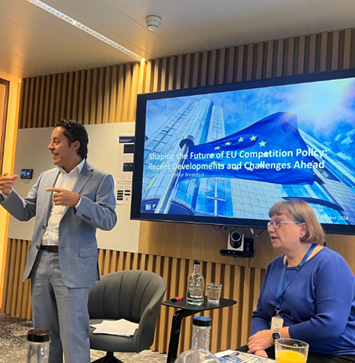
Shaping the Future of EU Competition Law
Last week our legal services team hosted a Competition Policy Breakfast with insightful discussions on the future of EU competition law and policy.
Our antitrust experts Anne MacGregor and Gerardo Proaño led a deep dive into key developments, from recent CJEU rulings to the implications of the Draghi Report. Together with our audience, we explored where the next five-year mandate under the new Commissioner for Competition might take us.
Stay tuned for our next event!
Upcoming Conferences, Elections and Webinars
- October 24: Parliamentary election (Uzbekistan)
- October 26: Parliamentary election (Georgia)
- October 27: Parliamentary election (Bulgaria)
- October 27: General election, first round (Uruguay)
- November 05: Presidential Election (US)
To be added to the distribution list for the Global PA Newswire, or for further information on the dedicated Public Affairs team at FTI, please contact [email protected]. |
The views expressed in this article are those of the author(s) and not necessarily the views of FTI Consulting, its management, its subsidiaries, its affiliates, or its other professionals.
©2024 FTI Consulting, Inc. All rights reserved. www.fticonsulting.com