Global Public Affairs Newswire – 12 June 2026

Welcome to the latest instalment of FTI Consulting’s fortnightly Global Public Affairs Newswire.
This week, we bring you updates from FTI Public Affairs teams across the world’s major markets, including the United States, the United Kingdom, India, Ireland, Brazil, China, Germany, South Africa, France, Colombia, Australia, Ghana, and the European Union and Spain. This week’s update also brings readers market insights from FTI Public Affairs experts from around the world, explaining what these updates mean for your business.
Market updates
- Is There Art to the Deal? Pressure mounts in Washington over the war with Iran as negotiators work to end the current fighting. President Trump’s resumption of kinetic strikes as well as Iranian retaliation have inflamed tensions and demonstrate how little President Trump controls the outcome in the short term. The domestic and global economic impacts of this conflict will continue to be President Trump’s most significant challenge and are quietly damaging the President’s standing inside the GOP as other Republican politicians are feeling the political heat.
- The Tariff Wall Takes Shape. The White House is moving quickly to outline its global trade architecture for the remainder of President Trump’s second term. The U.S. Trade Representative recently published the results of its Section 301 investigation into forced labor, a determination that suggests baseline tariffs of 10% to 12.5% on 60 U.S. trading partners. The U.S. is also expected to release the results of its investigation into global manufacturing overcapacity in the coming weeks. On the other side, new details about the U.S.-China Board of Trade show how the U.S. is looking to stabilize the relationship with China, with a significant mentality shift away from changing Chinese economic practices to a new strategy intended to selectively manage reciprocal economic flows.
- Loyalty Picks Could Have Global Implications. The White House has further strained relations with Congress by bypassing traditional confirmation processes to install Bill Pulte as acting Director of National Intelligence. In doing so, President Trump is making it clear that he seeks immediate, widespread personnel cuts within the intelligence community. Elsewhere across the government he is continuing to pick close political allies for key leadership roles, including through the nomination of former personal defense attorney Todd Blanche as U.S. Attorney General. As the Administration approaches the 2-and-a-half-year mark, there are rumors that Trump may begin recalling his thin slate of foreign Ambassadors for domestic leadership roles, further straining America’s ability to coordinate policy with key allies.
For more information about FTI’s Public Affairs services in the Americas, please contact [email protected].
- The UK’s Secretary of State for Defence, John Healey, resigned on Thursday, publishing a damning letter to Prime Minister Sir Keir Starmer in which he said that Starmer had been “unable, and the Treasury has been unwilling, to commit the resources that the nation needs to defend the country at this time of rising threats”. The Security Minister, Dan Jarvis, was announced as Healey’s successor on Thursday evening.
- The trigger for Healey’s resignation was the financial settlement presented to him on Monday for the long-delayed Defence Investment Plan (DIP), which he said “falls way short of what is required” and “could make the country less safe”. Citing the war with Iran, Russian threats in the High North and escalation in Ukraine, Healey said the settlement would force decisions that “reduce the readiness of our Forces and increase the risk to personnel on operations”.
- The resignation lands at an acute moment for Starmer, already likely to face a leadership challenge from Andy Burnham after the Makerfield by-election on 18 June. Conservative leader Kemi Badenoch accused Starmer of prioritising welfare over defence to appease his backbenchers, while praising Healey for having “done the honourable thing” by resigning, a sentiment echoed by Reform UK’s Robert Jenrick.
- For business, Healey’s departure is an indictment of the current state of the Defence Investment Plan and leaves an already troubled process for the Government in disarray. This resignation also injects further uncertainty into the next steps for UK’s defence procurement and industrial strategy at a time when contractors and investors await the DIP for clarity on the spending trajectory. A contested settlement, a vacancy at the top of the MoD, and the wider fiscal squeeze together raise the risk of even further delay and revision across major programmes. A contested settlement, a new Defence Secretary, and the wider fiscal squeeze together raise the risk of even further delay and revision across major programmes.
For more information about FTI’s Public Affairs services in the United Kingdom, please contact [email protected].
- India’s power regulator has introduced revised grid discipline rules under the Deviation Settlement Mechanism (DSM), increasing financial penalties when electricity supply deviates from scheduled levels to strengthen grid security. The revised norms narrow tolerance bands from 10% to 5% for solar projects and from 15% to 10% for wind projects. Industry estimates suggest the revised DSM could reduce revenues by up to 11% for solar projects and 48% for wind projects, with industry associations escalating concerns with the Prime Minister’s Office. The revised penalty regime, initially scheduled for April 2026, has been deferred by a year to April 2027 following requests for further consultation. Separately, the regulator has proposed DSM rules for battery storage, pumped storage, hybrid, and future renewable energy projects.
- While the revised DSM framework has raised concerns about the viability of some wind and solar projects, it could also accelerate investment in renewable-plus-storage and hybrid projects that are better positioned to manage deviation risks. The changes may also support co-located renewable and data center campuses that reduce dependence on grid scheduling. Demand for such arrangements could grow as India’s data center market is projected to expand from approximately US$10 billion today to US$21 billion by 2031.
- For investors, the regulatory changes highlight a broader shift in India’s power market toward greater emphasis on dispatchability, forecasting accuracy, and integrated energy infrastructure. As of March, India had 288 GW of non-fossil fuel capacity, with wind and solar accounting for 73% of the total. The dispute over the revised rules highlights the challenge of balancing grid stability and investor confidence as India works toward its target of 500 GW of non-fossil fuel capacity by 2030.
For more information about FTI’s Public Affairs services in India, please contact [email protected].
- As Ireland prepares to assume the Presidency of the Council of the European Union on 1 July 2026, the Department of Foreign Affairs and Trade on 10 June published its official programme, setting out an ambitious and delivery-focused agenda for its six-month term. Guided by the principle of “strength with unity,” the programme is structured around three core priorities: competitiveness, values and security. Delivering on the timelines and targets set out in the One Europe, One Market Roadmap, agreed by the EU institutions in April 2026, will underpin work across all policy areas, alongside a strong emphasis on regulatory simplification.
- Competitiveness and economic strength are positioned as a central theme, with Ireland aiming to deepen the Single Market, reduce regulatory burdens and accelerate innovation and investment. A key focus will be driving negotiations on the next Multiannual Financial Framework (2028–2034), ensuring a balanced EU budget that supports growth, security and social priorities. On enlargement, Ireland will seek to prepare the ground for the first accession of new Member States since 2013, prioritising the completion of negotiations with Montenegro and advancing talks with Albania, Moldova and Ukraine, alongside internal reforms to support a larger Union. The programme also places strong emphasis on values, democracy and the rule of law, including strengthening democratic resilience and civic participation.
- In an increasingly complex geopolitical environment, security and defence priorities centre on protecting EU citizens, sustaining support for Ukraine, strengthening European defence capabilities, and enhancing preparedness across cyber, hybrid and critical infrastructure risks. Externally, Ireland will pursue a rules-based trade agenda, strengthening ties with key partners including the UK, United States, Canada and regions such as Asia, the Middle East and Africa.
- On sector specific priorities, in Financial Services, Ireland will prioritise advancing the Savings and Investments Union, capital markets integration and the Digital Euro, alongside regulatory simplification. In technology, the focus will be on digital infrastructure, cybersecurity, and advancing initiatives such as the Digital Networks Act, as well as strengthening EU capabilities in AI and cloud computing. In pharma and life sciences, priorities include advancing the Biotech Act, implementing the Pharma Package and reforming the medical devices framework, alongside strengthening the European Health Data Space and supporting innovation, clinical research capacity and health system resilience. Energy policy will focus on electrification, renewable deployment, grid infrastructure and the European Grids Package, while agriculture will centre on CAP reform, food security, sustainability and generational renewal.
- Overall, Ireland’s Presidency aims to position the EU as a more competitive, secure and globally engaged actor, while delivering tangible outcomes for Member States and citizens.
For more information about FTI Consulting’s Public Affairs services in Ireland, please contact [email protected].
- The U.S. government’s decision to designate the PCC and CV drug trafficking groups as terrorist organizations, effective June 5, marks a significant development in U.S.–Brazil relations and caps a long-running dispute between the Lula administration and allies of the Bolsonaro family over this issue. While Lula opposed the measure on legal and sovereignty grounds, Flávio Bolsonaro actively lobbied the Trump administration in favor of the designation, including in meetings in Washington shortly before the announcement, according to international and Brazilian press reports. Politically, the move has so far generated fewer benefits for Bolsonaro allies than expected. Rather than concentrating on the merits of the designation itself, much of the domestic debate shifted toward the Bolsonaro family’s role in encouraging U.S. involvement in a sensitive Brazilian matter, allowing Lula to frame the episode as a sovereignty question and to accuse opponents of inviting foreign interference for domestic political purposes. Public opinion on the designation appears mixed, which limits its usefulness as a political weapon against the government, and the main political effect has been to accentuate opposition fragmentation rather than to boost Lula’s support.
- Facing the threat of new U.S. tariffs on Brazilian exports, Lula has responded by convening business leaders, ministers, and civil-society representatives through the Conselhão (high-level advisory council to the president that brings together business leaders and other societal actors to discuss the country’s economic and development priorities) and by advancing technical negotiations with Washington, while assessing whether a meeting with Trump at the G7 would be productive depending on progress in ongoing talks. His priority is to contain economic uncertainty before it affects investment, exports, and business confidence. By bringing together major economic actors, the government signals that Brazil’s response will be coordinated and pragmatic rather than driven by open confrontation, and the emphasis on technical discussions before any presidential-level engagement suggests Brasília still sees room for compromise. Instead of escalating, the strategy aims to create opportunities to delay, soften, or narrow proposed tariffs, while Lula’s defense of multilateralism positions Brazil as a predictable partner committed to rules-based trade and raises the diplomatic cost of unilateral measures.
- The latest polling indicates that recent controversies involving the Bolsonaro family have primarily weakened the opposition rather than significantly increasing support for the government. In the most recent survey, Lula holds roughly 39% in first-round voting intentions and has modestly expanded his second-round advantage, while Flávio Bolsonaro has lost a few points in the first round and in a runoff scenario, consistent with a deterioration in his image after the Banco Master case became public. Although only about half of voters are familiar with the case, those who are tend to view Flávio’s actions negatively, including among evangelicals, center-right voters and non-Bolsonarist conservatives, pointing to a credibility problem with key anti-Lula constituencies. At the same time, attempts by Bolsonaro allies to capitalize on Trump’s recent moves toward Brazil appear to have yielded limited returns, as many voters perceive U.S. tariff threats and criticism of PIX as harmful to national interests. Lula’s own numbers remain broadly stable, suggesting he may be near a short-term ceiling; the net effect of recent events, therefore, is to reinforce his relative advantage by fragmenting and weakening the opposition rather than by generating a new wave of enthusiasm for the government.
For more information about FTI’s Public Affairs services in Brazil, please contact [email protected].
- June is emerging as an important period for assessing the future direction of China-EU economic relations, ahead of the G7 Summit, the European Council meeting, and an expected round of high-level China-EU trade exchanges later this month. While Brussels is accelerating efforts to operationalize its economic security agenda through new trade and supply-chain tools, China and the EU are also seeking to maintain dialogue and expand consultation mechanisms to manage growing areas of economic friction.
- Recent discussions within the European Commission suggest that economic security considerations are increasingly being translated into concrete policy tools. EU officials have floated measures aimed at reducing dependencies in critical supply chains and strengthening trade-defence instruments, particularly in response to concerns over Chinese “industrial overcapacity, subsidies, and market distortions”, suggesting a gradual move from a conceptual de-risking agenda toward a more operational economic-security framework, even as Brussels continues to emphasize that “de-risking is not decoupling”.
- Communication channels between China and the EU remain active. Trade Commissioner Maroš Šefčovič recently met Chinese Vice Commerce Minister Li Chenggang on the sidelines of the OECD Ministerial Council Meeting, while additional technical-level exchanges and a possible visit to Brussels by Commerce Minister Wang Wentao are expected later this month. Both sides are also exploring the establishment of a dedicated trade and investment consultation mechanism, suggesting a shared interest in preserving economic engagement even as strategic competition and regulatory pressures increase.
For more information about FTI’s Public Affairs services in China, please contact [email protected]
- Berlin remains committed to the United Nations despite electoral setback: Germany has failed to secure a non-permanent seat on the UN Security Council for the 2027-2028 term, marking an unexpected diplomatic disappointment for the new government. Foreign Minister Johann Wadephul (CDU) has rejected suggestions that Germany should reduce its financial contributions to the UN in response, reaffirming Berlin’s commitment to multilateralism and describing the organization as the central forum for promoting peace, human rights, and international security.
- Outcome raises questions about Germany’s international positioning: Wadephul attributed the result partly to Germany’s comparatively late candidacy, but also acknowledged that Berlin’s strong support for Ukraine and criticism of its stance on the Middle East may have influenced voting patterns among member states. The vote highlights the increasingly complex diplomatic environment Germany faces as it seeks to balance its values-based foreign policy with efforts to maintain support across the Global South and among non-aligned countries.
- Domestic criticism puts pressure on foreign policy strategy: The defeat has triggered criticism from parts of the governing coalition, with several politicians characterizing the outcome as a setback for Germany’s international standing. While the practical consequences are limited, the result is likely to intensify debate in Berlin over the effectiveness of Germany’s diplomatic outreach and its ability to translate economic and political weight into influence within multilateral institutions. The government is expected to use the episode to reassess its international engagement strategy ahead of future leadership bids in global organizations.
For more information about FTI Consulting’s Public Affairs services in Germany, please contact [email protected].
- On 7 June, President Cyril Ramaphosa delivered a national address in which he unequivocally condemned the recent outbreak of xenophobic violence, intimidation, and anti-migrant protests that have targeted undocumented foreign nationals, businesses, and communities in parts of South Africa. The President strongly rejected all forms of vigilantism, lawlessness, and violence directed at foreign nationals, reaffirming that such actions are inconsistent with South Africa’s constitutional values, the rule of law, and the country’s longstanding commitment to African solidarity. The unrest reflects a complex intersection of socio-economic pressures, including persistently high unemployment, inequality, service delivery challenges, and heightened public debate around migration, economic participation, and access to opportunities.
- Beyond the immediate humanitarian and security concerns, the violence has created diplomatic sensitivities with several African partners and has renewed scrutiny of South Africa’s standing as a destination for investment, trade, and regional integration. The developments have attracted considerable international attention at a time when South Africa is actively positioning itself as a gateway to African markets and a champion of continental economic integration through initiatives such as the African Continental Free Trade Area (AfCFTA). Recurring episodes of xenophobic violence risk undermining investor confidence, disrupting commercial activity, damaging South Africa’s international reputation, and complicating efforts to strengthen economic and trade relationships across the continent.
- The government’s response has sought to reassure both domestic and international stakeholders that decisive action is being taken. In his address, President Ramaphosa condemned the attacks in the strongest possible terms, reaffirmed the protection of all individuals residing in South Africa regardless of nationality, and committed government to strengthening law enforcement interventions against perpetrators. The administration has also reiterated its commitment to improving migration management while safeguarding constitutional rights and maintaining South Africa’s regional and international obligations.
For more information about FTI’s Public Affairs services in South Africa, please contact [email protected].
- President Emmanuel Macron inaugurated the ninth and likely final Choose France summit on June 1, securing a landmark €93 billion in foreign direct investment pledges across 71 projects, the largest investment volume ever recorded since the launch of Choose France. The total surpassed the cumulative commitments of the previous eight editions combined, which amounted to €87 billion, and is expected to generate more than 15,600 jobs across France.
- The summit was overwhelmingly dominated by AI and digital infrastructure. SoftBank anchored the announcements with a planned €75 billion commitment to build up to 5 GW of AI data centre capacity, with CEO Masayoshi Son citing France’s nuclear-powered electricity as a decisive factor. Brookfield and Data4 pledged $10 billion for a data centre campus in northern France, while Nebius, MGX, Ardian, and Verne announced a combined €20.5 billion in further AI computing and low-carbon infrastructure projects.
- The summit results reinforce a broader trend confirmed just weeks earlier. According to the EY Attractiveness Survey published on 21 May, France remains, for the seventh consecutive year, the leading European destination for foreign direct investment, ahead of the United Kingdom and Germany (despite a slowdown in investments due to the country’s political and fiscal situation).
For more information about FTI’s Public Affairs support in Paris, please contact [email protected].
- Following the first round of Colombia’s presidential election on May 31, conservative outsider Abelardo de la Espriella secured first place with 43.7% of the vote, followed closely by Senator Iván Cepeda of the governing Historic Pact coalition with 40.9%. As neither candidate achieved the majority required to win outright, both will advance to a runoff election on June 21.
- The election is widely viewed as a defining moment for Colombia’s political and economic direction after President Gustavo Petro’s administration, with voters facing two markedly different visions on issues such as security, economic policy, social reform, and international relations. The outcome will be closely monitored by domestic stakeholders, investors, and key international partners, particularly the United States.
- The campaign is expected to center on four major policy areas: economic growth and productivity, social policy and poverty reduction, public security, and institutional governance. Both candidates offer different approaches to addressing persistent challenges, including slow economic performance, inequality, rising security concerns, and the implementation of reforms introduced during the current administration.
- The runoff is taking place in a highly polarized political environment. International observers, including The Economist, have highlighted the election as one of the most politically divided contests in recent years, reflecting broader debates about Colombia’s economic model, security strategy, social agenda, and the role of state institutions. The outcome is expected to influence both domestic policymaking and Colombia’s international relationships.
For more information about FTI Consulting’s Public Affairs services in Colombia, please contact [email protected].
- The conversation around the rapid development of data centres on Australian shores has risen in volume recently, with increased industry, government, policymakers and sector experts contributing to the debate.
- While Australia has the potential to be a major host of data centres, there is growing concern over the strain on natural resources, disruption to local communities and degradation of employment opportunities.
- On the other hand, experts are arguing that by leaning into the AI and data centre race, Australia will not only gain a competitive global position in advanced technology but also stimulate an economic boom similar to our mining boom of the early 2000s which saw sustained growth for over a decade.
- This week, Independent Senator David Pocock called for a “fair return” through taxation for Australians, if proposed developments are to proceed. “If multinational tech companies are going to use Australian land, Australian energy, Australian water and Australian workers to build the infrastructure that powers the AI revolution, then Australians deserve a fair return,” Pocock says.
For more information about FTI’s Financial Services Public Affairs support in Australia, please contact [email protected].
- The government of Ghana is considering reforms to its mining sector that could increase state participation in strategic mineral assets and reshape how mining leases are renewed. The proposals include closer scrutiny of expiring mining licences, greater local ownership and participation requirements, and a stronger role for the state in determining how mineral wealth is distributed. The debate has been particularly pronounced around the renewal of major mining leases, with the government signalling that renewals should deliver clearer economic benefits to Ghanaians rather than being treated as automatic administrative processes.
- The initiative reflects a broader trend across Africa, where governments are increasingly questioning whether existing extractive industry frameworks provide sufficient value to citizens. From critical minerals to traditional mining sectors, countries across the continent are exploring models that increase state participation, strengthen local ownership, encourage beneficiation, and secure a greater share of revenues from natural resources. As global competition for minerals intensifies, many African governments are seeking to move beyond being exporters of raw commodities and capture a larger portion of the value generated by their resource endowments.
- While investors have expressed concerns about potential policy uncertainty, the government has sought to reassure markets that Ghana remains committed to a stable, predictable, transparent, and competitive investment environment. The Minister of Lands and Natural Resources, Emmanuel Armah-Kofi Buah, has emphasised that the reforms are intended to ensure that Ghanaians are at the centre of the industry while maintaining investor confidence and safeguarding long-term capital inflows. If managed effectively, the reforms could strengthen the sector’s social licence to operate, increase domestic economic benefits, and position Ghana as a leading example of how resource-rich countries can balance national development objectives with continued foreign investment.
- On 3 June, the European Commission unveiled its long-awaited Tech Sovereignty Package, a broad set of initiatives aimed at strengthening Europe’s position across critical digital technologies. The package brings together four interconnected pillars: the Cloud and AI Development Act (CADA), Chips Act 2.0, an EU Open Source Strategy, and a Strategic Roadmap for Digitalisation and AI in the Energy Sector. While each initiative addresses a distinct policy area, together they represent one of the clearest expressions yet of the Commission’s ambition to reduce strategic dependencies and strengthen Europe’s technological resilience.
- The package is particularly relevant for companies operating in cloud computing, AI, semiconductors, cybersecurity, digital infrastructure, and data-intensive sectors such as finance, healthcare, energy, telecommunications, and defence. Most notably, the proposed Cloud and AI Development Act introduces a new “sovereignty assurance” framework that could influence procurement decisions and cloud provider selection across both public authorities and operators of critical infrastructure. The proposals also signal growing EU support for domestic technology ecosystems, including European cloud, AI, semiconductor and open-source projects.
- For businesses, the package raises several strategic questions that go beyond compliance. Cloud providers may face new scrutiny around ownership, control, data handling and personnel requirements. Companies operating critical infrastructure could face increasing pressure to assess their reliance on non-EU technology providers. Meanwhile, the package’s emphasis on European capacity building is likely to create new opportunities for domestic technology champions while potentially reshaping procurement criteria and investment priorities across the EU. As negotiations progress, stakeholders will be seeking to influence how concepts such as “sovereignty”, “control”, and “Union added value” are ultimately defined and applied in practice.
For more information about FTI’s Public Affairs services in the EU, please contact [email protected]
- During the State Visit of Kenyan President William Ruto to South Africa, the flagship engagement was the South Africa–Kenya Business Forum held on 7 June 2026. The forum convened President Ruto, President Cyril Ramaphosa, senior government officials, business leaders, and investors from strategic sectors including infrastructure, agriculture, logistics, manufacturing, and the digital economy. The signing of several memoranda of understandings (MoUs) on trade, investment, and sector cooperation reinforced both countries’ commitment to translating political relations into tangible economic outcomes.
- The forum represented a significant step towards advancing intra-African trade and economic integration. While the African Continental Free Trade Area (AfCFTA) has largely been driven by policy commitments, the South Africa–Kenya partnership signals a stronger focus on implementation through private-sector collaboration, improved market access, and regulatory cooperation. As two of Africa’s most influential economies and gateways to East and Southern Africa, deeper cooperation has the potential to unlock investment, strengthen regional value chains, and expand cross-border commercial opportunities.
- The significance of the partnership extends beyond the bilateral relationship.Enhanced economic cooperation between South Africa and Kenya can help accelerate continental integration by reducing trade barriers, improving connectivity, and encouraging greater private-sector participation in African markets. At a time of global economic uncertainty and increasing geopolitical fragmentation, the partnership demonstrates Africa’s commitment to pursuing growth through regional cooperation. If effectively implemented, the agreements reached during the visit could serve as a practical blueprint for turning AfCFTA ambitions into measurable economic impact, strengthening investor confidence and reinforcing Africa’s long-term growth and competitiveness.
- Pope Leo XIV’s first apostolic visit to Spain, and the first by a pontiff in 15 years, opened in Madrid with institutional meetings at the Royal Palace and a message focused on political polarisation, dialogue and reconciliation. His remarks were delivered before Spain’s main political authorities, civil society representatives and the diplomatic corps.
- The visit has intersected directly with several of Spain’s most sensitive political debates, including migration, democratic coexistence and the tone of public life. The Pope’s agenda included meetings with migrants in Madrid and the Canary Islands, giving particular visibility to Spain’s role as one of Europe’s main southern entry points.
- The geopolitical dimension of the visit was also significant. Pope Leo XIV praised Spain’s commitment to international law and multilateralism, while using Spain as a platform to defend dialogue, peace and human dignity. His address to Parliament added institutional weight to a visit closely watched across the Spanish political spectrum.
For more information about FTI’s Public Affairs services in Spain, please contact [email protected].
Expert Analysis |
SuperReturn International 2026
Our experts were on the ground in Berlin this week, joining the global private capital community at SuperReturn International 2026.
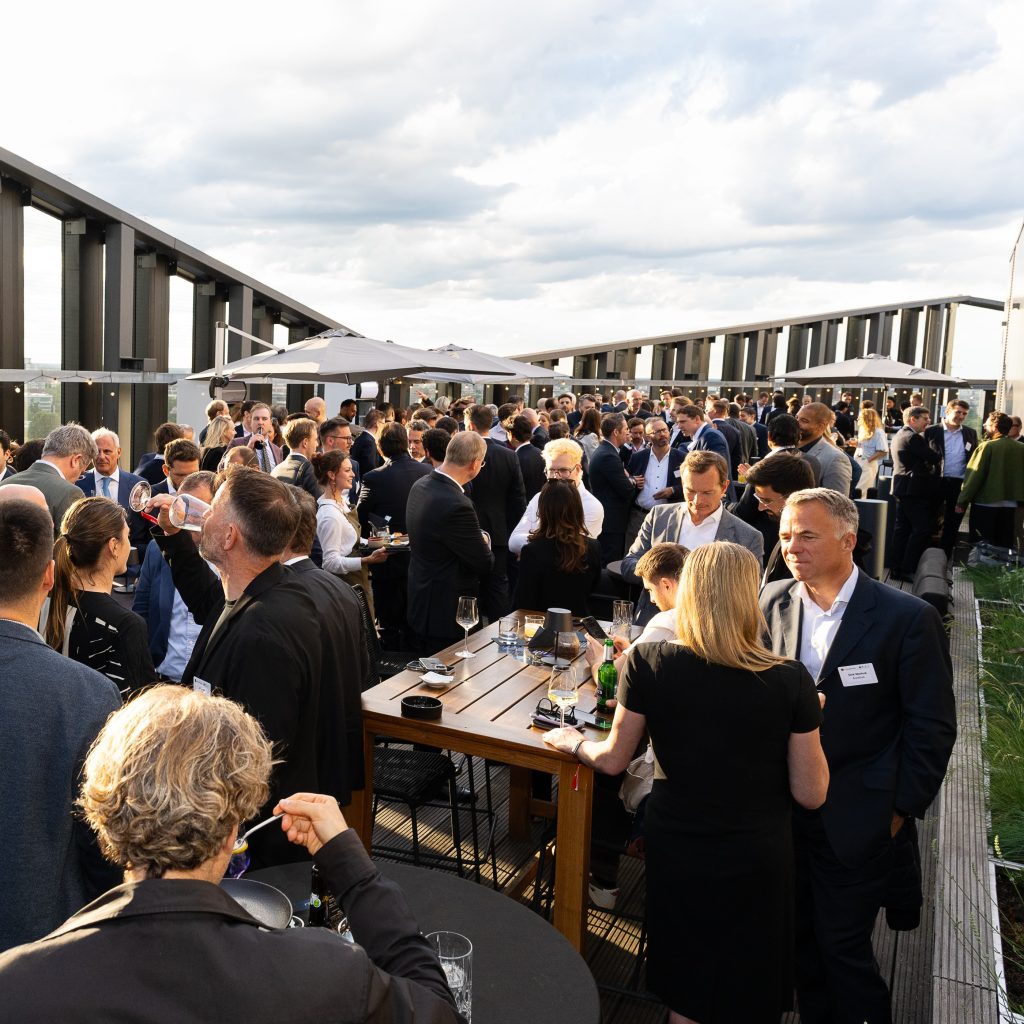
In addition to welcoming attendees to the FTI Consulting lounge at our Berlin office, a dedicated space to connect, collaborate and recharge, we partnered with Greenberg Traurig to host an exclusive rooftop drinks reception. Bringing together senior leaders from across the private equity and private credit ecosystem, the event provided a forum for insightful conversations, meaningful connections and the exchange of ideas on the forces shaping the future of private markets.
The EU Tech Sovereignty Package
Last week the European Commission published its long-awaited European Tech Sovereignty Package, setting out a comprehensive strategy to strengthen Europe’s technological capabilities and reduce strategic dependencies across the digital value chain.
Our experts have reviewed the package and highlighted some of the key measures, questions and considerations likely to emerge during the legislative process.
Shangri-La Dialogue Snapshot
The annual Shangri-La Dialogue, held in Singapore, brought together military and political leaders from across Asia, Europe, North America and the Middle East in Singapore.
In their latest snapshot, FTI Consulting’s public affairs experts across Asia and Europe unpack what this year’s Shangri-La Dialogue means for global security and the defence industry.
FDI Forum 2026
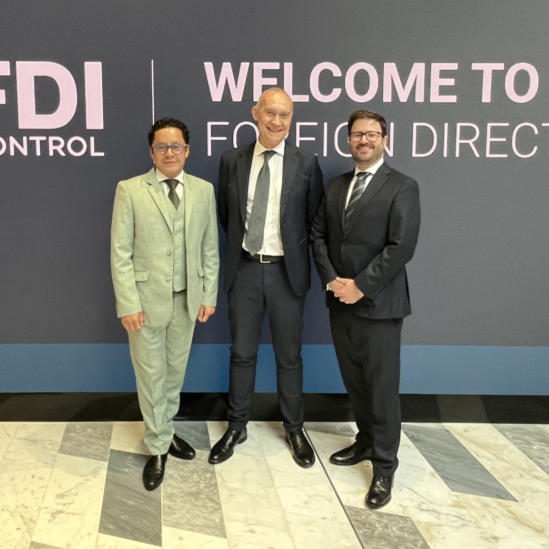
FTI Consulting was proud to return as lead sponsor of the 2026 FDI Control Forum in Paris last week, marking our fourth consecutive year supporting this important industry gathering.
Our Strategic Communications experts, Guillaume Granier, Josh Cameron and Gerardo Proaño, joined peers and policymakers in Paris to share insights across a series of workshops, exploring topics ranging from emerging trends in foreign investment screening to sovereign wealth funds and the challenges of navigating multi-jurisdictional transactions.
Public Affairs Summer Political Panel and Reception
We are pleased to invite you to a Political Panel session to catch up on the state of British politics as MPs head into summer recess. The panel will feature insights from Rt Hon Dame Patricia Hewitt, alongside FTI Consulting Public Affairs experts Alex Deane, Gemma Doyle and Dan Hamilton.
This will be followed immediately by our summer reception on our sunny terrace in the heart of the City of London.
When: Wednesday 15th July 2026
Where: FTI Consulting London offices
British-American Business Association event
Earlier this week, we were delighted to partner with British-American Business Association, Bristol Myers Squibb and the British Embassy to host a timely networking event to exchange perspectives on the challenges and opportunities shaping the healthcare landscape today.
Christopher Kuzmuk (Bristol Myers Squibb) offered perspectives of what’s happening from an industry angle and Melanie Egorin (former Asst. Secretary for Legislation at HHS) shared insights on the macro policy trends shaping healthcare and life sciences as the midterm election cycle approaches.
Upcoming Elections
- 14 June: Federal referendums (Switzerland)
- 21 June: Presidential run-off election (Colombia)
- 28 June: Provincial elections (New Caledonia)
- 2 July: Parliamentary elections (Algeria)
- 4 July: Referendum (Slovakia)
- 19 July: Presidential Election (São Tomé and Príncipe)
- 13 August: General Election (Zambia)
To be added to the distribution list for the Global PA Newswire, or for further information on the dedicated Public Affairs team at FTI, please contact [email protected]. |
The views expressed in this article are those of the author(s) and not necessarily the views of FTI Consulting, its management, its subsidiaries, its affiliates, or its other professionals.
©2026 FTI Consulting, Inc. All rights reserved. www.fticonsulting.com