Public & Government Affairs

Global Public Affairs Newswire – Special ‘Trade and Tariffs’ Edition

Welcome to a special ‘Trade and Tariffs’ edition of the Global Public Affairs Newswire.

In this instalment, FTI Consulting’s Public Affairs experts from key global markets shed light on the political and economic implications of President Donald Trump’s recent tariff announcements, bringing you updates from the United States, the European Union, Australia, China, the United Kingdom, India, France, Brazil, Germany and Colombia.

The world is grappling with unprecedented trade disruption and market volatility following historic actions by the Trump Administration to advance its "America First" agenda, reshape the global trade system, and redefine international security agreements. As corporates and countries navigate this rapidly shifting landscape, our clients must navigate the operational realities of these reciprocal tariffs, what happens after this 90 day pause, and what growing tensions mean for commercial decision making and political engagement. By integrating technical, commercial, and regulatory expertise, our team is here to help you and your clients proactively manage the complexities of the current landscape and adapt to rapidly changing conditions.

Mark McCall
Global Segment Leader of FTI Consulting's Strategic Communications segment
Market updates

USA
  • President Trump’s 90-day pause on most new reciprocal tariffs underscores the president’s focus on advancing trade negotiations with America’s trading partners.
  • Uncertainty will persist as the administration uses policy changes — and threats of policy changes — to create negotiating leverage. Escalation with China over the last 72 hours is likely to create meaningful supply chain disruptions across sectors. 
  • As the President has indicated, everything is on the table in these negotiations, including non-trade barriers, foreign assistance, and security commitments. Companies should continue to closely monitor rapidly-evolving events for risk and opportunity. 
"In this unprecedented environment, organizations cannot simply wait and see what comes next. Business leaders must take a multipronged approach to mitigate their exposure, including engaging in robust assessment of customs programs and partnerships, strategic planning and supply chain optimization, and risk management and advocacy with their consistencies and the political decision-makers that matter.”
Jackson Dunn
Head of Public Affairs, Americas

For more information about FTI’s Public Affairs services in the Americas, please contact [email protected].

Brussels/ EU
  • On 9 April, the US announced a 90-day suspension of reciprocal tariffs, which officially includes the EU. In response, on 10 April, the EU has announced the suspension of its retaliatory measures on US steel and aluminium, also for 90 days. The EU was also preparing to unveil a ‘retaliation roadmap’ next week, in response to US car and reciprocal tariffs, which is now likely to be postponed as well.
  • The EU is adopting a ‘keep calm and negotiate’ approach to all Trump trade developments, extending olive branches such as the retaliation suspension to ease talks and hopefully secure a deal.
  • However, the EU is not being naïve either, its retaliation suspension is temporary and preparations and consultations of Member States and businesses on the EU’s response to potentially reinstated US tariffs are likely to continue in parallel with EU-US negotiations. Additionally, the EU is still awaiting Trump’s announced tariffs on pharmaceuticals and possibly semiconductors which may create further complexities and require further EU actions.
“FTI’s EU trade experts are uniquely placed to help organisations through business critical trade and geopolitical issues. FTI’s EU trade experts can provide tailored support to your business, from building strategic responses to tariffs, to advocacy in the context of EU trade investigations. Our role is to support your company in assessing political and policy contexts, informing key decision-makers and mobilising potential allies, in order to prevent or mitigate any business risks linked to EU trade developments. FTI’s EU Trade services include: monitoring & intelligence gathering, analysis and strategic advisory, stakeholder management and outreach, advocacy and alliance building as well as global and transatlantic advisory capabilities."

Arne Koeppel
Managing Director, Brussels
For more information about FTI’s Financial Services Public Affairs support in Brussels, please contact [email protected].

China
  • China is demonstrating an unwavering national resolve in its response to U.S. tariffs. China’s countermeasures go beyond reciprocal tariffs, incorporating strategic tools such as tightened export controls on rare earths, the expansion of the Unreliable Entity List, and potentially other targeted actions.
  • China is leveraging state power to stabilize its financial markets. On April 10, the A-share market regained the 3,200-point level following a 7.3% plunge a few days earlier. This is supported by coordinated state interventions: Central Huijin injected RMB 200 billion into ETFs, while state-owned enterprises such as Sinopec announced large-scale share buyback plans. The PBOC’s liquidity pledge further helped anchor market sentiment. 
  • China is managing the depreciation of the yuan. On April 9, the offshore yuan dropped below the 7.40 mark, reaching a historic low. In response, PBOC stepped in with measures to stabilize market expectations. Chinese policymakers are discreetly gauging the level of persistent depreciation which could lead to evaporating market confidence and worse capital outflows.
"China’s response remains proportionate but firm, reinforcing its readiness to absorb shocks and reshape market exposure. For businesses, the greater risk lies not in direct policy, but in strategic drift—where trust erosion, retaliatory logic, and fragmented governance create a fog of uncertainty. The task now is not just to respond, but to re-anchor planning assumptions in a more contested and less predictable global system."
Rachel Hsueh
Head of Strategic Communications, China

For more information about FTI’s Public Affairs services in China, please contact [email protected]

Germany
  • U.S. tariff policy poses a threat to Germany’s economic growth, as exports to the United States could drop by up to 15% if the threatened measures are implemented. The automotive industry, its suppliers, and mechanical engineering are particularly affected. No EU country exports more cars to the U.S. than Germany.
  • Germany could also be especially impacted by U.S. tariff measures targeting China. German companies fear a “China flood” if Europe becomes the destination for low-cost exports that can no longer be sold on the U.S. market and are thus redirected—especially to Germany.
  • In response to U.S. trade policy, Germany is expected to further diversify its foreign trade. The new federal government is therefore pushing for EU free trade agreements with countries in Latin America, the ASEAN states, as well as Canada and Australia.
“Germany’s new government is stepping up in the EU—and its stance will be critical in shaping Europe’s response to U.S. tariffs. For the German automotive industry, which relies heavily on transatlantic trade, the signals from Berlin could define strategic moves in a shifting global market. It is important that business perspectives are taken into account before political decisions are made. At the same time, our clients need early insights and analysis regarding the German government's stance toward the United States. FTI makes a constructive contribution to the dialogue between politics and business.”

Caroline Müecke-Kemp
Head of Public Affairs, Germany
For more information about FTI Consulting’s Public Affairs services in Germany, please contact [email protected].

Australia
  • With a federal election campaign in full swing ahead of the national poll on 3 May, debate over the US tariff regime and how to handle it has been flowing thick and fast. With the Australian share market largely following the whipsaw of other bourses around the world, Australian Treasurer Jim Chalmers met with the Reserve Bank and financial regulators to assess the local impacts, while Opposition Leader Peter Dutton raised the possibility of a looming recession.
  • The governing Labor Party has release it’s ‘5 Point Plan’ to support local industry and exporters most impacted, while the Opposition says they would have secured a better deal for Australia, flagging a critical minerals reserve and leveraging Australia’s defence relationship with the US as potential bargaining chips. Neither party has raised the possibility of retaliatory tariffs.
  • Meanwhile the Australian Treasury released its pre-election economic and fiscal outlook this week, and the advice is stark: “This escalation in trade hostilities has created significant economic uncertainty and exacerbates the risks to the economic and fiscal outlook.”
“As the Australian election campaign continues, the rhetoric from both sides of politics will ramp up as each side lays claim to the title of best economic manager. Whatever the result on 3 May, businesses should be ready to take stock of the risks and opportunities presented by a new Government and prepare to be flexible in response to the rapidly changing global environment and its local impacts."
Ben Hamilton
Senior Managing Director, Australia
For more information about FTI’s Public Affairs services in Australia, please contact [email protected]

Singapore
  • Singapore is the only ASEAN member to face a 10% “baseline” tariff, despite having a trade deficit with the US, and an FTA which imposes zero tariffs. This week, the Prime Minister of Singapore, Lawrence Wong, delivered a speech in Parliament outlining the Government response to US tariffs. He stated Singapore will neither retaliate nor negotiate with the US and described the tariffs as risking a “full-blown global trade war”, as well as a “new wave of… unstable protectionism”. Wong’s speech notably made clear the Prime Minister’s view that the 10% baseline tariff was now a permanent fixture, so there was little merit in trying to negotiate. His unusually direct criticism of the US marks a rare stance for a Singaporean leader.
  • Wong noted that sectors such as electronics, semiconductors, and biomedical sciences, which have higher export exposure to the US, are likely to be disproportionately affected. The Prime Minister also announced the formation of an inter-agency taskforce, chaired by Deputy Prime Minister and Minister for Trade and Industry, Gan Kim Yong, to help businesses and workers to adapt to the new economic environment. While the full composition of the taskforce is not yet clear, it will include key economic agencies such as the Ministry of Finance and Ministry of Trade and Industry – alongside the Singapore Business Federation, the Singapore National Employers Federation, and the National Trades Union Congress.
  • In addition, Wong made clear that Singapore has the resources and willingness to use industrial policy to support industries affected by US tariffs, and with Singapore continuing to support the global trade system, also committed to engage closely with like-minded, pro-free trade, partners.
"As a small, trade-dependent, island nation, Singapore is uniquely exposed to the direct and indirect impacts of the US tariffs. Some 71% of Singapore businesses have an offshore presence with top countries including Malaysia (63%), Indonesia (49%), both of which were targeted with US tariffs of 24% and 32% prior to the suspension. The Singapore Government’s decision not to negotiate with the White House is a clear sign that Singapore will be looking to deepen engagement with trading partners elsewhere, including within the ASEAN region. Together, ASEAN forms the fifth largest world economy, and whilst its other members can be expected to seek deals with the White House, the US’ trade policy may in fact inject new momentum behind regional integration. FTI Consulting’s Asia Pacific Public Affairs team can provide advice, intelligence, and counsel to companies looking to seize the opportunities from this important region amid increasing global fragmentation."

Rachel Yeo
Director, Singapore

For more information about FTI’s Public Affairs services in the Singapore, please contact [email protected].

UK
  • Having been hit by the relatively low baseline tariff rate of 10% the UK has favoured a restrained approach, emphasising the needs for “cool heads” in response to US tariffs. While leaving open the possibility of retaliation, the Government has emphasised that such action will be a last resort as it launched a business consultation on possible responses to US due to close on 1 May. This consultation is likely to confirm that the private sector stands behind the bi-partisan position that retaliation would be ill-advised.
  • The trade war is already exacerbating domestic economic headaches for the Government. With public finances already under strain, Ministers have looked to deregulation as a fast and cheap way to support industries that have been – or are likely to be – targeted by specific US tariffs beyond the 10% baseline rate, such as the automotive and pharmaceutical sectors. The Trade Remedies Authority has also been strengthened in anticipation of the need to protect UK firms from the dumping of foreign goods originally intended for US markets.
  • As well as trying to get a better deal with Washington, the Government is determined to use the upending of global trade certainties as an opportunity to make progress with other important trade partners. Ministers have been redoubled efforts to strengthen trading relationships with the EU and have made a public effort to increase the speed on the ponderous free trade agreement negotiations.
"While the UK maintains it’s “Keep Calm and Carry On” posture, the Government is still moving frantically to adjust to the new trade environment. This means a great many policy certainties from last month may be subject to drastic change. More than ever, businesses need to be on top of this changing policy environment and aware of the risks and opportunities arising from it. With an unrivalled bench of trade experts  - including former trade Ministers and negotiators – FTI Consulting’s London Public Affairs is ensuring our clients have the analysis and advocacy support they need to navigate the current uncertainty."

Josh Cameron
Managing Director, United Kingdom
Mexico
  • With global tariffs very much in flux, USMCA is back as a relevant trade policy category. Goods compliant with the treaty’s rules of origin have maintained tariff-free access to the United States. These are good news for Mexico, and for Canada. 
  • Many companies that had previously not met the threshold required by the treaty are moving to increase the regional content of their goods. Many are underscoring how their own case-by-case considerations connect to government priorities (e.g., their role in value chains, the jobs they support, their connection to strategic sectors).
  • Negotiations are far from over, notably on the automotive and auto part sectors. Much work remains so that short-term fixes give way to stable mid and long-term criteria, which is key. To follow the conversation, subscribe here to our bi-weekly newsletter on the North American agenda.
"North American cooperation, long taken as a given and then seemingly ruled out, is currently back on the menu. As companies work out what this means for their business models, they must deal with disruption in a nimble yet consistent manner. An updated approach to cross-border risk management is also required. FTI is supporting clients as they seize opportunities and tackle challenges, overcome inertia, and break silos in decision-making."

Damián Martínez Tagüeña
Managing Director, Mexico

For more information about FTI’s Public Affairs services in Mexico, please contact [email protected].

India
  • India’s export-oriented sectors – Agriculture, IT & Electronics, Textiles and Gems/Jewelry – hardest hit, despite 90-day US reciprocal tariff reprieve, unless India and US can accommodate concessions under a US-India Bilateral Trade Agreement (BTA) (currently being negotiated and expected to be concluded by September). India’s Small and Medium Enterprises (SMEs) in these sectors will be worst hit.
  • New trade alliances – US reciprocal tariff actions has fundamentally altered the global trade environment, forcing India to revisit its trade alliances with EU, UK, ASEAN and China, and mitigate against future disruptions; including stronger BRICS+ position in Global Trade and more Local Currency Trade settlements outside US-Dollar denominated trade (as recently announced between India and UAE).
  • Geopolitical Shifts and New Risks – Leaders should expect a sharp rise in cybersecurity risks, at a critical infrastructure and enterprise level, followed by increased military build-ups in key supply chain choke points. All business and policy leaders should be track these risks and plan scenarios that impact supply chain and operational security that could leading to further economic loss and capital write-offs.
"Global companies, operating in India and focused on the domestic market, should be able to leverage their scale and stronger financial positions to expand in the Indian marketplace, if they can manage their supply chains and partners/suppliers well…Irrespective of the India-US BTA, reciprocal tariff actions have fundamentally altered the global trade environment, forcing India to revisit its trade alliances with EU, UK, ASEAN and China, and mitigate against future disruptions."
Amrit Singh Deo
Senior Managing Director, India

For more information about FTI’s Public Affairs services in India, please contact [email protected].

France
  • Driven by the Presidency and Finance Ministry, France is slowly carving out a key role in shaping the EU response to US trade policy, and seems to be advocating for a stronger response.  While French Economy Minister Eric Lombard welcomed the 90-day pause, President Macron initially called for French companies to reconsider investments in the US, and his trade minister suggested the EU’s response could be “extremely aggressive”, implying that all options, including the anti-coercion instrument are on the table.
  • This position appears to stem from France’s relatively limited exposure to the effects of US tariffs.  However, key export sectors like wine, spirits, and luxury goods remain vulnerable to potential retaliation, reflected in the French government’s request for bourbon’s removal from the list of products facing retaliatory tariffs.
  • Two dynamics that could reshape French policy are the level of domestic pressure from firms and difficult economic realities of slow growth and a high budget deficit. Lombard warned an escalation of the trade war would likely hinder the government’s efforts to respect its European commitments to reduce the deficit. In parallel, he announced a revision of the growth target to 0.7% from 0.9%.
“FTI Consulting Paris is uniquely positioned to guide clients through the growing challenges of worsening trade tensions, as France advocates for a more aggressive EU response to US tariffs. President Macron’s direct involvement means that Paris is a key actor in shaping the EU response, and any strategy aiming to influence the Commission’s response will have to consider the French view. Our team of seasoned sectoral experts enables us to provide clients with up-to-date, actionable insights that are critical in navigating this complex landscape. Additionally, our team’s strong institutional integration with key French and European gives us unparalleled access to decision-making processes, allowing us to offer a level of strategic foresight and support that few can match."

Gregory Grellet
Senior Director and Head of Government Relations, Regulatory and Public Affairs, France

For more information about FTI’s Public Affairs services in France, please contact [email protected]

Brazil
  • Approved a new Economic Reciprocity Law. It was directed to presidential ratification on April 8th, legislative debate and procedures were rushed by Trump’s tariff announcement. It gives legislative approval to counter with trade measures countries and blocks that impose barriers to Brazilian products.
  • Government and private sector are open to dialogue. Virtual bilateral conversations have occurred weekly on diplomatic and technical level – specially focused on steel, aluminum and auto parts (that remain with 25%).
  • Expressed assuring reciprocity in bilateral trade and is evaluating launch of a WTO dispute. Their main argument is that the tariffs violate commitments made by the US at the organization. Increasing tariffs on US imports, entertainment productions and breaking medicine patents are on the table.
“As global trade tensions escalate, Brazil’s push for reciprocal measures marks a significant shift in its approach to economic diplomacy. The Reciprocity Bill introduces new variables for companies operating across borders, as governments become more willing to use trade policy as a tool for strategic leverage. In this evolving landscape, businesses will need to stay ahead of regulatory changes, assess potential risks, and adapt their engagement strategies to navigate an increasingly complex environment.”

Raquel Rocha
Senior Director, Brazil
For more information about FTI’s Public Affairs services in Brazil, please contact [email protected].

Ireland
  • Risk to pharma supply chain: Taoiseach Micheál Martin is engaging directly with pharmaceutical leaders to fully understand the complexity of the supply chain. The Irish Government believes pharma exports to the US could reduce by as much as 50% over five years if a 20% tariff was introduced.
  • Focus on new markets: An action plan on market diversification to support affected companies is being developed by government officials. A key feature will be trade missions to identify new export and investment opportunities, focusing on Asia. Irish state agencies have also set up dedicated teams to support companies exporting to the US. Early engagement is encouraged to address potential supply chain challenges.
  • Push for inclusive talks covering all industries: Ireland wants to see pharma covered in any EU-US trade talks during the 90 day pause, not just industries affected by the recent tariff announcement. This was the message from Tánaiste and Minister for Foreign Affairs and Trade, Simon Harris when he met with Secretary Lutnick on Wednesday and when he later spoke with EU Commissioner Šefčovič.
"With Ireland highly exposed to potential tariffs, the Irish Government’s proactive engagement with industry offers companies a vital opportunity to shape national strategy. With the support of FTI Consulting’s Public Affairs Team in Dublin, companies operating in Ireland can help inform the country’s response to evolving trade dynamics and preparations for potential disruptions, by contributing insights and highlighting the risks and challenges."

Aoife Mullen
Director, Ireland

For more information about FTI’s Financial Services Public Affairs support in Ireland, please contact [email protected].

Spain
  • With total trade in goods and services between Spain and the U.S. amounting to approximately €46.7 billion, or around 3.1% of Spain’s GDP, the country is exposed compared to other EU economies. Key sectors—mainly automotive, wine, olive oil, and industrial components—face significant disruptions. In a 20% tariff scenario, exports to the U.S. could drop between 10.1% and 18.4%, driven by sectoral contraction and external demand shocks.
  • To counter U.S. tariffs, the Spanish Government launched a €14.1 billion Commercial Response and Relaunch Plan. The plan includes €6.7 billion reallocated from existing EU and national instruments, and €7.4 billion in new measures—such as €5 billion in state-backed loans, support for strategic industries, and funding for SME internationalization.
  • At the EU level, Spain is steering efforts for a coordinated response, with four concrete proposals: creating an EU fund from retaliatory tariff revenue, activating temporary state aid rules, revising restrictive trade regulations that limit reindustrialization, and fast-tracking Mercosur ratification.
"While tariffs pose short-term challenges, they are also accelerating Spain’s broader economic repositioning—driving efforts toward market diversification, industrial resilience, and a more assertive European trade policy. Vulnerable sectors such as automotive components and agri-food are also among those best positioned to adapt, through supply chain reconfiguration and expansion into alternative markets. This creates real opportunities for companies to secure support and adapt their operations. Spain’s active leadership at both national and EU levels reflects a growing recognition that trade policy is now a core pillar of economic and strategic security. This is evidenced by its €14.1 billion relief plan in place and concrete proposals in Brussels to mobilize EU support and accelerate market diversification."
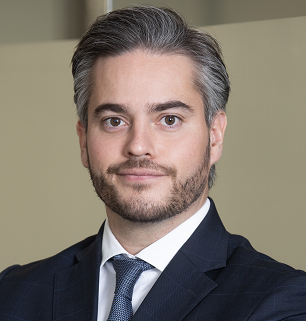
Carlos Ochoa Alonso
Head of Public Affairs, Spain

For more information about FTI’s Public Affairs services in Spain, please contact [email protected].

South Africa
  • Following the US administration imposing 31% tariff on South African goods, the South African government has unveiled a comprehensive strategy to mitigate the economic impact of new US tariffs, focusing on export diversification, value-added production, and strengthening regional trade partnerships. 
  • The tariff increases imposed by the US are set to have impact the South Africa’s auto industry, with the government considering expanding its flagship vehicle industry incentive scheme, the Automotive Production and Development Programme (APDP) to protect the nearly R500 billion motor manufacturing sector – the sector contributes 5% of SA’s R9-trillion GDP, employing 120,000 people. The agricultural sector, including citrus and wine, is set to be severely impact, with South Africa’s rural communities most severely affected.  
  • The Minister of Trade, Industry and Competition, Parks Tau has come out to state that the tariff increase has largely nullified the African Growth and Opportunity Act (AGOA) – a legislation approved by the US Congress to allow certain African countries preferential access to the US markets – benefits in particular categories. It is anticipated that the AGOA, which expires in September, will likely not be renewed.  

"The South African government has committed to quietly engaging the US government rather than using microphone diplomacy. The Minister of Trade, Industry and Competition, Parks Tau has affirmed that South Africa would not be reacting to the tariff increase and terming such a reaction as “a race to the bottom”, the government has emphasised that it is open to negotiating favourable trade agreements with US”

Deerah Pillay Lungoomiah
Senior Director, South Africa

For more information about FTI’s Public Affairs services in South Africa, please contact [email protected]

Colombia
  • Colombia’s diplomatic approach opens space for business-led influence – by rejecting retaliation and pursuing formal tariff removal, Colombia signals maturity and alignment with U.S. institutional processes. This creates a window for companies to amplify their case through coordinated engagement and U.S.-oriented narratives on competitiveness and hemispheric value.
  • Government-private coordination could become a national competitiveness tool – the new working group with over 10 leading business associations enables joint positioning. Companies can now directly shape Colombia’s external trade messaging, ensuring their sector priorities are reflected in advocacy, mitigation efforts and diversification strategies beyond the U.S. market.
  • Operational strategy must align with geopolitical signaling – the 10% tariff is a wake-up call: access now hinges on perceived strategic value. Companies should align their exports, sourcing and communication strategies to reinforce Colombia’s role in U.S. supply chain security, while preparing for selective concessions—not automatic reinstatement of benefits.
"Our Colombia-based team advises corporate leadership on public affairs, reputation strategy, and high-stakes stakeholder engagement. We deliver actionable insights, messaging frameworks, advocacy plans, and crisis response strategies tailored to the current U.S. tariff environment. We operate as trusted advisors, equipping executives with the tools to navigate complex political signals and make informed decisions with scenario planning strategies."

Juliana Gómez
Head of Public Affairs, Colombia
For more information about FTI’s Public Affairs services in Colombia, please contact [email protected].

Further insights

Liberation Day: What next for the UK Government after the US imposes global tariffs?

On 2 April, US President Donald Trump unleashed an unprecedented wave of tariffs against 180 US trade partners to mark what he described as “Liberation Day”. The UK now faces wide-ranging tariffs with its largest trading partner across virtually all sectors. In this snapshot, FTI Consulting’s UK Public Affairs trade experts consider the choices facing the UK Government in the face of US tariffs, and the prospects for a deal to escape them.


Read here >>

From Retaliation to Negotiation: The EU’s Likely Responses to New US Tariffs

Recent EU-US developments have been marked by significant diplomatic engagements and policy shifts. But what are the key takeaways?

Our EU trade experts, Arne Koeppel and Danesh Kermabon-Haq, share a comprehensive overview of US tariffs and provide their insights on the EU’s potential response scenarios.


Read here >>

The impact of US elections on AI Crypto activity

General counsel have a growing role in ensuring political due diligence when adapting to changes as a result of the U.S. administration.

Senior Managing Director Alex Deane discusses three immediate areas GCs should monitor, including:

➡️ Artificial intelligence 
➡️ Cryptocurrency
➡️ Tariffs

Watch video here >>
View our Modern GC hub here >>

National Security-driven regulatory disruption

While regulatory changes are often linked to increased oversight for the role of the General Counsel (“GC”), deregulation presents its own complexities as less regulation doesn’t always mean less risk.

Senior Managing Director Cory Fritz emphasizes the ways in which GC’s operating in the often fragmented regulatory-deregulatory environment can help their organizations to navigate shifting policies, while aligning risk mitigation with core business strategy.

Read here >>

To be added to the distribution list for the Global PA Newswire, or for further information on the dedicated Public Affairs team at FTI, please contact [email protected].

The views expressed in this article are those of the author(s) and not necessarily the views of FTI Consulting, its management, its subsidiaries, its affiliates, or its other professionals.

©2025 FTI Consulting, Inc. All rights reserved. www.fticonsulting.com
Related Articles

4th Annual Shareholder Activism State of the Market

September 8, 2025—4th Annual Shareholder Activism State of the Market Request Report The 4th Annual Shareholder Activism State of the Mark...

Use It or Lose It: U.S. Hydrogen Industry Must Act To Maintain Momentum

July 12, 2025—Key takeaway: Following the passage of the “One Big Beautiful Bill Act”, time is of the essence for hydrogen produce...

Quick Analysis: ‘One Big Beautiful Bill’ Drives More Gas and Batteries, Less Renewables

July 3, 2025—With the recent passage of the “One Big Beautiful Bill” (“OBBB” or the “Legislation”),[1] FTI Consulting’s...

FTI Consulting UK Public Affairs Snapshot – What Might “Manchesterism” Mean for Financial Services?

June 30, 2026—As challengers fade away and Andy Burnham edges closer towards Downing Street, the City of London is paying close attent...

FTI Consulting News Bytes – 26 June 2026

June 26, 2026—FTI Consulting News Bytes Similar to the UK weather this week, things are heating up in the tech industry – here’s w...

Global Public Affairs Newswire – 26 June 2026

June 26, 2026—Welcome to the latest instalment of FTI Consulting’s fortnightly Global Public Affairs Newswire.  This week, we bring...