Global Public Affairs Newswire

Global Public Affairs Newswire – 6 February 2026

Welcome to the latest instalment of FTI Consulting’s fortnightly Global Public Affairs Newswire. 

This week, we bring you updates from FTI Public Affairs teams across the world’s major markets, including the United States, the United Kingdom, China, Colombia, India, the European Union, France, Australia, Brazil, Thailand, Spain, Hong Kong and Germany. This week’s update also brings readers market insights from FTI Public Affairs experts from around the world, explaining what these updates mean for your business. 

Market updates

Trump names choice for Federal Reserve Chair; shifts strategy in Minnesota
  • New head of the Fed?: President Trump’s nomination of former Federal Reserve Governor Kevin Warsh to succeed Jerome Powell has triggered a broader confrontation over the independence of the central bank. While Warsh’s credentials position him as a credible institutional nominee, the confirmation process has become entangled in a Justice Department criminal investigation into Powell that Democrats widely view as a pressure tactic aimed at forcing interest-rate cuts. Senator Thom Tillis (R-NC) has publicly vowed to block any confirmation hearings until the investigation concludes, effectively stalling the nomination and deepening concerns that monetary policy is being drawn into partisan conflict. 
  • Streets of Minneapolis: The Trump Administration has been forced to adjust tactics in Minneapolis following weeks of protests and the fatal shootings of two protesters by federal agents. In response, the White House removed the lead federal official overseeing operations, dispatched Border Czar Tom Homan to manage the response, and announced the withdrawal of approximately 700 federal agents alongside renewed engagement with city leadership. While administration officials have framed the move as a recalibration, arrests and unrest continues in Minneapolis with both deaths continuing as flashpoints in the national debate over federal law-enforcement authority, civil liberties, and the political costs of aggressive immigration enforcement in urban centers. 
  • Who’s counting?: President Trump has renewed calls for Congress to “nationalize” federal elections, citing claims of widespread electoral fraud. The proposal has drawn immediate constitutional criticism from Democrats and some Republicans, who argue that election administration is reserved to the states and warn that federal intervention risks undermining democratic norms. The timing—coinciding with a revived FBI investigation into alleged voting irregularities in Georgia during the 2020 election—has intensified fears of executive interference in the electoral process and revived memories of the post-2020 election crisis. 
“Amid mounting domestic and foreign challenges for the administration, Democrats are seizing on signs of erosion in the President’s standing on core issues such as the economy and immigration. With nine months until the midterms, party strategists argue the political environment is becoming more favorable, fueling expectations of retaking at least one chamber of Congress and raising the prospect of unified Democratic control.”  

Jackson Dunn
Head of Public Affairs, Americas

For more information about FTI’s Public Affairs services in the Americas, please contact [email protected].

Starmer faces questions over his future following Epstein apology  
  • Prime Minister Sir Keir Starmer has apologised to the victims of American sex trafficker Jeffrey Epstein after MPs forced the release of documents linked to his decision to appoint Lord Peter Mandelson as the UK’s Ambassador to the United States. Mandelson, a Labour grandee and close friend of Epstein, was appointed to the role in February 2025 despite concerns over his association with Epstein but sacked in September 2025 after evidence came to light that his relationship with Epstein was closer than had previously been publicly known. Following the US Department of Justice’s latest release of the Epstein investigation files, evidence has now emerged that Mandelson not only continued the relationship long after the conviction but may also have leaked market-sensitive information to Epstein while serving in Gordon Brown’s administration in 2009. The Cabinet Office has referred the matter to the Metropolitan Police, which is investigating.  
  • The episode has also exposed strains in Starmer’s control over his own MPs and, by extension, his Commons majority. An attempt to soften a motion calling for the publication of Mandelson-related appointment documents backfired when it became clear Labour MPs would rebel and instead support an amendment tabled by Starmer’s former Deputy Prime Minister, Angela Rayner. Rayner, who left government herself in September 2025 after it emerged that she had broken the Ministerial Code in relation to her tax affairs, tabled an amendment which would compel the Government to provide all relevant files to Parliament’s Intelligence and Security Committee, rather than allowing ministers to withhold material on national security or international relations grounds. The Government ultimately accepted Rayner’s amendment, intensifying, rather than defusing, the pressure on the Prime Minister.  
  • The situation has escalated into an acute political crisis, with calls for Starmer’s resignation from both opposition and Labour MPs. Rachael Maskell, a Labour MP on the party’s left, told the BBC it was “inevitable” Starmer would “have to step down”, adding: “We only need to read the country to realise that his position has now become untenable.” The centre-left Labour network Mainstream said in a press release that the “corrosive political culture” that led to Mandelson’s appointment “must be torn out by its roots”, adding that “a failure of this magnitude does not happen by accident”, and that everyone involved “must be held accountable”.  
  • The opposition Conservatives and the Liberal Democrats have both called for a confidence vote in the Prime Minister, which would force MPs to either publicly support Starmer, or push him from office. While there is no indication that such a vote is imminent, this may change as the party approaches this May’s local and devolved elections, in which Labour are forecast to perform poorly. 
“A central component of Starmer’s appeal in 2024 was that he promised a break from the chaos, sleaze, and scandal of recent Conservative governments. Today, it is easy to see why many Labour MPs, and the voters who elected them, feel disillusioned. While most of the MPs publicly urging the Prime Minister to consider his position were already outspoken critics, the tone of political journalists in Westminster has also shifted, reflecting the content of private conversations with MPs who are not the “usual suspects”. There is now genuine uncertainty in Westminster over how long Starmer and his Chief of Staff, Morgan McSweeney, can remain in 10 Downing Street- and what, or who, might come next.”

Samuel Betz
Director, UK
For more information about FTI’s Public Affairs services in the United Kingdom, please contact [email protected].

After gold and cold eras, what next for China-UK relations?
  • UK Prime Minister Keir Starmer’s official visit to China, the first by a British leader in eight years, was widely seen as an effort to bring greater stability and predictability to China-UK relations. In meetings with President Xi Jinping and others, both sides committed to a long-term, consistent comprehensive strategic partnership and agreed to resume high-level dialogues encompassing strategic, economic, and security issues, collectively suggesting an attempt to re-anchor the relationship institutionally, even as deeper differences persist. 
  • The visit also delivered concrete outcomes. China agreed to cut tariffs on Scotch whisky from 10% to 5% and indicated openness to visa facilitation for UK visitors. A dozen intergovernmental agreements were signed across trade, agriculture, culture, and market regulation, while UK firms in sectors ranging from energy and automotive to pharmaceuticals and creative industries explored new commercial initiatives. These developments point to a renewed willingness on both sides to translate diplomatic engagement into practical cooperation. 
  • At the same time, the visit underscored the structural constraints shaping the relationship. Longstanding divergences over human rights, technology, and geopolitical alignment remain unresolved and continue to define the outer boundaries of engagement. Starmer’s outreach also unfolded against a complex external backdrop, including renewed uncertainty in transatlantic politics. U.S. reactions were closely watched, reinforcing the reality that China-UK ties do not evolve in isolation. 
“Starmer’s visit marks a move away from the extremes that have characterized China-UK relations over the past decade, though not a return to the ambitions of the past. After a “golden era” followed by a prolonged cold spell, the relationship is settling into a more cautiously calibrated phase, defined by selective and managed re-engagement. Cooperation is possible, but it is likely to be incremental and bounded, shaped as much by external pressures as by bilateral intent. For businesses, this points to a landscape where opportunities re-emerge unevenly and require sustained engagement, political awareness, and a clear-eyed assessment of where commercial opportunity aligns with prevailing policy parameters.”
Rachel Hsueh
Director, China

For more information about FTI’s Public Affairs services in China, please contact [email protected]

 The Trump–Petro summit at the White House represents a significant tactical reset in U.S.–Colombia relations
  • After months of vitriolic exchanges — including mutual insults, OFAC sanctions against Colombian officials, and threats of military action — both governments prioritized diplomacy over rhetoric. The encounter was conducted largely behind closed doors, signaling a deliberate move toward quiet crisis management rather than public confrontation. 
  • Strategic desensitization and shared narratives defined the initial rapport. President Petro leveraged a narrative of being “chosen by the forgotten” to find common ground with Trump’s base, while referencing personal experiences to humanize the dialogue. This approach successfully opened a direct line of communication intended to rebuild institutional trust and bypass the rhetorical clashes that dominated 2025. 
  • Security and drug policy have been reframed around converging interests. Colombian officials emphasized concrete metrics on counternarcotics — including substantial cocaine seizures — to address U.S. concerns about Colombia’s role in the drug trade, a major source of bilateral strain. While the U.S. remains focused on interdiction, the meeting signaled an openness to a “hybrid strategy.” This combines high-level pressure on cartel leadership with economic alternatives for rural Colombia, such as cacao and coffee export, aligning Petro’s agrarian transformation with Trump’s focus on tangible, market-driven results. 
  • The “Venezuela Question” is being repositioned as a regional economic opportunity. Colombia emphasized its role as an indispensable ally in a potential reconstruction phase, pitching energy interconnection and the involvement of Colombian firms. This suggests a shift toward a medium-term vision where Colombia acts as a stabilizing broker rather than a passive observer of U.S. policy toward Caracas. 
“The Petro–Trump summit suggests that pragmatism is outweighing polarization for now. By establishing a direct roadmap and focusing on economic alternatives for antidrug policy, both administrations are signaling a desire for stability over disruption. For investors and stakeholders, the key will be monitoring whether this newfound cordiality translates into technical policy shifts—particularly in trade and security cooperation—as the 2026 electoral cycle in Colombia approaches.” 

Jorge Del Castillo
Managing Director, Colombia

For more information about FTI Consulting’s Public Affairs services in Colombia, please contact [email protected].

India-EU FTA creates new global trade corridor, pressures Washington into ‘deal’ 
  • ‘Mother of All Deals’: India and the EU signed a landmark FTA in Delhi on January 27, granting immediate zero-duty access for Indian exports across textiles, apparel, leather, footwear, chemicals, and engineering goods. This removes a tariff disadvantage relative to Bangladesh and Vietnam and accelerates India’s role as a sourcing hub for the EU. India will progressively lower tariffs on EU exports, including automobiles, medical devices, and wines and spirits. 
  • Services, Mobility & the CBAM Hurdle: For India, the FTA secures commitments across 144 EU services sub-sectors, though mobility gains are largely limited to intra-corporate transferees, and other hurdles remain. India’s pursuit of EU “data adequacy” status was deferred to a separate regulatory process. The absence of exemptions under the EU’s CBAM remains a key risk: from 2026, Indian exporters in carbon-intensive sectors face new compliance pressures linked to emissions reporting. 
  • The U.S. Pivot: In apparent reaction to the India-EU FTA, on February 2, President Trump announced a trade deal with India that reduced U.S. duties on Indian goods to 18% (down from 50%, including punitive duties for Russian oil purchases). PM Modi welcomed the announcement, though New Delhi has not confirmed key Trump claims, such as India committing to buy “more than $500 billion worth of U.S. goods” or to reduce tariffs on US products to zero.
“Beyond tariff reductions, the India-EU FTA reshapes how global companies think about supply chains. It creates a credible third trade corridor at a time when geopolitical tensions continue to disrupt flows of goods, capital, and technology—and creates pressure on the U.S. to accelerate its own trade strategy with India (reflected in President Trump’s sudden February 2 ‘deal with India’ announcement). While sectors such as textiles and advanced manufacturing stand to gain immediately, CBAM compliance will be a key challenge for exporters. Businesses in India that invest early in greener production, traceability, and regulatory readiness will be best positioned to capture long-term value from this agreement.” 

Amrit Singh Deo
Senior Managing Director, India

For more information about FTI’s Public Affairs services in India, please contact [email protected].

The EU-India deal: an immediate diplomatic win, but economic gains still years away
  • On 27 January, the EU and India announced that they had concluded talks on a free trade agreement, hailed as the “mother of all deals” and a major win for trade liberalisation. Behind the triumphant rhetoric, however, the deal looks more like an act of geopolitical statecraft rather than an economic success story. For businesses, concrete benefits are far from materialising soon. 
  • Prolonged trade talks: Negotiations began in 2007 and progressed intermittently until they were suspended in 2013. After restarting in 2022, talks accelerated significantly after European Commission President Ursula von der Leyen and Indian Prime Minister Mahendra Modi committed in February 2025 to finalize negotiations within one year. With this political push, the last round closed in October 2025. 
  • Major concessions: Speed came at the price of important concessions from both sides. India agreed to unprecedented tariff cuts for EU exporters, giving a significant competitive advantage to industrial and agri-food sectors. Indian tariffs on machinery, chemicals, and pharmaceuticals will be mostly eliminated, while tariffs on cars will be gradually reduced from 110% to 10%. In return, the EU made sizable market access concessions for Indian companies, and agreed to lighter enforcement of the Trade and Sustainable Development chapter, with weaker consequences for violations of environmental and labour standards. Due to the urgency to wrap up negotiations, the parties also dropped several chapters, including those relevant to climate policy. 
  • A long way to go: Despite the optimistic announcement, the actual conclusion will take another 12 to 24 months. On the EU side, it will require the active role of the Council of the European Union and the consent of the Parliament: the process could prove contentious and prone to unexpected delays, as seen for the EU-Mercosur deal. Even after the official ratification, the deal will be far from being operational: given that most tariff reductions will be phased in over 5 to 7 years (and in some cases 10), economic gains for exporters will not materialise quickly. In a nutshell, economic promises remain largely prospective, and the success story will take years to unfold. 
"Rather than an economic triumph with immediate gains for exporters, the EU-India trade deal is a diplomatic and strategic move. The economic benefits will take time to materialise. Yet, both sides needed the agreement to advance their respective diplomatic agendas and prove a solid relationship in a shifting geopolitical landscape”.

Paolo Recaldini
Director, Brussels

For more information about FTI’s Public Affairs services in the EU, please contact [email protected]

French far right on the verge of a major reshuffle ahead of the 2027 presidential election
  • This week, French state prosecutors asked appeal judges to uphold far-right leader Marine Le Pen’s five-year ban from elected office over misuse of European Parliament funds. They did not, however, request that the ban take immediate effect, leaving a narrow and uncertain path open for a potential 2027 candidacy, pending an appeal ruling expected before the summer. 
  • Even so, a Le Pen bid now appears improbable. While the party currently leads polling in both the first and second rounds, prolonged legal uncertainty and reputational damage risk undermining the National Rally’s electoral momentum. Attention is increasingly shifting to Le Pen’s protégé, 30-year-old MEP and National Rally president Jordan Bardella. 
  • Bardella represents a distinct evolution of French far-right politics, emphasising a more economically liberal agenda and seeking to distance the party from its historically pro-Russian positions. He is often compared to Italian Prime Minister Giorgia Meloni, and is likely seeking to “normalise” his party in a similar way. 
“A decision by Le Pen to step aside could fundamentally reshape the dynamics of the 2027 presidential election. With Bardella at the helm, the prospects for a “union of the right”, long hindered by deep divisions over economic policy, appear stronger than ever. Part of the traditional conservative camp already broke with the mainstream right in July 2024 to align with the National Rally. A Bardella candidacy, backed by a more pro-business platform, could further bridge gaps between traditionally rival right-wing forces, with early signs of rapprochement emerging ahead of the March 2026 municipal elections. Yet support for the National Rally may be constrained by a “rally-around-the-flag” effect amid rising transatlantic tensions. Bardella’s past alignment with the Trump administration could weigh on his prospects, potentially shifting some voters toward a more traditional, experienced centrist candidate.” 

Augustin Gosset
Senior Director, France

For more information about FTI’s Public Affairs services in France, please contact [email protected].

NSW Parliament launches Australia’s first inquiry into data centres 
  • The New South Wales (NSW) state Parliament has launched Australia’s first inquiry into the expansion of data centres across the state.
  • With over 90 data centres already operating in NSW, the Labor government’s approval-advancing-policy is set to establish a further influx of the centres, with the approval of an additional seven major facilities granted in the second half of 2025 alone.
  • The inquiry follows rising community concerns about the concentration of large-scale facilities near residential areas.
  • The Parliament’s Public Accountability and Works Committee (Legislative Council) will conduct the investigation and cover planning policy, infrastructure readiness, environmental impact, and economic outcomes. It will aim to assess the state’s readiness for the pace and scale of development underway.
  • The Committee’s findings and hearings have the ability to influence public and political perception of data centres and may apply pressure on the NSW government to change its policy in relation to them. Last year the government fast tracked the approval of 23 data centres across the state, including what will be the biggest data centre in the Southern Hemisphere. If notable, the state-level inquiry may trigger more scrutiny of data centre policy at a federal level or in other states. 
“This is a pressure test moment for data centre operators as they are thrust into the political spotlight following a series of media articles speculating about long term environmental and planning impacts. Whether ready or not, industry must now engage publicly, prepare for criticism while educating stakeholders and managing potential reputational impacts.”  

Izabela Szewczul
Senior Director, Australia

For more information about FTI’s Financial Services Public Affairs support in Australia, please contact [email protected].

Lula's Dual Strategy: Regional Leadership Meets Domestic Legislative Pressure
  • Brazil’s congress has resumed activities under heavy pressure from the electoral calendar. Most votes are expected to take place in the first half of the year, with activity slowing sharply towards July as congresspeople turn their attention to election campaigns. A backlog of 73 presidential vetoes weighs on the agenda. The lack of a joint session to review presidential vetoes has stalled key decisions and further compressed the legislative schedule. At the same time, high-profile policy items are competing for limited floor time, such as the trade agreement between Mercosur and the European Union – which is expected to be voted in the next week – the regulation of artificial intelligence and Public Security Constitutional Amendment. The combination of unresolved vetoes, controversial legislation, and the expected July slowdown is likely to force fast-tracked deals in the first semester, while pushing higher-cost political decisions into rushed negotiations or postponement until after the elections.  
  • Brazil has intensified efforts to recalibrate its relationship with the United States through renewed high-level political engagement. Foreign Minister Mauro Vieira’s phone call with U.S. Secretary of State Marco Rubio, centered on trade and security cooperation, is part of a broader strategy led by President Lula to restore structured dialogue and prepare for an upcoming visit to Washington, expected for March. The outreach follows a recent conversation between Lula and President Donald Trump, signaling diplomatic proximity. Brasília is seeking progress on key economic issues, including the review of tariffs and the restoring of technical trade agendas that stalled in 2025. Brasília is seeking advances on economic issues such as tariff reviews and the resumption of stalled trade talks, while also emphasizing security cooperation on transnational crime, illicit financial flows, and regional coordination. The move reflects a pragmatic approach to the relation, aiming to lower tensions and unlock economic and strategic cooperation while preserving Brazil’s diplomatic autonomy instead of automatically aligning with Washington, with its decisions servicing its own interests and specific contexts. 
  • Speaking in Panama during the so-called “Latin America Davos,” President Lula reinforced his push for deeper integration across Latin America and the Caribbean while sending carefully calibrated messages to the United States. Lula highlighted the region’s economic potential, pointing to strategic assets such as energy resources and rare earths, and argued that coordinated action could turn these advantages into greater global influence. He framed regional integration as a pragmatic necessity, criticizing what he called the hollowing out of regional blocs and summits that function as “empty rituals.” Without naming Washington directly, Lula was vocal against the resurgence of global protectionism and alluded to external interference in the region, citing Venezuela’s political context. Multilateralism stood at the core of his speech, presented as an alternative to unilateral power politics. By choosing to attend the Panama forum, Lula sought to elevate Latin America’s collective voice while signaling to the U.S. that Brazil favors engagement on equal terms -cooperative and pragmatic, but resistant to protectionism and external tutelage. 
"As Brazil heads into the 2026 elections, President Lula is trying to leverage public security and national sovereignty agendas to strengthen his political position domestically and abroad. By emphasizing public security reforms and asserting Brazil’s independence in economic and diplomatic matters, he aims to project both domestic confidence and regional leadership, signaling to partners like the United States that Brazil is a capable, autonomous actor. Domestically, however, Lula faces a fragmented Congress, with executive agendas competing with an electoral calendar and priorities that will have little legislative action from July onwards. This disconnect between executive ambitions and legislative timing could delay or reshape critical reforms. Ultimately, Lula’s ability to translate his strong performance on the international stage into a political advantage for the elections depends directly on finding ways to navigate a domestic political grid shaped by polarization.”  

Raquel Rocha, PhD
Head of Public Affairs, Brazil

For more information about FTI’s Public Affairs services in Brazil, please contact [email protected].

Opposition People’s Party widens lead in opinion polls ahead of Thailand’s general election
  • Ahead of Thailand’s general election 8 February, the largest opposition party, the People’s Party, is widely seen as the frontrunner in national opinion polls, leading the incumbent Bhumjaithai Party and rival Pheu Thai Party. A latest survey by the National Institute of Development Administration suggests the People’s Party commands 34.2% of public support, while Bhumjaithai trails with 22.6% and Pheu Thai with 16.2%. The poll is significant in that People’s Party saw the greatest increase in support from 30.5% since 11 January, while its rivals saw negligible sentiment changes. 
  • Thus far, the polls signal that People’s Party – a reinvention of the Move Forward Party that won the most seats in the 2023 election but was subsequently dissolved by Thailand’s Constitutional Court – is maintaining its political relevance and national traction, despite having been excluded from being part of the two previous governments. Having dropped its agenda to remove Thailand’s lèse-majesté laws, the basis on which Move Forward was dissolved, and gain broader appeal, the People’s Party is running on a platform of economic reform that combines immediate stimulus with longer-term structural measures to aid small and medium enterprises. However, despite the party’s lead in the polls, a majority in the 500-seat House of Representatives is by no-means certain in Thailand’s competitive and fragmented political landscape. 
  • Meanwhile, Pheu Thai’s prime ministerial candidate Yodchanan Wongsawat – both former Prime Minister Thaksin Shinawatra’s nephew and former Prime Minister Somchai Wongsawat’s son – is working to preserve the Shinawatra political legacy. By consolidating Pheu Thai’s popularity in pro-Shinawatra strongholds in northern Thailand and promising a crackdown on drugs, Yodchanan hopes to re-energise his party’s traditional voter base and secure a mandate to form the next government. 
“This election follows a period of political turmoil in Thailand which resulted in three different Prime Ministers being forced from power in the last three years. As well as delaying key legislation and policy, this instability has hindered economic growth and investor confidence at a time when Thailand faces economic headwinds, housing affordability and access pressures, and a recent decline in tourism. As such, the key question facing Thailand’s political parties at this year’s election will be how effectively they can translate voter sentiment into a stable governing alliance.” 

James Manning
Senior Director, Singapore

Spain signals tougher digital governance with proposed under-16 social media ban 
  • Spain’s PM Pedro Sánchez announced at the World Governments Summit in Dubai that the government will move to restrict access to social networks for under-16s, framing the measure as a child-protection response to online harms. The proposal points to stricter age-verification expectations for platforms and signals a more assertive Spanish stance on platform accountability and digital governance. 
  • The proposal remains at an early political stage and would need to be channelled through the Organic Bill on the Protection of Minors in Digital Environments, a flagship initiative linked to coalition partner Sumar. The explicit under-16 ban is not included in the government’s initial draft to Congress, implying that any measure would require parliamentary amendments in a fragmented legislature where approval and scope remain uncertain.
  • Internationally, Spain is aligning with a growing global regulatory trend, following Australia’s under-16 ban and similar moves under discussion in France and other EU states. At EU level, however, the European Commission has warned that national measures must remain within the Digital Services Act (DSA), pushing back against Spanish signals on executive liability and additional obligations. The announcement has quickly spilled beyond the regulatory sphere, prompting a public backlash from platform leaders such as Elon Musk (X) and Pavel Durov (Telegram). 
“President Sánchez has framed social media restrictions primarily as a child-protection and governance measure requiring state intervention, but it also carries a clear political dimension. With elections due by 2027 and a fragmented Parliament limiting prospects for rapid passage, the announcement helps set the domestic agenda even if legislative outcomes remain uncertain. The Commission’s reminders on DSA boundaries and the likely scrutiny of proportionality and enforceability mean the debate may evolve beyond national policy into a broader European discussion on digital governance, regulatory competence and the balance between platform accountability, fundamental rights and market coherence.” 

Gonzalo Conde
Director, Spain 

For more information about FTI’s Public Affairs services in Spain, please contact [email protected]

Financial Secretary signals fiscal discipline ahead of February budget announcement 
  • Hong Kong’s Financial Secretary Paul Chan Mo-po has signaled that fiscal prudence will remain a guiding principle for Hong Kong’s upcoming 2026 budget announcement, despite signs of improvement to the city’s public finance. Speaking ahead of his budget speech scheduled for 25 February, Chan emphasized that government spending should not grow faster than income.
  • Notably, Chan pointed to a stronger-than-expected start to 2026, supported by buoyant financial markets and improved revenue performance. Hong Kong’s operating account returned to surplus earlier than anticipated, driven in part by higher stamp duty revenue linked to a surge in stock market activity. Average daily turnover on the Hong Kong stock market rose sharply in January, while retail sales also recorded year-on-year growth in late 2025. Total bank deposits exceeded HKD $19t (USD $2.4t), and the financial system has continued to operate smoothly despite heightened global volatility.  
  • At the same time, Chan cautioned that fiscal headroom remains constrained. The Hong Kong SAR government continues to face pressure on its capital account due to ongoing infrastructure investments, including major projects linked to its Northern Metropolis initiative (i.e., a development initiative designed to create an international innovation and technology hub closely integrated with Shenzhen). He also stressed the importance of maintaining a cash buffer to manage geopolitical risks and potential external shocks going forward, noting that revenue is expected to taper later in the fiscal year.  
  • Looking ahead, Chan expressed cautious optimism about Hong Kong’s economic outlook, citing stable national growth, improving exports to Southeast Asia, and sustained investor confidence. However, he acknowledged that the economic recovery remains uneven, with sectors such as retail and catering still under pressure. Against this backdrop, economists expect the forthcoming budget to prioritize fiscal discipline and targeted investment over broad-based stimulus, where long-term economic transition will remain a core policy approach.  
“Chan’s comments suggest that Hong Kong’s 2026 budget will be less about short-term giveaways and more about reinforcing confidence in the city’s fiscal credibility. For businesses, this points to a policy environment where infrastructure investment and economic upgrading remain priorities, and companies should not expect significant cyclical support. Firms should read this as a signal to plan on the basis of stable, fiscally-responsible policymaking, while factoring in continued geopolitical uncertainty and a gradual, albeit uneven, recovery across various sectors.”  

Seulah Han
Managing Director, Hong Kong and South Korea

For more information about FTI’s Public Affairs services in Hong Kong, please contact [email protected]

Merz’ Gulf Visit Focuses on Strategic Partnerships and Energy
  • High-Level Diplomatic Outreach: On February 4, 2026, Chancellor Friedrich Merz (CDU) began a week-long ministerial tour of the Gulf region, including Saudi Arabia, Qatar, and the UAE. The delegation includes senior ministers and business representatives, signaling Germany’s intent to deepen bilateral relations amid shifting global power balances and growing competition in trade, energy, and security.
  • Energy and Defense Cooperation: Core discussions focus on long-term energy supply agreements, particularly LNG and hydrogen, as well as defense and technology collaboration. Chancellor Merz emphasized his aim to elevate bilateral ties to a “new level,” exploring industrial partnerships, sovereign wealth fund investments, and pragmatic adjustments to arms export policies to trusted Gulf partners.
  • Domestic and Regional Considerations: The visit occurs amid domestic debate over human rights, governance, and foreign policy priorities. Coalition partners support the outreach for strategic and economic reasons, while critics stress balancing commercial and security interests with ethical standards. Regionally, Germany is emphasizing cooperation on security and stability, given ongoing tensions involving Iran, Syria, and Sudan.
“This visit underscores the imperative for the Federal Government to strengthen reliable partnerships in the Gulf region in order to strategically pursue key German interests - such as the long-term security and diversification of energy supplies, the sustainable exchange of technologies, and the development of new security cooperations - while doing so in a consistent and credible manner.”

Ferdinand Gehringer
Director, Germany 
For more information about FTI Consulting’s Public Affairs services in Germany, please contact [email protected].

Expert Analysis

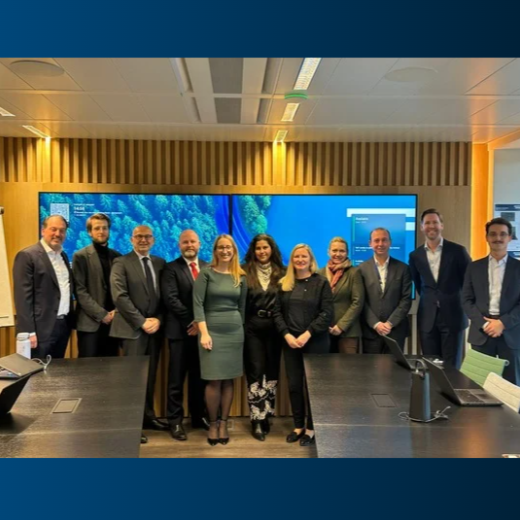
ReArm Europe 2030 Event

Our Defence and Aerospace experts in Brussels hosted an insightful debate at their offices last week, bringing together EU policymakers and industry leaders to discuss ReArm Europe 2030.

Moderated by Director Beatriz Cózar Murillo, the session featured insights from Ramūnas Stanionis, EU Cabiner Member, Daniel Fiott, Head of the Defence and Statecraft Programme at the Brussels School of Governance and Marco Canton, Senior European Affairs Executive at Fujitsu. The event was a valuable and insightful discussion on Europe’s defence readiness, emerging technologies and the importance of collaboration in today’s security environment.


View here >>

2026 Latin America Insights

The business environment in Latin America is entering a new period of volatility. Our public affairs, corporate reputation, cybersecurity and strategic communications experts based in Brazil, Colombia, Mexico and the US are eager to share their insights and recommendations in the forthcoming 2026 FTI Consulting Latin America Insights.

To get early access to the full insights, subscribe below.

Sign me up for early access >>

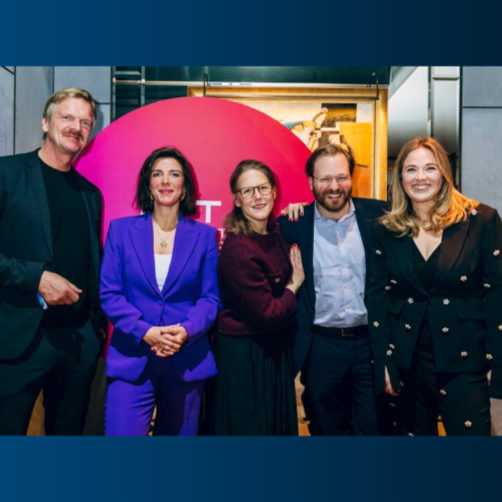
‘Young. Female. In Politics’ Event

Our experts in Berlin hosted the second edition of their ‘Young. Female. In Politics’ events last week in partnership with POLITICO, focusing on the theme of ‘Growth. Transformation. Prosperity. How 2026 can become the year of the economy’. 

The panel tackled the vital question: how do we intentionally bring together the female decision-makers of today and tomorrow across politics, business, finance, and industry and create real exchange beyond panels and headlines? 

View here >>

Association of Institutional Relations Professionals Event

We recently hosted the Association of Institutional Relations Professionals (APRI) at our Brussels office for their New Year’s cocktail event.

The session was opened by Carlos Ochoa Alonso, Head of Public Affairs in Spain, and was attended by around 40 members. It provided an opportunity to review APRI’s 2025 milestones, including the organisation of monthly meetings, the participation of more than 400 attendees and a dozen MEPs, and collaboration with other authorities from the EU institutions.

View here >>

Upcoming Elections

  • 8 February: General election (Thailand) 
  • 8 February: General election (Japan) 
  • 8 February: Presidential election – second round (Portugal) 
  • 11 February: General election (Barbados) 
  • 12 February: Parliamentary elections (Bangladesh) 
  • 22 February: Parliamentary elections (Laos) 
  • 5 March: General election (Nepal) 
  • 8 March: Parliamentary elections (Colombia) 
  • 15 March: Legislative elections (Vietnam) 
  • 22 March: Parliamentary elections (Slovenia) 
  • 12 April: Parliamentary elections (Hungary) 
  • 12 April: General election (Peru) 
  • 12 April: Presidential election (Benin) 

To be added to the distribution list for the Global PA Newswire, or for further information on the dedicated Public Affairs team at FTI, please contact [email protected].

The views expressed in this article are those of the author(s) and not necessarily the views of FTI Consulting, its management, its subsidiaries, its affiliates, or its other professionals.

©2025 FTI Consulting, Inc. All rights reserved. www.fticonsulting.com
Related Articles

4th Annual Shareholder Activism State of the Market

September 8, 2025—4th Annual Shareholder Activism State of the Market Request Report The 4th Annual Shareholder Activism State of the Mark...

Use It or Lose It: U.S. Hydrogen Industry Must Act To Maintain Momentum

July 12, 2025—Key takeaway: Following the passage of the “One Big Beautiful Bill Act”, time is of the essence for hydrogen produce...

Quick Analysis: ‘One Big Beautiful Bill’ Drives More Gas and Batteries, Less Renewables

July 3, 2025—With the recent passage of the “One Big Beautiful Bill” (“OBBB” or the “Legislation”),[1] FTI Consulting’s...

FTI Consulting News Bytes – 12 June 2026

June 12, 2026—FTI Consulting News Bytes From drones to chatbots to humanoid robotics and more, it has been a busy week as business and...

Global Public Affairs Newswire – 12 June 2026

June 12, 2026—Welcome to the latest instalment of FTI Consulting’s fortnightly Global Public Affairs Newswire. This week, we bring y...

ESG+ Newsletter – 11 June 2026

June 11, 2026—In this week’s ESG+ Newsletter, we first dive into updates within the sustainable reporting landscape, as Norges B...