Global Public Affairs Newswire – 5 September 2025

|
Market updates
- Tariffs Today. Tariffs Tomorrow? President Trump’s trade policy has been dealt a serious blow, with a federal appeals court ruling many of his tariffs illegal — a decision that could force the administration to refund billions in duties to U.S. businesses. While the ruling is stayed until October 14 and the Supreme Court is expected to fast-track a hearing, the decision exposes vulnerabilities in Trump’s trade strategy and casts doubt on the durability of the deals his White House has negotiated.
- Federal Reserve to Cut Rates? At the same time, Federal Reserve Chair Jerome Powell hinted that an interest rate cut could be on the horizon, pointing to slowing job growth and weak economic signals. Though cautious in tone, Powell’s comments suggest the Fed is preparing to step in to offset economic headwinds. Trump’s ongoing campaign to pressure Powell — even demanding his resignation — underscores the unusual and fraught relationship between the White House and the central bank. The President’s threat to remove another Fed board member, now tied up in litigation, highlights the broader tension between Trump’s political instincts and institutional norms.
- But Can You Sell It? These developments land against the backdrop of an increasingly precarious political environment for Trump. His approval rating has slipped to 38%, inflation remains a persistent drag on household budgets, and nearly 60% of the public opposes his signature “One Big Beautiful Bill.” Republicans in Congress, already facing angry town halls over Medicaid cuts, are openly worried about the midterms. Even Trump has admitted that his legislative branding has failed to resonate — an unusual concession from a President who built his political identity on marketing prowess.
For more information about FTI’s Public Affairs services in the Americas, please contact [email protected].
- The Prime Minister, Sir Keir Starmer, kicked off the Autumn Parliamentary term by pilfering economic expertise from the Treasury and elsewhere to bolster operations at the centre of Government, notably, No.10 Downing Street.
- Among the new appointments, in what many have described as a ‘reshuffle,’ was Darren Jones, former Chief Secretary to the Treasury, who will assume the brand new role of Chief Secretary to the Prime Minister. His brief will be heading up the day-to-day delivery of the Prime Minister’s priorities.
- Baroness Minouche Shafik has also been appointed as Starmer’s new Chief Economic Adviser, having previously served as the Deputy Governor of the Bank of England and Deputy Managing Director at the International Monetary Fund.
- Meanwhile, former Director General of Tax and Welfare, Dan York-Smith, assumes the role of Keir Starmer’s Principal Private Secretary and Tim Allan, former media adviser to Tony Blair, returns to Downing Street as Executive Director of Government Communications.
- The changes have been seen as an attempt by the Prime Minister to bolster the “economic firepower” of No.10 Downing Street ahead of what is anticipated to be a difficult Autumn Budget. Speculation is growing that tax rises in the 26 November Budget are inevitable, as the Government grapples with borrowing costs soaring to £40 billion.
- But, speaking to BBC Radio 5 Live, Starmer insisted that the changes are not a ‘reshuffle’, rather an indication that phase two of Government, focusing on “delivery, delivery, delivery”, has begun.
For more information about FTI’s Public Affairs services in the United Kingdom, please contact [email protected].
- In Brussels la ‘Rentrée’ (Back to School in French) is a fact. The EU machinery is back at full speed. Although, to be honest, the month of August was less calm than usual with trade negotiations and geopolitical ad hoc summits and White House visits for leaders.
- The rest of the year promises to be equally volatile. Discussions on security guarantees for Ukraine, which need to be driven by the European countries (including the UK) continue. The US and the EU might have concluded and confirmed an agreement on trade, albeit grudgingly, key elements of this need to be approved by the European Parliament. After pressure from the US on digital legislation, enforcement and taxation, approval by the European Parliament is not a certainty.
- Looking forward, on 10th September, European Commission President Ursula von der Leyen will hold her State of the European Union address in the European Parliament. It is a moment to look back at the first 9 months in office and more importantly, to set out the priorities for the coming year. The speech is expected to focus on defence and the competitiveness of the EU.
For more information about FTI’s Public Affairs services in the EU, please contact [email protected]
- SCO members agreed on a 10-year development strategy, anchored in the “Shanghai Spirit”. Decisions included the politically decisive launch of an SCO development bank, the rollout of four security centers, and a membership reform merging observers and dialogue partners into unified “SCO Partners”. With 27 countries now under its umbrella, the SCO highlighted its demographic and economic weight – nearly half the world’s population and one-quarter of global GDP.
- China, as host, unveiled six cooperation platforms spanning energy, green industry, digital economy, science and technology, higher education, and vocational training, paired with six action plans covering energy sustainability, AI, and green growth. These steps were framed as a shift from declaratory politics to institution-building, though coordination across diverse members remains a challenge.
- SCO members issued statements defending the multilateral trade system, voicing support for the WTO, and condemning unilateral sanctions. Alongside the summit outcomes, President Xi announced a new Global Governance Initiative (GGI) – following the GDI, GSI, and GCI – presented as part of China’s broader global vision. While not an SCO deliverable, its timing reinforced Beijing’s use of the summit as a platform for projecting global leadership narratives.
For more information about FTI’s Public Affairs services in China, please contact [email protected]
- On 29 August, Thailand’s Constitutional Court removed Prime Minister Paetongtarn Shinawatra for an ethics violation, following the leaking of a call she held with from former Cambodian Prime Minister Hun Sen in the context of recent Thailand-Cambodia border skirmishes. The verdict marked the fifth time the Court has ousted a prime minister from, or supported by, the Shinawatra family, reinforcing perceptions of judicial bias against the populist political dynasty.
- Acting Prime Minister Phumtham Wechayachai convened an extraordinary parliamentary session from 3 to 5 September to elect a new premier. On 3 September, the opposition People’s Party pledged support for the leader of the Bhumjaithai Party – which left the governing coalition following the leaked call – Anutin Charnvirakul, to become Thailand’s 32nd prime minister. The party’s binding conditions for such support include holding a fresh general election within four months. Within hours, the governing Pheu Thai party requested a royal dissolution of Thailand’s parliament, a move that was eventually rejected. The Speaker of the House of Representatives has now sent a letter calling for MPs to vote for a new Prime Minister on 5 September.
- Thailand’s political turmoil coincides with fragile economic conditions. The country is facing a 19% US “reciprocal” tariff, while the World Bank expects Thailand’s GDP growth to slow to as low as 1.8% in 2025 – down from 2.5% in 2024.
For more information about FTI Consulting’s Public Affairs services in Thailand, please contact [email protected].
- On 25 August, Prime Minister François Bayrou unexpectedly announced that he would seek a confidence vote from the National Assembly on 8 September, putting his minority government at risk and the country on the brink of another political crisis. The declaration came during a press conference aimed at bolstering support for his contentious austerity budget, which includes €44 billion in spending cuts to address France’s mounting public debt.
- Opposition parties across the spectrum, from the far-right National Rally to the Socialists, Greens, and the far-left, have vowed to vote against the government. With Bayrou’s survival in doubt, President Macron will be faced with difficult choices: appoint a new prime minister amid a deeply fragmented parliament lacking any clear majority, or dissolve the Assembly and call snap legislative elections. While some voices have urged Macron to resign, this remains an unlikely scenario at present.
- A government collapse would halt progress on key legislation until a new prime minister is appointed. If the National Assembly is dissolved, all ongoing bills would be nullified and require reintroduction in the next parliament, resetting the entire legislative process. This could significantly delay initiatives such as the Economic Simplification Bill, Resilience Bill (transposing the CER, DORA, and NIS2 directives), and Fast-fashion Bill.
For more information about FTI’s Public Affairs services in France, please contact [email protected]
- President Petro’s government has submitted its third tax reform, seeking COP26.3 trillion (USD6.3 billion) to cover the 2026 budget gap. The proposal raises levies on fuels, gambling, streaming platforms, alcohol, tobacco, and entertainment, while taxing churches’ commercial activities. Several measures would be phased in gradually between 2026 and 2028.
- Key measures include raising the corporate income surtax on financial institutions to 50%, increasing carbon and fossil fuel taxes, and tightening wealth and dividend taxes. The plan also removes exemptions on luxury goods and imports under USD200, while introducing incentives such as deductions for renewable energy investments.
- Politically, the reform faces strong resistance. Opposition parties and business groups argue it burdens workers and companies, especially before elections. With Congress historically rejecting similar proposals, approval appears unlikely. Still, the government frames the initiative as essential to fiscal stability, projecting COP37 trillion (USD9.2 billion) in revenues by 2030.
For more information about FTI Consulting’s Public Affairs services in Colombia, please contact [email protected].
- Since 25 August, Indonesia has seen widespread protests, stemming from public anger at financial perks granted to legislators in the House of Representatives (DPR). The benefits include a USD3,075 monthly housing allowance, as well as additional stipends that bring their monthly salaries to USD6,150 – nearly 50 times the country’s lowest minimum wage. The situation escalated when 21-year-old delivery driver, Affan Kurniawan, was run over by a police tactical vehicle during protests on 28 August. Across the country, seven people have died and more than 1,200 protestors have been detained, with USD55 million in total damages estimated to have been caused to date. Government buildings have been set on fire and the homes of politicians looted.
- In response, President Prabowo has demanded a police investigation into Affan’s death, and pledged to remove lawmakers’ financial perks. According to the President, members of the House of Representatives (DPR) will “see certain allowances scrapped and overseas work trips suspended under a new moratorium” effective as of 1 September. He made the announcement on the latter with leaders of political parties represented in the DPR to demonstrate strong political buy-in.
- The country’s markets have been rattled, with The Jakarta Composite Index falling as much as 3.6% on 1 September before paring declines to end 1.2% lower. The Rupiah weakened to 16,500 against the US Dollar on the same day, the currency’s weakest intra-day level since 1 August.
For more information about FTI Consulting’s Public Affairs services in Indonesia, please contact [email protected].
- The trial of former president Jair Bolsonaro commenced on September 2, with a verdict expected by September 12. He faces five criminal charges, including plotting a coup. The trial has garnered international attention; former U.S. President Donald Trump imposed tariffs on Brazilian goods and sanctioned Supreme Court Justice Alexandre de Moraes, who is overseeing the case, labeling the proceedings a “witch hunt.” Conversely, The Economist highlighted the trial as a testament to Brazil’s democratic maturity, contrasting it with challenges to democratic norms in other nations.
- Brazil’s Supreme Court, particularly Justice Alexandre de Moraes, has been at the center of a national debate. On one hand, the court is seen as upholding democracy by containing Bolsonaro’s attempts to subvert the 2022 election, countering fake news and foreign interventions like Trump’s sanctions. On the other, critics argue that justices act simultaneously as investigator, prosecutor, and judge, concentrating power in ways that challenge traditional separation of powers and influences other justices towards politization of the Court. The paradox is clear: the court is both a safeguard and a source of political tension.
- Bolsonaro’s efforts to influence outcomes abroad – including his son’s lobbying of Trump to impose 50% tariffs on Brazil, hitting the agribusiness sector that has traditionally supported him – have eroded his political standing. Even with Bolsonaro already ineligible to run in 2026, the right still looked at him as kingmaker. Now, the landscape is shifting, with new leaders stepping forward independently, building strategies and alliances without Bolsonaro at the center. The result is a more fragmented conservative camp – still tied to Bolsonaro’s influence, but no longer entirely reliant on him – as the country moves closer to next year’s presidential race.
For more information about FTI Consulting’s Public Affairs support in Brazil, please contact [email protected].
Australia’s current net zero debate is a prominent topic of public debate in the lead-up to the announcement of Australia’s 2035 and 2050 milestones. The incumbent Labor Government and the Opposition Coalition hold sharply different visions for climate action, and Australia’s next steps are being closely scrutinised by voters.
- The debate was a driver and focal point of last month’s Productivity Summit, with decarbonisation framed as a core strategy for reversing Australia’s flagging productivity growth and securing future economic prosperity.
- The debate was also the cause of a recent, temporary split of the Opposition Coalition – a partnership of the Liberal and National parties, due to deep internal divisions between its more conservative rural members—primarily from the Nationals, and moderate Liberals—especially those representing urban and inner-city electorates.
- This week, our Energy and Climate Minister, Chris Bowen affirmed that the Government will achieve its target of 82 per cent renewables by 2030, whilst recognising that the Labor Government has more work to do to win over regional communities.
For more information about FTI’s Financial Services Public Affairs support in Australia, please contact [email protected].
- Germany’s coalition committee, the top-level forum where party leaders and ministers negotiate compromises, is positioning this autumn as the season for long-delayed reforms. Key on the agenda is the “Bürgergeld”, Germany’s basic unemployment benefit introduced in 2023. The governing parties are debating stricter rules on eligibility and sanctions in what CDU General Secretary Carsten Linnemann has described as a “paradigm shift” in welfare policy.
- Fiscal discipline is central. Chancellor Friedrich Merz and SPD Finance Minister Lars Klingbeil have signaled that stabilizing the social state requires both cuts in spending (CDU) and possible tax increases for high earners (SPD). This reflects growing pressure to close a €30 billion gap projected for the 2027 federal budget.
- Beyond welfare, the “Deutschlandpaket” of planning reforms is expected to accelerate infrastructure and housing projects by cutting red tape. Berlin wants faster permitting to restore business confidence and address Germany’s competitiveness concerns.
For more information about FTI Consulting’s Public Affairs services in Germany, please contact [email protected]
- In the context of rising geopolitical tensions with one of its key strategic partners, the United States (US), and the imposition of increased tariffs, the South African government is accelerating its market diversification agenda. Recognising the risks of over-reliance on traditional partners, Pretoria is actively seeking new avenues for its exports and businesses to gain competitive access abroad.
- This strategic pivot has been clearly demonstrated by South Africa’s engagement with Japan during the Ninth Tokyo International Conference on African Development (TICAD9), where the South African delegation requested that Japan consider easing tariffs. This comes as South Africa grapples with a 30% tariff increase imposed by the US, highlighting the urgency of securing fairer market access elsewhere. By positioning itself as a platform for Japanese firms to expand into Africa, South Africa is signalling its openness to strategic partnerships that offer mutual economic benefits.
- These engagements are part of a broader government strategy to reduce dependence on historical partners such as the US, particularly as Washington’s tariff actions and the potential for sanctions underscore the fragility of relying on a single dominant market. South Africa is therefore navigating a delicate balancing act: maintaining an independent, values-driven foreign policy while mitigating economic pressures from its second-largest trading partner.
- South Africa’s bilateral and trade relations with the United States are under growing strain, with the looming threat of sanctions through the proposed US-South Africa Bilateral Relations Review Act of 2025. Championed by Republican Congressman Ronny Jackson, the Act reflects Washington’s unease with Pretoria’s deepening strategic ties with Russia and China—relations increasingly perceived in the US as running counter to American interests.
For more information about FTI’s Public Affairs services in South Africa, please contact [email protected].
- During his National Day Rally speech in August, Prime Minister Lawrence Wong highlighted the risks of screen addiction and harmful online content among young people. In response, Wong said Singapore is studying international examples of laws restricting children’s access to online platforms and will consider further steps to strengthen child online safety. Current Ministry of Health guidelines already advise zero screen time for infants and limited use for pre-schoolers, under the Grow Well SG national health strategy.
- The remarks underscore regulatory momentum in Singapore around online safety, with potential implications for global tech, gaming and social media companies operating in the market. From March 2025, app stores have been required to implement measures to protect children from inappropriate apps. Any new measures could tighten age restrictions or increase compliance obligations, adding reputational and regulatory risk for platforms that fail to safeguard children effectively.
For more information about FTI’s Public Affairs services in Singapore, please contact [email protected].
- Amid trade tensions with the US, PM Modi held key bilateral meetings during the SCO (Shanghai Cooperation Organization) Summit in Tianjin, China. PM Modi and President Xi Jinping agreed that India and China were “partners, not rivals.” They discussed trade and India’s $100B deficit, border peace, the resumption of direct flights. Modi also met Russia’s president during a 45-minute ride in Putin’s limousine, and then in a bilateral meet where they discussed trade, energy, defense, their “special and strategic partnership”, and the Ukraine war.
- With the thaw of bilateral ties, India will relax visa curbs on Chinese executives, allowing manufacturers Vivo, Oppo, Xiaomi, Byd, Haier, Hisense and others to bring them in after almost five years. Chinese CEOs and India country heads of Vivo, Oppo, Realme and others have operated remotely from China for years. Visa curbs also affected Carrier Midea, a US-China joint venture for air-conditioners, and carmaker Byd India, which was unable to comply with an Indian law that required directors to be in India for at least six months. China accounts for over 60% of components used in electronics manufacturing in India.
- Just before the SCO Summit, PM Modi spent two days in Tokyo at the 15th India-Japan Annual Summit with Japanese PM Ishiba. India and Japan announced agreements spanning defense, critical mineral exploration, semiconductors, high-speed rail and skilling, as Japan set a target of USD 67 billion in private-sector investments in India over the next decade. PM Modi semiconductor equipment-maker Tokyo Electron’s factory. A few days later, PM Modi inaugurated the Semicon 2025 conference in Delhi, hosting chiefs of global firms such as ASML, Tokyo Electron, AMD, Applied Materials and trade body SEMI. Meanwhile, New Delhi reported 7.8% GDP growth in April–June, “the world’s fastest-growing major economy”, soon after Trump’s TruthSocial post: “I don’t care what India does with Russia. They can take their dead economies down together, for all I care.”
For more information about FTI’s Public Affairs services in India, please contact [email protected].
- The Ministry of Finance has published in Spain’s Official State Bulletin (Boletín Oficial del Estado) the order that launches the preparation of the General State Budget for 2026. The order sets priorities around productive investment with EU funds, support for exporters facing tariffs, the green transition, innovation, defence, housing and youth. It requires ministries to file proposals by 12 September, initiating inter-ministerial processing toward presentation in Congress later this month.
- The Spanish Constitution requires the Government to submit the Budget at least three months before year-end (end of September). Nonetheless, Spain is operating on the 2023 accounts, extended twice for 2024 and 2025. This illustrates how the constitutional timeline has not been observed amid persistent parliamentary fragmentation.
- Parliamentary arithmetic is adverse. The main opposition signals firm resistance and has proposed a legal reform to trigger elections after two consecutive extensions. Traditional and occasional allies demand concessions on territorial financing, social policy and regional investment calendars, while intra-coalition partners urge swift tabling. In parallel, the Government has approved a partial debt write-off for autonomous regions, a move that relieves regional budgets but adds complexity to negotiations.
For more information about FTI Consulting’s Public Affairs services in Spain, please contact [email protected].
Expert Analysis |
FTI Consulting’s Brussels Practice
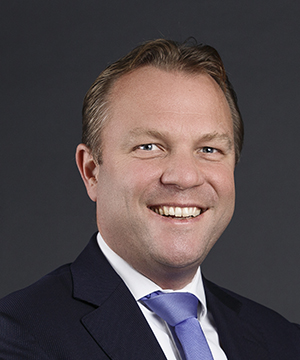
Hans Hack, Head of FTI Consulting’s Brussels office, reflects on what matters most to their clients, the rapid growth of their Defence & Aerospace practice and their seamless collaboration with colleagues throughout EMEA and across the globe.
Getting your voice heard: Navigating changing policies
In today’s increasingly complex policy landscape, working effectively with government isn’t just an advantage- it’s a necessity. Alex Deane highlights why, in this fast-moving environment, it’s vital that your voice, and your case, are heard.
Upcoming Elections
- 08 September: Parliamentary elections (Norway)
- 14 September: State elections (Russia)
- 16 September: General election (Malawi)
- 27 September: General election (Seychelles)
To be added to the distribution list for the Global PA Newswire, or for further information on the dedicated Public Affairs team at FTI, please contact [email protected]. |
The views expressed in this article are those of the author(s) and not necessarily the views of FTI Consulting, its management, its subsidiaries, its affiliates, or its other professionals.
©2025 FTI Consulting, Inc. All rights reserved. www.fticonsulting.com