Global Public Affairs Newswire – 26 July 2024
Welcome to the latest instalment of FTI Consulting’s fortnightly Global Public Affairs Newswire.
Welcome to the latest instalment of FTI Consulting’s fortnightly Global Public Affairs Newswire. This week, we bring you an election update from the US, where President Joe Biden has officially withdrawn from the race and endorsed Vice President Kamala Harris, and France, where legislators are navigating the outcome of the July election as the nation prepares to host the 2024 Olympic Games. Beyond this, we bring you our usual comprehensive market update, with analysis of the latest big public affairs developments across the world’s major markets. This week features updates covering developments in the EU, China, the USA, the UK, Brazil, Germany, India, Hong Kong, and Colombia.
Our global team are closely tracking the key votes and contests in this worldwide ‘Year of the Election’. In each edition of the Newswire, we look to dive into the upcoming implications, considerations, and opportunities for business.
Biden Drops Out of Race, Endorses Harris: Following mounting public and private concern, particularly from Democratic Party leadership and members in competitive races, on the viability of his candidacy, President Biden announced on July 21 he would end his presidential re-election bid. In his statement, Biden wrote that he believed it is “in the best interest of my party and the country for me to stand down and to focus solely on fulfilling my duties as President for the remainder of my term.” Moments later, Biden endorsed Vice President Kamala Harris, as the Democratic nominee for the Presidential race. In the statement that followed, Harris praised the President’s “selfless and patriotic act,” noting that she intends to “earn and win” the Democratic nomination. Biden’s commitment to continue to carry out his duties as President for the remainder of his term prompted several Republican Congressional leaders to call on him to resign, questioning his fitness to remain President. House Speaker Mike Johnson (R-LA) stated that “if Joe Biden is not fit to run for President, he is not fit to serve as President.”
Senior Democrats Endorse Harris as Her Campaign Breaks Campaign Fundraising Records: Following Biden’s announcement, senior Democratic Party members and leadership quickly coalesced to endorse Vice President Harris for President. Key endorsements included Former House Speaker Nancy Pelosi (D-CA), Senate Majority Leader Chuck Schumer (D-NY), House Minority Leader Hakeem Jeffries (D-NY), California Governor Gavin Newsom, Former President Bill Clinton, and former Secretary of State Hillary Clinton. The Harris campaign also received endorsement from Former President Barack Obama and Former First Lady Michelle Obama, who described her candidacy as “historic”.
This comes as the Harris campaign and the Democratic National Committee announced that they had raised a record breaking $81 million from 888,000 donors in the first 24 hours since President Biden’s withdrawal, and of that, 60% of donors were first time donors in the 2024 cycle. According to Associated Press, the Vice President has garnered enough pledges from delegates to be the Democratic presumptive nominee. In a statement on Tuesday, Harris said she is “proud to have secured the broad support needed” to become the party’s nominee. The Democratic National Convention is scheduled to begin on August 19 in Chicago. The nomination of Vice President Harris will become official in early August via a first-of-its-kind “virtual roll call” where delegates will cast their official vote in order to guarantee the party meets ballot access deadlines in all 50 states and the District of Columbia.
How Does Harris Poll Against Trump? Although national and battleground state polling on the two candidates is limited at this point in the race, one new Reuters/Ipsos poll conducted on Monday and Tuesday found that Harris opened a marginal two-percentage-point lead over Trump. A further new poll published on Thursday also found that among likely voters, a theoretical head-to-head matchup puts Trump at 48% to Harris’ 47%. In response to Biden’s endorsement of Harris, Trump said he would be willing to debate the Vice President more than once if she is nominated. The former President also stated: “I want to debate her and she’ll be no different because they [referring to Biden] have the same policies.”
Speculation Mounts Around Harris’ Running Mate: With Harris quickly receiving sufficient pledged support from delegates to become the presumptive Democratic nominee, attention shifted to who Harris will chose as her running mate for the role of Vice President. Harris is in the process of vetting potential candidates, with her campaign reportedly requesting materials from potential candidates as part of the vetting procedure. Media reports indicate Pennsylvania Governor Josh Shapiro and Arizona Senator Mark Kelly are the top two contenders. Other candidates include North Carolina Governor Roy Cooper; Michigan Governor Gretchen Whitmer; Kentucky Governor Andy Beshear; and Minnesota Governor Tim Walz. This comes as Harris held her first presidential campaign rally in Milwaukee on Tuesday, where she pledged to spend the coming weeks “continuing to unite” the Democratic Party.
We will continue sharing insights and implications from key U.S. elections developments through this newswire each fortnight. In addition, updates will be issued during intervening weeks. Join our dedicated U.S. elections mailing list to receive all U.S.-related insights. Subscribe here.
The election for the presidency of the National Assembly took place on Thursday July 18, in a first test of the new political balance of power. Outgoing speaker Yaël Braun-Pivet secured 220 votes, mainly from centrists and moderate conservatives, overcoming challenges from a veteran left-wing candidate and from the National Rally party. The left criticized the outcome, calling it a ‘pact’ between President Emmanuel Macron’s Renaissance party and the centre-right Republican party. In a brief acceptance speech on Thursday night, Yaël Braun-Pivet acknowledged the pressure she faced to foster unity after the parliamentary elections resulted in no single party securing a majority in the 577-seat lower house.
This outcome gives an initial indication of how a coalition could be formed, especially as the Republicans were granted other key positions in the National Assembly, including two Vice-Presidents, as part of the deal. This has also led to calls from centrists that the next Prime Minister should come from their ranks rather than from the NFP, arguing that their bloc can form a simple majority. The next day, the left-wing NFP coalition obtained a majority in the bureau of the Assembly – an administrative organ – chaired by the Yaël Braun-Pivet. The NFP accordingly inherited 12 of the 22 positions.
At the National Assembly, National Rally MPs failed to win any of the six vice-presidencies, and barely obtained other strategic positions. Marine Le Pen condemned this sidelining, saying it did not comply with the internal rules of the National Assembly dictating proportional representation, arguing that the votes of 11 million citizens had been ignored.
In a nutshell, while the presidency of the National Assembly has remained in the hands of a centrist, the assembly’s executive body will be dominated by MPs from the left-wing New Popular Front. Despite repeated calls for a broad coalition from the centre and some members of the centre-right, France is unlikely to see a new government soon, as Macron will seek stability during the Olympic Games, which are set to begin on July 26.
President Macron has called for “a political truce” during the Paris Games, meaning that he will probably appoint the new government after the games. The Opening Ceremony of the Paris 2024 Olympic and Paralympic Games will take place for the first time in a venue open to the public, andPresident Macron is likely to leverage the summer period to attempt to calm the political temperature before negotiations for a government resume in September.
Market updates

This week, the UK’s new Labour Prime Minister, Keir Starmer, suspended seven MPs from his party for six months after they voted against the Government on an amendment to the Kings Speech, the Government’s legislative agenda for this session of Parliament.
The seven suspended MPs, all of whom are from the party’s hard left, voted in favour of an amendment which called for the Government to abolish the two-child benefit cap, a measure introduced under the previous Conservative administration, which limits state benefit payments to only provide for a family’s first two children. Despite the rebellion, the Government (which enjoys a considerable majority in the House of Commons) secured a comfortable victory of 363 votes to 103.
The retention of the cap, a policy many Labour MPs are uncomfortable with, is an important first test of Chancellor Rachel Reeves’ commitment to her fiscal rules – at a time when Labour are overtly positioning a narrative that the UK’s public finances have been left in a much more perilous state by the previous administration than even the most pessimistic predictions. True or not, that is a useful qualification for any new government to set out as it looks to manage expectations in terms of policy ambition. But it is also one that the new occupants of Downing Street have gambled their political futures on being able to reverse.
In context, this vote and the suspension of these MPs is a continuation of a factional battle within the Labour Party which the Prime Minister has all but already won. Starmer appears determined not to repeat the mistakes of his predecessors- previous Labour leaders and Prime Ministers took a gentler approach to backbench rebels, only for these rebels to seize control of the Party in 2015, with disastrous electoral consequences.
These factional tensions have plagued Starmer’s leadership since he was elected as Labour leader in 2020. A particular point of contention has been the status of Starmer’s direct predecessor as Labour Leader, Jeremy Corbyn. Corbyn, a veteran hard-left Labour MP, was suspended from the party shortly after Starmer replaced him as leader, after he minimised the findings of an investigation into antisemitism in Labour under his leadership. Corbyn refused to apologise and was permanently expelled from Labour when he announced his (ultimately successful) bid to be re-elected to Parliament as an independent MP.
In the run up to the same election, Starmer and his allies secured a major victory against the Labour left in the form of a successful series of ‘deselections’- the removal of sitting MPs as Labour candidates. The MPs removed in this fashion were all from the hard left of the party, and many had been supporters of Corbyn’s leadership. During the Corbyn era, ‘moderate’ Labour MPs had regularly been threatened with deselection, but these threats never materialised. Following a dramatic reversal of fortunes over the last four years, it was ultimately the moderates who deselected the ‘Corbynistas’.
This week’s decision to suspend the rebels has reignited the embers of this factional debate within Labour, with some supporting the Prime Minister’s no-nonsense stance on party discipline, while critics have called it “control-freakery and authoritarianism”. Ultimately, following this summer’s General Election, the hard left is hugely outnumbered in the Parliamentary Labour Party, and Starmer has little to fear from the handful of disgruntled backbench rebels who remain Labour MPs.

Following the re-election of Ursula Von der Leyen as President of the European Commission for 2024-2029, the re-election of the incumbent President of the European Parliament, Roberta Metsola, and the vote for the Parliament’s new Bureau, with all 14 Vice-Presidents and five Quaestors, all committees elected their chair and vice-chairs on 23 July for a two-and-half-year mandate. The composition of these committees was initially announced during the Parliament’s plenary session on 19 July.
Similar to the election of the Parliament’s Vice-Presidents and Quaestors, mainstream political groups successfully excluded the hard-right groups Patriots for Europe (PfE) and Europe of Sovereign Nations (ESN) from leadership roles through informal agreements (cordon sanitaire), ensuring they hold no leadership positions at either the committee level or broader top jobs.
Committees and subcommittees will now commence their regular meetings, with some such as the Committee on Agriculture and Rural Development (AGRI), the Committee on Budgets (BUDG), and the Committee on Industry, Research and Energy (ITRE) reconvening this week. Other committees will begin their meetings in September.

The Third Plenary Session of the 20th Communist Party of China (CPC) Central Committee concluded on July 18, with a short Communiqué released on the day, a press conference held the day after, and the full-text Resolution of reform agenda along with an explanation by President Xi published over the weekend. In the communiqué, Chinese leadership laid out reforms for the next five years, focusing on innovation, urbanization, “new-quality productive forces”, risk control, and supply chain security. The full-text Resolution, in turn, gave out more substantive policy agendas, including some heatedly debated ones, such as the role of markets in allocating resources, fiscal and tax reforms, proposed solutions to the property crisis, and urbanization and land reforms.
While the Party session is not a traditional occasion to set near-term policy, Chinese leadership this time pledged to “unswervingly achieve the full-year growth target”, “proactively expand domestic demand”, and “enhance the consistency among various macro policies”. This suggests that the leadership recognizes the series of challenges confronting China, is concerned over weak domestic demand, and will likely accelerate easing measures and policy supports, most likely on the fiscal and property fronts, to secure the full year “around 5%” real GDP growth target. More details are expected to be communicated at the upcoming July Politburo meeting.
Overall, the Chinese leadership reaffirmed China’s determination to build a high-level socialist market economy. By focusing on innovation, urbanization, “new-quality productive forces”, risk control, and supply chain security, the leadership implied a combination of growing the upside potential and containing the downside risks to achieve the “Chinese path to modernization” in the post-property era, where the property sector is no longer a significant driver of growth, and government finance is less reliant on property-related revenue. Driven by the national ambition to climb up the industrial value chain amid a more complicated geopolitical environment, Chinese leadership also reiterated the long-held goals of “high-quality growth”, “high-level security”, and “a better coordination between development and security”.

In the days since President Biden announced his withdrawal from the 2024 Presidential Election, little else has dominated the headlines beyond what this unprecedented decision means for the Democratic party and the November election. President Biden followed his Sunday announcement with a formal endorsement of Vice President Kamala Harris to be the Democratic Nominee for President, which has sent political commentators into a tailspin with speculation about who the running mate may be on a Harris ticket. With the Democratic National Convention approaching quickly on August 19th and a possible early, virtual meeting of delegates to officially decide on the party’s candidate, the U.S. is bracing itself for a brutal race between the likely Democratic Nominee, Kamala Harris, and Republican Nominee Donald Trump.
While election politics have accounted for the majority of energy in Washington this week, Congress returned from a recess, which included the Republican Convention, to an important week themselves. On Monday, Secret Service Director Kimberly Cheatle testified before the House Oversight Committee in a grueling hearing that sought to uncover more about the events that enabled an assassination attempt on former President Donald Trump at a campaign rally earlier this month. While Cheatle defended herself during the hearing, she stepped down from her position the next day after both the Chair and Ranking Member of the Oversight Committee requested her resignation. This week also served as an opportunity for Congress to make headway on government funding bills, though it will be all but impossible to pass the twelve bills before the fiscal year ends on September 30th, necessitating a Continuing Resolution (CR) at that time.

This week, São Paulo’s Government concluded the privatization process of the state’s sanitation company, Sabesp, which had been underway since February 2023. The privatization of the largest sanitation company in the country and one of the largest in the world represents a major milestone, given that the company provides services to more than 28 million people in 375 municipalities. The liquidation of the share offer was concluded with Equatorial acquiring a 15% share of the company and the State Government reducing its stake from 50.3% to 18% – raising R$14.77 billion. Another 17% was distributed among Brazilian and foreign investors, companies, and funds.
In response to criticism from those opposed to the measure, government officials and Sabesp representatives stressed that, despite the reduction in the state’s stake, the company would continue to play an important social role. According to the privatization model, Equatorial will act as a reference shareholder, committing to Sabesp’s objectives along with the government. Nevertheless, the measure has faced resistance from social movements, trade unions and public opinion, who argue that the privatization could lead to higher prices and lower service quality. According to a poll carried out by Quaest in April, 52% of citizens were against the measure, compared to only 36% in favour.
The government claims that with Sabesp’s privatization, it will be possible to reduce consumption tariffs for the population and anticipate the universalization of water supply and waste management services from 2033 to 2039. The privatization of state-owned sanitation companies gained momentum with the approval of the New Sanitation Legal Framework in 2020. Besides providing the legal basis for concession contracts within this industry, the new framework seeks to increase private investment and expand the population’s access to water supply and waste management services, generating new opportunities for companies interested in operating in Brazil.

Following the SPD’s weak performance in this year’s EU elections, high-ranking party officials initially reaffirmed their support for Olaf Scholz as the party’s candidate for Chancellor. However, according to a survey by the opinion research institute Forsa, only a third of SPD members believe that the current Federal Chancellor Olaf Scholz should run again. 67% of respondents think the SPD would have a better chance of achieving a high election result with a different candidate. Some are calling for the nomination of the current Defence Minister, Boris Pistorius (SPD), who is quite popular among the German public. Additionally, more than half of the respondents feel that the party is in a serious crisis.
Despite these developments, Scholz made it clear that he wants to run for Chancellor again and rejected debates about possible other SPD candidates at a press conference this week. He stated that the SPD would be more united than ever before. He has not yet been officially nominated.
Other parties are also beginning to discuss their potential candidates for chancellor. For the largest opposition party, the Christian Democrats (CDU/CSU), party leader Friedrich Merz is expected to be nominated, while the Greens, who are part of the government, are expected to nominate Economic Affairs Minister Robert Habeck. The federal election will most likely take place on 28 September 2025.

Union Finance Minister (FM) Nirmala Sitharaman presented India’s union budget for 2024-25 on 23 July, aiming to strike a balance between fiscal consolidation and expenditure on infrastructure, agriculture, and social welfare programs. This was seventh consecutive budget Sitharaman presented, and the first from the newly formed NDA government under prime minister Modi’s third term. The $576 billion in total outlays, marginally higher than interim budget estimates presented in February, included $32 billion for rural programs, $24 billion to be spent over five years to create jobs, and more than $5 billion for two states ruled by alliance partners—reflecting the pressures of Modi’s first-ever coalition government.
The budget focused on sustained investments in employment, skilling, employment and MSMEs, aimed at winning back voters after the election ‘setback’ of a less than absolute majority for the Modi-led Bharatiya Janata Party (BJP). Economic distress in rural areas and a weak job market were among key reasons for a poor poll showing.
Major announcements include investments for agriculture, job-linked schemes, and infrastructure and tourism projects in Bihar and Andhra Pradesh, states led by two key NDA allies of the BJP. Meanwhile, there were some major changes announced on the taxation front. Taxes were ramped up on equity investments and equity derivative trading, while giving lower-income consumers some tax relief.
The market reaction to the Budget has been mixed. The stock market fell towards the end of the speech when the tax proposals were announced but recovered subsequently. Industry views reflected appreciation for the budget’s fiscal prudence and realistic revenue projections, while avoiding populist measures. Continuity in allocations, including capex at USD $134 billion, aligns with expectations amid early-year disruptions from elections and monsoons.
Critics said the budget neglected key issues plaguing the Indian economy such as unemployment, inflation, farmer distress, the sustainability of small and medium enterprises, and climate change. They added that the government’s allocations for employment and related sectors are merely symbolic gestures.

Hong Kong’s Security Bureau tabled the Protection of Critical Infrastructure (Computer System) Bill, a legislative proposal to regulate cybersecurity obligations of critical infrastructure operators (CIOs) in the Special Administrative Region. The provisional bill came to fruition after Chinese President Xi Jinping introduced cybersecurity as one of the 20 “major security fields” under the Party’s Holistic View of National Security policy agenda, urging the Hong Kong government to formalize its cybersecurity regulations for critical infrastructure. The bill is expected to enter First Reading at Hong Kong’s Legislative Council by the end of 2024 and published in the gazette by 2025.
CIOs are defined as being those companies responsible for “continuous delivery of essential services” and “maintaining important societal and economic activities” in Hong Kong and are separated into two categories. Category 1 includes companies involved in energy, Information technology, banking and financial services, land transport, air transport, maritime, healthcare services and communications sectors. Category 2 includes companies with facilities that are important to maintaining economic and societal activities, such as major sports venues, performance spaces and research and development parks.
Under the provisional bill, CIOs are required to strengthen their Critical Computer Systems (CCSs) by complying to a series of organizational and preventative obligations monitored by existing regulators such as the Hong Kong Monetary Authority and the Communications Authority. For example, under the new bill CIOs would be required to appoint dedicated cybersecurity teams, draft computer system security management plans, and conduct regular security risk assessments. The bill permits the use of third-party IT infrastructure service vendors, though liability is ultimately born by the CIO.
In addition, a new Commissioner’s Office is to be established under Hong Kong’s Security Bureau to oversee the implementation of the bill, including monitoring incident response obligations, and investigating CIOs for non-compliance. Incident response obligations will involve establishing reporting protocols to “serious security issues” and participation in computer system security drills organized by the Commissioner’s Office. The bill also introduced a penalty ranging from HKD 500,000 (USD 64,000) and HKD 5 million (USD 640,000) with additional fines applicable for consecutive non-compliance violations to the bill.

On 20 July, the Colombian Congress Inaugurated its third legislative session. President Petro presented a conciliatory speech, focused on economic reactivation and peace policy. However, the reaction in Congress was not accepting, including old members of the coalition. Opposition and independent parties criticized the government’s lack of dialogue towards a true national agreement and its ineffectiveness on issues such as national security.
Although the President managed to secure a communication channel with key leadership positions in the Senate and the House of Representatives, consolidating a majority continues to be the determining factor. In this scenario, the appointment of a new Minister of Interior, Juan Fernando Cristo (former minister of Juan Manuel Santos), tasked with renewing the relationship between the Legislature and the Government has the potential to strengthen a weakened governance.
The Colombian government’s priorities are yet far from aligning with the international priorities facing the region: migration, security, and illegal economies. With the upcoming elections in Venezuela and the United States, direction is required from the Colombian government. In this context, the Congress will play a crucial role in demanding that the Government adopt an agenda that addresses these international challenges.
Expert Analysis |

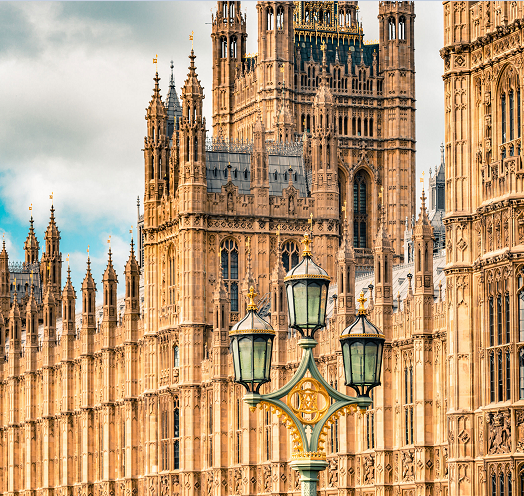
UK PA Snapshot -King’s Speech 2024
In a seismic shift of the political landscape, Labour has secured a commanding majority in the 2024 UK general election, marking one of the Conservative Party’s worst defeats in recent history.
Our UK Public Affairs experts offer their analysis on the implications of the general election results for the UK and the early priorities for a Starmer government.
2024 US Elections: Navigating the summer swing
Since the 1990s, federal lawmakers have leveraged nearly every August to head back to their districts and reconnect with their constituencies.
Our US Public Affairs team outline why the August congressional “recess” is an excellent opportunity for interested parties to elevate their issues with elected officials who are on the move, and emphasise the importance of connecting with lawmakers in August.
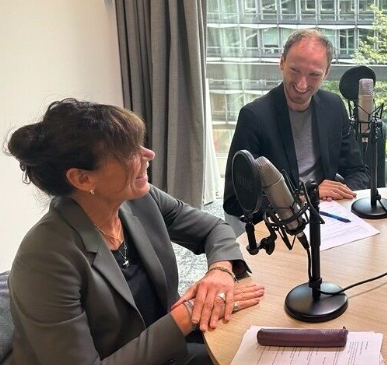

First Plenary in Strasbourg
Check out the Electoral Pulse’s newest episode where Anne-Sophie and FTI Consulting’s Senior Managing Director Kerstin Duhme discuss attending the first EU Plenary session in Strasbourg with Jeremy.
In this episode, our team dives into the significance of the first Plenary, the elections of Ursula von der Leyen and Roberta Metsola, as well as exploring the impacts of the coalitions that are taking shape.
The AI Act
The AI Act has finally been published in the Official Journal of the EU and it will enter into force across the 27 EU Member States on 1st August.
As the European AI Office works on the level-2 initiatives for implementation, it is crucial for organisations to engage in the process. Our AI policy experts walk you through the key dates and next steps.
Upcoming Conferences, Elections and Webinars
- 28 July: General Election (Rwanda)
- 01 September: Presidential Election (Venezuela)
- 07 September: Parliamentary Election (Azerbaijan)
- 10 September: Presidential Election (Algeria)
- 15 September: Parliamentary Election (Jordan)
To be added to the distribution list for the Global PA Newswire, or for further information on the dedicated Public Affairs team at FTI, please contact [email protected]. |
The views expressed in this article are those of the author(s) and not necessarily the views of FTI Consulting, its management, its subsidiaries, its affiliates, or its other professionals.
©2024 FTI Consulting, Inc. All rights reserved. www.fticonsulting.com