Global Public Affairs Newswire – 22 August 2025

Welcome to the latest instalment of FTI Consulting’s fortnightly Global Public Affairs Newswire.
This week, we bring you updates from FTI Public Affairs teams across the world’s major markets, including the European Union, the United States, the United Kingdom, China, Colombia, Germany, India, Australia, France, Brazil and Malaysia. This week’s update also brings readers market insights from FTI Public Affairs experts from around the world, explaining what these updates mean for your business.
Market updates
- Amid uncertainty over a potential Putin-Zelensky summit and its possible outcome, Europe is advancing its 19th sanctions package against Russia.
- On August 18, 2025, leaders from France, Germany, Italy, the UK, Finland, alongside European Commission President and NATO’s Secretary General joined Ukrainian President Volodymyr Zelensky in a historic meeting with U.S. President Donald Trump to strategize ending the war in Ukraine. European leaders acted decisively to bolster Ukraine’s security and safeguard Europe’s interests, countering Trump’s stance – perceived as favourable to Russian interests following his Alaska summit with President Putin.
- In Washington, D.C., European leaders secured a firm U.S pledge for security guarantees for Ukraine. The framework for these guarantees, potentially mirroring NATO’s Article 5, remains under development. At the same time, certain European nations would be willing to deploy troops, with the U.S. committing to air support (although this support may eventually extend to other areas where Europeans are lacking, such as logistics or intelligence).
For more information about FTI’s Public Affairs services in the EU, please contact [email protected]
- Give Peace a Chance? President Trump convened the Ukrainian President and leaders from Europe this week to discuss ending the Russia-Ukraine war. The meeting comes on the heels of a Trump-Putin meeting in Alaska. No tangible progress towards a peace deal was made at either meeting due to differences on security guarantees, potential territorial concessions, and the need for a ceasefire before negotiations can begin. It remains unclear whether future bi-or tri-lateral talks will move the needle.
- Police in the Streets. DC is on day 12 of a takeover of its police force by National Guard troops. Following the President’s request, Republican governors in six states have mobilized 1,200 troops for the effort. While Americans support crime reduction, questions are growing around whether this tactic will actually reduce crime, if it is appropriate to use the Guard as law enforcement – and, if Washington is a test case for other cities, a possibility repeatedly raised by the President and Vice President.
- Mess with Texas. Despite fleeing the state, Democratic lawmakers in Texas were unable to stop a redistricting measure intended to give Republicans additional seats in Congress. At the direction of President Trump, Texas legislators voted to approve new congressional maps, igniting responses from the Democratic governors of New York, Illinois, and California. California Governor Gavin Newsom immediately pushed back, signing two redistricting bills that, if approved by California voters, would replace the state’s maps and create five new Democratic districts to balance the new Republican seats in Texas.
For more information about FTI’s Public Affairs services in the Americas, please contact [email protected].
- The Chancellor of the Exchequer, Rachel Reeves, is currently weighing up a range of revenue-raising options ahead of this year’s Autumn Budget, due to be presented to Parliament in November. The Chancellor is grappling with a £40 billion fiscal gap in public finances, whilst also being constrained by her party’s manifesto pledges not to raise income tax, VAT, or National Insurance, and appeasing her own self-imposed financial rules of balancing day-to-day spending against the revenue raised from taxation.
- Reeves has reportedly asked HM Treasury officials to examine the UK’s system of property taxation, seeking structural, money-saving reforms for improving and simplifying the UK’s tax system over headline tax hikes, which would be an unpopular move for an already highly dissatisfied electorate.
- Inheritance tax and capital gains are speculated to be tightened alongside the current stamp duty system, while Deputy Prime Minister Angela Rayner has urged Reeves to consider further taxation on the wealthy, including changes to inheritance tax and pension taxation.
- While Reeves has insisted that her budget will be focused on productivity and growth, she has admitted that difficult decisions lie ahead on tax and spending. The seemingly inevitable tax-raising measures from the Autumn budget will make it difficult for the Government to focus the key fiscal event of 2025 on its main mission of economic growth and “rebuilding Britain”.
For more information about FTI’s Public Affairs services in the United Kingdom, please contact [email protected].
- The Government has announced a nationwide programme to subsidize interest costs on consumer loans, with banks directed to pass on benefits to households making major purchases. Officials expect the scheme to unlock trillions of yuan in new credit, reinforcing domestic demand as a growth driver while easing household balance sheet pressures.
- Alongside household measures, policymakers pledged greater backing for services and small businesses, focusing on consumption in key service sectors. Guidance highlighted the importance of improving financing access for private firms and stabilizing employment, reflecting efforts to cultivate new growth engines beyond real estate and manufacturing.
- At its latest meeting, the State Council stressed policy “precision and effectiveness”, linking short-term consumption stimulus with longer-term structural goals. Officials reiterated the direction set by the July Politburo meeting – balancing targeted fiscal and financial support with discipline on debt risks – while underscoring the centrality of domestic demand in sustaining medium-term growth momentum.
For more information about FTI’s Public Affairs services in China, please contact [email protected]
- The assassination of Miguel Uribe Turbay, a leading presidential candidate, illustrates how political violence continues to shape Colombia’s environment. For businesses, this signals potential volatility around the 2026 elections and the need to closely monitor institutional responses that will determine the level of political stability in the months ahead.
- The incident coincides with growing external scrutiny. Discussions in the U.S. Congress about a possible decertification of Colombia’s counternarcotics efforts could affect bilateral cooperation, aid, and trade preferences. Companies with exposure to U.S.–Colombia relations should assess potential scenarios that may influence investor sentiment, regulatory frameworks, and market confidence.
- These dynamics suggest that Colombia’s governance and security environment will remain under pressure. For the private sector, the key takeaway is to track how authorities manage election security and international credibility, as these factors will shape the operating environment, reputational risk, and long-term investment conditions leading into 2026.
For more information about FTI Consulting’s Public Affairs services in Colombia, please contact [email protected].
- Merz Everywhere: Chancellor Friedrich Merz (CDU) continues his foreign policy offensive. On 18 August, he joined EU leaders and President Zelenskyy in Washington for a Ukraine summit with Donald Trump. The Europeans pressed for credible security guarantees and an immediate ceasefire, firmly rejecting concessions of territory to Moscow. Such demands “must never be forced upon Ukraine,” he stressed. His positive verdict – expectations “not only met but exceeded” – sought to convey European unity and counter fears of a U.S.–Russia deal struck over Europe’s head.
- Muted reception at home: Merz’s role alongside the French, Italian and Finnish leaders and NATO chief Rutte was meant to showcase the renewed German leadership he had pledged. At home, however, pressure mounts. His partial suspension of arms exports to Israel and the government’s handling of the debacle over the appointments of new constitutional judges fuel friction in the CDU/CSU caucus, with some questioning his fitness for chancellorship. Furthermore, polls show the hard-right AfD ahead of the CDU. Critics warn Merz risks appearing to flee into foreign policy, echoing ex-Chancellor Helmut Schmidt (SPD), admired abroad but undone by domestic strife.
- The Foreign Policy Tightrope: Merz’s foreign policy activism faces limits. Although the Washington summit produced atmospherics of unity, but little substance, Trump still favors a “deal under fire” over the ceasefire demanded by Europeans. Wadephul’s Asia outreach underscores ambition, yet its domestic payoff is uncertain. Meanwhile, weak polling and CDU unrest expose Merz’s vulnerabilities. Unless he can turn international appearances into tangible domestic achievements, he risks cementing the image of an “Außenkanzler” (Foreign Policy Chancellor): respected abroad but embattled at home.
For more information about FTI Consulting’s Public Affairs services in Germany, please contact [email protected]
- The Australian Government held its three-day Economic Reform Roundtable from Tuesday to Thursday of this week, bringing together a group of 30 representatives from business, regulators, unions, MPs, academics and government. The Roundtable was focused on three themes: Making Australia’s economy more productive, building resilience in the face of global uncertainty and strengthening Australia’s budget and making it more sustainable.
- In the lead up to the Roundtable, the public were invited to provide submissions, with more than 900 submissions made, canvasing a vast array of options spanning AI regulation, industrial relations, tax and regulatory reform. Key guardrails for the talks included: ideas had to be either budget neutral or budget positive, in the national interest, as well as specific and practical.
- The Government has ruled out tax reform but signalled an interest in cutting regulation that’s slowing building approvals including housing, a pause on the National Construction Code, expediting changes to Australia’s Environment Protection and Biodiversity Conservation Act, and an introduction of a road user charging rules to cover electric vehicles, as well as achieving a ‘middle road’ regulatory approach to regulating AI.
For more information about FTI’s Financial Services Public Affairs support in Australia, please contact [email protected].
- The Trump administration’s decision to apply the Magnitsky Act against Brazilian Supreme Court Justice Alexandre de Moraes marks an escalation in U.S.-Brazil tensions and reflects Washington’s broader use of human rights legislation to exert geopolitical pressure. The law, which targets foreign individuals accused of serious human rights violations or corruption, sanctioned Moraes directly after advancing accusations that Bolsonaro attempted to assassinate both Lula and Moraes himself. The move blurs the line between legal action and political strategy, further disrupting diplomatic channels and intensifying domestic debates over judicial overreach and national sovereignty in Brazil.
- Supreme Court Justice Flávio Dino recalled a ruling from 2024 blocking the enforcement of foreign sanctions in Brazil, in response to the U.S. application of the Magnitsky Act against Justice Alexandre de Moraes. The decision triggered significant market reactions, particularly from the banking sector. Shares of major Brazilian banks operating in the U.S. fell significantly, contributing to a broader stock market decline. The ruling can create the perception that companies must choose between complying with Brazilian or U.S. law -risking penalties either way – introducing legal uncertainty that could directly impact their revenue and foreign investments in Brazil.
- After formally responding to a U.S. trade investigation, the Brazilian government is now preparing for a negotiation round with American authorities, although a meeting date has not yet been set. This step, known as a “consultation,” was recently offered by the U.S. and accepted by Brazil. Notably, this is not seen as a political goodwill gesture, but rather a standard procedural move by the U.S. government to demonstrate that Brazil is being given a fair opportunity to present its defense. In fact, Brazilian officials fear the U.S. may impose sanctions gradually across multiple issues. If sanctions proceed, Brazil is already considering taking the case to U.S. courts.
For more information about FTI’s Public Affairs services in Brazil, please contact [email protected]
- With the White House slapping 50% tariffs on India for buying Russian oil, even as Trump welcomed Putin to Alaska and finalized an oil deal with Pakistan, India-US relations have slid to their lowest point in 25 years, say analysts, reversing decades of progress and US foreign policy with bipartisan support. Trump’s trade adviser Peter Navarro called India a “global clearinghouse for Russian oil” financing Moscow’s war effort, while maintaining high tariffs on American goods. Navarro justified the tariffs as necessary to “hit India where it hurts”.
- The rift with the U.S. over tariffs and Russian oil has pushed India closer to China. The thawing of relations between Beijing and New Delhi, frozen since a deadly border clash in 2020, saw a visit by Chinese foreign minister Wang Yi on August 18, his first in three years, to meet his counterpart in New Delhi. The two Asian giants are exploring easing visa restrictions, direct flights, and reducing the number of troops on their disputed border. Experts say the India-US strategic glue – a shared view of a rising China – was undermined by Trump’s desire for a deal with Xi Jinping and the targeting of India over Russian oil.
- New Delhi is attempting a consumption-driven stimulus to cushion the impact of the US action and to position India more competitively as an investment destination. PM Modi used his August 15 Independence Day address to unveil a planned sweeping reform of goods and services tax, with tax cuts simplifying an onerous, multi-layered GST structure.
For more information about FTI’s Public Affairs services in India, please contact [email protected].
- While welcoming President Trump’s peace initiatives, France has voiced concern over the risk of Europe being sidelined. President Macron, speaking ahead of the meeting in Washington D.C., remarked: “We are going there to defend the interests of Europeans. Europe does not want to be at the table of major discussions merely as a subject. Europe must sit at the table to discuss its own future.”
- A long-standing advocate of European Strategic Autonomy, President Macron is seeking to reassert Europe’s influence in the negotiations. This was reflected in his co-chairing of a virtual meeting of the “Coalition of the Willing” with UK Prime Minister Starmer following the discussions in Washington.
- In a subsequent interview, President Macron hailed what he described as a “European strategic awakening” and the emergence of a “European pillar within NATO”. He called for progress towards a genuine “Europe of defence” and the development of a “European strategic culture”. Macron also stressed the importance of providing Ukraine with firm security guarantees, above all, by strengthening its armed forces and deploying European “reassurance forces” to deter future Russian aggression.
For more information about FTI’s Public Affairs services in France, please contact [email protected]
- Malaysia’s Minister of Investment, Trade & Industry, Zafrul Abdul Aziz, has said that the Malaysian government is awaiting confirmation from US as to whether Washington will impose tariffs on Malaysian semiconductor imports into the US.
- Minister Zafrul’s announcement comes after an interview with CNBC’s Squawk Box, when he remarked that industry players still maintain a long-term view that Southeast Asia remains a “key region” in the global semiconductor supply chain, despite the looming threat of US tariffs. In the same interview, he added that the Malaysian government will prioritise strategic “engagement” with the Trump administration, citing the US as Malaysia’s largest export market and its strategic importance to Malaysia’s economic growth.
- In 2024, Malaysia exported nearly USD30 billion worth of electrical and electronic goods to the US, with semiconductors making up half of those products. In total, E&E comprises 60% of Malaysia’s exported goods to the US. The latest development tied to US tariffs comes as Malaysia is looking to increase manufacturing value-added (MVA) from USD87 billion in 2021 to USD139 billion in 2030, while raising media wages to USD1,067 a month, up from the current USD650 – both goals are outlined in Malaysia’s New Industrial Masterplan 2030 that seeks to move the country higher up the global value chain.
For more information about FTI’s Public Affairs services in Malaysia, please contact [email protected].
Expert Analysis |
Managing geopolitical risk & change
Tariffs, deregulation, and rising geopolitical tensions are reshaping the global landscape at an unprecedented pace. In an era defined by turbulence and uncertainty, how can organizations not only adapt, but also position themselves to thrive?
Discover our Geopolitical Hub for expert analysis and insights to help your organization navigate these complex and ever-changing global dynamics.
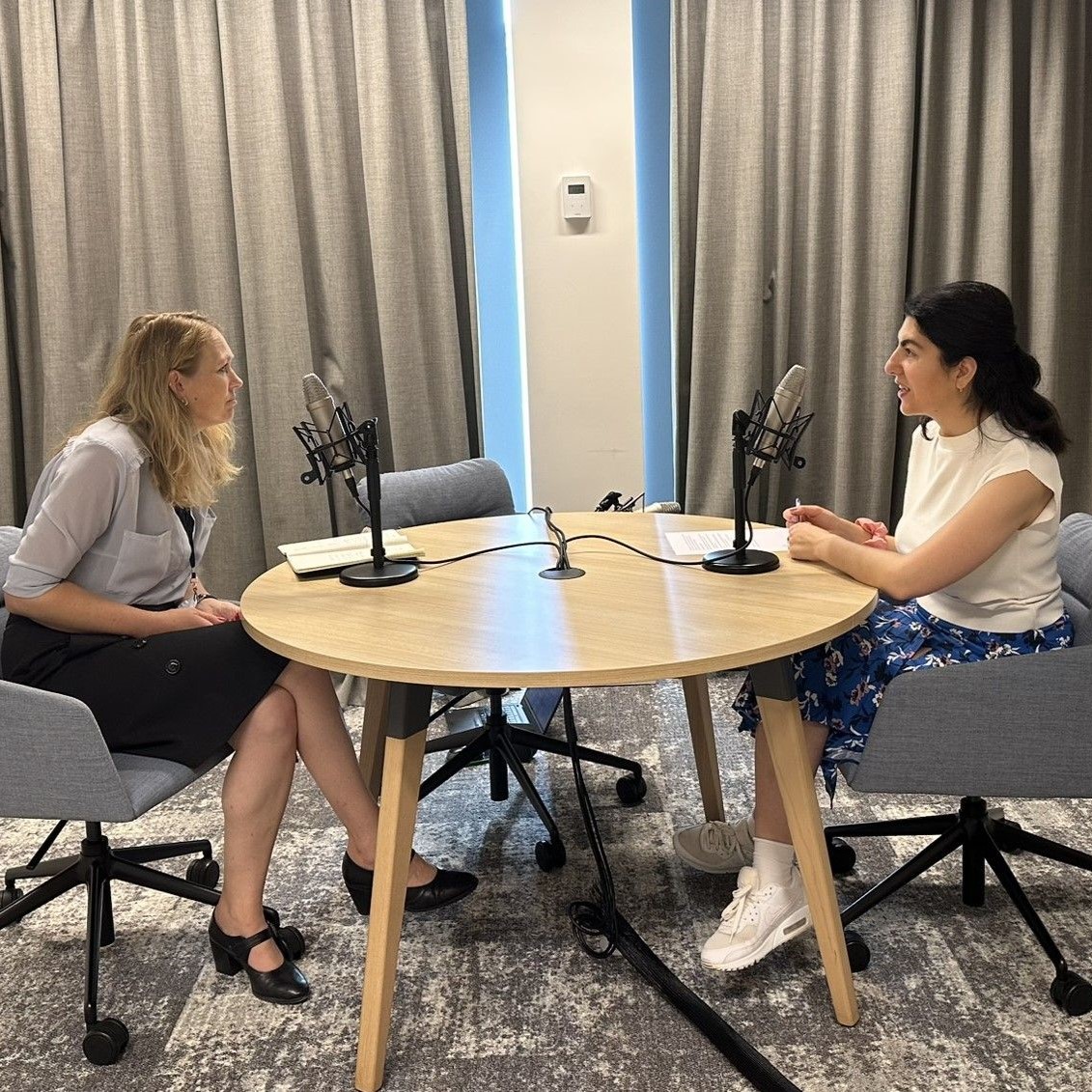
Brussels Bubble Tea: Denmark Leads EU Council
Join us as we sit down with Senior Director Katja Murray to delve into the highlights of Denmark’s recent assumption of the Presidency of the Council of the EU, as of 1st July 2025.
Discover how this pivotal role shapes EU-wide priorities and influence, and enjoy an insider’s perspective on Denmark itself- its culture, its capital Copenhagen, and the vision it brings to the EU table.
Upcoming Elections
- 08 September: Parliamentary elections (Norway)
- 14 September: State elections (Russia)
- 16 September: General election (Malawi)
- 27 September: General election (Seychelles)
To be added to the distribution list for the Global PA Newswire, or for further information on the dedicated Public Affairs team at FTI, please contact [email protected]. |
The views expressed in this article are those of the author(s) and not necessarily the views of FTI Consulting, its management, its subsidiaries, its affiliates, or its other professionals.
©2025 FTI Consulting, Inc. All rights reserved. www.fticonsulting.com