Global Public Affairs Newswire – 20 March 2026
Welcome to the latest instalment of FTI Consulting’s fortnightly Global Public Affairs Newswire.
This week, we bring you updates from FTI Public Affairs teams across the world’s major markets, including the United States, the United Kingdom, Ireland, India, China, Germany, Brazil, France, South Africa, the European Union, Australia, Spain, Colombia, Malaysia, and Hong Kong. This week’s update also brings readers market insights from FTI Public Affairs experts from around the world, explaining what these updates mean for your business.
Market updates
- Trump Coalition Fracturing Under War Pressure?: The Administration’s Iran policy is beginning to strain the President’s 2024 coalition. Recent YouGov polling shows his net approval among Independents dropping sharply from -23 to -39 in just one week, pushing overall approval to -20. The resignation of a senior administration official over the conflict—paired with increasingly public dissent from prominent Trump allies like Tucker Carlson underscores growing fissures in what had been a tightly aligned political base. With only 41% of Americans supporting the bombing campaign, the war is emerging less as a unifying force and more as a potential political liability.
- Energy Disruption Revives Inflation Fears at Home: The conflict is now feeding directly into economic anxiety. Escalating attacks on Persian Gulf energy infrastructure and in the Strait of Hormuz are heightening concerns about global supply disruptions, contributing to market volatility and softening US stock futures. At the same time, Federal Reserve Chair Jerome Powell’s decision to hold rates steady this week signals heightened uncertainty, reinforcing concerns that energy-driven price pressures could reignite inflation. The result is a growing political risk: foreign policy decisions are increasingly shaping kitchen-table economic sentiment, potentially undermining confidence in the administration’s economic stewardship heading into the campaign cycle.
- War Redefines Democratic Primary Landscape: The Iran conflict is quickly becoming a defining fault line in Democratic primaries. Progressive challengers in key states—including Michigan, Colorado, Illinois, and Maine —are drawing sharper contrasts between candidates, criticizing what they see as insufficient opposition to the President’s Iran policy and highlighting rivals’ ties to various private sector and advocacy groups. This dynamic is accelerating ideological sorting within the party, forcing candidates to take clearer positions on military intervention, and signaling that foreign policy may play an outsized role in determining the party’s direction heading into the general election.
For more information about FTI’s Public Affairs services in the Americas, please contact [email protected].
- The Chancellor of the Exchequer, Rachel Reeves, delivered the annual Mais Lecture this week in the City of London. An important event in the UK’s fiscal calendar, the lecture provided Reeves with the opportunity to emphasise the UK Government’s commitment to what she called the “three biggest opportunities for growth”— a closer EU-UK relationship, a “step change” in AI, and unlocking growth in every UK region and nation.
- The Chancellor positioned the EU-UK partnership as the Government’s main priority, asserting: “No partnership is more important than that between the UK and our European neighbours.” She argued that the current geopolitical uncertainty nations are facing only emphasises the importance of a strong and secure economy in a geopolitically unstable world, an economic approach she dubbed “securonomics”.
- With recent polls showing the Labour Party struggling in the polls less than two years after winning the last general election, political attention will now turn to England’s 2026 local elections, as well as the Scottish and Welsh devolved elections, all scheduled for the 7th of May. Both the Green Party and Reform UK are looking to make sizeable gains in England, whilst the SNP and Plaid Cymru could potentially emerge as the largest parties in Scotland and Wales respectively.
For more information about FTI’s Public Affairs services in the United Kingdom, please contact [email protected].
- Irish Taoiseach Micheál Martin used his St. Patrick’s Day visit to the White House to reaffirm strong US/Ireland ties, while carefully navigating divisions with US. President Donald Trump on Iran, Europe, and relations with the UK.
- Discussions were dominated by the ongoing conflict in the Middle East. Martin emphasised Ireland and Europe’s preference for de-escalation and diplomacy, aligning with the position of the European Union. Trump adopted a more forceful tone, framing the conflict in terms of security and global energy stability.
- Differences also emerged on European defence and burden sharing within NATO. Martin defended Europe’s multilateral approach and focus on conflict resolution, reflecting wider EU thinking, while Trump reiterated longstanding criticism of Europe’s NATO members.
- During the visit, Martin publicly supported UK Prime Minister Keir Starmer following criticism from Trump. The exchange underscored sensitivities in US/EU/UK relations, particularly as Western leaders weigh their responses to the Iran conflict and broader security challenges.
- Migration also featured in the discussion, with Martin stressing the importance of “robust and fair rules” while defending Europe’s approach. He noted that Ireland’s economic performance has been supported by legal migration, particularly from across Europe, and cautioned against mischaracterisations of the situation, stating that Europe is often “wrongly” portrayed as being overwhelmed.
- Economic issues were also central to the engagement. Martin highlighted the depth of bilateral trade and significant Irish investment in the United States, while Trump acknowledged the “tremendous” US/Ireland trade relationship even as he pointed to trade imbalances and encouraged increased imports of US energy.
For more information about FTI’s Public Affairs services in Ireland, please contact [email protected].
- New Delhi has eased curbs on Chinese investment, introduced in 2020 via ‘Press Note 3’ (PN3) after a border clash between the two nations. PN3 slowed all such investments, routing them through government approval, which will now no longer be required, at least up to 10% Chinese ownership. Beyond that level, faster approval is likely in key sectors, signaling a shift to a pragmatic, growth-oriented approach.
- India’s trade deficit with China—$100 billion annually—highlights structural dependence on imports, in electronics, machinery, renewable energy components, and pharma ingredients. For smartphones, PN3 curbs froze the entry of major tier-2 suppliers, keeping localization below 20% in the world’s second-largest phone-making nation, where 300 factories make and sell over 150 million handsets a year, not counting exports; yet are dependent largely on Chinese supply chains for displays, chips, batteries, camera modules. Easing PN3, visa and other curbs could bring in more of those tier-2 suppliers, improving supply chain depth.
- The warm-up toward China is not isolated and comes alongside India’s spree of trade deals in recent months: the “mother of all deals” with the EU, and trade pacts with the UK, Oman, EFTA and others. Despite the big India-US trade deal that President Trump posted about just after the India-EU FTA, India is de-risking. US tariffs may return, once the 150-day period for the 10% global tariff expires. The latest signal: Two USTR Section 301 investigations into the trade practices of 60 economies, including India. The sparingly used Section 301 controversially allows Washington to act unilaterally against trading partners.
For more information about FTI’s Public Affairs services in India, please contact [email protected].
- President Donald Trump said he asked President Xi Jinping to delay his planned visit to China by about a month, citing Middle East tensions. Beijing has never formally confirmed the late March-early April timeline, maintaining that “the two sides maintain communication on head-of-state interactions”, leaving room for interpretation ahead of any potential summit.
- Escalating tensions involving Iran are widely cited as a complicating factor. Hosting a US presidential visit amid ongoing conflict would present diplomatic sensitivities given China’s regional interests. Trump had suggested the timing might hinge on China facilitating the reopening of the Strait of Hormuz, though Secretary Bessent clarified that any delay was not linked to China’s position.
- Substantive bilateral issues remain. Following last year’s leaders’ meeting, trade escalation has paused, and economic dialogue continued, including the sixth round of talks in Paris. The Chinese readout described discussions as “candid, in-depth, and constructive”, noting the sides “reached some new common understandings” and would continue consultations. Frictions persist around tariffs, Section 301 measures, export controls, and market access restrictions, all central to China’s concerns.
For more information about FTI’s Public Affairs services in China, please contact [email protected]
- Clear non-participation in military escalation: Chancellor Friedrich Merz (CDU) has ruled out any German military involvement in the US-Israeli strikes against Iran, stressing the absence of a NATO, EU, or UN mandate. Berlin is deliberately setting operational limits to its alliance contributions, including rejecting participation in maritime security missions in the Strait of Hormuz, while continuing to acknowledge shared Western security concerns around Iran’s nuclear program.
- Balancing alliance cohesion and strategic restraint: The federal government is pursuing a calibrated approach, politically aligned with key partners, but cautious on escalation risks. Germany is advocating for de-escalation and diplomatic engagement, while signaling that automatic alignment in high-intensity conflict scenarios is no longer guaranteed, reflecting a more interest-driven foreign policy posture.
- European dimension gains importance: Berlin is actively coordinating with European partners to promote a common position centered on restraint and crisis management. The situation is reinforcing calls for greater European strategic autonomy, particularly in managing regional security risks and mitigating economic spillovers, including energy price volatility and trade disruptions.
For more information about FTI Consulting’s Public Affairs services in Germany, please contact [email protected].
- In recent weeks, the Trump administration has signaled that it may designate Brazilian organized crime groups such as the PCC and Comando Vermelho as foreign terrorist organizations, even though Brazilian law already has them classified as criminal organizations. By concept, a terrorist organization has political intent to influence political structures as they seek change – which is not the case for these drug trafficking related criminal organizations. In practice, a US designation would trigger sanctions, financial restrictions, and legal penalties for anyone linked to these groups. It could also set a precedent – despite not being under international conventions – for potential US military action on Brazilian territory. It is also important to note that this decision comes at a pivotal political moment and with right-wing Brazilian political groups pushing for this outcome from the US, given the rise in Flávio Bolsonaro’s popularity and President Lula’s ongoing difficulty in regaining momentum with voters.
- Flávio Bolsonaro attended the inauguration of Chile’s new president, José Antonio Kast, where he also met with Venezuelan opposition leader María Corina Machado. The confirmed presence from Flávio made President Lula reassess and not attend the inauguration, Flávio held discussions with key political figures in a agenda set by right-wing transnational coalitions. Coincidentally or not, in the same week, former president Jair Bolsonaro – who is currently imprisoned for attempting to orchestrate a coup – requested authorization from Brazil’s Supreme Court to meet with Trump adviser Darren Beattie, a key figure in the global network of right-wing populism. Such request has resulted in institutional clashes as the judiciary had authorized it and the executive did not approve the adviser’s visa to enter the country.
- Finance Minister Fernando Haddad has officially entered the race for governor of São Paulo, challenging incumbent Tarcísio de Freitas in what is widely viewed as a high-stakes test ahead of the 2026 national elections. Although governor and presidential elections take place on the same day, this matchup is seen as a direct proxy for the broader Lula-Bolsonaro rivalry. Current Datafolha polling shows Tarcísio leading Haddad 44% to 31%. This week, Tarcísio sharpened the ideological divide by criticizing the federal government’s fiscal management, specifically accusing Haddad of relying on “recurring tax increases” to offset rising public debt. Historically, the state of São Paulo has posed a challenge for left-wing candidates, largely due to the more conservative profile of its countryside regions.
For more information about FTI’s Public Affairs services in Brazil, please contact [email protected].
- The first round of the 2026 local elections took place on 15 March. Widely viewed as a key barometer of party strength ahead of next year’s presidential race, the vote could significantly reshape the political landscape, with several prominent figures tying their presidential ambitions to local-level performance. A second round is scheduled for 22 March.
- The far-right National Rally (RN) delivered strong first-round results, including a notable performance in Marseille, France’s second-largest city, where it narrowly finished second. The elections also highlighted growing cooperation between mainstream conservatives and RN-aligned candidates. In Nice, for example, the far-right benefited from local support by some mainstream conservatives and won more than 43% of the vote.
- On the left, mainstream parties such as the Socialists performed well overall. However, in several major cities, including Paris, Toulouse and Marseille, they may require support from the far-left La France Insoumise (LFI) to secure victory in run-offs. With LFI embroiled in national-level controversies despite strong local support, potential alliances pose a dilemma for the centre-left, with several prominent figures voicing their opposition to cooperation with LFI.
For more information about FTI’s Public Affairs services in France, please contact [email protected].
- South Africa’s Minister of Mineral and Petroleum Resources, Gwede Mantashe speaking at the Southern Africa Oil and Gas conference in South Africa signalled a strategic inflection point for South Africa within an increasingly contested global energy landscape. Heightened geopolitical tensions, particularly in the Middle East, have reinforced the centrality of oil and gas in ensuring energy security, even as the global transition agenda accelerates. For import-dependent economies such as South Africa, this volatility translates directly into price shocks, supply uncertainty, and broader macroeconomic pressure. At the same time, shifting global alliances and the selective inclusion of African states in strategic mineral and energy dialogues underscore the risk of marginalisation for countries that are slow to assert their resource potential and policy clarity.
- From a global perspective, South Africa’s exclusion from the recent US-led African minerals engagement is analytically significant. It signals not only a geopolitical repositioning but also a potential marginalisation in emerging critical minerals and energy diplomacy frameworks. This exclusion, when juxtaposed with the country’s relatively underdeveloped upstream petroleum sector, underscores a strategic vulnerability: South Africa risks being a price-taker in global energy markets while simultaneously being bypassed in strategic resource partnerships.
- From a domestic standpoint, the address advances a clear and pragmatic thesis: long-term energy resilience and economic competitiveness will depend on South Africa’s ability to unlock its own petroleum resources. The country is not resource-constrained, evidenced by offshore potential in the Orange Basin and Outeniqua Basin, but rather constrained by regulatory delays, policy uncertainty, and sustained opposition to exploration activities. The Minister’s emphasis on “responsible exploration” reflects an attempt to recalibrate the balance between environmental stewardship and developmental imperatives, positioning resource development as a catalyst for industrialisation, job creation, and reduced import dependence.
For more information about FTI’s Public Affairs services in South Africa, please contact [email protected].
- With the European Council coming up, the focus is shifting to traffic disruption caused by the closure of the Strait of Hormuz. Washington meanwhile is pressing its allies to contribute to efforts to secure maritime flows, while European capitals are reluctant to be drawn into a conflict they do not want to be involved in, as its consequences will reverberate through Europe’s energy security, economic resilience and geopolitical cohesion.
- Yet, we’re already seeing diverging positions from EU Member States and institutions, High Representative Kallas is seeking for a diplomatic approach, but following Trump’s veiled threats regarding NATO, has been exploring ways to change the mandate of the EU’s naval mission, but ultimately stating that there was “no appetite” to do so. Trump’s calls for support have been called out by, among others, Luxembourg’s Bettel, who said he would gladly support with communications and satellites, but not with troops and machinery, and that he would not be “blackmailed” into joining the conflict.
- Similarly, Spain has explicitly ruled out any involvement in the war, attracting the ire of Trump in the process. France, by contrast, appears more willing to explore a European role in safeguarding navigation, albeit through coalition-building and diplomatic outreach rather than alignment with a US-led military approach. This leaves the EU once again struggling to speak with a single strategic voice at a moment of high external pressure.
- As a result of the closure of the Strait, the EU is facing a multi-pronged set of interconnected challenges, each of which risks worsening the others. First, higher oil and gas prices would hit Europe at a particularly vulnerable moment: with energy costs already structurally elevated, any further spike would intensify pressure on the EU’s already weakened industrial competitiveness. Higher energy costs would raise the cost of production across the economy, but particularly for energy-intensive industries, while also increasing transport and supply chain costs more broadly.
- Secondly, the closure of the Strait goes beyond just oil & gas. Global agriculture will be massively impacted by the restricted access to fertilizers, for which the Hormuz Strait is a major trade artery. Unlike 2022, when Russian fertilizers were being rerouted, limited alternative routes present themselves today. And when food prices rise, so do the odds of social unrest, compounded even more so with a general rise of cost of living.
- Finally, the lack of European unity has been much exacerbated by this crisis, which once again exposes the gap between Member States favouring distance from another Middle East conflict and those more inclined to support efforts to defend freedom of navigation and avoid a complete rupture with Washington.
For more information about FTI’s Public Affairs services in the EU, please contact [email protected]
- The effects of the Middle East conflicts are starting to be felt for Australian consumers and across the Australian economy.
- Elevated oil prices stemming from the blockage to the Strait of Hormuz have driven the federal government’s decision to ease Australian fuel standards and release 20% of domestic reserve supplies. The decision intends to ease consumer fears of a fuel shortage; however, it has sparked heated discussion about implications for the environment and consumer prices.
- The easing of standards for 60 days will allow drivers to fill their cars with fuel that has a high concentration of sulphur. This will have some effect on air quality in the location where fuel is burned, and, according to experts, will increase risks of asthma, cardiovascular problems and heart attacks.
- The decision places pressure on the Albanese government to determine what will occur following the 60 days, as the Reserve Bank of Australia made the decision to raise interest rates on Tuesday by 25 basis points to 4.1% in response to persistent inflation. The challenge for government now lies in predicting the duration of the conflict in the Middle East and adjusting domestic policy to minimise impact on Australians.
For more information about FTI’s Financial Services Public Affairs support in Australia, please contact [email protected].
- The Spanish government has approved a Bill establishing a comprehensive framework to enhance the protection and resilience of public and private entities operating in strategic sectors. The legislation updates existing critical infrastructure rules and aligns Spain with evolving EU standards, expanding obligations on operators to prevent, respond to and recover from disruptive incidents affecting essential services.
- The proposed framework broadens the definition of critical entities to include additional sectors and introduces reinforced risk management, reporting and contingency planning requirements. Companies designated as critical will be required to implement resilience plans, conduct regular risk assessments and comply with enhanced oversight mechanisms. The bill also foresees stronger coordination between public authorities and private operators.
- The initiative is positioned as a response to increasing hybrid threats, including cyberattacks and disruptions to energy, transport and digital infrastructure. The government aims to establish a more integrated national system for crisis prevention and response, improving information-sharing and operational coordination across sectors.
For more information about FTI’s Public Affairs services in Spain, please contact [email protected]
- The government declared an economic emergency due to severe climate-related disruptions, allowing it to enact tax measures by decree to fund reconstruction, social support, and infrastructure recovery. This fast-track mechanism shortens implementation timelines significantly, meaning companies may face immediate compliance requirements and limited adjustment periods for newly introduced fiscal obligations.
- The package introduces targeted tax increases and revenue measures across selected sectors and transactions, with an emphasis on rapid collection. While framed as temporary, according to experts, these measures could affect cash flow, pricing, and margins in the near term—particularly in sectors with thin profitability or high exposure to domestic demand and logistics disruptions.
- The use of emergency powers has triggered institutional and legal scrutiny by business associations and industry players, raising the likelihood of court challenges or subsequent revisions. This creates a fluid regulatory environment where tax rules may change within short timeframes, requiring companies to closely monitor legal developments and maintain flexibility in financial and tax planning assumptions.
- From a macro perspective, the measures aim to stabilize affected regions and sustain public spending, which may support short-term economic activity. However, higher effective taxation and policy uncertainty could weigh on private investment sentiment, increase risk premiums, and complicate capital allocation decisions—particularly for foreign investors assessing Colombia’s medium-term fiscal and regulatory predictability.
For more information about FTI Consulting’s Public Affairs services in Colombia, please contact [email protected].
- Following the US Supreme Court’s 20 February ruling, which struck down the US tariff regime under the International Economic Emergency Powers Act (IEEPA), Malaysia’s October 2025 Agreement on Reciprocal Trade (ART) with the US has come under renewed scrutiny. Malaysia is also now subject to two Section 301 investigations over alleged excess capacity in manufacturing sectors and use of forced labour in supply chains, which increases uncertainty and the risk of fresh tariffs even as the Government seeks clarity on the status of the existing ART.
- On 15 March, Minister of Investment, Trade & Industry Johari Abdul Ghani announced the agreement was “null and void” as the US’ 19% “reciprocal” tariff was no long applicable. Malaysia is the only ASEAN country thus far to publicly articulate such a view. Johari’s statement likely reflects the Government’s intent to avoid being locked into outdated terms while recalibrating its negotiating position amid the White House’s new approach.
- However, the Government subsequently walked back the statement, instead signalling a more measured approach, with Johari set to continue engagements in the US as Malaysia seeks clarity on both the agreement’s status and the broader trajectory of US trade policy. In the meantime, Malaysia’s opposition has asked for a special parliamentary sitting to clarify the implications of Johari’s statement for Malaysian exporters.
For more information about FTI Consulting’s Public Affairs services in Malaysia, please contact [email protected].
- Hong Kong has launched an accelerated effort to develop its first-ever Five-Year Plan, with Chief Executive John Lee announcing a new collaboration mechanism between the Hong Kong Government and the Legislative Council (LegCo). The blueprint—designed to align with Beijing’s 15th Five-Year Plan (2026–2030)—will set visions and measurable targets across priority sectors and is expected to be completed by the end of 2026 following a public consultation in the fourth quarter.
- Under a new mechanism, the Constitutional and Mainland Affairs Bureau will work jointly with relevant LegCo committees to conduct research, consolidate public views, and analyze industry recommendations on an expedited three- to four-month timeline. LegCo President Starry Lee, alongside coordinators Ronick Chan and Stanley Ng, emphasized that the initiative represents a new level of executive-legislative cooperation aimed at building a comprehensive, forward-looking policy framework.
- Alignment with the national plan is expected to reinforce Hong Kong’s role as an international financial, shipping, trading, and aviation hub while strengthening its position as a global offshore RMB center and asset- and risk-management platform. Priority areas highlighted for deeper development include innovation and technology, original R&D, AI, IP, international legal and dispute-resolution services, and cultural exchange. The plan also aims to further integrate Hong Kong into the Greater Bay Area (i.e., a strategic economic zone in Southern China consisting of nine cities in Guangdong Province as well as Hong Kong and Macao) and expand global economic engagement—deepening ties with established markets and emerging economies—while leveraging Hong Kong’s international professional services and Chinese Mainland innovation capacity to support high-quality Chinese Mainland firms in going global.
For more information about FTI’s Public Affairs services in Hong Kong, please contact [email protected].
Expert Analysis |
AmCham EU’s Transatlantic Conference
Our experts were on the ground at the American Chamber of Commerce to the European Union’s annual Transatlantic Conference this week!
Our trade expert, Payne Griffin, joined a panel discussion which focused on ‘Beyond tariffs: reimagining transatlantic trade for the next decade’, where they examined how the EU and US can overcome ongoing trade tensions and modernise their trade relationship.
BEDEX 2026
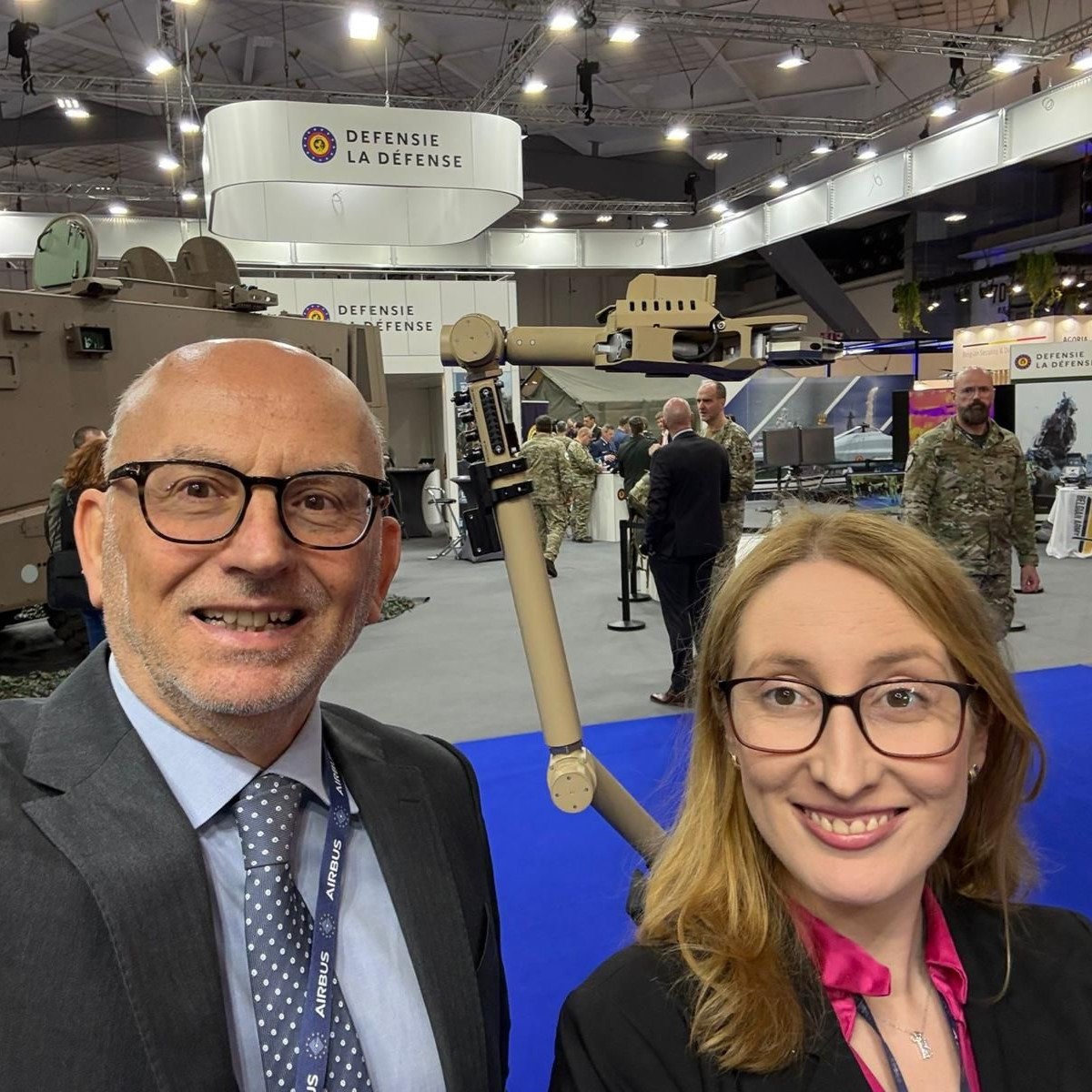
Our Defence & Aerospace experts Beatriz Cózar Murillo and Giorgio Cioni were pleased to attend the first edition of BEDEX, (Brussels European Defence Exhibition & Conference) that took place from 12th to 14th March in Brussels.
The conference brought together key stakeholders across the Belgian and European defence community and reflected the city’s unique position at the centre of Europe’s institutional and strategic landscape.
UK Public Affairs Panel Event
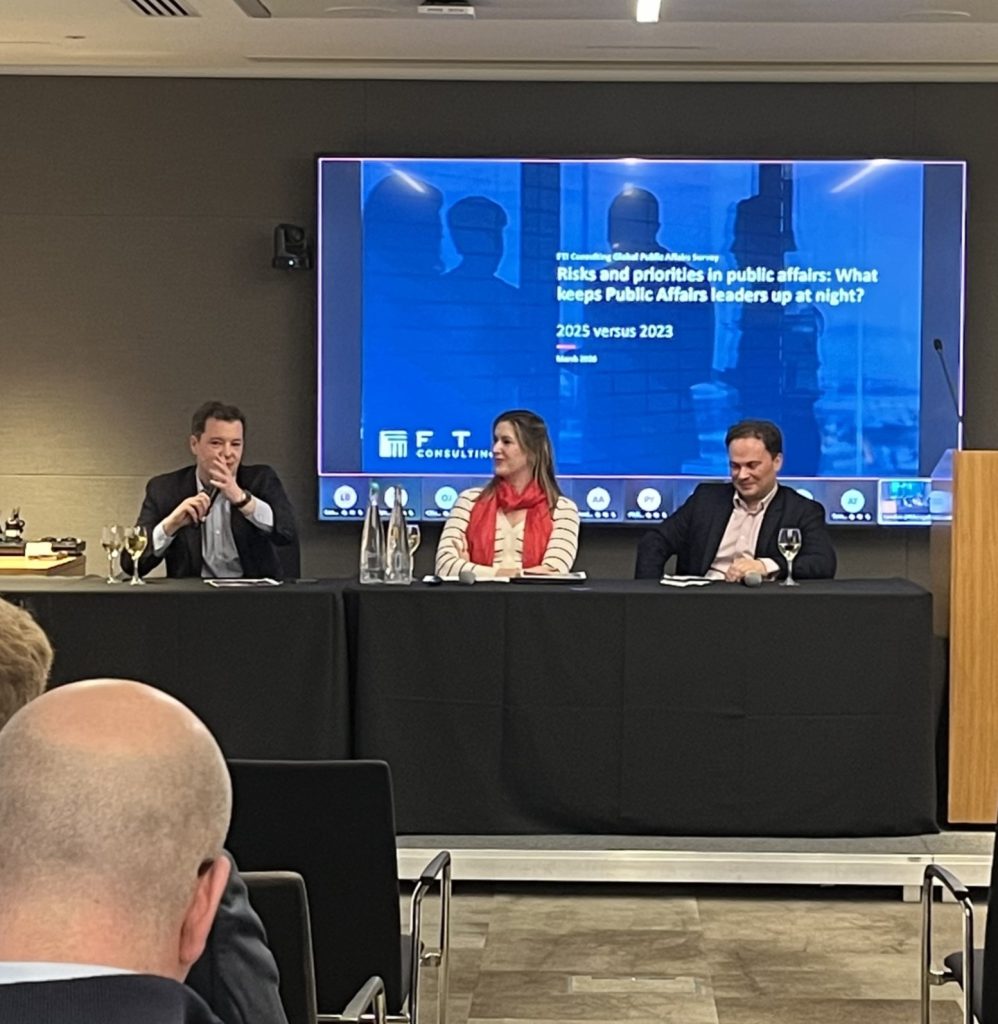
Our UK Public Affairs experts hosted an engaging panel event at our London offices last week.
Moderated by our UK Head of Public Affairs, Alex Deane, and featuring insights from Senior Director Adrian Pascu-Tulbure and Hannah Peech, Principal at Heidrick & Struggles, the event brought together leaders and experts to explore how the strategic priorities and external risk landscape for public affairs teams have evolved over the past two years, and what this means for organisations navigating today’s political and regulatory environment.
Critical Minerals in the Crosshairs
In January, President Trump issued a Section 232 presidential proclamation directing senior U.S. officials to negotiate agreements with trading partners to address national security vulnerabilities linked to the import of processed critical minerals and their derivative products (PCMDPs).
In our recent article ‘Critical Minerals in the Crosshairs: Navigating U.S. Supply Chain Policy and Global Competition’, our experts outline why these changes matter and what this means for the industry.
Beyond Security and Operational Continuity
On 22nd February 2026, the leader of the Cartel Jalisco Nueva Generación (CJNG), Nemesio Rubén Oseguera Cervantes (“El Mencho”), was killed as Mexican federal forces sought to arrest him in a targeted raid. El Mencho was among the most wanted criminals in both Mexico and the United States, making this operation comparable in significance only to the final arrest of Joaquin Guzmán (“El Chapo”) a decade ago.
FTI Consulting’s Public Affairs experts outline the emerging corporate risks after the killing of El Mencho.
European Defence Fund Info Days 2026
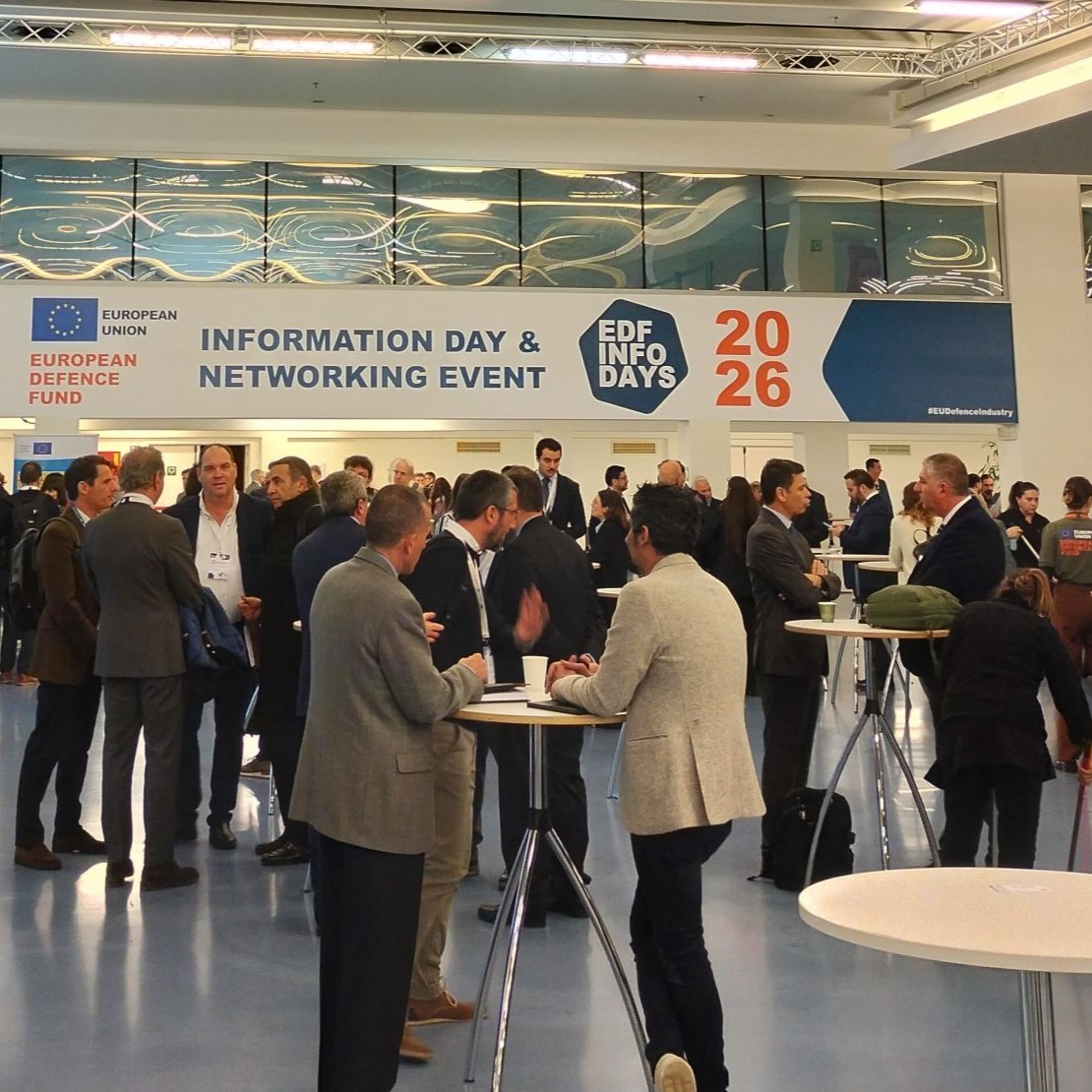
We were pleased to attend the European Defence Fund Info Days 2026 in Brussels last week, with our Brussels defence team joining the discussions on the future of European defence cooperation, capability development and innovation.
The event provided valuable opportunity to exchange views with institutional representatives and industrial stakeholders on the priorities shaping the European defence landscape, as well as on the evolving framework for collaborative defence initiatives across the EU.
Upcoming Elections
- 22 March: Parliamentary elections (Slovenia)
- 24 March: Parliamentary elections (Denmark)
- 10 April: Presidential election (Djibouti)
- 12 April: Parliamentary elections (Hungary)
- 12 April: General and presidential elections (Peru)
- 12 April: Presidential election (Benin)
- 19 April: Parliamentary elections (Bulgaria)
- 7 May: Local elections (United Kingdom)
- 24 May: Parliamentary elections (Cyprus)
- 31 May: Presidential election (Colombia)
To be added to the distribution list for the Global PA Newswire, or for further information on the dedicated Public Affairs team at FTI, please contact [email protected]. |
The views expressed in this article are those of the author(s) and not necessarily the views of FTI Consulting, its management, its subsidiaries, its affiliates, or its other professionals.
©2025 FTI Consulting, Inc. All rights reserved. www.fticonsulting.com