Global Public Affairs Newswire – 20 February 2026

Welcome to the latest instalment of FTI Consulting’s fortnightly Global Public Affairs Newswire.
This week, we bring you updates from FTI Public Affairs teams across the world’s major markets, including Germany, the United States, China, the United Kingdom, the European Union, India, France, Saudi Arabia, Colombia, Australia, Spain, and Brazil. This week’s update also brings readers market insights from FTI Public Affairs experts from around the world, explaining what these updates mean for your business.
Market updates
- The end of an era: At the Munich Security Conference, German Chancellor Friedrich Merz framed the current geopolitical moment as a rupture rather than a downturn. He argued that the post-1945 international order no longer functions as the default framework for global politics, and that Europe has crossed a threshold into an era once again defined by power politics, spheres of influence, and strategic competition. The implication of Merz’s remarks was one of permanence: this is not a temporary disruption, but a new operating environment to which governments and markets must adapt.
- Clear normative divergence from Washington: While reaffirming Germany’s commitment to the transatlantic relationship, Merz openly acknowledged that the United States can no longer be treated as the uncontested anchor of the Western order. He warned that American leadership is increasingly contested and even “squandered”. He pushed back against a worldview that subordinates international law, climate cooperation, and multilateral institutions to narrowly defined national interests. In doing so, Merz, an avowed trans-Atlanticist drew an unusually clear line.
- Europe as a reluctant but necessary order-builder: Merz’s diagnosis led to a clear conclusion: Europe must act as a security and order-producing actor, not merely as a regulatory or economic one. He presented European integration, higher defense spending, and strategic coordination as necessities imposed by systemic change rather than political choices. At the same time, reporting from Munich highlighted the tension between this ambition and Europe’s capacity to deliver, with internal divisions and a lack of concrete follow-through threatening to undercut the strategic shift Merz outlined.
For more information about FTI Consulting’s Public Affairs services in Germany, please contact [email protected].
- Iran: Rising Tensions After Nuclear Talks Stall| Washington is closely monitoring developments following inconclusive nuclear discussions between U.S. officials and Iran’s foreign minister in Geneva. Public comments from the White House suggest growing frustration with the pace of negotiations, prompting speculation that President Trump could consider alternative options, including potential military measures. Meanwhile, reports indicate a noticeable uptick in U.S. military activity in the region, including more than 150 cargo flights and the deployment of additional fighter aircraft. While no formal action has been announced, regional partners and markets are watching carefully.
- Endangerment: EPA to Reverse Longstanding Climate Finding| President Donald Trump announced that the Environmental Protection Agency will rescind the 2009 “endangerment finding,” the legal foundation the agency has used for nearly two decades to regulate greenhouse gas emissions from vehicles, power plants, and industrial facilities. The decision would significantly reshape U.S. climate policy and could introduce a period of regulatory uncertainty. For multinational companies and energy-intensive industries, the change may create complexity around compliance and heightened legal risk as federal and state approaches potentially diverge.
- Trump–Xi Summit: Trade and Security Front and Center| President Trump is expected to travel to China in April for a summit with President Xi Jinping in Beijing. The meeting would mark the first in a series of high-level engagements focused on stabilizing U.S.–China relations. Key agenda items are likely to include trade tensions and tariffs, technology restrictions, fentanyl trafficking, Taiwan — including U.S. arms sales — and export controls involving rare earth minerals and advanced semiconductors. The summit comes at a sensitive moment in the bilateral relationship, with both sides seeking to manage strategic competition while preventing further economic disruption.
For more information about FTI’s Public Affairs services in the Americas, please contact [email protected].
- President Xi and President Trump held another phone call, with an April visit by Trump gaining clarity. Official readouts reflected divergent priorities: China stressed Taiwan as the “most important issue” and urged caution on arms sales, while Trump focused on trade, Ukraine, Iran, and potential expanded U.S. agricultural purchases. Ongoing U.S. export controls, tech restrictions, and critical mineral initiatives underscore that structural competition persists.
- China-EU relations are cautiously warming, aided by recent and planned European visits. Transatlantic shifts have added momentum, and recent EV price undertakings offer a concrete tool to manage trade tensions, though economic security and industrial policy disputes continue to shape engagement and limit progress.
- China-Japan ties have moved in the opposite direction. Japanese leaders’ Taiwan statements drew strong Beijing reactions. Historical and regional references by China’s foreign minister at the Munich Security Conference reinforced the stakes, keeping Taiwan firmly within China’s red lines and heightening regional geopolitical risk.
For more information about FTI’s Public Affairs services in China, please contact [email protected]
- Last weekend, at the 2026 Munich Security Conference, Prime Minister Sir Keir Starmer delivered a major speech where he underlined the urgency of Europe’s security challenges. The address came as European leaders were out in force at Munich underlining their determination to shoulder more of the burden for upholding collective security across the continent in the face of increased uncertainty regarding U.S. strategic guarantees.
- Speaking alongside the President of the European Commission, Ursula von der Leyen, Starmer asserted that Britain has moved beyond the “Brexit years”, stressing to the audience his view that continental security is a shared responsibility. The Prime Minister called for deeper UK-EU defence & security cooperation and closer industrial integration to forge what he termed a “joint European defence industry”. Starmer signalled the UK’s willingness to participate in innovative joint solutions with European allies, in order to accelerate defence investment and capability development across the continent.
- Starmer acknowledged the United States’ historic contribution to European security and rejected the assertion that bruised transatlantic ties between the U.S. and Europe mark a “rupture” in relations. Instead, he urged allies to “not disregard everything that has sustained us for the last 80 years” and called the moment an opportunity for “radical renewal”, outlining a vision for for the development of a “more European” NATO that can more effectively shoulder more of the burden in the transatlantic alliance.
- Whilst Starmer said spending would need to “go faster”, questions marks remain over the UK’s own plans. Debates continue in Whitehall between HM Treasury, the Ministry of Defence and 10 Downing Street over how best to deliver the long-delayed Defence Investment Plan and to what extent defence spending plans can be further accelerated in order to offset an expected £28 billion in the defence budget over the next four years.
For more information about FTI’s Public Affairs services in the United Kingdom, please contact [email protected].
- The Antwerp Summit and subsequent leaders’ retreat at Alden Biesen underscore the EU’s growing commitment to a robust industrial policy amid mounting geopolitical and economic pressures.
- On 11 February, industry leaders – spearheaded by the chemical sector – renewed calls for urgent action to reverse industrial decline. Their primary focus is reducing the costs and regulatory burden of decarbonization. Supported by several Member States, these demands may lead to a reform of the Emission Trading Scheme (ETS) and significant reductions of administrative “red tape.”
- The following day Commission President Ursula von der Leyen wanted to use the informal summit to garner support for her roadmap for industrial revival among European heads of state and government. While leaders agree that action is urgently needed, there are major disagreements on the details. The controversy centres around the question of “Made in Europe” requirements and the issue of common depts. Notable progress was made on the Capital Markets Union, the idea of an integrated market for investment and savings across all Member States and the possibility of ‘enhanced cooperation’ that allows groups of ambitious Member States to move ahead with policy reforms without agreement of opposing Member States.
- At the next European Summit on 19 and 20 March the European Commission will present its Roadmap for further to reduce administrative burdens and to promote and leverage private and public capital. Over the next months there will also be several important legislative proposals such as the Industrial Accelerator Act and the Circular Economy act, all aimed at supporting the competitiveness of European industry.
For more information about FTI’s Public Affairs services in the EU, please contact [email protected]
- New Delhi inaugurated the AI Impact Summit on 19 February—a first for the Global South. Over 100 countries participated, with 20 heads of state, 50+ ministers, 40 CEOs—of OpenAI, Anthropic, Qualcomm, Google, DeepMind, Microsoft, and others—and 250,000 registered visitors.
- India’s IT Minister said $17 billion in VC funds and $200 billion in infrastructure investment were committed at the summit. Sundar Pichai gave details of Google’s $15 billion AI hub planned in Vizag, including new fiber-optic routes between the U.S. and India. The government earmarked $1.1 billion for a state-backed AI venture capital fund. For a market of a billion internet users, VC investment in India remains low: under 1% of global AI-related investment in 2025.
- Just before the Summit, New Delhi notified IT Rules amendments effective 20 February, reducing the content takedown window from 36 hours to a near-impossible three hours and mandating labeling of AI-generated content. The compressed timeline has raised industry concerns about feasibility of human review, and risk of over-removal with automated processes.
For more information about FTI’s Public Affairs services in India, please contact [email protected].
- On 12 February, Prime Minister Sébastien Lecornu published France’s third multi-year energy plan (PPE3), a long-awaited strategic roadmap for industrial sectors. It sets the country’s energy priorities and guides investment, planning, and long-term competitiveness.
- The plan aims for France to source 60% of its energy from decarbonized electricity by 2030, and as much as 70% by 2035. This represents a drastic shift from the country’s current 60% energy dependence on fossil fuels. To meet these targets, nuclear production goals have been raised by 5%, while a previous plan to close 14 reactors has been scrapped. Controversially, wind and solar energy targets have been cut by roughly 20%.
- The text has proven politically divisive, as energy policy in France is sharply split along party lines. The right supports nuclear energy, while the left pushes for renewables. Moreover, lawmakers had sought to influence the text by calling for it to be reviewed in Parliament. The government’s decision to publish the plan via decrees drew condemnation from opposition parliamentarians.
For more information about FTI’s Public Affairs services in France, please contact [email protected].
- On 12 February 2026, Saudi Arabia announced a reorganization affecting over 40 senior and regional government roles, representing its largest reshuffle since 2022.
- Most notably, Fahad AlSaif was appointed Minister of Investment, succeeding Khalid Al Falih, who has led the ministry since 2020 and is among the Kingdom’s longest-serving officials. Al Falih will remain in government as Minister of State and Member of the Cabinet.
- New Minister of Investment Fahad AlSaif joins the government from the Public Investment Fund (PIF), the Kingdom’s sovereign wealth fund, where he has been overseeing the PIF’s global capital finance and investment strategy.
- In his new role, AlSaif is expected to support the Kingdom’s target of attracting US$100 billion in annual foreign direct investment by 2030. Advancing toward this objective is likely to involve continued efforts to expand foreign participation in the economy, potentially alongside further structural and regulatory adjustments.
- Earlier this year, Saudi Arabia removed most restrictions that had limited foreign participation in its domestic equity market, representing one of its most significant financial liberalization measures to date. This has been accompanied by revisions to real estate regulations intended to facilitate increased foreign ownership and investment.
- Concurrently, the PIF is expected to unveil a new strategy aimed at refining and accelerating implementation of Saudi Vision 2030, the Kingdom’s long-term framework for diversifying its economy and reducing reliance on hydrocarbons.
For more information about FTI’s Public Affairs services in Saudi Arabia, please contact [email protected]
- In late 2025, President Petro decreed a historically large spike in the 2026 minimum wage of 23%.
- The decree was formally challenged and subsequently halted by the Council of State, which ruled that the measure did not meet the technical and procedural standards required by law (inflation, productivity, and growth metrics), forcing the wage-setting process to re-open.
- The government has resumed negotiations through tripartite talks with employers and unions while preparing a new decree to re-establish a legally valid 2026 minimum wage; the executive has signaled it wants to “preserve the purchasing-power” gains embedded in the original increase while making the formula defensible under judicial review.
- Officials have warned that the new legally compliant wage could be equal to or even higher than the suspended figure and, in parallel, introduced the idea of a “mobile minimum wage” — a framework that would allow in-year adjustments if inflation or the cost of the basic consumption basket rises, which for companies would mean less predictable payroll trajectories and the possibility of multiple statutory wage resets within a single fiscal year.
- A higher — and potentially mobile — minimum wage would support household incomes and short-term consumption, but materially raise total labor costs since taxes and benefits are indexed to the minimum.
- However, experts warn that a sharp or repeated increase could expand informality and pressure employment, particularly among small and labor-intensive sectors. For employers, this means tighter margins, price adjustments, or slower hiring; for investors, it adds inflation, interest-rate, and regulatory-certainty risks to Colombia’s 2026 outlook — especially in sectors sensitive to unit labor costs.
For more information about FTI Consulting’s Public Affairs services in Colombia, please contact [email protected].
- Less than a year after the Federal election and after a prolonged period of instability, the main Opposition Liberal Party have elected a new leader, Angus Taylor.
- After losing the leadership outgoing Opposition leader Sussan Ley signalled she will leave politics, with a by-election now due for her seat of Farrer in NSW. This will be seen as a litmus test for the new leader.
- In his first speech as Opposition leader, Taylor highlighted his policy areas of focus: lower immigration, increasing defence spending, easing cost of living, increasing home ownership and affirming the party’s opposition to net zero.
- Taylor faces the dual challenges, of reuniting a fractured Liberal party, while also sharpening attacks on the Labor government’s areas of vulnerability.
For more information about FTI’s Financial Services Public Affairs support in Australia, please contact [email protected].
- Brazil’s National Congress resumed work on February 2 aiming to reorganize its legislative agenda for a pre-election year, but Carnival quickly displaced institutional debate with political spectacle. In Rio de Janeiro, a samba school staged a parade honoring President Luiz Inácio Lula da Silva, portraying former president Jair Bolsonaro as a clown and mocking “traditional families.” The controversy centered not only on the partisan tone — including campaign-style slogans, references to Lula’s ballot number, and his presence waving from the sidelines — but on reports that public agency Embratur directed millions of reais in public funds to support the parade, despite Carnival already generating substantial private revenue. Although Brazil’s Superior Electoral Court rejected an attempt to block the tribute, several justices warned that the use of public resources for what resembled campaign promotion could constitute an electoral violation, potentially resulting in fines or challenges to Lula’s eligibility, while the segment attacking “neoconservatives” reignited mobilization among Catholic and evangelical groups and deepened resistance among constituencies already critical of his administration.
- The fallout from the liquidation of Banco Master has moved beyond financial supervision into open institutional confrontation. The mid-sized lender grew rapidly by offering above-market deposit rates allegedly backed by illiquid — and in some cases questionable — assets, prompting Brazil’s Central Bank to impose temporary administration and ultimately order extrajudicial liquidation in November 2025 to prevent systemic risk. The process was later challenged by the federal audit court, which argued that the exposure of public banks and pension funds justified external oversight, triggering a jurisdictional clash that unsettled markets. Parallel criminal investigations uncovered signs of potential fraud and political pressure on public financial institutions, leading the case to Brazil’s Supreme Court, where proceedings were placed under seal. A Senate subcommittee now monitors the unfolding inquiries, while lawmakers debate transparency, Central Bank autonomy, and possible supervisory failures. What began as a bank collapse has evolved into a broader stress test of Brazil’s regulatory credibility, judicial neutrality, and governance stability.
- Building on a strategy that has served him well over the past year, President Luiz Inácio Lula da Silva continues to pursue a pragmatic form of “active non-alignment” — cultivating ties across rival blocs while diversifying trade to preserve room for maneuver. In Brasília, Brazil joined Russia in defending South Africa’s participation in the 2026 G20 summit and criticizing “unilateral coercive measures,” while also deepening financial coordination within BRICS, including increased dialogue between central banks and discussions on alternative payment systems that could reduce reliance on the U.S. dollar. This week, a state visit to India, including the President, ministers and business leaders, seeks to advance cooperation in AI and strategic minerals, support trade talks between Mercosur and India, and promote a defense deal involving Embraer. Brasília is also pushing ratification of the European Union–Mercosur agreement and exploring arrangements with Canada and the United Arab Emirates.
For more information about FTI’s Public Affairs services in Brazil, please contact [email protected].
- Spain has recently concluded two regional elections where the PSOE –PM Pedro Sanchez’s party–, has taken historical vote losses. In Extremadura, the party secured 26% of the vote (down from 40% in 2023), and 24% in Aragon (down from 29%).
- Following these, Sanchez’s government appears to be prioritizing socially framed initiatives while staying clear of controversial domestic discussions. For example, the latest measures from the executive include the launch of the “España Crece” investment vehicle —designed to extend strategic investments beyond the conclusion of the EU recovery plan—, an increase on the minimum wage, and a package of measures to end energy poverty in the country.
- In contrast, PM Sánchez is adopting a more assertive international profile, backing investigations into TMT multinationals for breaches of data protection, taking a strong stance against nuclear rearmament in European defence forums, and with his office stating that the informal pre-summit meeting organised by Italy “undermines the basic principles of the European Union and, rather than bringing solutions closer, pushes them further away”.
For more information about FTI’s Public Affairs services in Spain, please contact [email protected]
Expert Analysis |
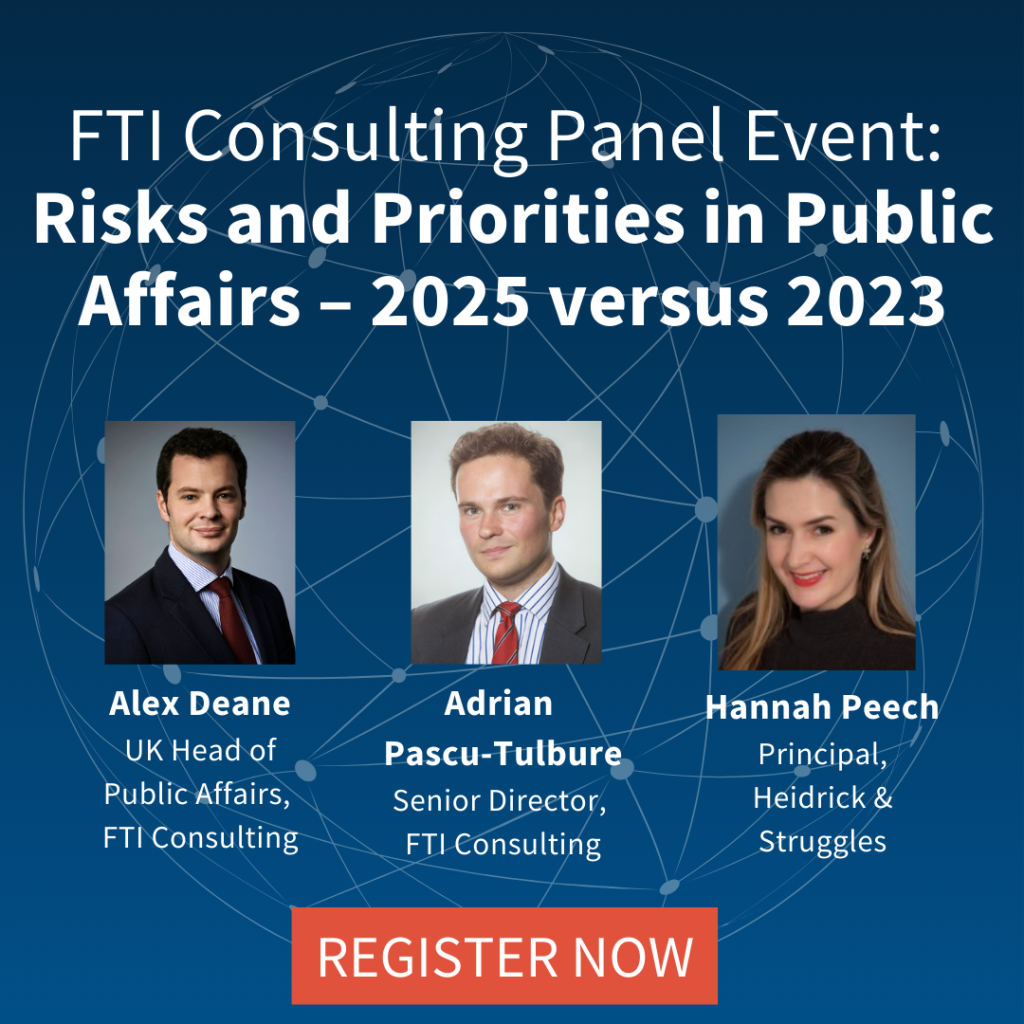
UK Public Affairs Panel Event
We are pleased to invite you to a panel discussion exploring the key findings of our recent research report ‘Risks and Priorities in Public Affairs – 2025 versus 2023’. This session will bring leaders and experts together to unpack how the strategic priorities and external risk landscape for public affairs teams have shifted over the past two years, and what this means for organisations navigating today’s political and regulatory environment.
When: Thursday 12th March 2026
Where: FTI Consulting London offices or virtual
The Arsenal Europe Newsletter
Amidst a rapidly changing global political landscape that’s reshaping the defence industry, we’re proud to have been the launch partner for the European edition of The Arsenal, a newsletter covering Ukrainian and European defence tech and regulation with actionable business insights.
Throughout our sponsorship, our Public Affairs experts across Europe shared their insights on why strategic defence demands strategic communications.
Munich Security Conference 2026: Europe presses the accelerator
Each year, the Munich Security Conference delivers a three-day diplomatic whirlwind, offering a vital barometer of the most urgent international defence and security trends of the day.
This year, the health of the transatlantic alliance between the U.S. and Europe firmly took centre stage. In the Conference’s aftermath, FTI Consulting’s global Public Affairs experts analyse the ongoing strategic shift for Europe and assess the emerging trends for the continent’s defence industry as the political imperative to accelerate rearmament efforts increases.
2026 Latin America Insights
The Latin America of 2026 defies traditional narratives. It is marked by fragmentation, complexity, and a rise in special situations that challenge conventional approach to risk and opportunity. In our 2026 Latin American Insights, our experts based in Brazil, Colombia, Mexico and the U.S. analyze and examine the risk dynamics in these key markets and share their advice for organizations to capitalize risks as opportunities in high-stakes situations.
This year’s insights include:
- Latin America 2026: The Rise of Special Situations
- Brazil 2026: Practicing Resiliency in a Fragmenting World
- Colombia 2026: Navigating a Year of Structural Change
- Mexico 2026: Understanding Risk as a Competitive Advantage
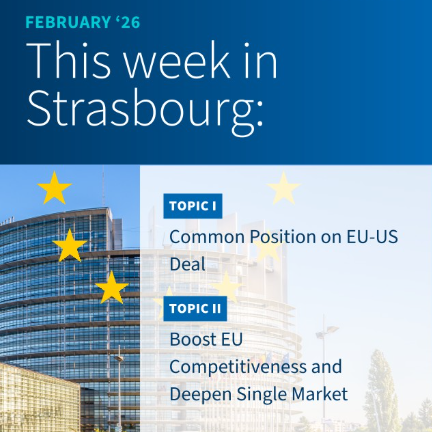
Strasbourg Plenary
What were the main takeaways from this month’s Strasbourg plenary?
Our experts Aleksandra Żuchowska and David Simon were live on the ground this week – check out their top policy highlights!
Society of European Affairs Professionals Event
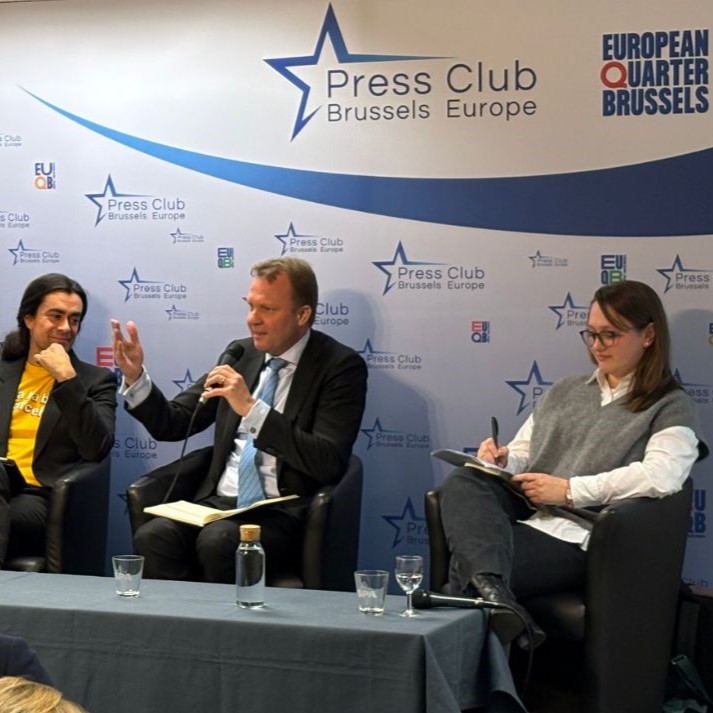
Last week, our head of office Hans Hack shared his experience in a workshop on how to work with consultants effectively and successfully, organised by the Society of European Affairs Professionals, together with the The European Centre for Public Affairs (The ECPA).
This workshop offered a practical, experience-based discussion between practitioners from consultancies, companies and civil society on what makes cooperation work well in practice, and how digital tools and AI are reshaping consultancy work.
Geopolitical Gazette
Introducing FTI Consulting’s newest monthly newsletter, featuring expert insights on managing the tensions, shifts, emerging risks and opportunities that will define 2026 and beyond.
Lorem ipsum dolor sit amet, consectetur adipiscing elit. Ut elit tellus, luctus nec ullamcorper mattis, pulvinar dapibus leo.
Upcoming Elections
- 22 February: Parliamentary elections (Laos)
- 5 March: General election (Nepal)
- 8 March: Parliamentary elections (Colombia)
- 15 March: Legislative elections (Vietnam)
- 22 March: Parliamentary elections (Slovenia)
- 12 April: Parliamentary elections (Hungary)
- 12 April: General and presidential elections (Peru)
- 12 April: Presidential election (Benin)
To be added to the distribution list for the Global PA Newswire, or for further information on the dedicated Public Affairs team at FTI, please contact [email protected]. |
The views expressed in this article are those of the author(s) and not necessarily the views of FTI Consulting, its management, its subsidiaries, its affiliates, or its other professionals.
©2025 FTI Consulting, Inc. All rights reserved. www.fticonsulting.com