Public & Government Affairs

Global Public Affairs Newswire – 19 September 2025

Welcome to the latest instalment of FTI Consulting’s fortnightly Global Public Affairs Newswire.

This week, we bring you updates from FTI Public Affairs teams across the world’s major markets, including the United States, the United Kingdom, the European Union, China, France, India, Australia, Germany, Brazil, Spain, Ireland and Colombia. This week’s update also brings readers market insights from FTI Public Affairs experts from around the world, explaining what these updates mean for your business.

Market updates

Debate and division dominate U.S. headlines
  • Political Debate or Acts of War? Following the killing of political activist Charlie Kirk, Americans across the political spectrum continue to debate the role of free speech and the impact of political violence on democracy. It has left many wondering how – if at all – we can return to respectful debate. While a large portion of the country continues to mourn and call for unity, others are leaning into charged narratives intended to vilify and further divide the nation. It remains to be seen which version of American politics will prevail.
  • To Fund or Not to Fund? Funding for the federal government is set to expire on September 30. As we speed towards that deadline, Republicans put forward a stopgap proposal that would keep the government open until November 21. Senate Majority Leader Thune says that the measure is intended to allow for more discussion on the longer-term spending bill and is pushing for a vote on the continuing resolution on Friday, ahead of a weeklong recess. The outcome of the budget battle remains unclear with weak bi-partisan support, a push on Affordable Care Act subsidies, and Democrats weighing how best to use their leverage to stop President Trump’s policy agenda.
  • Fed Up. On Wednesday, the Federal Reserve Bank lowered interest rates by a quarter point and indicated that two additional cuts could follow this year as a result of challenges confronting the labor market. The cut was the first in nine months and comes after months of a pressure campaign by President Trump, including threats to fire Fed Chair, Jerome Powell, attempts to fire Fed Governor Lisa Cook, and nominating his top economic advisor, Stephen Miran, to the board. While they have not been vocal, privately, business leaders remain concerned about the independence of the Fed and potential economic instability that could result from politicizing the institution.
“Every day, the number of battlefronts seems to increase and people are being pushed to choose sides. Companies continue to be impacted by issues like tariffs, economic uncertainty, and regulatory changes, and are looking for guidance on how they can engage the administration on these issues, but avoid getting pulled into partisan battles.”

Jennifer Kaplan
Managing Director, United States

For more information about FTI’s Public Affairs services in the Americas, please contact [email protected].

UK Ambassador to the US ousted ahead of Trump State Visit
  • The dismissal of Lord (Peter) Mandelson as UK Ambassador to Washington threw Westminster into fresh turmoil last week, days before US President Donald Trump’s state visit. 
  • Lord Mandelson’s removal follows leaked emails which revealed that he had downplayed the closeness of his friendship with the sex trafficker Jeffrey Epstein, forcing the Prime Minister to dismiss him in a bid to contain the reputational damage. Allies insist the Prime Minister has demonstrated decisive leadership in cutting loose a once-powerful figure, but critics warn the episode highlights poor vetting and misjudgement at the top of Starmer’s administration.
  • For Starmer, the stakes could not be higher. This week’s state visit by President Trump has been the most significant diplomatic test of his premiership so far, demanding both authority and clarity of purpose. The sudden vacancy in Washington leaves Britain’s diplomatic hand weakened, and the crisis collided with a sweeping Cabinet reshuffle triggered by the resignation of Deputy Prime Minister Angela Rayner, following revelations that she had not paid the correct amount of tax on a £800,000 property purchase. 
  • More than 20 MPs were promoted in the subsequent reshuffle, a similar number demoted, and entire departments overhauled – including the creation of a new department for Welfare and Skills under Pat McFadden. The clear intent is to reset the government’s direction and prove Labour still has the appetite for change.
“The sacking of Peter Mandelson coming hot on the heels of a sweeping reshuffle has created a moment of crisis for the Government, with MPs raising questions about the advice the Prime Minister is getting from his Chief of Staff.”

Gemma Doyle
Senior Managing Director, United Kingdom

For more information about FTI’s Public Affairs services in the United Kingdom, please contact [email protected].

The Draghi report: one year on
  • On 16 September, Commission President Ursula von der Leyen and former Italian Prime Minister Mario Draghi opened a high-level conference on Europe’s competitiveness, reviewing the achieved progress on Draghi’s recommendations. President von der Leyen’s speech focused on closing the innovation gap with the U.S. and China, completing the Single Market, and using the energy transition as a driver of growth. She highlighted the €400 billion Competitiveness Fund, measures to cut high energy costs, and incentives for clean and circular industries. She also stressed the importance of reducing dependencies through diversified trade, recycling, and strengthening Europe’s defence, alongside simplifying EU rules to cut €8 billion in annual business costs and updating merger guidelines.
  • In her keynote, President von der Leyen reaffirmed her position set out in last week’s State of the Union, during which she also emphasised the need for greater European unity and action, while noting remaining divisions between the Commission, Member States, and the European Parliament. In her State of the Union, the President attempted to stay firmly in the centre of the political spectrum by addressing issues related to housing, migration, border control, climate resilience, food safety, and security. It remains clear that the political landscape is still fragmented, and she will continuously face political pressure as the Commission’s ability to deliver on the shifted political priorities, such as sovereignty and competitiveness, is still rather limited.
  • Finally, it is rather noteworthy that Draghi focused on AI and urged caution on the AI Act, calling for postponement of high-risk requirements and suggesting ex-post enforcement based on real-world AI performance rather than upfront classifications. 
“The challenges the EU is facing are clearly set out by the European Commission and Mario Draghi, addressing them will require members states and the European Parliament to agree on actions and funding. That will require many people involved to compromise and move past red lines. I am not convinced the political will to do that is there at the moment.”
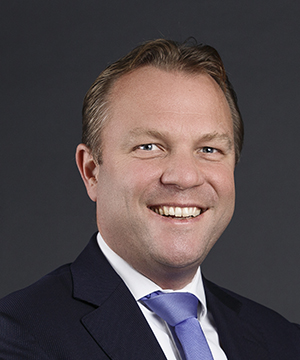
Hans Hack
Head of Public Affairs, Brussels

For more information about FTI’s Public Affairs services in the EU, please contact [email protected]

China-U.S. talks in Madrid yield fragile consensus amid sanctions tensions
  • Chinese Vice Premier He Lifeng and U.S. Treasury Secretary Scott Bessent held their fourth meeting this year in Madrid, described as constructive and results-oriented. Talks covered investment, tariffs, and technology. Beijing signaled readiness to improve ties on the basis of mutual respect, but not at the expense of principles. Washington emphasized fair competition and highlighted Chinese signals on investment access and transparency.
  • A “basic framework consensus” was reached on TikTok, covering data security, algorithm licensing, and operational autonomy. Washington stressed that ownership and data control remain essential security guarantees, while Beijing rejected the politicization of trade and technology and called for safeguarding legitimate corporate rights. Analysts cautioned that algorithm and data transparency will ultimately determine the deal’s durability.
  • The talks unfolded amid escalating sanctions. Washington added Chinese semiconductor and biotech firms to its entity list, pressed Beijing on unmet farm import pledges, and urged G7 and NATO to impose tariffs on Chinese imports linked to Russian oil. In response, Beijing launched anti-dumping and anti-discrimination probes targeting U.S. semiconductor policies. Structural disputes over trade, technology, and digital governance remain unresolved.
“The Madrid round highlights the contradictions of China-U.S. engagement: dialogue projects stability, yet is continually eroded by fresh sanctions and strategic distrust. The TikTok framework is more symbolic than substantive, unlikely to resolve the systemic rifts over tariffs, export control, technology, and market access. For Beijing, sovereignty and equal treatment remain red lines, while Washington’s parallel pressure tactics cast doubt on the durability of any consensus. A Xi-Trump call or meeting may generate headlines, but it is unlikely to alter the fundamental trajectory of rivalry.”

Xu Zheng
Director, Public Affairs, China

For more information about FTI’s Public Affairs services in China, please contact [email protected]

Macron appoints new Prime Minister as budgetary and political crisis worsens
  • On 11 September, President Macron appointed 39-year-old Defence Minister Sébastien Lecornu as France’s new prime minister. Lecornu began his political career in France’s mainstream conservative party before joining Macron in 2017, quickly becoming a trusted ally.
  • Lecornu now faces the challenge of forming a new government amid a National Assembly divided into three antagonistic blocs.  He is expected to leverage his relative popularity on the right and good ties with the left to build consensus on key issues and survive until 2027.
  • He is under immediate pressure to finalize the budget, traditionally presented on the first Tuesday of October. He is likely to make concessions to the centre-left on contentious elements of his predecessor’s €44 billion deficit reduction plan, a move that will be challenged by the right and closely watched by international investors, especially following Fitch’s downgrade of France’s sovereign credit rating.
“Lecornu is seeking to distance himself from his predecessor, not only by cancelling controversial measures in Bayrou’s budget proposals but also by attempting to secure a supply-and-confidence agreement with political parties before appointing ministers, rather than adopting a more top-down approach. In doing so, he reinforces a recent shift in France towards parliamentary-style politics seen in Germany or Italy, which see prolonged negotiations between parties in the context of government formation. By presenting himself as a consensus-builder, he could also attribute failure to opposition parties, while success would strengthen his standing and possibly propel him to be the first choice of centrist parties ahead of the 2027 presidential race. Even so, he faces an uphill battle, contending with rival and ideologically opposed movements that have an interest in seeing him fail. Should Parliament force him from office in the coming months, Macron would come under heavy pressure to call new elections.”

Gregory Grellet
Senior Managing Director, France

For more information about FTI’s Public Affairs services in France, please contact [email protected] 

Amid US tariff uncertainty, India steps up Pharma reforms
  • As part of tax reforms and simplification, India has reduced GST for critical drugs for life-threatening diseases such as cancer from 12% to 5% or below. This builds on import duty exemptions in February 2025 for 36 essential drugs, along with other duty reductions for pharma.
  • Clinical trials rules are being updated for faster drug approvals. The New Drugs and Clinical Trials Rules (2019) have been partially refreshed, and two other key amendments have been proposed, with public comments sought. These simplify procedures for test licenses and applications for bio-availability/bio-equivalence (BA/BE) studies, and aim to reduce delays in drug development and approval.
  • India pharma firms are aiming for a strategic pivot amid potential US restrictions on Chinese investigational drugs and research data. Potential US restrictions on licensing molecules from Chinese biotechs and tightening FDA reviews of Chinese research data including additional regulatory fees, could trigger realignments in global pharma. Indian pharma firms could emerge as partners for US and European innovators for Key Source Material (KSM) & Active Pharma Ingredient (API) supplies, clinical research, and even custom manufacturing.
“In the backdrop of uncertainty around tariffs and US-India trade negotiations, New Delhi’s pharma sector reforms, with reduced duties and taxes for lifesaving drugs and quicker clinical trials and approvals, is a tailwind for the country’s pharma sector and a step toward India’s “global hub for pharma innovation” aspiration. US- and EU-based innovator pharma and med-tech firms should make the most of the ongoing reforms by realigning market access initiatives, provider-practitioner-patient engagement models, licensing, and partnerships with select Indian biologics and custom pharma formulation developers, prioritizing low cost, high quality clinical research and health tech assessment studies in India.”

Srinivas Vunnava
Senior Director, India

For more information about FTI’s Public Affairs services in India, please contact [email protected].

The Australia/US alliance
  • After persistent calls from the White House for Australia to increase defence spending to 3.5% of GDP (currently sitting around 2% of GDP), this week Prime Minister Anthony Albanese has committed to an investment of up to AU$25 billion over the next decade, to directly endorse Australia’s contributions and capabilities as part of the AUKUS agreement.  
  • The commitment includes a AU$12 billion down payment on the Henderson Shipyard Project in Western Australia to service AUKUS nuclear-powered submarines, AU$1.7 billion to build a fleet of AI-controlled underwater ‘ghost ship’ drones, AU$2 billion for the Osborne Naval Shipyard in South Australia and $850 million on a factory in NSW to build long-range strike missiles.  
  • The announcement came strategically before PM Albanese’s scheduled meeting with President Trump in New York this month, as part of his trip to the UN General Assembly.  
  • US War Secretary Pete Hegseth has repeatedly called on Australia to increase its defence spending by AU$40 billion, to reach the 3.5% of GDP mark. The announcements are undoubtedly well-timed ahead of the two countries in-person meeting. 
“As longstanding strategic partners, Australia’s defence spending is crucial for the longevity and strength of our relationship with the US. Albanese’s announcement of an additional $12 billion for AUKUS advancements signals the long-term value of our relationship with allied nations. The funding to upgrade local shipyards will support local economies in Australia’s smaller capital cities. With these defence announcements, Albanese has sent a strong signal to our ally that we are committed to a long-term, defence relationship, even if we are unwilling to meet the US’s call for Australia to spend 3.5% of GDP on defence.”  

Tara Gasior
Senior Director, Australia

For more information about FTI’s Financial Services Public Affairs support in Australia, please contact [email protected].

Municipal elections in North Rhine-Westphalia: Merz Government passes first test of public sentiment after federal vote
  • On September 14, municipal elections were held in Germany’s most populous federal state, North Rhine-Westphalia. Voters elected municipal councils as well as mayors, lord mayors, and district administrators. The CDU emerged as the strongest party by a wide margin with 33.3% of the vote. The SPD followed with 22.1%, performing worse than in the 2020 municipal elections but still better than in the most recent federal election. The Greens dropped to 13.5%, attracting only about half as many voters as five years earlier. The right-wing AfD recorded significant gains, reaching 14.5% of the vote. Although this result remained below its national performance, it still represented a tripling of its share compared to 2020.
  • Given the CDU’s strong showing, the party leadership expressed satisfaction, viewing the result as momentum for the governing coalition in Berlin and confirmation of its pragmatic course. By contrast, the SPD reacted with disappointment, acknowledging continued losses but stressing that the outcome was less severe than many forecasts had suggested.
  • The municipal elections were widely seen as the first major test of public opinion for the federal government. Chancellor Friedrich Merz (CDU), Vice Chancellor Lars Klingbeil (SPD), and other senior party figures therefore campaigned actively. Merz had signaled beforehand that the results would shape federal policymaking. By the end of the year, the government aims to have reformed the citizens’ benefit system, repealed the heating law, and set the course for reforms in pensions, long-term care, and health policy.
“Despite weak national polling for the governing parties CDU and SPD, both emerged relatively unscathed in North Rhine-Westphalia. The federal coalition must now focus on its autumn reform agenda, with little time before major state elections in March 2026.”

Claas Bansemer
Senior Director, Germany

For more information about FTI Consulting’s Public Affairs services in Germany, please contact [email protected]

Bolsonaro sentenced to 27 years and 3 months in prison for attempted coup
  • Former President Jair Bolsonaro has been sentenced to 27 years and 3 months in prison for his role in an attempted coup following the 2022 elections. Amongst the accusations are leading a criminal organization that sought to prevent Lula’s inauguration by spreading disinformation about the electoral system and advocating military intervention and planning to assassinate President Luiz Inácio Lula da Silva and VP Geraldo Alckmin. Investigations revealed meetings with military officials, ambassadors, and ministers, as well as the planning of violent, anti-democratic actions.
  • Amid heated debate in the lower house, lawmakers advanced two highly controversial regulations: one to curtail the Supreme Court’s ability to prosecute members of Congress, and another to grant amnesty to those involved in the January 8 coup attempt. Both are widely seen as efforts to shield Bolsonaro’s political allies, particularly following his conviction for attempting to overturn the 2022 election.
  • President Lula published a letter in the New York Times presenting Brazil as a sovereign and democratic nation resisting external political pressure from the United States. He portrays Trump administration’s tariffs and criticisms as politically motivated particularly in relation to the prosecution of former President Jair Bolsonaro, lacking economic basis, and damaging to long-standing bilateral ties. Lula reaffirms Brazil’s commitment to multilateralism, environmental protection, and fair regulation of digital platforms. While signaling openness to cooperation, he draws a clear line: Brazil’s democratic institutions and sovereignty are non-negotiable – even with strategic partners like the U.S.
“Former President Bolsonaro’ conviction is a first for Brazil in terms of transitional justice, as Brazil has a repetition history with coups and lack of societal clarity of the facts and due process. Although the case is grounded in constitutional due process, it has raised concerns about potential judicial politicization. Brazil is a young democracy and its institutions are fragmented - the Judiciary uses its authority to curb abuses and guarantee the Constitution, while the Legislative tries to preserve its autonomy and personal interests of congresspeople, and the Executive seeks to balance governability with political pressure. These tensions reflect Brazil’s ongoing struggle to consolidate democratic governance.”

Raquel Rocha
Head of Public Affairs, Brazil

For more information about FTI Consulting’s Public Affairs support in Brazil, please contact [email protected].

Spain escalates boycott of Israel amid mass protests and political polarization
  • Mass protests disrupted the final stage of La Vuelta in Madrid, the country’s premier professional cycling race, forcing cancellation of the closing ceremony. The government estimated 100,000 demonstrators; clashes left 22 police officers injured.  Prime Minister Pedro Sánchez and his allies praised the mobilization, using it to amplify calls for a broader boycott of Israel and to demand the country’s exclusion from sporting competitions, framing Spain as “saving Europe’s honor.”
  • Sánchez unveiled nine measures against Israel, including a Royal Decree-Law to enforce a comprehensive arms embargo, bans on port and airspace use for defense supplies, and restrictions on settlement products. The moves carry direct consequences for Spain’s defense industry, illustrated by the cancellation of a €700m arms contract, and raise uncertainty over future deals. Spain will also expand UNRWA funding and humanitarian aid to €150m in 2026, intensifying pressure on EU partners.
  • Domestically, the PSOE-led government portrays the boycott as moral leadership, while opposition parties accuse Sánchez of fueling unrest and distracting from corruption scandals. Coalition partner Sumar demands tougher action, while PP leaders warn of escalating violence. The issue is reshaping electoral positioning ahead of Spain’s 2026 regional electoral cycle.
“Spain’s measures against Israel will hit sectors with direct exposure, particularly defense and technology, while also sending a strong political signal that polarizes debate at home. For companies, the impact is twofold: potential disruption of activities with Israeli ties and a more volatile domestic climate shaped by heightened political confrontation.”

Ignacio Gomá
Senior Director and Public Affairs TMT Lead, Spain

For more information about FTI Consulting’s Public Affairs services in Spain, please contact [email protected].

Ireland publishes competitiveness plan
  • The Irish Government has unveiled its new Action Plan on Competitiveness and Productivity, an ambitious strategy designed to safeguard Ireland’s economic future amid global uncertainty and shifting trade dynamics. At its core, the plan embraces a “control the controllables” approach, focusing on areas fully within Ireland’s power to strengthen resilience, protect jobs, and maintain the country’s reputation as one of the world’s most competitive economies. 
  • The plan outlines 85 concrete measures across six themes, ranging from innovation and skills to attracting foreign direct investment (FDI). With Ireland’s economy deeply tied to sectors such as pharmaceuticals, semiconductors, energy, and technology, the initiatives target both present challenges and future opportunities. 
  • Among the headline actions are the creation of a National Artificial Intelligence Office, the development of a national life sciences strategy, and a medium-term framework to connect large energy-intensive industries to the electricity grid. The government also intends to assess new ways of supporting high-energy manufacturing sectors.
“Backed by funding ringfenced in the recently updated National Development Plan, Ireland’s new Action Plan shows a pragmatic response to global trade uncertainty: focusing on innovation, skills, and infrastructure while reducing domestic vulnerabilities. By “controlling the controllables,” Ireland is reinforcing competitiveness, protecting jobs, and positioning itself as a resilient, attractive hub for investment in key industries like tech, energy, and life sciences. Time will tell if Government departments and agencies can come together to deliver.”

Aoife Mullen
Director, Ireland

For more information about FTI Consulting’s Public Affairs services in Ireland, please contact [email protected].

US decertifies Colombia in counter-narcotics, raising stakes for policy and business
  • The U.S. decided to decertify Colombia in counter-narcotics efforts and included it in the 2026 Major Drug Transit or Illicit Drug Producing Countries list, citing record coca cultivation and cocaine production under President Petro. Washington distinguishes political leadership, held accountable, from security forces, praised for their continued efforts.
  • Despite the decertification, U.S. assistance to Colombia remains a “vital interest” for American security, ensuring continuity in counter-narcotics cooperation. The decision frames a results-oriented agenda: Colombia can retain a central role in bilateral relations if it demonstrates measurable progress on coca eradication, reduction of cocaine flows, and judicial cooperation.
  • For international investors, the announcement shapes Colombia’s reputation and raises scrutiny on policy execution. It can influence trade negotiations, congressional perspectives, and U.S. investment flows. Companies benefit from monitoring how Colombia advances anti-drug policies, as visible progress reinforces credibility, sustains investor confidence, and supports both bilateral relations and market stability.
"For U.S. investors in Colombia, the decertification elevates the importance of stability and clear policy signals. When Colombia shows concrete progress, it reinforces confidence, protects bilateral flows, and ensures that business decisions remain anchored in trust and long-term partnership."

Julia Gomez
Head of Public Affairs, Colombia

For more information about FTI Consulting’s Public Affairs services in Colombia, please contact [email protected].

Expert Analysis

Association of Women in International Trade event

Last week, FTI Consulting and the Association of Women in International Trade (WIIT DC) cohosted an event focused on “Doing Business In The New Global Landscape” at our offices in Washington D.C.

The discussion dove into key topics such as navigating geopolitical uncertainty, tariffs, and trade restrictions, and their impact on business strategy and operations.

View here >>

Esade Business and Law School, Barcelona

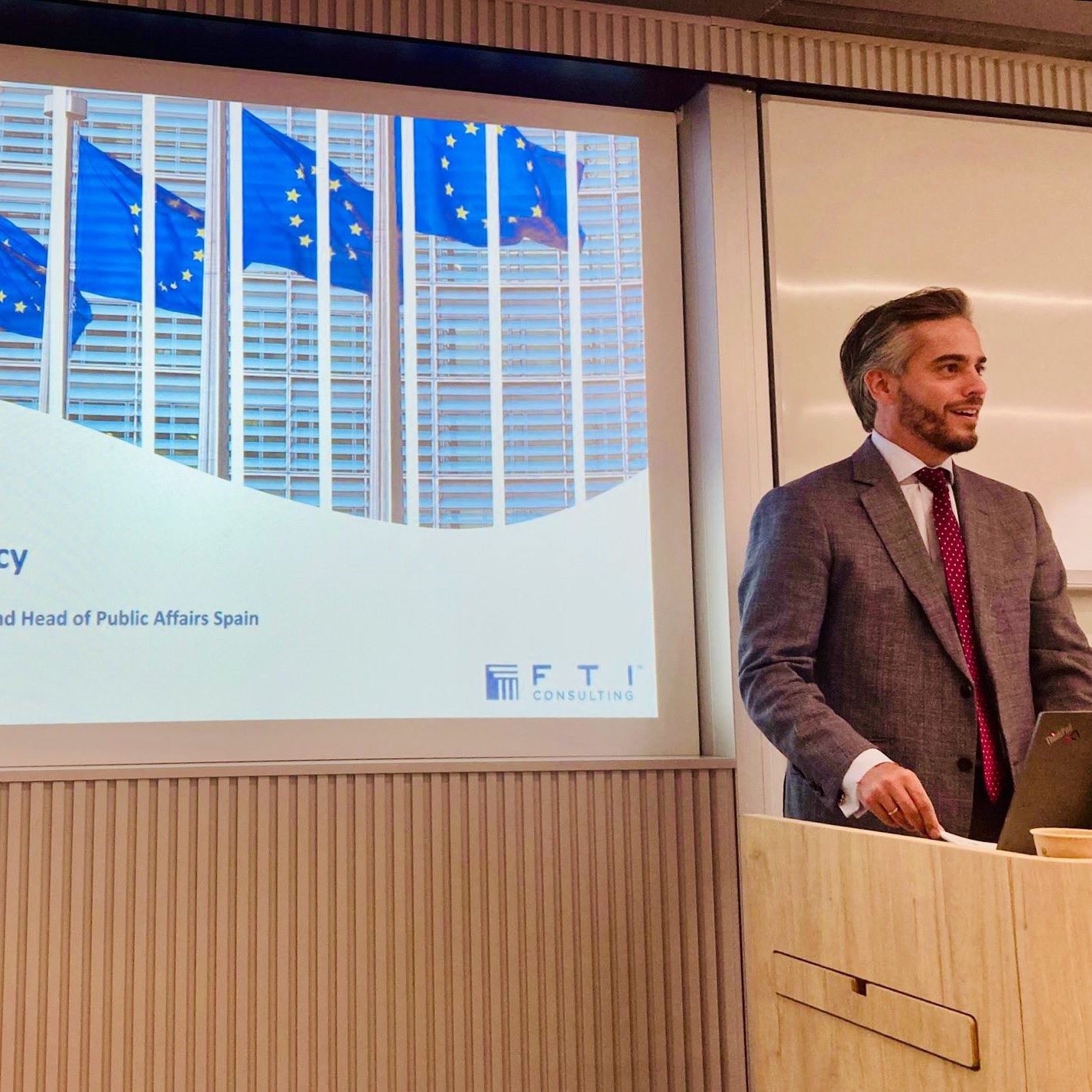
Our Head of Public Affairs in Spain, Carlos Ochoa Alonso, joined students of the Esade Business and Law School in Barcelona last week for an insightful session on the ‘ABC of EU decision-making processes and advocacy’.

Carlos exchanged ideas with the students on how Brussels works in practice, the interplay between policy, politics and regulation, and how advocacy can shape outcomes across sectors.

View here >>

Notes from Strasbourg

What were the key takeaways the first Plenary session after the summer recess? 

Hans Hack, Head of Public Affairs in Brussels, weighs in on the State of the Union, while Senior Consultant David Simon reports live from the ground.

View here >>

W@LifeSciences event in Brussels

Our team in Brussels are thrilled to be hosting an upcoming W@LifeSciences event on ‘Women in Conflict Zones: Enhancing Healthcare Access’, which will explore key themes including the experiences of women and girls in conflict, NATO’s role in safeguarding access to healthcare, and the goals and expected impact of EU and international policy initiatives.

View here >>

Upcoming Elections

  • 27 September: General election (Seychelles)
  • 11 October: Local elections (New Zealand)
  • 26 October: Legislative elections (Argentina) 

To be added to the distribution list for the Global PA Newswire, or for further information on the dedicated Public Affairs team at FTI, please contact [email protected].

The views expressed in this article are those of the author(s) and not necessarily the views of FTI Consulting, its management, its subsidiaries, its affiliates, or its other professionals.

©2025 FTI Consulting, Inc. All rights reserved. www.fticonsulting.com

Related Articles

4th Annual Shareholder Activism State of the Market

September 8, 2025—4th Annual Shareholder Activism State of the Market Request Report The 4th Annual Shareholder Activism State of the Mark...

Use It or Lose It: U.S. Hydrogen Industry Must Act To Maintain Momentum

July 12, 2025—Key takeaway: Following the passage of the “One Big Beautiful Bill Act”, time is of the essence for hydrogen produce...

Quick Analysis: ‘One Big Beautiful Bill’ Drives More Gas and Batteries, Less Renewables

July 3, 2025—With the recent passage of the “One Big Beautiful Bill” (“OBBB” or the “Legislation”),[1] FTI Consulting’s...

FTI Consulting Appoints Dilip Kejriwal as Managing Director in Capital Markets Practice

July 6, 2026—London, 6 July 2026 — FTI Consulting, Inc. (NYSE: FCN) today announced the appointment of Dilip Kejriwal as a Managing...

FTI Consulting News Bytes – 3 July 2026

July 3, 2026—FTI Consulting News Bytes This week’s TMT headlines draw attention to several dominant themes across the sector with A...

FTI Consulting UK Public Affairs Snapshot – The Defence Investment Plan – ‘A DIP into the unknown’

July 3, 2026—Autumn 2025. That was supposed to be the date when the Defence Investment Plan (DIP) would detail how the Ministry of De...