Global Public Affairs Newswire – 16 May 2025

Welcome to the latest instalment of FTI Consulting’s fortnightly Global Public Affairs Newswire.
This week, we bring you updates from FTI Public Affairs teams across the world’s major markets, including the United States, Australia, Germany, China, the United Kingdom, Colombia, France, Brazil, India, and South Africa. This week’s update also brings readers market insights from FTI Public Affairs experts from around the world, explaining what these updates mean for your business.
Market updates
US -China Talks Move Capital, Political Markets: Following Secretary Bessant’s announcement of a 90-day pause in the ongoing U.S.-China tariff policy, U.S. capital markets reacted swiftly and positively, recovering losses on the NYSE and S&P that had accumulated since reciprocal tariffs were introduced in early April. The White House praised the President’s trade negotiation strategy, even as critics continued to weigh its effectiveness against his stated goal of boosting domestic manufacturing. Nevertheless, the pause was broadly welcomed across financial, commercial, and political sectors. After a recent decline in approval ratings, the President’s supporters found renewed optimism, though uncertainty persists regarding negotiations with other countries as the first 90-day deadline on the reciprocal tariffs nears its midpoint.
Trump in the Middle East: President Trump’s first foreign trip of his second term is underway, with stops in Saudi Arabia, Qatar, and the UAE. In Riyadh and Doha, the White House announced hundreds of billions of dollars in bilateral economic agreements aimed at boosting U.S. jobs and investment, while reinforcing strong diplomatic and economic ties with the region. However, back in the United States, media and political attention has largely shifted away from the new deals, focusing instead on Qatar’s proposed gift of a $400 million aircraft to replace Air Force One, as well as growing speculation surrounding a potential Iranian nuclear agreement.
One big beautiful bill: Congress is working to deliver President Trump what he has dubbed “One big beautiful bill”—a sweeping budget proposal featuring significant tax cuts and deep reductions in government spending. Leadership in both the Senate and House aim to implement over $1.5 trillion in cuts while formally codifying reforms introduced through the DOGE initiative. Despite Republican majorities in both chambers, key GOP senators—Rand Paul (KY), Josh Hawley (MO), and Ron Johnson (WI)—have voiced concerns over the proposal, signaling contentious debates and tough negotiations in the months ahead.
For more information about FTI’s Public Affairs services in the Americas, please contact [email protected].
The Australian Labor Party (ALP) led by Anthony Albanese, was returned to government at Australia’s federal election held on 3 May 2025. The ALP increased its seats in Parliament’s lower house from 77 to 93, winning seats from the centre right Liberal party and the left wing Green party. In the Senate the ALP also expanded its presence.
The leader of the Liberal party, Peter Dutton, and Greens leader Adam Bandt both lost their seats to ALP challengers, which resulted in new leadership for both parties, who will now embark on reviews of their respective campaigns in the coming weeks.
Prime Minister Anthony Albanese has announced his Cabinet appointments, with two Ministers in the previous government losing out on Cabinet positions due to factional power shifts. Following the swearing in, the Prime Minister has departed on his first overseas trip of the new term, to Indonesia to discuss defence and security cooperation, and onto Rome for Pope Leo XIV’s inauguration mass.
"While the 3 May Australian Federal election has seen the Labor government returned to office, the make up of the Parliament has shifted considerably from the previous term. Where the crossbenchers were the previous kingmakers, the Greens position in the Senate gives it a position of influence on the government’s legislative agenda. New faces in Parliament, Caucus and Cabinet, bring new perspectives, priorities and influences. At this point in the political cycle, a businesses’ government relations strategy and policy priorities should be reviewed in light of the new look of the Parliament and government. FTI’s Australian public affairs team is available to provide detailed update on the implications of this election.”

For more information about FTI’s Public Affairs services in Australia , please contact [email protected].
- The historic vote marked the first occasion in German parliamentary history that a Chancellor required a second round of voting, leaving coalition partners CDU/CSU and SPD visibly unsettled. By gathering support from the Greens and the Left Party, the coalition could move to hold the second vote on the same day.
In the decisive second round, Merz secured the necessary majority, after which Federal President Steinmeier officially appointed him Chancellor. He was promptly sworn into office in the Bundestag, followed immediately by the swearing-in of his new cabinet. This also included SPD cabinet members, who were announced just one day prior. Notably, both party leaders, Merz (CDU) and Klingbeil (SPD), prioritized political loyalty over subject-matter expertise in their ministerial selections, resulting in several appointments of individuals without extensive experience in their respective policy areas.
Experts currently grant the new coalition the benefit of the doubt. However, tensions have already emerged on migration and social policy, signaling challenges ahead for coalition stability.
"The media response to Merz's initial defeat in the voting process was undeniably severe but short-lived. Merz strategically redirected attention toward his foreign policy agenda, promptly undertaking diplomatic visits to Paris, Warsaw, Brussels, and Kyiv during his first week as Chancellor. These actions successfully restored Germany’s standing as a leading European power, at least temporarily. However, the coalition still appears to be struggling to find common ground, particularly regarding domestic and economic policies, hinting at potential internal conflicts ahead.”

For more information about FTI Consulting’s Public Affairs services in Germany, please contact [email protected].
The U.S. and China agreed to a 90-day pause on new tariffs, rolling back some to pre-trade-war levels. China also signaled its intent to suspend or cancel certain non-tariff countermeasures – reportedly including recent export restrictions on rare earths – without specifying how or when this would be carried out.
Both sides portrayed the outcome as a constructive step, though many observers see it as a provisional easing of tensions. China retains strategic mineral export curbs, while the U.S. has even strengthened its semiconductor export controls – indicating that no sectoral-specific breakthrough or broader tech détente has been achieved.
Global markets responded positively to the pause, but tangible benefits for businesses remain to be seen. A new consultation mechanism was launched, yet deeper structural issues – such as subsidies, state-driven policies, and limitations on foreign investment – were not substantively addressed.
For more information about FTI’s Public Affairs services in China, please contact [email protected]
17 of the UK’s largest pension fund managers have pledged to allocate at least 10% of all defined contribution (DC) funds into private markets by 2030, with 5% reserved for UK private markets. While industry-led, the “Mansion House Accord” has been supported by Chancellor of the Exchequer Rachel Reeves, who declared that it “will unlock billions for major infrastructure, clean energy and exciting start-ups”.
However, the Chancellor’s refusal to rule out implementing a “backstop”, which would enable the Government to force funds to invest into the UK economy, has led to a backlash from signatories. Indeed, the Pension Schemes Bill – expected to be introduced to Parliament by July – is anticipated to include a reserve power to set binding asset allocations, which is perceived by some as interfering with trustees’ fiduciary duty to invest in the best interests of members.
While Sir Jeremy Hunt, who as Chancellor launched the first Mansion House Compact, has welcomed the agreement, Shadow Chancellor Mel Stride has criticised the move to mandation. Although this issue will undoubtedly continue to be politicised, for Reeves, pension funds remain a central lever to pull on the Government’s overarching mission to drive investment and deliver growth.
For more information about FTI’s Public Affairs services in the United Kingdom, please contact [email protected]
President Gustavo Petro’s visit to China, framed by the 4th China–CELAC Ministerial Forum, marks a milestone in Colombia’s foreign policy agenda. By joining the Belt and Road Initiative, the country signals its interest in diversifying alliances and exploring new avenues for cooperation, investment, and infrastructure development in a shifting global landscape.
While the Belt and Road opens space for long-term financing and industrial collaboration, the announcement also invites constructive dialogue. Business leaders from ANDI and AmCham Colombia have highlighted the value of transparency, institutional clarity, and a shared understanding of how this decision aligns with Colombia’s broader strategic interests and domestic economic priorities.
By joining the Belt and Road Initiative, Colombia enters a cooperation framework that carries geopolitical weight and global visibility. This decision introduces new variables into Colombia’s foreign policy equation, positioning the country within China’s global economic architecture while also requiring a deliberate recalibration of its traditional alliances. In a context where the United States remains Colombia’s main trade partner and security ally, this move invites careful diplomatic management to ensure complementarity rather than competition—preserving trust with Washington, while leveraging new channels with Beijing to advance Colombia’s development, connectivity, and regional leadership goals.
For more information about FTI Consulting’s Public Affairs services in Colombia, please contact [email protected].
- On 13 May, President Macron gave a 3-hour televised interview, marking his return to domestic politics after stepping back following the National Assembly’s June 2024 dissolution. He addressed a wide range of topics—international, economic, social, and security—but made no major policy announcements.
On international affairs, Macron defended French and European support for Ukraine and displayed his willingness “to open” a discussion on the deployment of French nuclear weapons in other European countries. He firmly condemned the Trump administration’s trade war, vowed support for affected French producers, and expressed cautious optimism regarding negotiations with both Washington and Beijing. He also strongly criticised Israeli actions in Gaza, reiterating France’s stance: the release of hostages, the disarmament of Hamas, and protection of civilian lives on both sides.
On the Economy, Macron reaffirmed the need to boost French attractiveness, stating that nationalisations were not the solution to France’s current industrial crisis. He also defended his 2023 pension reform and the economic support measures implemented during the COVID pandemic. Regarding public finances, he did not dismiss the Prime Minister’s plan to organise a referendum to validate 40 billion in savings, but stated he was “waiting for the government’s plan”.
For more information about FTI’s Public Affairs services in France, please contact [email protected]
President Lula attended Russia’s May 9 Victory Day parade and met with President Putin, officially framing the visit as a defense of multilateralism. At home, the gesture sparked criticism over diplomatic incoherence. Still, Brazil signaled balance as its foreign minister spoke with his Ukrainian counterpart, who requested help advancing peace talks.
During a state visit to China, President Lula declared that Brazil and China “have never been closer.” China, Brazil’s top trading partner, pledged R$27 billion in investments across clean energy, mining, and technology. In a joint communiqué, both countries called for the urgent start of peace talks between Russia and Ukraine.
Brazil moved to strengthen economic ties with Washington through trade dialogue and investment outreach. This week, Finance Minister Fernando Haddad met with tech giants including Google, Nvidia, and Amazon to promote a new policy offering fiscal incentives for technology investments, with a focus on data center infrastructure.
For more information about FTI’s Public Affairs services in Brazil, please contact [email protected]
A terror attack on April 22 in Jammu and Kashmir killed 26 tourists, reigniting tensions between New Delhi and Islamabad, during US vice president JD Vance’s first India visit. In response, India downgraded ties with Pakistan, suspended a river-water pact, and then on May 7 launched missile strikes at multiple sites in Pakistan and Pakistan-administered Kashmir which New Delhi harbored terrorist infrastructure. Four days of shelling and missile and drone attacks followed, between the two nuclear-armed neighbors, concluding with a sudden ceasefire on May 10 for which US president Trump took credit. Sporadic border incidents persist, and Indian prime minister Modi said that state-linked terror attacks will be considered an act of war.
Travel and tourism were the first economic casualties. Airports near sensitive zones shut, flights were rerouted or canceled, and Kashmir’s booming tourism stalled. Indian equity markets were affected, but quickly recovered.
The conflict drew global attention from military analysts watching Pakistan’s Chinese-supplied arms, missiles and fighter aircraft in action against India’s weapons supplied by Russia and the West. China accounted for over 80% of Pakistani arms imports from 2020 to 2024. The conflict comes as India gains global manufacturing prominence, in smartphones, solar panels, and semiconductors, while also expanding its back-office services. Trade talks with the U.S. continue, and a deal with the UK was finalized just a day before the strikes became public.
For more information about FTI’s Public Affairs services in India, please contact [email protected]
- As diplomatic tensions escalate between the US government and the South African government, the White House has reportedly instructed federal agencies to halt all the work US agencies are undertaking in relation to the upcoming Group of 20 (G20) conference set to take place later this year in South Africa. The South African government, however, has stated that it has not received any formal communication from its US counterparts and maintains that preparations for the summit are continuing as planned.
- The instruction comes after the expedited refugee programme that saw South Africa’s white Afrikaners being afforded refugee status, amid outcry from President Trump over the treatment of white South African farmers. The first 49 white Afrikaners were welcomed by President Trump, who has threatened to boycott the G20 summit, unless what he calls the “genocide of white Afrikaners” is addressed.
- South African President Cyril Ramaphosa and Minister of International Relations and Cooperations Ronald Lamola have both rejected the genocide narrative. On the 21st of May 2025, South African President Cyril Ramaphosa and US President Donald Trump are set to meet in Washington for a diplomatic engagement aimed at resetting strained bilateral relations.
"A potential boycott by the US of South Africa’s G20 Presidency poses a significant threat to the continuity and credibility of the G20 process. As the US is set to assume the G20 Presidency from South Africa at the end of 2025, such a move could severely disrupt the traditional handover process. If true, this unprecedented scenario could undermine the legitimacy of resolutions adopted during the Johannesburg Summit, with a strong possibility that key resolutions will be sidelined by the Trump administration. The 2025 South African G20 Presidency; marking the first time the G20 has been led by a nation on the African continent, risks being overshadowed by geopolitical tensions, raising concerns about the effectiveness, unity, and global relevance of the G20 itself.”

For more information about FTI’s Public Affairs support in South Africa, please contact [email protected].
Expert Analysis |
Implications for the UK-US tariffs deal
On 8th May, following several months of negotiations, the US and UK announced they had reached agreement on a trade deal, the first struck by US President Donald Trump’s administration against the backdrop of an unprecedented global trade war.
Read the latest snapshot from FTI Consulting’s UK Public Affairs team, which considers what we know about the deal so far and whether it is a “win-win” outcome for both sides.
IESE Business School Geopolitics Event
Our Strategic Communications team in Spain hosted an insightful Geopolitics event in collaboration with IESE Business School in Madrid last week.
With over 500 guests in attendance, the event covered a wide range of topics — from international conflicts and defence to digital transformation — and addressed the key question: Is Europe ready to compete in today’s geopolitical landscape?
EMEA Critical Issues Forum: Defence Webinar
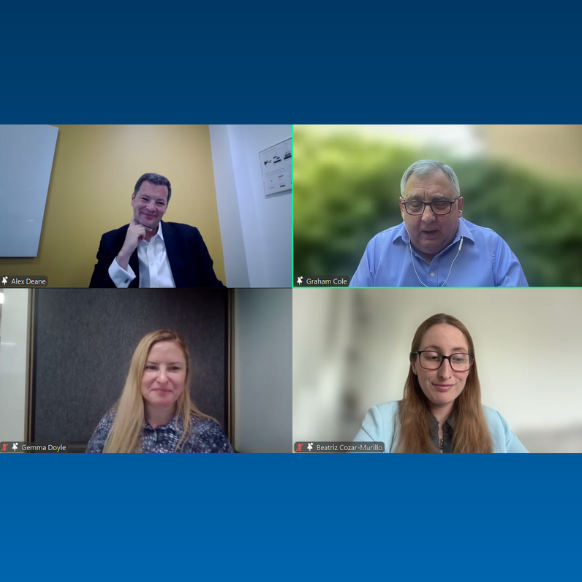
In the inaugural session of our new webinar series– EMEA Critical Issues Forum – our experts explored the challenges and opportunities facing the defence industry in an increasingly volatile geopolitical and economic climate.
The session was moderated by Alex Deane, Head of Public Affairs UK at FTI Consulting and featured insights from Graham Cole CBE, Former Chairman at AgustaWestland, Gemma Doyle, Former Labour MP and Shadow Defence Minister and Senior Managing Director at FTI Consulting and Dr. Beatriz Cózar-Murillo- Director in our Defence and Aerospace team.
FTI Consulting 2025 Global Affiliate Summit
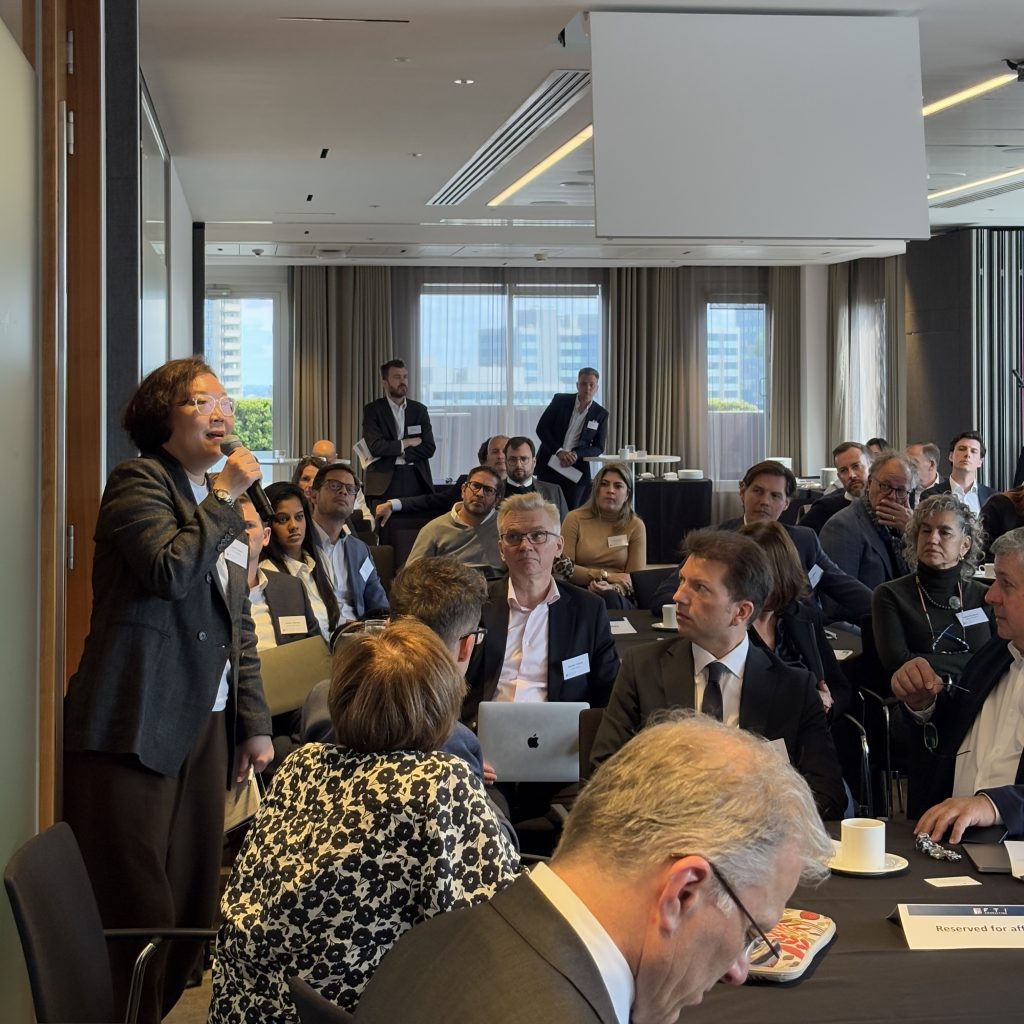
We were delighted to host over 50 of FTI Consulting’s affiliates at our London office last week for our 16th annual Affiliate Summit. Bringing together affiliates and colleagues from across the globe, this was a valuable opportunity to reconnect, exchange ideas, and explore new ways to grow together. The summit spotlighted key external trends—ranging from AI and geopolitical risk, to M&A and shareholder activism.
Attendees also participated in an interactive workshop on navigating deepfake threats, before concluding the day with rooftop networking and meaningful conversations against the backdrop of the London skyline.
Upcoming Conferences, Elections and Webinars
- 18 May: Presidential election (Poland)
- 25 May: Parliamentary elections (Venezuela)
- 25 May: General election (Suriname)
- 01 June: Judicial elections (Mexico)
- 05 June: Parliamentary elections (Burundi)
- 07 June: Local elections (Latvia)
To be added to the distribution list for the Global PA Newswire, or for further information on the dedicated Public Affairs team at FTI, please contact [email protected]. |
The views expressed in this article are those of the author(s) and not necessarily the views of FTI Consulting, its management, its subsidiaries, its affiliates, or its other professionals.
©2025 FTI Consulting, Inc. All rights reserved. www.fticonsulting.com