Global Public Affairs Newswire – 09 January 2026

Happy New Year and welcome to the first 2026 instalment of FTI Consulting’s fortnightly Global Public Affairs Newswire.
This week, we bring you updates from FTI Public Affairs teams across the world’s major markets, including the United States, China, Colombia, India, United Kingdom, European Union, Brazil, Australia, South Korea, France, Singapore, and Spain. This week’s update also brings readers market insights from FTI Public Affairs experts from around the world, explaining what these updates mean for your business.
Market updates
- USA – Speak Loudly and Carry a Big Stick? The January 3 announcement of Nicolás Maduro’s extradition following a U.S. military strike represents a marked escalation in Washington’s Venezuela policy and a departure from years of reliance on sanctions, diplomatic isolation, and indirect pressure. Although the administration has characterized Operation Southern Spear as a counter-narcotics action, the post-operation rhetoric suggests ambitions that extend well beyond law enforcement. Trump’s repeated emphasis that the U.S. will “run the country,” control oil exports, and remain open to deployment of U.S. ground forces underscores an expansive view of U.S. authority that diverge from his own previous statements on “nation-building” and the isolationist views that persist throughout his MAGA political base.
- Big Agenda, Narrower Margins. On Capitol Hill, the Republican-led Congress returns from winter recess facing a crowded legislative calendar and slimmer governing margins due to the departure of Rep. Marjorie Taylor Greene and the unexpected passing of Rep. LaMalfa. These dynamics complicate efforts to advance the president’s agenda, particularly as lawmakers confront upcoming votes on healthcare, an approaching January 30 government funding deadline —all in the shadow of the midterm elections. Reduced margins also increases the difficulty Speaker Mike Johnson faces in maintaining caucus cohesion, especially as voter frustration over economic conditions persists. Polling trends suggest a challenging midterm environment for Republicans, limiting congressional appetite for controversial or high-risk initiatives and constraining the administration’s room for maneuver.
For more information about FTI’s Public Affairs services in the Americas, please contact [email protected].
- On 6 January, China’s Ministry of Commerce announced a ban on all dual-use items destined for Japanese military users, military purposes, or any applications that could enhance Japan’s military capabilities. Violations by any organization or individual will be subject to legal accountability.
- The announcement follows recent statements by Japanese leadership on the Taiwan region. Beyond immediate trade implications, the measure signals how geopolitical tensions are increasingly shaping the governance of strategic materials, critical supply chains, and high-tech sectors.
- Under China’s dual-use export framework, the restrictions are expected to include certain high-end medium and heavy rare earths, where Japan is a key importer. The move underscores China’s readiness to employ export controls as a strategic lever, highlighting the growing convergence of economic policy and national security considerations.
For more information about FTI’s public affairs services in China, please contact [email protected].
- The Government of Colombia, led by President Gustavo Petro, expressed concern over the operation that resulted in the detention of Nicolás Maduro, reiterating a position focused on the preservation of regional peace and questioning what it described as U.S. intervention. The Executive Branch called for de-escalation, the use of diplomatic channels, and the protection of the civilian population along the Colombia–Venezuela border.
- In multilateral forums, Colombia conveyed Venezuela’s request for an emergency session of the United Nations Security Council. The position, articulated by Colombia and echoed by Brazil, Chile, and Mexico, stressed that the detention of Nicolás Maduro could constitute a violation of international law, underscoring shared principles related to the defense of sovereignty and territorial integrity, as well as the rejection of the unilateral use of force.
- Developments in Venezuela have reopened domestic debates in Colombia on migration, security, and the bilateral relationship, particularly in the context of the 2026 electoral cycle. This environment has been further strained by recent statements from former U.S. President Donald Trump, who suggested the possibility of military action from the Caribbean and accused President Gustavo Petro of links to cocaine production, and by the Colombian president’s response, in which he rejected any form of external interference, reaffirmed the loyalty of the Armed Forces to national sovereignty, and called for the defense of constitutional order. Analysts warn that this exchange heightens the risk of rhetorical and diplomatic escalation, with potential spillover effects on security dynamics, migration flows, border economies, and the instrumentalization of the Venezuelan crisis in domestic political discourse across Latin America.
For more information about FTI Consulting’s Public Affairs services in Colombia, please contact [email protected].
PM Modi has a penchant for smart acronyms—SHANTI, Sanskrit for peace, now expands to Sustainable Harnessing and Advancement of Nuclear energy for Transforming India Act, 2025. Passed in December, this landmark legislation replaces the Atomic Energy Act of 1962 and a 2010 liability law, ending the state monopoly on nuclear power. It allows licensed Indian companies (including JVs with foreign partners) to build and operate nuclear plants, under a clarified liability framework and strict safety regulation. The Act grants statutory powers to the Atomic Energy Regulatory Board (AERB) and aims to accelerate India’s clean energy transition, energy security, and infrastructure modernization.
Reforms were long overdue. Despite India’s nuclear ambitions, atomic energy contributes 3% of electricity generation with installed capacity at 9 GW, and 22 GW targeted by 2031—far short of a 100 GW goal by 2047, India’s centenary of independence. Clean 24×7 power is crucial for an expanding economy, including hyperscale data centers, green hydrogen, and smart cities. Nuclear is seen as a key complement to renewables for reliable baseload electricity: India operates 25 nuclear reactors across 7 plants and is building 7 large reactors.
The SHANTI Act improves the bankability of projects by introducing tiered liability caps for operators and removing a prior clause that exposed suppliers to open-ended claims. It opens the small modular reactor (SMR) market to U.S. firms such as Holtec, NuScale, and GE Vernova-Hitachi. Under the Nuclear Power Mission announced in India’s FY26 Budget, New Delhi allocated USD 2.2 billion for indigenous SMRs, with plans to commission five Bharat SMRs by 2033. The new law enables both large-scale and modular nuclear growth, while preserving government control over sensitive fuel-cycle activities like enrichment and reprocessing.
For more information about FTI’s Public Affairs services in India, please contact [email protected].
- A spokesman for the UK’s Prime Minister, Sir Keir Starmer, confirmed this week that Parliament will be given a vote on any “long-term deployment” of British troops to Ukraine, following renewed discussions with allies on post-conflict security arrangements. The commitment came after a summit in Paris on Tuesday, where Starmer and French President Emmanuel Macron reaffirmed the UK and France’s readiness to help enforce a potential peace agreement between Russia and Ukraine.
- Starmer has declined to set out the scale or timing of any possible deployment, telling the House of Commons on Wednesday that British forces would focus on “deterrence operations” and the protection of newly established military “hubs,” rather than frontline combat. While he did not explicitly confirm whether MPs would vote before troops were deployed, his press secretary later clarified that parliamentary approval would be sought ahead of any “long-term deployment”.
- The announcement drew a mixed response domestically. The Chair of the House of Commons Defence Committee, Tan Dhesi, welcomed the announcement but warned that the Prime Minister’s commitment “intensifies the very real challenges our armed forces are already facing” and “runs the risk of overstretching our armed forces”. Reform UK leader Nigel Farage said he would vote against the deployment of British soldiers to Ukraine, telling Times Radio that “under the current terms, with the current strength of the British Army… we neither have the manpower nor the equipment to go into an operation that clearly has no ending timeline.”
For more information about FTI’s Public Affairs services in the United Kingdom, please contact [email protected].
- Prime Minister Pedro Sánchez publicly condemned the U.S. military intervention in Venezuela, calling it a violation of international law and Venezuelan sovereignty. While Spain does not recognise Nicolás Maduro’s government, Madrid has clearly separated that position from its rejection of foreign military intervention and has pushed for respect for the UN Charter.
- The intervention increases political and legal uncertainty for Spanish firms operating in or linked to Venezuela. Companies such as Repsol and Telefónica face risks linked to sanctions policy, contract enforcement, payments, and asset protection. The situation complicates long-standing efforts to recover debts, maintain operations, or exit the market in an orderly way.
- Spain’s stance on Venezuela fits a broader trend of tension with Washington, including disagreements over defence spending within NATO and Madrid’s strong pro-Palestinian position. Sánchez has taken one of the hardest lines in the EU against the intervention and is working with Latin American partners and European allies to coordinate statements defending international law and opposing unilateral military action.
For more information about FTI’s Public Affairs services in Spain, please contact [email protected]
- Cyprus assumed the rotating presidency of the Council of the European Union on 1 January, launching its six-month term with an agenda focused on strengthening the EU’s strategic autonomy, resilience, and global role. Operating under the motto “An Autonomous Union. Open to the World,” the Cypriot presidency aims to position the EU as more self-reliant while remaining outward-looking and internationally engaged.
- Its core priorities include enhancing European security, defence and preparedness – with the implementation of the EU Defence White Paper and Defence Readiness Roadmap – as well as boosting competitiveness through regulatory simplification, energy and digital autonomy, and support for European industry. In addition, the Presidency seeks to uphold EU values, social cohesion, and the rule of law, and to advance negotiations on the Multiannual Financial Framework 2028–2034. Furthermore, the program aims to call on Europe to redefine and reshape its future through an assertive autonomy trajectory. More specifically, the Presidency will pursue its objectives through five overarching priorities, such as
I) Autonomy through Security, Defence Readiness and Preparedness;
II) Autonomy through Competitiveness;
III) Autonomy through Openness to the World;
IV) an Autonomous Union of Values that Leaves No One Behind;
V) A long-term budget for an autonomous Union.
In light of these priorities and objectives, it is worth acknowledging the rapidly evolving geopolitical landscape in which the EU has to operate and the longstanding internal challenges that demand swift action, notably strengthening security, boosting the internal market, the need for regulatory simplification, and the pressure facing European industries.
For more information about FTI’s Public Affairs services in the EU, please contact [email protected]
- The U.S. military operation to capture Nicolás Maduro prompted a reaction from the Brazilian government, with President Luiz Inácio Lula da Silva condemning the operation as a serious violation of Venezuelan sovereignty and international law and calling for a multilateral response through the United Nations. Amid political uncertainty in Caracas, Brazil moved to recognize Vice President Delcy Rodríguez as the country’s interim leader and increased monitoring of its northern border with Venezuela after temporarily closed crossings, though authorities reported calm conditions. The episode unfolds against a backdrop of diminished Brazilian influence in Venezuela and a growing U.S. presence in the region. Brasília seems to be focused on balancing its defense of multilateralism with the need to prevent migratory spillovers and preserve regional stability while managing its already delicate bilateral relationship with the U.S.
- President Lula’s remarks on the, once-again postponed, EU–Mercosur agreement underscored the political disputes still blocking its conclusion after 25 years of negotiations. While Brazil and its Mercosur partners argue the deal is settled, opposition within the EU—led by France and joined by Italy—reflects domestic political pressure from farmers and broader resistance to trade liberalization. Lula portrayed the postponement as a European problem rather than a Mercosur one, framing Brazil as pragmatic and willing to accept an asymmetrical deal. Politically, the debate exposes tensions between EU protectionism and its free-trade rhetoric, while limiting Lula’s strategy of using the agreement to signal Brazil’s role as a diplomatic and economic leader on the global stage.
- Brazil’s 2026 presidential race is beginning to take shape amid intense political debate over economic performance, social policy, and democratic legitimacy. President Luiz Inácio Lula da Silva is positioning himself for a fourth term by emphasizing economic stability and expanded social programs as policy, while deliberately framing the run as a democratic competition centered on different policy proposals rather than personal attacks. This strategy seeks to contrast with an opposition that lacks a clear leadership and cohesive discourse. On the right, Senator Flávio Bolsonaro is emerging as a key contender, pushing for a platform of fiscal austerity and state retrenchment while invoking claims of political persecution tied to his father. Fragmentation within the center-right currently benefits Lula, but identity politics, economic policy, and public security issues are likely to shape voter’s behavior as the race evolves.
For more information about FTI’s Public Affairs services in Brazil, please contact [email protected].
- The new year saw a raft of policies and reforms commencing spanning healthcare, social services, renewable energy, and consumer affairs policy areas.
- Under the changes, the medicines in part subsidised by the government under Australia’s Pharmaceutical Benefits Scheme will be capped at AU$25 per script. A Medicare mental health check in service will also launch later this month, geared towards those experiencing mild mental health issues.
- Furthering the government’s focus on women’s economic participation, families will now receive three days of government subsidised childcare each week, replacing the ‘activity test’ where subsidised care was calculated based on a family’s individual circumstances.
- Certain retailers such as grocery stores and petrol stations will be required to accept cash for transactions of $500 or less and for youth, students and carers in particular, the rate of social security allowances will see an increase.
- However, as more Australians take up the government’s ‘Home Battery Scheme’ there will be a slight reduction in the rebates for those installing batteries into their homes.
For more information about FTI’s Financial Services Public Affairs support in Australia, please contact [email protected].
- On 5 January, South Korean President Lee Jae Myung met Chinese President Xi Jinping in Beijing, calling the visit an opportunity to open a “new phase” and accelerate the “full-scale restoration” of South Korea–China relations. The leaders witnessed the signing of 15 cooperation documents spanning areas such as science and technology, economic and trade cooperation, transportation, and environmental collaboration, alongside parallel business-to-business agreements.
- The summit underscores Seoul’s effort to stabilize ties with its largest trading partner while maintaining a security alliance with the U.S. Xi’s calls for “correct strategic choices,” indirectly referring to South Korea’s alignment with Washington on sensitive regional issues, including Taiwan and broader U.S.-led security coordination in Northeast Asia. In parallel, both presidents reaffirmed the value of resuming dialogue with North Korea.
- The meeting suggests potential near-term tailwinds for cross-border investment, tourism, and selected technology and consumer sectors, if follow-through materializes. That said, China did not acknowledge the existence of nor explicitly confirm to lift its ban on the “Korean wave” that was understood to have been in put in place following Seoul’s deployment of the U.S. THAAD systems in 2016. The unofficial ban since then has restricted performances and distribution of Korean entertainment and content and led a handful of Korean corporations to exit from China. Businesses could expect continued policy uncertainty as South Korea seeks to balance cooperation with China against enduring U.S. security commitments and heightened regional geopolitical competition.
For more information about FTI’s Public Affairs services in Hong Kong, please contact [email protected]
- In his last New Year’s address, Emmanuel Macron urged unity, strength, and hope, and reaffirmed he would serve until the end of his term. He called for concrete commitments to support Ukraine and restore French independence and acknowledged mounting domestic and international challenges amid low approval ratings, political gridlock over the budget, and growing far-right support in opinion polls ahead of the 2027 election.
- On January 6, Paris hosted a “Coalition of the Willing” meeting, where thirty-five countries approved the Paris Declaration, outlining robust security guarantees, largely European and backed by the United States, aimed at ensuring any future peace in Ukraine is durable, does not amount to Ukrainian surrender, and prevents renewed Russian threats. Emmanuel Macron has directly mentioned the possibility of deployment for thousands of French troops.
- Meanwhile, domestically, the government has reopened talks on the 2026 budget to secure a compromise that would keep the deficit below 5% of GDP. It has put forward a €9bn adjustment package combining spending cuts with the revival of corporate surtaxes, seeking to win parliamentary approval while deliberately avoiding the use of constitutional tools such as Article 49-3 – which would allow it to bypass a vote – in order not to further antagonise the opposition.
For more information about FTI’s Public Affairs services in France, please contact [email protected].
- Chancellor Election – Merz Secures the Top Job: On 06 May, Friedrich Merz (CDU) was elected Chancellor in a historic second round of voting, forming a coalition with the SPD, despite early tensions over ministerial appointments.
- €500-Billion Special Fund – the Largest Debt Package in Germany’s History: On 18 March, the Bundestag approved a €500-billion special fund to boost infrastructure and climate projects and additionally eased the debt brake for defense spending.
- Pension Reform – Securing the Present, Raising Future Questions: On 5 December, the Bundestag passed a controversial pension reform, narrowly avoiding a government crisis but raising concerns about long-term fiscal sustainability.
For more information about FTI Consulting’s Public Affairs services in Germany, please contact [email protected].
- In a televised New Year address, Prime Minister Anwar Ibrahim outlined a broad reform agenda for 2026, committing to institutional changes such as separating the Attorney-General’s advisory role from prosecutorial powers, enacting a Freedom of Information Act, and introducing a two-term limit for holders of the office of Prime Minister.
- The announcement, which marks Anwar’s fourth year in power, is part of the Government’s move to fulfil key election pledges on governance and accountability, well ahead of the 15th General Election that must be held by Q1 2028.
- The Prime Minister’s commitments come against the backdrop of the 1MDB ruling on 26 December 2025, where former Prime Minister and United Malaysia National Organisation (UMNO) President Najib Razak was found guilty on four charges of abuse of power and 21 charges of money laundering. After seven years of legal proceedings, Najib – already serving a reduced six-year jail term – was given four 15-year prison sentences to be run concurrently, with a record USD2.8 billion fine. For Anwar, the case serves as a high-risk balancing act: he must uphold the rule of law to satisfy his reformist voter base without alienating UMNO, a key coalition partner whose support—and that of its pro-Najib grassroots—is vital for the government’s survival ahead of the next general election.
For more information about FTI Consulting’s Public Affairs services in Singapore, please contact [email protected].
Expert Analysis |
FTI Consulting Political Panel
Our UK Public Affairs team invite you to their ‘Start the Year Political Panel’ event. Bringing together a panel of senior political experts, this event will offer timely insight as the political landscape begins to take shape for 2026. This event will be hosted in-person and virtually. Date: Monday 19 January 2026 |
European Defence
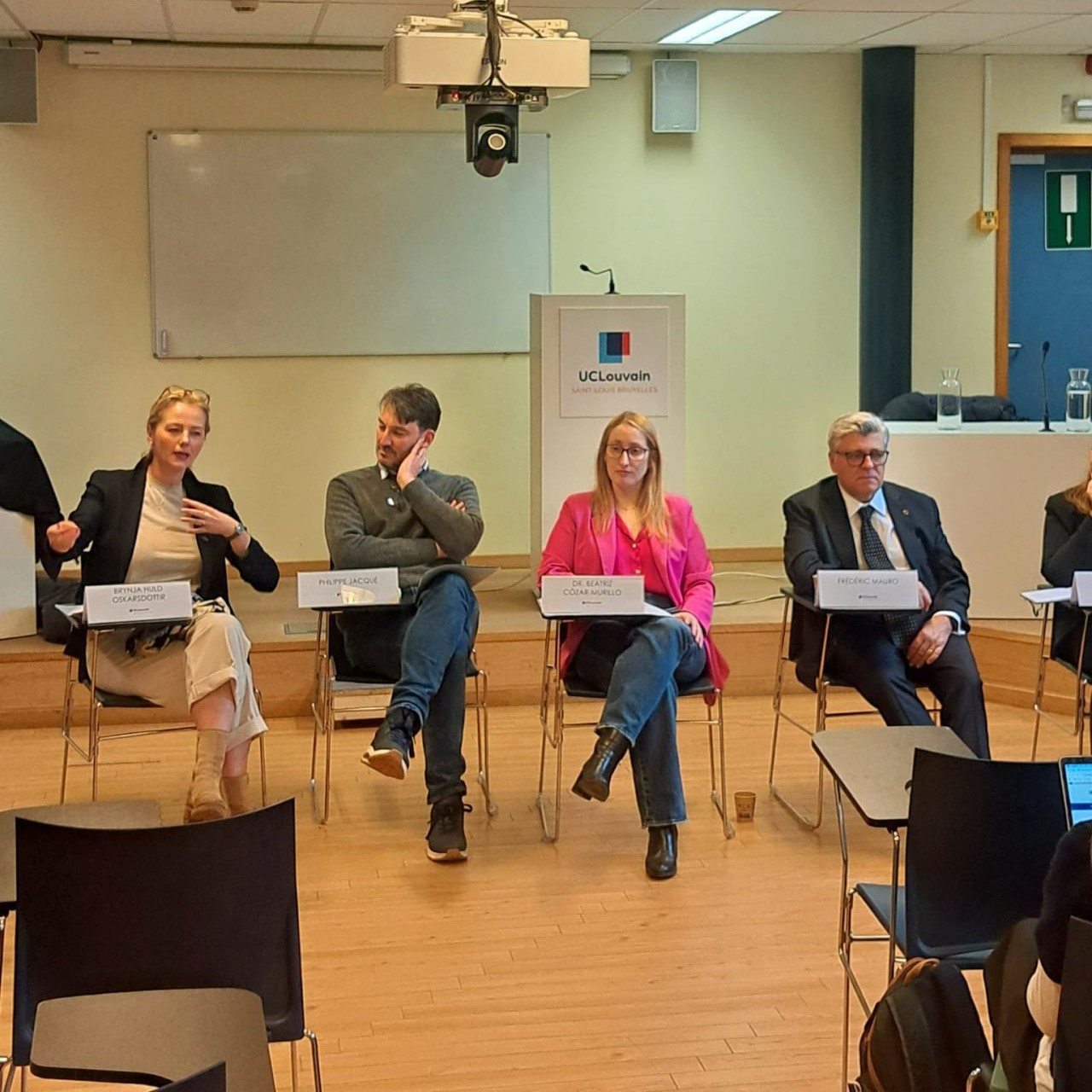
Our Defence and Aerospace lead in Brussels, Beatriz Cozar Murillo, recently joined two insightful exchanges with academia on European Defence.
Through a roundtable discussion on “How can Europe become a strategic power?” and an online webinar which shon a light on “The EU in practice”, the events were a powerful reminder of the growing momentum and depth of talent shaping Europe’s defence and security agenda.
The Policy Pulse
For the European Union, 2025 was a year characterised by volatility, political shifts, budgetary pressures, and important steps forward in Europe’s defence ambitions.
Check out the latest episode of The Policy Pulse where our experts discuss the political shifts that shaped the European Union in 2025, and look at what lies ahead in 2026.
Global Public Affairs Survey
What keeps Public Affairs leaders up at night?
Back in 2023, Public Affairs leaders told us that their biggest external challenges were economic headwinds, regulatory pressures, and macropolitical uncertainty. Today, the political and regulatory environment is equally complex to navigate.
Our latest report, “Risks and priorities in Public Affairs – 2025 versus 2023”, reveals meaningful shifts in what leaders view as their principal risks, and in how they are adapting to manage those risks.
Upcoming Elections
- 15 January: General election (Uganda)
- 18 January: Presidential elections (Portugal)
- 1 February: General election (Costa Rica)
- 22 February: Parliamentary elections (Laos)
- 5 March: General election (Nepal)
- 8 March: Parliamentary elections (Colombia)
- 15 March: Legislative elections (Vietnam)
To be added to the distribution list for the Global PA Newswire, or for further information on the dedicated Public Affairs team at FTI, please contact [email protected]. |
The views expressed in this article are those of the author(s) and not necessarily the views of FTI Consulting, its management, its subsidiaries, its affiliates, or its other professionals.
©2025 FTI Consulting, Inc. All rights reserved. www.fticonsulting.com