Global Public Affairs Newswire – 06 March 2026

Welcome to the latest instalment of FTI Consulting’s fortnightly Global Public Affairs Newswire.
This week, we bring you updates from FTI Public Affairs teams across the world’s major markets, including the United States, the United Kingdom, China, the European Union, Germany, France, Brazil, Australia, Spain, Hong Kong, and Colombia. The update also features insights from FTI Public Affairs experts around the world, explaining what these developments mean for your business.
Market updates
- Operation Epic Fury: The United States, in coordination with Israel, launched a joint military operation against Iran on Saturday under the name “Operation Epic Fury.” President Donald Trump publicly defended the strikes, citing Tehran’s continued refusal to curtail its nuclear program and the regime’s longstanding support for terrorist organizations targeting the United States and its allies. Domestic reactions have been mixed. According to CNN, 59 percent of Americans disapprove of the strikes and express concern about the potential for a prolonged military engagement in the region. Senior defense officials have reinforced expectations that the conflict may extend beyond an initial exchange. Defense Secretary Pete Hegseth and the Chairman of the Joint Chiefs both indicated that operations could last weeks, with Hegseth stating that the United States has “only just begun to hunt, dismantle, demoralize, destroy, and defeat” Iranian capabilities.
- All Eyes on Texas: With the midterm elections approaching, several states held primary contests this week. However, the political spotlight centered on Texas, where several competitive races produced noteworthy results. The overarching takeaway is that 2026 may prove to be a challenging cycle for incumbents in both parties. Four sitting U.S. House members—Democrats and Republicans alike—either lost outright or were forced into runoffs. Most strikingly, incumbent Republican Senator John Cornyn was pushed into a runoff against Attorney General Ken Paxton, underscoring volatility within the GOP electorate.
- Tariffs and the Supreme Court: In a significant development on trade policy, the Supreme Court of the United States struck down the sweeping tariffs President Trump had imposed via executive action. The 6–3 ruling represents a sharp rebuke of the administration’s trade strategy and executive authority in this domain. The Court did not resolve how the federal government should address nearly $200 billion in tariff revenues already collected, leaving open the question of whether and how refunds may be issued to affected importers. The financial and political implications of that unresolved issue are likely to reverberate in the months ahead.
For more information about FTI’s Public Affairs services in the Americas, please contact [email protected].
- With the Labour government still absorbing its defeat in the Gorton and Denton by-election, the ongoing fall-out from the Peter Mandelson scandal and the looming test of May’s elections, the Chancellor of the Exchequer, Rachel Reeves, set out to make this week’s Spring Forecast a deliberately low-key event. This reflected Labour’s commitment to holding only one main fiscal event each year, but more importantly the need to avoid repeating the turbulence that had followed Reeves’ previous set-pieces. The objective was therefore straightforward: deliver a technical update, avoid policy surprises and ensure the event passed without unsettling markets or generating a fresh political crisis. Events in the Middle East brought a different sort of crisis to the government’s door nonetheless.
- Reeves’ delivery at the dispatch box largely followed the script that had been briefed: steady language about stability, falling inflation and borrowing, and the argument that living standards were beginning to improve. In line with expectations, no new measures were announced. The Office for Budget Responsibility’s (OBR) forecasts themselves gave a mixed picture, revising Britain’s in-year growth expectations down and the rate of unemployment up, but noting increases to the fiscal headroom and greater growth beyond 2027.
- The larger uncertainty now lies overseas. The OBR warned of the significant macroeconomic risks posed by developments in the Middle East and specifically the inflationary risk of rising energy prices. Markets have already begun to reflect that risk: equities have fallen, gilt yields have risen and investors have scaled back expectations of further Bank of England rate cuts as inflation risks are reassessed. Reeves’ next major intervention will be her Mais lecture in a fortnight, where she is expected to outline further growth reforms. This will come amid pre-existing concern from business about the coherence of the government’s growth strategy – concern that will only become more acute if global events materially damage the domestic economy.
For more information about FTI’s Public Affairs services in the United Kingdom, please contact [email protected].
- China’s ongoing annual “Two Sessions” will outline economic and policy priorities for 2026-2030, with a clear emphasis on “high-quality development”: technological self-reliance, supply-chain resilience, and calibrated growth targets. Policy direction is expected to favor advanced manufacturing, digital technologies, green transition, and strategic emerging industries, while maintaining a broader focus on macro stability and risk containment.
- Recent U.S.-Israeli strikes on Iran and subsequent regional escalation have heightened geopolitical and energy-market uncertainty. For Beijing, the crisis complicates an already delicate external environment, with potential implications for energy security, trade corridors, and diplomatic bandwidth. The situation also injects volatility into high-level engagements and global economic coordination at a sensitive juncture.
- Beijing and Washington are preparing a sixth round of economic and trade consultations as representatives meet ahead of a planned Trump visit to China. The talks and prospective summit create space for tactical stabilization. Yet competition in high-tech, export controls, and critical supply chains continues to shape the strategic backdrop against which any near-term progress will unfold.
For more information about FTI’s Public Affairs services in China, please contact [email protected]
- The weekend saw a significant escalation of the conflict in the Middle East, with U.S. and Israeli attacks targeting Iran, followed by Iranian attacks targeting the Gulf States and Israel, and a drone striking a UK base on Cyprus on Monday.
- The initial responses from the EU Member States and EU Institutions reflect a diversity of positions as leaders scrambled to take a position. Spain spoke out against the unilateral military action by the US and Irael and the actions of the Iranian regime. The E3 (the France, Germany and the UK) spoke out against the Iranian strikes as EC President von der Leyen called for a credible transition in Iran. EU Member States representatives met on Sunday – releasing a statement condemning Iran’s repression, its military actions, and nuclear ambitions, pledging continued sanctions. In addition, the EU Member States urged restraint, respect for international law and maritime security while supporting regional stability and the Iranian people. On Monday the EC convened a Security College, outlining that its work would focus on supporting the EU Member States and protecting EU citizens from the consequences of the conflict.
- From an EU perspective, the conflict could have several ramification – ranging from physical security risks (Cyprus), increased energy prices, lack of unity amongst EU Member States, division of EU institutional competences and impact on the transatlantic relationship and the war in Ukraine. To highlight 2 of these:
- First, on the European unity and transatlantic relationship – the conflict highlights differences amongst EU Member States on if and how they should support the US, risking both grievances to build up internally and with the US. Second, the war in Ukraine and the interplay with the EU’s energy security – notably given Iran’s strategic partnership with Russia, the potential of military supplies being diverted away from Ukraine to US allies in the Middle East (notably air defence) and the impact on EU energy security further complicating negotiations to lift Hungary’s veto on the 20th Russia sanctions package and EUR90 billion Ukraine Loan.
For more information about FTI’s Public Affairs services in the EU, please contact [email protected]
- A more sober tone toward China: Chancellor Merz is pursuing a dual-track approach. In the weeks before the trip, he openly criticized Beijing’s leadership and raised concerns about human rights. In China, however, he avoided a lecturing tone, as previously announced. Sensitive issues such as human rights were not addressed publicly, and after his meeting with President and Party leader Xi Jinping, only a brief statement was issued, with no opportunity for German journalists to pose critical questions.
- Strategic recalibration over deal-making: The visit prioritized political signaling, relationship management, and strategic recalibration over immediate economic deliverables. Merz described the trip as constructive and underscored Germany’s openness to economic engagement, stating: “We want Chinese investment in Germany. We want jobs created through Chinese investment.” Compared to engagements under the previous government, the atmosphere appeared noticeably improved, building on momentum from Foreign Minister Johann Wadephul’s December 2025 visit. At the same time, Merz framed the relationship through the lens of his top domestic priority: restoring Germany’s economic competitiveness.
- Structural tensions persist: Merz emphasized that both sides face a number of challenges that they are willing and able to address jointly, implicitly acknowledging existing areas of tension. German and European companies continue to report incomplete market access in certain sectors. Regarding the sharp increase in Chinese exports to Europe, Merz acknowledged growing calls for protective measures but stressed that Germany seeks to keep protectionism to a minimum. He reaffirmed Berlin’s commitment to open, fair, and rules-based trade from which both export-oriented economies benefit, while making clear that existing complaints would need to be addressed candidly.
For more information about FTI Consulting’s Public Affairs services in Germany, please contact [email protected].
- On 2 March, President Emmanuel Macron delivered a highly anticipated speech reviewing French Nuclear Deterrence. He announced a reinforcement of France’s nuclear arsenal, including more warheads, next-generation nuclear ballistic missile submarines, and hypersonic missiles.
- Macron also unveiled the concept of “advanced deterrence,” which involves dispersing French strategic air forces across Europe and establishing a new framework for coordination with European partners. Allies would support exercises, early-warning systems, air defence, and long-range strike capabilities, while France retains exclusive decision-making authority over nuclear weapons.
- Regarding the war in the Middle East, Macron condemned on 3 March the U.S.-Israeli strikes on Iran as “outside international law,” while attributing responsibility for the escalation to Iran. To protect French interests and support allies, France deployed its aircraft carrier, fighter jets, air-defence systems, and anti-missile assets to the Mediterranean and the Gulf.
For more information about FTI’s Public Affairs services in France, please contact [email protected].
- Presidential adviser and former Minister, Ambassador Celso Amorim has warned that Brazil must “prepare for the worst” amid the escalating conflict involving the United States, Israel and Iran, signaling concern over a broader regional spillover and knock-on effects for the global economy, including oil prices and financial markets. By describing the killing of a sitting head of state as “condemnable and unacceptable”, Amorim underscored Brazil’s long-standing diplomatic principles: respect for international law, state sovereignty, and non-intervention. Under President Lula, Brasília has sought a careful balancing act – criticizing the military escalation, calling for restraint and dialogue, while avoiding instant alignment with any side. Brazil faces the challenges of maintaining strategic autonomy and open channels of communication without compromising its international credibility.
- Brazilian diplomats regard the timing of a prospective meeting between President Lula and Trump as particularly sensitive against the backdrop of recent US strikes on Iran. The encounter, tentatively expected for the second half of March in Washington, had been conceived as an opportunity to consolidate a cautiously rebuilt bilateral relationship, with trade, climate cooperation and geopolitical dialogue on the agenda. However, the escalation of the conflict in the Middle East has altered the optics. A public appearance alongside Trump at this juncture could be interpreted as implicit endorsement of US military action – a stance at odds with Brasília’s stated defense of sovereignty, non-intervention and international law. In diplomatic terms, symbolism carries strategic weight: even silence on the crisis could be read as acquiescence. Yet, declining a formal White House invitation would risk undermining a relationship both sides have worked hard to stabilize, especially for the trade agenda.
- Domestically, investigations into corruption within the local pensions system are putting the government under pressure, as President Lula’s son is involved for alleged corruption claims at a time when Lula is losing momentum in the polls and facing a more competitive electoral landscape. The episode comes as opinion polls point to a statistical tie between Lula and Flávio Bolsonaro in a potential run-off, reinforcing the prospect of a highly polarized contest decided by narrow margins – mainly by voters that elected Bolsonaro in the first term but then decided he was not worthy of a second one and are less ideological and still undecided. They will be the ones to determine the outcome at the polls while the most loyal voters are unlikely to shift their stance. Issues related to corruption tend to inflict greater damage on governments, particularly when there is scope for further developments and the release of additional information and seeking re-election.
For more information about FTI’s Public Affairs services in Brazil, please contact [email protected].
- The escalating conflict in the Middle East has dominated Australian headlines this week. While geographically distant from the epicentre of the conflict, Australia is bracing for the economic, national security, social cohesion and foreign policy impacts.
- Rising global oil prices will likely impact domestic petrol and diesel costs, which then flow through to transport, groceries and airfare prices. This will add another element of complexity to the economy’s inflation pressures. While Australia has not committed military support, any support beyond the status quo would come with a monetary costs, also adding to inflation.
- The conflict will likely exacerbate the social cohesion issues highlighted by the Bondi terror attack that occurred in December 2025.
- Australia’s Department of Foreign Affairs and Trade has activated crisis support for Australians in the region and warns of risk of further escalation and flight cancellations affecting anyone transiting through Middle Eastern hubs.
- Australia’s diplomatic relationships with the US and Middle Eastern nations will now fall under intense public scrutiny.
- Prime Minister Albanese has come forward in support of the people of Iran, recognising their struggle against oppression and has endorsed President Trump’s act to prevent Iran from developing nuclear weapons. The challenge for Albanese will now be to minimise any impact the conflict will have on Australia’s economy and be strategic in longer term decisions such as military aid, funding and diplomatic ties.
For more information about FTI’s Financial Services Public Affairs support in Australia, please contact [email protected].
- Prime Minister Pedro Sánchez has reaffirmed Spain’s condemnation of Iran while maintaining that Madrid will not support offensive military action lacking a UN mandate. The government has also refused to authorise the offensive use of the US-operated bases at Naval Station Rota and Morón Air Base. The decision has triggered a direct dispute with the administration of Donald Trump, with Washington raising the possibility of trade retaliation against Spain.
- The diplomatic exchange intensified after White House spokesperson Karoline Leavitt suggested that the Spanish government had previously indicated willingness to support the military strategy, while Spanish Foreign Minister José Manuel Albares publicly rejected the claim. The disagreement has brought Spain into a direct political dispute with Washington and placed the use of US military facilities in Spain at the centre of the debate.
- European officials have emphasised that trade policy is an exclusive EU competence. Teresa Ribera has publicly rejected the possibility of unilateral US trade action against Spain, while Mark Rutte has defended Spain’s contribution to NATO. Nevertheless, Madrid’s cautious stance diverges from the more open posture toward limited offensive action seen in France, Germany and the United Kingdom. Domestically, the opposition People’s Party has criticised the government’s approach, while Vox has advocated closer alignment with Washington. Spanish media commentary has also drawn parallels with the political legacy of the Iraq War.
For more information about FTI’s Public Affairs services in Spain, please contact [email protected]
- On 25 February, Financial Secretary Paul Chan delivered Hong Kong’s 2026–27 Budget, outlining a strategy to accelerate innovation-led growth while reinforcing the city’s role as an international financial center and cross-border gateway. In his speech, Chan noted that Hong Kong returned to a modest budget surplus of around HKD2.9 billion (USD 374 million) in 2026–27 after recording a deficit of approximately HKD 102 billion (USD 13 billion) in 2025–26, with the turnaround driven by stronger stock-market activity, higher stamp-duty (e.g., a tax imposed on specific legal documents) and investment income. Authorities noted that they also expect a gradual expansion of surpluses over the coming years by maintaining spending discipline and stabilizing revenue.
- Notably, AI and I&T were featured prominently during this year’s budget, with new funding allocated for AI adoption across public services, workforce upskilling, and commercialization. Authorities promised to establish a dedicated AI+ committee and provide further capital to the Hong Kong Investment Corporation Limited, a public investment body, to scale tech-sector investments and crowd in private funding. The government also committed additional resources HKD 20 billion (USD 2.5 billion) to the Hetao Shenzhen-Hong Kong Science and Technology Innovation Co-operation Zone and the San Tin Technopole, alongside broader Northern Metropolis (i.e., a 20-year development in Hong Kong, aiming to create a new economic hub integrating with Shenzhen through innovation, technology, and industry) development, supported by increased bond issuance and higher borrowing ceilings.
- In addition, the budget also introduced measures to reinforce Hong Kong’s capital-markets ecosystem, including reforms at the Hong Kong Stock Exchange, measures to expand offshore RMB business, upgrades to digital-asset regulatory, and new bond-trading and settlement infrastructure. Moreover, targeted tax incentives and deductions are expected to support the city’s asset and wealth management, digital assets, and selected high-growth sectors. Authorities underscored that they would step up outreach to ASEAN, Middle East, and Belt and Road Initiative (BRI) markets, while expanding SME financing and export support schemes to diversify trade flows.
For more information about FTI’s Public Affairs services in Hong Kong, please contact [email protected].
- Legislative elections on March 8 will formally launch the electoral cycle in a context of economic uncertainty and highly polarized political discourse. Colombians will elect a new Senate and House of Representatives for four-year terms. The outcome will signal political trends ahead of the presidential race and, critically, shape future governability: the size and cohesion of party blocs will determine whether the next president can advance structural reforms or face legislative gridlock.
- The same day will also include legally regulated inter-party presidential primaries, through which political coalitions select a single candidate for the first round. These consultations act as an early indicator of organizational strength, voter mobilization, and regional political machinery. Combined with the congressional results, they provide the first nationwide measurement of political forces ahead of the presidential election.
- President Gustavo Petro’s coalition, Pacto Histórico, will contest its first legislative election as a unified party following the merger of several progressive factions. It has nominated Senator Iván Cepeda as its presidential candidate and polls suggest it could secure the largest bloc in the Senate. Its main competitor remains the conservative Centro Democrático, founded by former president Álvaro Uribe. Overseas voting will take place from March 2–8, under the supervision of Colombia’s electoral authority, providing the first nationwide test of political strength in what is expected to be a highly polarized and consequential electoral year.
For more information about FTI Consulting’s Public Affairs services in Colombia, please contact [email protected].
Expert Analysis |
2026 UK Spring Forecast
On Tuesday, the Chancellor of the Exchequer, Rachel Reeves, delivered the Labour Party’s 2026 Spring Forecast, providing an update on the state of the UK economy. The economic growth forecast has been downgraded for 2026, casting a shadow over the outlook, yet the Chancellor maintains that her fiscal strategy remains firmly on track.
Read our expert analysis of the statement in the latest FTI Consulting UK Public Affairs Snapshot below.
UK Public Affairs Panel Event
We are pleased to invite you to a panel discussion exploring the key findings of our recent research report ‘Risks and Priorities in Public Affairs – 2025 versus 2023’. This session will bring leaders and experts together to unpack how the strategic priorities and external risk landscape for public affairs teams have shifted over the past two years, and what this means for organisations navigating today’s political and regulatory environment.
When: Thursday 12th March 2026
Where: FTI Consulting London offices or virtual
Asia’s Supermajority Mandate
Recent election outcomes in Japan and Thailand highlight a shift toward more consolidated political power, enabling governments to advance policy agendas with greater speed and certainty.
In their latest article, our experts in Singapore outline how strong election wins across parts of Asia could give governments the political power to push through major economic reforms and growth strategies.
U.S. Defense Sector Risks & Opportunities in 2026
The U.S. defense sector is poised to see a period of transformative growth in 2026.
From risks to opportunities, our Aerospace & Defense experts analyse prevailing trends, policy and regulatory shifts, and explore emerging governance issues, as well as offer insights and advice on dealmaking and navigating the capital markets.
‘The Pioneer’ Podcast
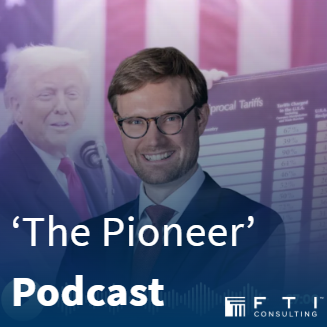
FTI Consulting Senior Director and former Deputy Chief of Staff to the US Trade Representative under President Trump, Payne Griffin, recently sat down with ‘The Pioneer’ to discuss the Supreme Court tariff case, the President’s new Section 122 tariffs, and what that means for European business.
Corporate and Public Affairs Outlook event in Sydney
Our Strategic Communications experts in Sydney hosted their first Corporate and Public Affairs Outlook event last week, bringing together a panel of industry-leading journalists to unpack the year ahead.
The discussion examined the forces shaping Australia’s business landscape and the expectations that media and audiences will place on corporates in 2026.
Upcoming Elections
- 8 March: Parliamentary elections (Colombia)
- 15 March: Legislative elections (Vietnam)
- 22 March: Parliamentary elections (Slovenia)
- 24 March: Parliamentary elections (Denmark)
- 10 April: Presidential election (Djibouti)
- 12 April: Parliamentary elections (Hungary)
- 12 April: General and presidential elections (Peru)
- 12 April: Presidential election (Benin)
- 19 April: Parliamentary elections (Bulgaria)
- 7 May: Local elections (United Kingdom)
- 31 May: Presidential election (Colombia)
To be added to the distribution list for the Global PA Newswire, or for further information on the dedicated Public Affairs team at FTI, please contact [email protected]. |
The views expressed in this article are those of the author(s) and not necessarily the views of FTI Consulting, its management, its subsidiaries, its affiliates, or its other professionals.
©2025 FTI Consulting, Inc. All rights reserved. www.fticonsulting.com