Public & Government Affairs

Expectations on the upcoming BRICS Summit

On July 6 and 7, Brazil will host the 2025 BRICS Summit in Rio de Janeiro, convening the heads of state and government of eleven countries from the Global South. The bloc—despite lacking a founding treaty, fixed budget, or permanent secretariat—has grown into an influential mechanism for cooperation. With its recent expansions and the creation of a “partner country” status, it continues to evolve as a broader network of countries seeking to amplify their collective voice and promote a more inclusive and balanced international order.

The upcoming BRICS summit has gained heightened geopolitical relevance amid escalating tensions in the Middle East. With only days remaining before the meeting, efforts to forge a unified stance among member states —including Iran— are challenged by time constraints and diverging national interests, limiting opportunities for consensus-building.

Against this backdrop, FTI Consulting has assembled a group of experts to analyze expectations for the summit, focusing on the original BRICS members. By examining each country’s particular agenda and the extent to which their foreign policy interests converge within the broader BRICS framework, we aim to shed light on the bloc’s internal dynamics and its potential to influence the future of global economic governance, geopolitical stability, and South-South cooperation.

Brazil
  • Brazil has historically positioned itself as a strong advocate for reforming global governance institutions. However, in light of recent geopolitical uncertainty and fragmentation, the country has recalibrated its stance. Rather than pushing for radical change, Brazil is using the BRICS Summit to emphasize the importance of preserving the existing rules-based international order.
  • In parallel with this recalibration, Brazil is quietly sidelining topics that, although historically central to its diplomatic agenda—such as the promotion of multilateral peace and security, and economic autonomy through de-dollarization—are now seen as too sensitive for today’s unstable geopolitical climate. Rather than risk misinterpretation or unnecessary friction, particularly with partners like the United States, Brazil is choosing to deprioritize these themes in formal discussions while preserving them rhetorically or through low-profile, technical channels (for example, between the NDB and BRICS Central Banks).
  • Despite recalibrating its rhetoric and sidelining sensitive issues, Brazil is leveraging a rare convergence of events: it held the G20 presidency in 2024, chairs the BRICS summit in July 2025, and will lead COP30 later this year. By identifying cross-cutting priorities—particularly climate action and sustainable financing, trade, and health cooperation—Brazil is creating thematic continuity across platforms. This strategy enables it to focus on less divisive, yet value-aligned issues, increasing the likelihood of concrete outcomes.
“Brazil’s successful G20 presidency in 2024 secured support for key priorities — tackling hunger and poverty, advancing sustainability, and reaching rare consensus on taxing the super-rich. These outcomes raised expectations for Brazil’s leadership at the BRICS summit. However, with complex geopolitical dynamics and growing domestic turbulence, it remains uncertain whether Brazil will be able to deliver the same level of impact this time. In that sense, the challenge will be to find grounds for agreement and will for action in a context where most countries are feeling compelled to proceed with the utmost caution”.
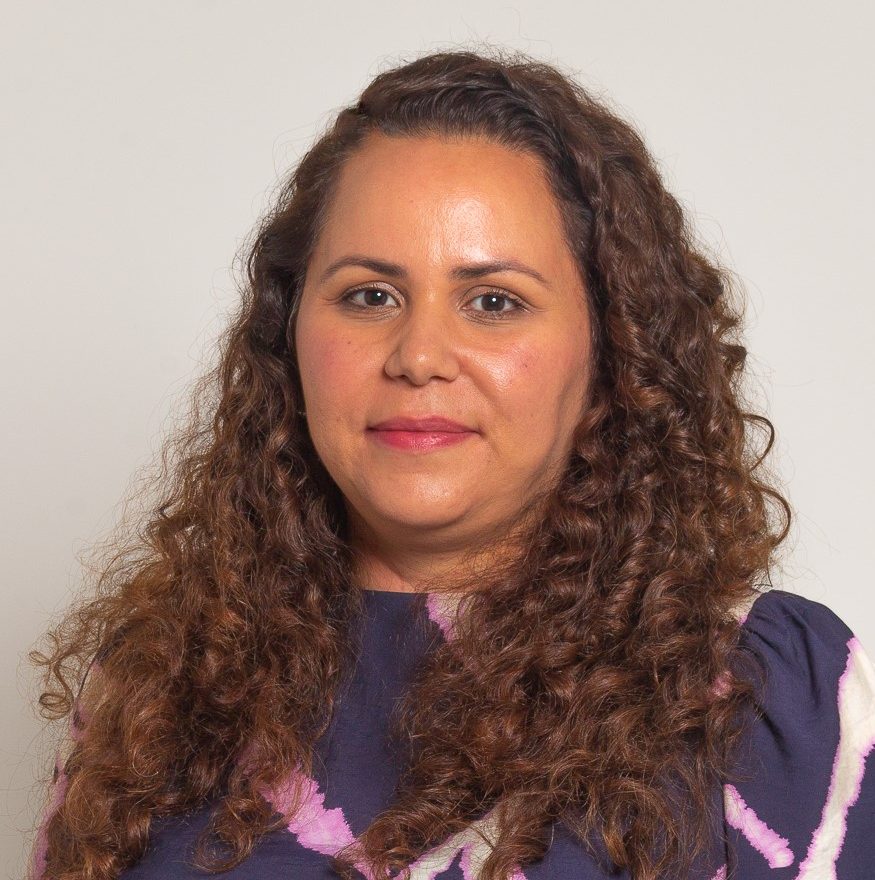
Raquel Rocha
Head of Public Affairs, Brazil

Russia
  • Russia’s top priority for the Summit is to advance the development and introduction of the block’s unified payments platform that would fully eliminate the need for SWIFT system and the US corresponding banks. When this is up and running, its resource trading with China and India would be less constrained.
  • Ahead of the Rio Summit, the Russian delegation pushed for a stronger call from BRICS to reform key international institutions, from IMF to UN Security Council, to increase the role of the countries of the “world’s majority”, which BRICS represents.
  • While for many ordinary Russians the international isolation is demonstrated through the country’s absence on the Olympic Games, football and ice hockey leagues, the Eurovision festival and other international cultural events, Russia will continue to be the key enthusiast of the experimental formats like BRICS Sports, BRICS Fashion, BRICS Arts, TV BRICS and the like.
"Russia is sucked in a protracted war, as it struggles to deliver a decisive blow to its smaller and seemingly weaker opponent. It feels quite isolated and suffers from international sanctions which restrict its ability to build weapons and support economic growth outside of the defense industries. That provides Russia’ context of the summit and more broadly the raison d'être for BRICS as far as the Kremlin is concerned. Although the overall line is unchanged, Russian officials will be careful in choosing their words in Rio de Janeiro, to avoid sending openly anti-American signals, so that the Trump administration doesn’t lose patience with Putin in its current balancing act”.

Leonid Fink
Head of the CEE Team, United Kingdom
India
  • India’s engagement in BRICS will continue to reflect a dual focus on expanding influence in both Western-led and Global South platforms. It will champion Global South cooperation, advocating a multipolar world order and reforms in global institutions like the UN and IMF for fairer representation and inclusive growth. As part of this, India will also look to drive technological initiatives in AI, digital infrastructure, and cybersecurity.
  • India seeks stronger bilateral trade within BRICS, especially to reduce its deficit with China. It will continue to push for fairer terms and expanded exports in tech (AI, semiconductors), pharma, and critical minerals (lithium, cobalt, rare earths). It aims to dismantle export controls while boosting agriculture, renewables, and infrastructure ties. As BRICS embraces new members, India will support expansion cautiously, favoring countries that align with its strategic and economic priorities, such as the UAE.
  • India aims to leverage BRICS to address regional security, counter-terrorism, and border stability, particularly concerning China and Pakistan. It will use the platform to raise some of the issues and drive some stricter enforcement mechanism towards enhancing security in the region.
"India’s BRICS strategy for 2025 rests on three pillars: leadership in Global South innovation, rebalanced economic ties through tech and critical minerals trade, and leveraging the bloc to address regional security challenges. India will look to create actionable frameworks for trade, technology, and strategic autonomy as it gears up to take presidency in 2026”.
Amrit Singh Deo
Senior Managing Director, India
China
  • China will continue to support expanding BRICS “circle of friends” to include a wider group of emerging markets and developing countries, reflecting China’s strategic goal to strengthen the Global South’s influence in global affairs and enhance BRICS’ geopolitical and geoeconomic representativeness.
  • China is expected to highlight the importance of the “three-wheel drive” cooperation framework – economic, political-security, and people-to-people exchanges – as essential for managing the cultural, historical, and political differences within BRICS. China’s continued push for people-to-people and cultural ties signals its commitment to deeper, more sustainable partnerships.
  • The New Development Bank (NDB), headquartered in Shanghai and led by former Brazilian President Dilma Rousseff, will be showcased as a key instrument through which China advances sustainable infrastructure financing and development across BRICS and the broader Global South. China will likely advocate for further strengthening the bank’s role in global financial governance.
  • China will underline the strategic role of the BRICS Innovation Base in Xiamen in driving industrial modernization and policy coordination under the New Industrial Revolution partnership. This initiative not only advances practical cooperation but also demonstrates China’s ambition to institutionalize BRICS mechanisms for long-term development.
“At the upcoming summit, China is expected to champion “BRICS Plus” as a strategic effort to amplify the voice of the Global South and reshape global governance. Heightened instability in parts of the Global South – including the Middle East where BRICS members are involved – is likely to increase the bloc’s urgency in calling for peaceful conflict resolution, respect for sovereignty and territorial integrity, adherence to international law, and dialogue. BRICS members are expected to reaffirm the principles of non-use of force and non-interference, firmly opposing actions that threaten regional security and global peace. Through this broader coalition, China seeks to enhance the group’s geopolitical weight and economic influence, positioning BRICS as a counterbalance to Western-led institutions. China’s overall summit strategy will balance driving deeper institutional development and economic integration with managing internal complexities and external pressures – a challenge shared by all members."
Rachel Hsueh
Head of Strategic Communications, China
South Africa
  • As the host of the G20 in 2025, South Africa is pushing for a rebalanced, multipolar world order that emphasizes the reform of institutions like the UN Security Council, IMF, and World Bank to better represent the Global South. BRICS provides a platform to amplify its voice and align with emerging powers to contest a global governance perceived as outdated and Western-centric. South Africa is likely to take a more assertive stance in global forums and pivot its multilateral engagements, emphasizing South–South cooperation over traditional Western alliances.
  • South Africa’s deepening engagement with BRICS reflects its intent to diversify economic partnerships and reduce exposure to Western-dominated financial systems. The New Development Bank (NDB) and the Pan-African Payment and Settlement System (PAPSS), offer a blueprint for alternative financing and cross-border trade settlements in local currencies, aimed at insulating African economies from external shocks and dollar volatility. South Africa is likely to champion increased BRICS–Africa trade, particularly in energy, manufacturing, finance, and digital sectors, while positioning itself as a gateway to the AfCFTA. Advances in payment systems and regulation may also lower transaction costs and support broader local currency use across the continent.
  • South Africa sees BRICS as an avenue to enhance Africa’s role in international decision-making and advance its commitment to non-alignment amidst growing global tensions. By fostering knowledge-sharing and research collaborations, South Africa aims to counterbalance Western influence, which has historically led global policymaking. South Africa will likely become more vocal in regional policy and standard setting (especially within the AfCFTA), but businesses must be aware of potential policy ambivalence as South Africa balances its strategic non-alignment against its existing relationships with the West.

“At the upcoming BRICS Summit, South Africa is expected to continue championing a more inclusive and equitable global order, leveraging the country’s role as host for the 2025 G20 Presidency. The priority will be to advance financial autonomy through local currency trade and robust alternatives to Western-dominated systems, while positioning South Africa as a gateway for trade and investment between BRICS economies and the African Continental Free Trade Area.”

Lelo Skosana
Head of Public Affairs, South Africa

At FTI Consulting, we have established a dedicated BRICS working group composed of Public Affairs teams in Brazil, China, South Africa, and India, as well as Russia specialists based in our London office. This cross-market structure allows us to monitor developments closely, provide localized insights, and support clients in navigating the complex and evolving dynamics of the bloc, as well as its impact on the local business environment. Please see our contact details below to reach the team.

The views expressed in this article are those of the author(s) and not necessarily the views of FTI Consulting, its management, its subsidiaries, its affiliates, or its other professionals.

©2025 FTI Consulting, Inc. All rights reserved. www.fticonsulting.com
Related Articles

4th Annual Shareholder Activism State of the Market

September 8, 2025—4th Annual Shareholder Activism State of the Market Request Report The 4th Annual Shareholder Activism State of the Mark...

Use It or Lose It: U.S. Hydrogen Industry Must Act To Maintain Momentum

July 12, 2025—Key takeaway: Following the passage of the “One Big Beautiful Bill Act”, time is of the essence for hydrogen produce...

Quick Analysis: ‘One Big Beautiful Bill’ Drives More Gas and Batteries, Less Renewables

July 3, 2025—With the recent passage of the “One Big Beautiful Bill” (“OBBB” or the “Legislation”),[1] FTI Consulting’s...

Done Deal – Insights from our M&A and Activism team – June 2026

June 24, 2026—Insights from our M&A and Activism team Welcome to the latest installment of Done Deal. This month, Senior Consultan...

IR Monitor – 24 June 2026

June 24, 2026—In this week’s newsletter: The stories that investor relations professionals need to read this week: IR in Kazakhstan:...

Mehr als nur Zahlen: Social Media und die Kunst der Ergebniskommunikation

June 24, 2026—Social Media Monitor 2026: Eine Analyse der Nutzung von Social Media durch DAX-40-Unternehmen in der Finanzkommunikation...