ESG+ Newsletter – 8 May 2025
While questions continue to surround ESG, sustainability and associated impacts, this week we cover developments from stock exchange guidance, regulation on climate risks in financial services, fund labelling and ESG rating agencies. We also look at the latest developments in AI and proxy advice.
This week’s poll
Do record outflows signal the beginning of the end for ESG funds?
- Yes
- No
- No, but likely to be severely reduced
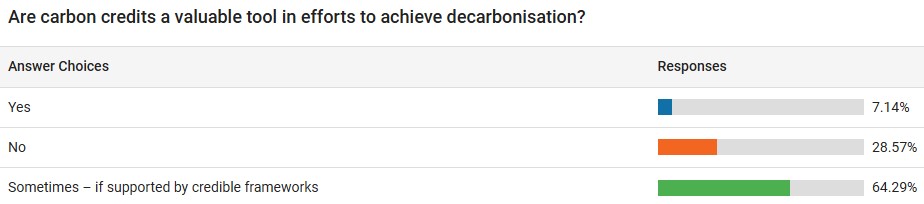
Last week’s poll results
Euronext in ESG rebrand to boost investment in defence
As reported by Reuters, European exchange operator Euronext has unveiled a set of initiatives aimed at enhancing investment in Europe’s defense sector, supporting the region’s push for strategic autonomy amid rising geopolitical tensions. Central to these efforts is the planned launch of the European Aerospace and Defense Growth Hub by the end of 2025, which will connect defense companies with investors to help scale up innovation and production. Additionally, Euronext will introduce the IPOready Defense Programme in Q3 2025, backed by EU funding, to prepare defense firms for public listings. A new defense bond segment with fast-track listing procedures is also in development to streamline capital access.
To support these initiatives, Euronext is rebranding its ESG framework to focus on “Energy, Security, and Geostrategy,” aligning with Europe’s broader security and sustainability goals. This includes launching sector-specific indices and revising ESG index criteria to accommodate defense firms, excluding only those involved in weapons prohibited by relevant international treaties. In general, European asset managers have been reassessing their policies on investing in defense, as politicians and customers pressure them to loosen restrictions and help fund the race to re-arm. The Euronext announcement highlights Europe’s growing commitment to increase military spending as it responds to calls from the U.S. to take more responsibility for its own security.
Governance and proxy advice in transition
For many years, proxy advisory firms like ISS and Glass Lewis have held significant sway in shaping how institutional investors vote at shareholder meetings. Their benchmark reports, or “house views,” are often picked up by the media, in particular when they include recommendations to oppose large pay packages or high-profile board appointments. A recent Semafor article stirred industry speculation by suggesting Glass Lewis might scrap its house view altogether. However, Glass Lewis quickly clarified its commitment to maintaining its house view, while offering a broader range of on-the-shelf policy options and supporting the development of client-specific policies. This shift underscores a growing trend in governance: tailoring proxy voting to reflect a more nuanced spectrum of investor priorities.
This emphasis on flexibility parallels evolving practices in how shareholder meetings themselves are conducted, as reported by the Financial Times. The UK government is expected to address the legal ambiguity surrounding virtual annual general meetings (AGMs), a move some investors fear could limit their ability to challenge management face-to-face. While in-person AGMs are valued for direct accountability, virtual formats have gained global traction for their convenience, particularly in large countries where travel is a barrier. Broadridge, for example, hosted over 2,400 virtual-only AGMs in North America in 2024. UK reforms may soon allow companies to switch to virtual-only formats, subject to shareholder approval and changes to corporate bylaws. The Investment Association supports hybrid models but remains wary of excluding physical interaction altogether. Governance norms continue to evolve, with proxy advisory practices and meeting formats both under increasing pressure to become more flexible and adaptable.
Bank of England strengthens management of climate-related risks
The Bank of England (BoE) announced on 2 May 2025 a series of proposals to strengthen and streamline management of climate-related risks for banks and insurers, reports ESG Today. The new proposals will update ‘Supervisory Statement 3/19’, the BoE’s initial 2019 supervisory expectations for firms’ management of climate-related risks, based on learnings from the past five years. According to the BoE’s Prudential Regulatory Authority (PRA), its review indicated that while “firms have made progress, their capabilities to identify and manage climate-related risk are still at an early stage”, adding that banks’ frameworks for climate-related risk management “are still in their infancy”. With most banks yet to establish climate-related risk metrics, omitting climate-related risk from material risk frameworks, and insurers often failing to quantify, and therefore monitor exposure to, climate-related financial risks, the PRA points to the pressing need for refined guidance. The BoE proposals will place greater emphasis on scenario analysis, encouraging financial service firms to enhance their scenario analysis capabilities used to inform decision making. The proposals will also formalise climate-related risk appetite, ensuring boards review climate risk appetite, strategy and evolution in their business models.
The value of the FCA’s SDRs acknowledged despite low uptake
A survey from Investment Association of 50 asset managers, has found 80% of firms to believe the Sustainability Disclosure Requirements (SDR) has successfully reduced misleading sustainability claims. The FCA’s SDR was introduced on 31 May 2024 to enhance investor protection against greenwashing and support the UK’s leadership in sustainable investment. The SDR requires firms with environmental or social funds to choose between four approved labels; Sustainability Focus, Sustainability Impact, Sustainability Improvers and Sustainability Mixed Goals. However, since it’s inception only 94 of the UK-domiciled funds have adopted one of the FCA’s sustainability labels, below the 216 anticipated. Firms point to the complex and demanding authorisation process as an adoption inhibitor. More broadly, firms are opting to avoid both SDR’s official labels and ESG-related terms in general as the return of the Trump administration to the White House sparked a push-back against ESGs, a trend now spilling into Europe. Although the SDR has been praised for improving clarity and helping investors navigate sustainability claims, its impact on investment flows remains uncertain, only 14% of firms by the Investment Association believe the regime will lead to increased capital moving into sustainable funds over the next three years. Regardless, edie reports that the FCA remains optimistic, expecting to see a rise in approved labels for funds throughout 2025 as firms and the regulator better to understand the implementation of regulation.
New EU rules to regulate ESG ratings providers
The European Securities and Markets Authority (ESMA) has released draft Regulatory Technical Standards (RTS) to tighten oversight of ESG ratings providers under the new EU ESG Ratings Regulation, as reported by ESG News. The move aims to enhance transparency, reduce conflicts of interest, and strengthen the credibility of sustainability data across Europe. Key aspects of the RTS include mandatory authorisation for ESG ratings firms, strict disclosure of methodologies, and clear separation between ratings and advisory services. This is a significant step toward addressing investor concerns about opaque and inconsistent ESG assessments, which have long plagued the sector. While early proposals considered banning firms from offering consulting alongside ratings, the final draft allows this, provided strict operational separation is maintained to prevent conflicts of interest. A public consultation on these draft rules is open until June 20, 2025, with final recommendations expected in October. In parallel, ESMA has released new guidelines to tighten enforcement of sustainability disclosures, aligning this oversight with the rigor of financial reporting. This framework directs national authorities to increase supervisory capacity, ensuring compliance with the CSRD and EU Taxonomy Regulation, while intensifying scrutiny of potential greenwashing. Companies must prepare for more rigorous ESG oversight as the EU pushes for harmonised sustainability reporting standards.
ICYMI
- FCA Drops ESG Labelling Plans for Wealth Managers, according to Financial News. Initially announced last April, the plan aimed to extend the Sustainability Disclosure Requirements to portfolio managers as part of a broader effort to combat greenwashing.
- BloombergNEF’s latest outlook warns that, under current market-driven trends, emissions would fall by just 22% by 2050—keeping the world on track for 2.6°C warming, far from the Paris Agreement’s goals.
| The views expressed in this article are those of the author(s) and not necessarily the views of FTI Consulting, its management, its subsidiaries, its affiliates, or its other professionals.
©2025 FTI Consulting, Inc. All rights reserved. www.fticonsulting.com |