ESG+ Newsletter – 6 February 2025
This week’s newsletter begins by covering the growing backlash from investors against the proposed omnibus package by the EU, with concerns that changes will undermine market confidence. We also look at growing concerns from investors regarding carbon credits and the impacts of the new US administration on DEI efforts. Finally, we cover whether India’s budget has led to a disjointed approach to the green transition. But first, our weekly poll.
This week’s poll
How will companies react to the pushback against ESG under the new US administration?
- Continue as usual
- Remain committed, but reduce or change communication on ESG
- Roll back efforts to avoid scrutiny
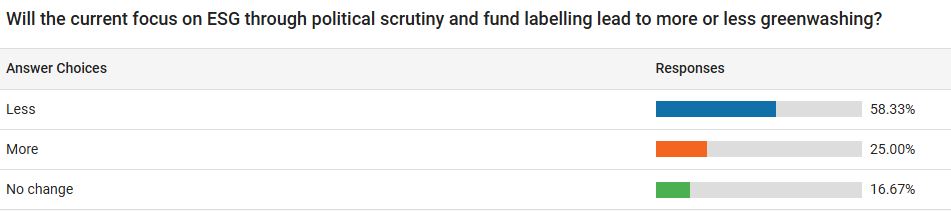
Last week’s poll results
Investors warn EU’s Omnibus may undermine ESG data amid growing backlash
A coalition of investors managing €6.6 trillion in assets has urged the European Commission not to weaken ESG reporting rules, warning that doing so could create regulatory uncertainty and jeopardise the EU’s Green Deal. The Commission’s ‘Omnibus’ reform package aims to revise key sustainability regulations, including the CSRD and the CSDDD. However, pressure from Germany and France to scale back ESG rules—citing competitiveness concerns—has raised questions among responsible investors. France has called for a regulatory pause, while Germany is seeking to delay CSRD by two years. Investor groups, including Eurosif, the Institutional Investors Group on Climate Change (IIGCC), and the Principles for Responsible Investment (PRI), emphasise that ESG disclosures are vital for capital allocation. The investor groups, backed by over 200 financial sector participants, urge only minor technical adjustments rather than a full reopening of regulations, which could destabilise investor confidence.
This warning comes as ESG remains a key factor in portfolio allocation. Fidelity International’s survey found that over half of investors still prioritise ESG considerations, particularly environmental factors like decarbonisation and energy transition. However, measuring ESG impact and navigating inconsistent regulations remain major barriers. Despite calls for simplification, the EU Commissioner for Financial Services reaffirmed the bloc’s commitment to the Green Deal, suggesting the focus should be on “adjusting the pace” rather than dismantling key frameworks. While regulatory refinements could ease reporting burdens for businesses, policymakers must strike a balance between reducing complexity and maintaining robust ESG standards to ensure long-term sustainability goals remain on track.
Growth in carbon offsets face greater investor scrutiny
A recent article by Responsible Investor has delved into growing investor concerns around the use of carbon offsets. Currently, over two-thirds of the world’s 50 largest companies are using carbon credits to help them meet their net zero targets. Demand for credits is growing, particularly from big tech companies who have been among the largest buyers of voluntary carbon credits, as they look to balance their climate transition targets with the increasing energy demands from AI and other technology. Amid that backdrop, the article focuses on the lingering credibility issues that have plagued the carbon credit market, looking at whether the use on low quality carbon credits may be a waste of company money and potentially expose corporates to greenwashing suits. However, despite the concerns, some investors believe that carbon credits do have a role and have cautioned that they should not be abandoned; rather advocating that companies select credits that deliver a meaningful impact and reduce emissions.
The use of carbon credits and the role they play in the climate transition has long been a contentious issue, with significant doubt cast on the environmental efficacy of carbon offsets and whether they delivered their intended outcomes. With it widely being accepted that companies likely have to use some form of carbon offsetting, it is imperative they place significant emphasis on identifying high class credits with demonstrable impact, which will support effective transition plans and associated communications.
What is the future for DEI?
While the political zeitgeist in the US may point towards reduced prioritisation of diversity, equity and inclusion (DEI), experts are predicting an entirely different trajectory in the FT. Some US companies are ending DEI programmes, but many others are reinforcing their commitments to improve representation in their workforce and boardrooms. Experts say that most companies will be looking to strike a balance between abandoning their initiatives and becoming targets for conservative anti-DEI activists. Goals may be scaled back, but they will not be completely left behind. DEI goals will likely become more aligned with core business objectives, as inclusive teams are more productive, and deliver better results. It is predicted that a data-driven approach to diversity will also be taken, with rigorous measurement, data collection, analysis and target-setting being recommended.
As UK companies come to the end of their five-year timeframe for DEI targets set in 2020, it is unclear how businesses will approach the topic for a new era. The influence of US politics on the British DEI landscape is yet to be determined, and as Labour considers mandatory ethnicity and disability pay gap reporting, the UK may swing in the opposite direction.
India’s Union Budget 2025 fails to seize the green transition opportunity
Following the publication of the Indian Union Budget 2025 last week, some have criticised the bill as falling short in addressing the urgent need for decarbonisation and green finance. Despite focusing on economic growth, the Economic Times believes it neglects critical sectors like steel, cement, and manufacturing, which are key to reducing emissions. India’s approach to sustainability remains fragmented, with limited support for high-carbon industries’ transition to low-carbon alternatives. The absence of a robust carbon market and transition finance mechanisms further hampers progress. Moreover, while the Business Responsibility and Sustainability Reporting framework aims for ESG transparency, it lacks enforceable KPIs, potentially leading to greenwashing. With global shifts towards stricter climate policies, particularly in the EU, India’s sustainability efforts risk falling behind, undermining its global trade competitiveness. The budget may have been a missed opportunity at integrating climate action into economic policy, leaving India’s green transition slow and disjointed.
ICYMI
- The US Treasury Department announced that its Federal Insurance Office is withdrawing from the Network of Central Banks and Supervisors for Greening the Financial System. According to ESG Dive, The Treasury said in a statement that the departure is “one part of implementing President Trump’s Executive Orders Putting America First in International Environmental Agreements and Unleashing American Energy.”
- Japan has created a transition advisory body for their Climate Transition Government Agency. The advisory group is made up of sustainability experts who will provide advice to the agency to allow it to operate “from a global perspective”, as reported by Responsible Investor.
- The TNFD is set to begin piloting its nature transition plan guidance in the coming months. This follows the release of a draft guidance for corporates and financial institutions at last year’s COP16. According to Responsible Investor, pilot testing will be undertaken with a small group of companies and financial institutions to learn more about application before the TNFD publishes its guidance at the end of this year.
| The views expressed in this article are those of the author(s) and not necessarily the views of FTI Consulting, its management, its subsidiaries, its affiliates, or its other professionals.
©2024 FTI Consulting, Inc. All rights reserved. www.fticonsulting.com |