ESG+ Newsletter – 3 April 2025
As the upcoming AGM season heats up, corporate boards are bracing for intensified scrutiny on ESG and DEI matters. Adding to the global regulatory tension, US embassies are pressuring French companies to comply with Trump-era restrictions on diversity policies. On the ‘E’ front, climate talk is losing momentum among S&P 500 firms as the SEC regulations face ongoing uncertainty; the EU Commission continues its push for streamlined sustainability reporting; while Australia has finalised its climate disclosure guidance.
This week’s poll
Do you believe the latest economic developments, including the imposition of tariffs, will result in a change in sustainability budgets?
- Reduce
- Increase
- No change
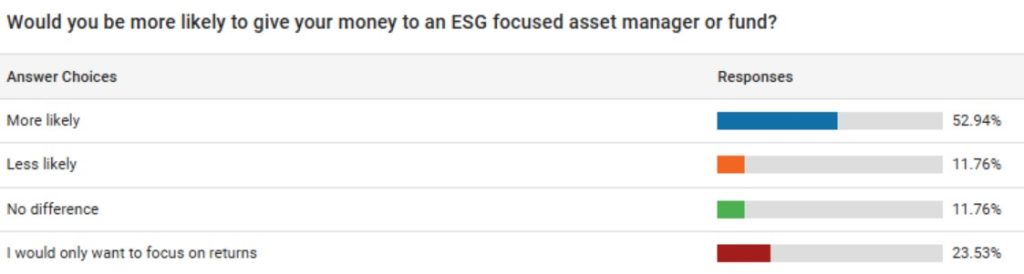
Last week’s poll results
Uncertain economic and geopolitical backdrop sets scene for UK AGM season
As major UK-listed companies gear up to host their AGMs over April and May, boards of directors are preparing for the potentially challenging questions from shareholders this year, as they are grilled over financial results, capital allocation strategy and shareholder returns. Shareholders and activists have increasingly used AGMs to voice dissent, vote against management decisions or push for drastic overhauls in how companies are run. These AGMs will be held against an uncertain economic backdrop, with geopolitical tensions and fragmenting policy landscape significantly impacting businesses with global operations.
Ranconteur shared views from experts on some of the topics likely to dominate AGMs. The common theme is whether the trend in the US from global investment managers of dropping DEI and climate policies from their proxy voting, will follow in the UK. Boards are also likely to face heat over executives’ pay following a flurry of pay rises announced for UK bosses in recent weeks, in a bid to allegedly remain competitive with US rivals. There will also likely be scrutiny over companies’ capital allocation strategies and long-term value creation. The expectation from shareholders is that companies will place an emphasis on buybacks and dividends ahead of growth initiatives.
US embassies order French companies to comply with Trump’s ban on diversity politics
Sticking with DEI, Reuters has reported that the Trump administration is attempting to enforce compliance with the ban on DEI programmes with suppliers to the US embassies and consulates. Suppliers for US diplomatic missions who fail to submit the required information in Trump’s DEI crackdown questionnaire entitled “ Certification Regarding Compliance With Applicable Federal Anti-Discrimination Law”, have been warned they will face a payments freeze. An additional Reuters article suggests that the questionnaire raises questions about the practical changes companies may need to implement, given the differing approaches towards DEI between the US and European countries. The warning also reflects President Trump’s goal of extending his January executive order which dismantled DEI policies for government agencies and contractors beyond the US, potentially impacting European corporate practices. Donald Trump’s ‘America First’ policies have rallied politico-economic tensions between the US and Europe since his inauguration earlier this year, with DEI controversies seemingly extending this rift.
SEC, S&P 500: Climate talk takes a dive
The shifting US political landscape has had a notable influence in changing companies’ approach to communicating environmental initiatives. Bloomberg reports a 76% average decline in corporate environmental mentions, such as the use of the terms “climate change, global warming, ESG, clean energy and green energy,” compared to three years prior. This trend aligns with the SEC’s recent decision to cease defending its climate rule, which mandated emissions disclosures. As reported by The Hill, this SEC vote, while anticipated, solidified a broader move away from sustainability initiatives on Wall Street.
This decline in environmental discourse during S&P 500 earnings reinforces the narrative advanced by climate activists, who argue the SEC’s decision diminishes public transparency. They argue that concealing climate risks does not eliminate them. While these trends suggest potential consumer-driven tension, the most significant drop in climate-related discussions is concentrated within the consumer, financial, and energy sectors—all areas heavily reliant on consumer engagement. Although only recently evident, these shifts indicate a broader movement towards a less vocal approach to climate considerations.
EU Commission directs EFRAG to streamline sustainability reporting standards
The European Commission has tasked the European Financial Reporting Advisory Group (EFRAG) with creating a streamlined version of the European Sustainability Reporting Standards (ESRS), with a deadline for new advice set for the end of October reports ESG Today. This is part of the broader goal to reduce regulatory burdens under the Corporate Sustainability Reporting Directive (CSRD). The initiative follows the February release of the Omnibus I package, which aims to simplify compliance for businesses by cutting down on sustainability data points and prioritising quantitative disclosures. The Commission also proposed amendments to the EU Taxonomy, sparking debate among stakeholders, as reported by Responsible Investor. Over 300 responses raised concerns about the introduction of a materiality threshold, the lack of alignment with CSRD, and revisions to the Green Asset Ratio. Key changes include limiting reporting obligations to large companies and allowing partial alignment reporting. A financial materiality threshold could exempt companies with less than 10% eligible activities from mandatory disclosure, but some worry this would reduce transparency and favour larger businesses, exempting nearly 40% of firms from reporting green revenues.
Despite mixed reactions, including concerns from environmental groups and asset managers, the Commission aims to finalise these amendments by year-end, balancing simplification with the need for transparency and alignment with sustainability goals.
Australia’s financial regulator issues final climate disclosure guidance
The Australia securities & investments commission (ASIC), Australia’s financial regulator, has issued Regulatory Guide 280 (RG 280), clarifying compliance expectations for mandatory climate reporting, which begins in 2025 as reported by ESG News. The new law requires public companies, large proprietary companies, and significant asset owners to disclose climate-related risks and greenhouse gas emissions. ASIC will take a “proportionate and pragmatic” enforcement approach, focusing on serious misconduct and failure to report. Reporting begins in July 2025 for large companies, with medium and small businesses following in 2026 and 2027, respectively. The guide includes new details on climate scenario analysis, scope 3 emissions reporting, and director responsibilities. ASIC will offer support and consider granting relief under certain conditions. The approach aims to encourage companies to adapt to new reporting requirements while ensuring transparency and promoting sustainable business practices. The guide can be accessed here.
ICYMI
- L’Oréal announced that it has reached 100% renewable energy for its European operations – including factories, distribution centers and offices, ESG Today reports.
- Japan’s $1.7 trillion Government Pension Investment Fund issued new guidelines supporting sustainability-related investments, viewing the management of environmental and social issues crucial to its long-term returns strategy, according to Bloomberg.
- Shipping industry regulations aimed at decarbonising the sector could unlock a trillion-dollar investment opportunity, particularly through the development of renewable electricity-based fuels, Sustainable Views reports.
| The views expressed in this article are those of the author(s) and not necessarily the views of FTI Consulting, its management, its subsidiaries, its affiliates, or its other professionals.
©2024 FTI Consulting, Inc. All rights reserved. www.fticonsulting.com |