SEC pushback on ESG policies sparks legal and international tensions
The SEC is actively rolling back climate policies introduced under the Biden administration and pressuring European regulators to follow suit. Under former President Biden, the SEC adopted rules requiring publicly traded companies to disclose environmental information on topics such as climate-related risks. In March, under President Trump’s administration, the SEC voted to stop defending this rule in court, with acting chairman Mark Uyeda describing it as an effort to “cease the Commission’s involvement in the defense of the costly and unnecessarily intrusive climate change disclosure rules.”
The US Court of Appeals is weighing legal challenges against the SEC for failing to decide whether to rescind, repeal, modify, or defend the disclosure rules. It recently paused proceedings until the SEC clarifies its stance. This domestic pushback comes as SEC Chair, Paul Atkins, recently addressed the international community at the OECD Roundtable on Global Financial Markets, criticising European sustainability disclosures, including CSDDD and CSRD. He argued that these regulatory requirements are overly prescriptive, impose significant costs on US companies and consumers, and should be reduced, advocating for greater “freedom of enterprise.”
Atkins also warned that overseas firms operating in the US could be barred from using International Financial Reporting Standards (IFRS) if sustainability issues remain integrated, arguing this would undermine IFRS integrity and its alignment with US standards. This could force European firms with US listings to reconcile their reporting with US accounting rules. The IFRS Foundation maintains that its sustainability standards address global investor demand and are independent of accounting rules.
EPA rollbacks put corporate climate promises at odds with federal policies
The Trump administration’s EPA is moving to dismantle two pillars of US climate oversight: mandatory emissions reporting and the 2009 “endangerment finding.” Bloomberg reports that the agency is preparing to eliminate requirements for around 8,000 major polluters, including power plants and refineries, to disclose annual greenhouse gas emissions, calling the programme too burdensome. At the same time, the EPA is downplaying the dangers of greenhouse gases, suggesting they may not pose serious risks to public health and may even bring benefits such as crop yield gains.
These moves directly conflict with the trajectory of many US companies that have committed to emissions reductions and sustainability goals. According to the Wall Street Journal, references to climate risk and emissions reduction have already begun declining in corporate filings, suggesting firms are adjusting messaging as regulatory expectations weaken. The rollback increases the risk that corporate climate pledges will lose credibility without federal oversight.
FCA permits greater flexibility on sustainability product reports
The UK’s Financial Conduct Authority (FCA) has amended its Sustainability Disclosure Requirements (SDR) to clarify a rule change relating to index funds, giving firms greater flexibility in preparing sustainability product reports. The rule change refers to the labelling of SDR funds, following an update earlier this year that enabled funds to drop the term “sustainable” and/or “impact”; or apply one of the four labels (sustainability focus, sustainability improvers, sustainability impact, and sustainability mixed goals) by April 2025. Following confusion over qualifying criteria, particularly for index-tracking funds, the FCA announced their intention to share clearer guidance. The FCA has also agreed to increase the flexibility of the reporting period for product-level sustainability reports, to reduce administrative burdens. The FCA will conduct a post-implementation review in three years to assess whether its intervention has met its intended outcomes, to identify implementation issues, identify implementation issues, and evaluate compliance with the rule.
The FCA’s timely update comes as the UK’s Transition Finance Council (TFC) encouraged sectoral decarbonisation ‘roadmaps’ to better enable private financing. In a report published this week, the TFC warned that a lack of policy clarity has made investing in the green transition “commercially unviable”. The report proposed a variety of recommendations to de-risk and encourage investment in energy transition technologies, aligning with the FCA’s ambitions to clarify regulation and encourage businesses to transparently decarbonise.
Simplifying EU financial regulations could draw green capital
According to Bloomberg, the EU’s Financial Services Commissioner, Maria Luís Albuquerque, has said that making EU financial regulations more appealing would “attract more investment on the sustainability area, but also in other areas”. The comments come on the back of ongoing simplification efforts to the EU’s sustainable finance framework which is aimed at reducing the number of companies that need to comply with the CSRD and CSDDD. These simplification efforts will make the EU more aligned with global standards, reducing the level of ambition of the regulations and the burden on smaller companies. Albuquerque hopes that aligning reporting standards with sustainable finance criteria could help to attract capital to the bloc, mirroring the wider push in Brussels for emphasis on growth and security to boost investment.
ICYMI
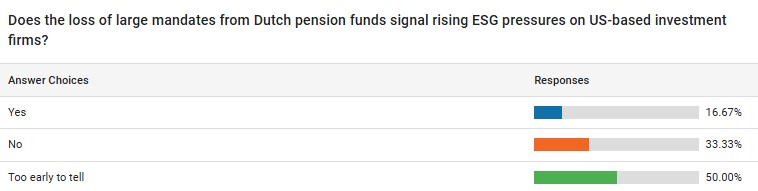
- Robeco has secured a €15.4 billion mandate from pension investor PGGM on behalf of Dutch pension fund PFZW. The deal signals PFZW’s shift from passive investing to an actively managed, sustainability-focused strategy, according to ESG Today.
- The UN will limit staff attendance at the COP30 climate summit in Belém, Brazil, citing insufficient accommodation in the city. The decision comes as organisers prepare for a record number of delegates expected at next year’s event, Reuters reports.