From R&D Experiment to Unlocking Enterprise-Wide Efficiencies
Artificial intelligence (AI) and large-language models (LLM) in many ways have fundamentally transformed our daily lives – e.g., how we seek information, how we work and how we connect with each other across the world. As players in the industry with the most significant and direct impact on human health, life sciences companies are by the increasing adoption of these innovative technologies. To better understand how companies and their leaders are viewing and using AI across their businesses, FTI Consulting surveyed 300 life sciences industry leaders about their outlook on AI for life sciences, the barriers to adoption and what they view as the opportunities that AI brings as they seek to develop life-changing treatments for patients.
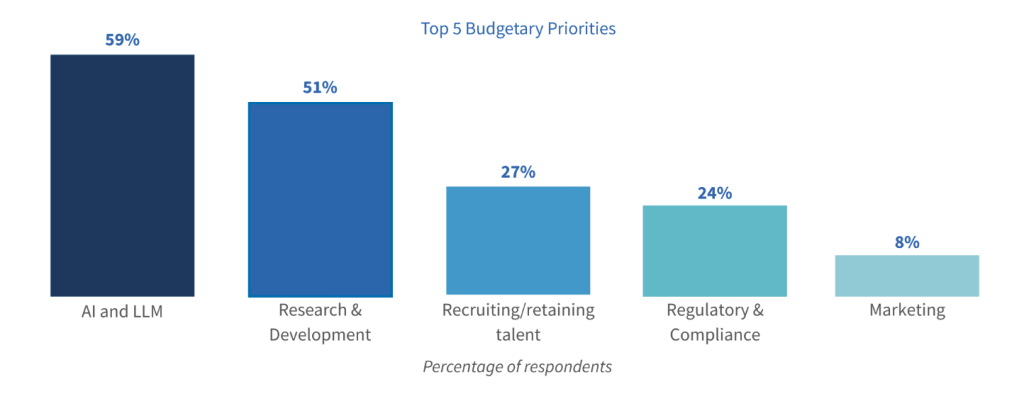
Over 59% of respondents plan to allocate more spending on developing AI and LLMs in 2026 – making this the number one area of investment and ranking higher than research and development, marketing and retaining and recruiting talent.
AI’s Expanding Role in Life Sciences
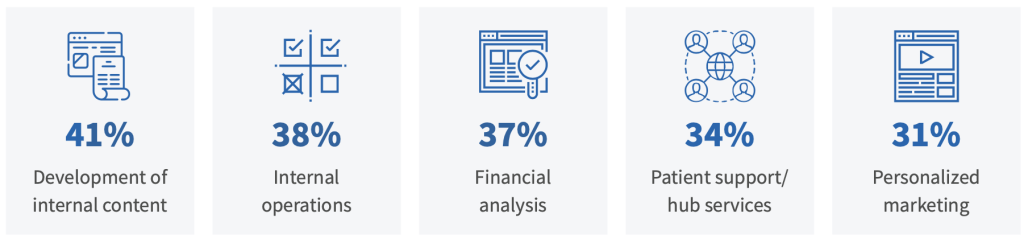
Since the 2010s, life sciences companies have experimented with using AI to streamline the drug discovery and development process. However, as AI has evolved, so have the use cases for AI. Today, organizations are actively using AI across the enterprise to operate more effectively and gather insights more quickly, with AI also playing a role in financial analysis, patient engagement, and communications, among others.
AI Shapes Corporate Affairs and Communications
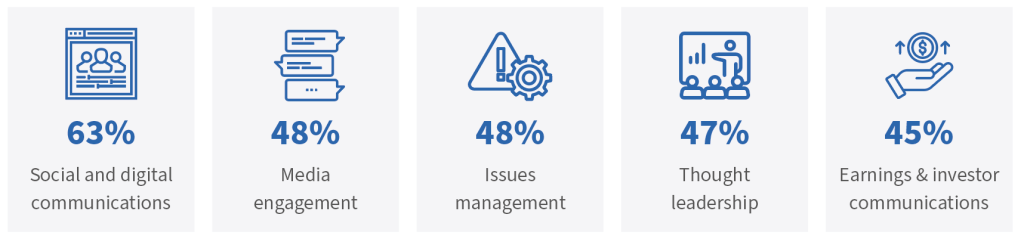
In FTI Consulting’s survey, 75% of leaders expect AI and LLM to play a greater role in their organization’s communications and reputation management in 2026, and 55% see AI as a supporting asset to their organization’s communications and reputation management activities – enhancing and building upon the knowledge of existing teams to deliver results.
Key areas in which AI is used in corporate affairs and communications include:
Organizations Proceeding Cautiously Towards Adoption
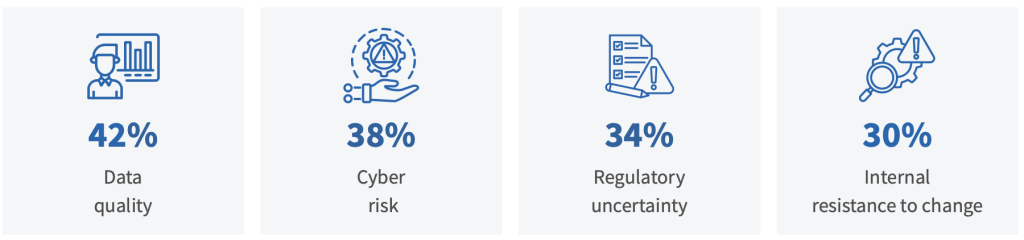
Despite the perceived value AI can provide to the operations of life sciences companies, significant barriers to universal adoption remain.
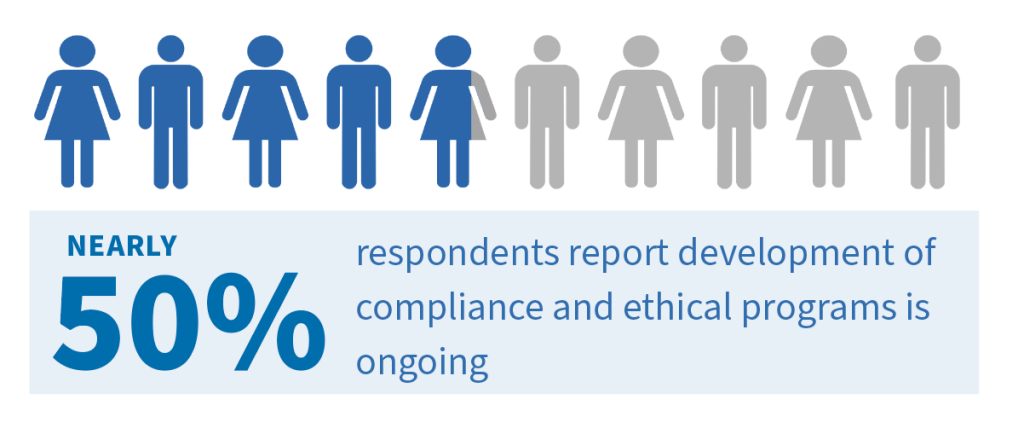
In this rapidly evolving space, nearly half of life sciences leaders report that they are still building a compliance and ethics program to anticipate and comply with potential AI regulations.
Ready to help healthcare and life sciences organizations through the AI transformation. FTI Consulting’s life sciences communications experts can help organizations tap into the power of AI and turn uses of AI from communications challenges into opportunities. We combine deep industry knowledge with proprietary AI tools to develop tailored communication strategies that build stakeholder trust, navigate regulatory complexities, and support strategic business objectives.
We look forward to engaging in further discussions.
The views expressed herein are those of the author(s) and not necessarily the views of FTI Consulting, Inc., its management, its subsidiaries, its affiliates, or its other professionals.
We use cookies on our website to give you the most relevant experience by remembering your preferences and repeat visits. By clicking “Accept All”, you consent to the use of ALL the cookies. However, you may visit "Cookie Settings" to provide a controlled consent.
This website uses cookies to improve your experience while you navigate through the website. Out of these cookies, the cookies that are categorized as necessary are stored on your browser as they are essential for the working of basic functionalities of the website. We also use third-party cookies that help us analyze and understand how you use this website. These cookies will be stored in your browser only with your consent. You also have the option to opt-out of these cookies. But opting out of some of these cookies may have an effect on your browsing experience.
Necessary cookies are absolutely essential for the website to function properly. These cookies ensure basic functionalities and security features of the website, anonymously.
Cookie
Duration
Description
cookielawinfo-checkbox-analytics
11 months
This cookie is set by GDPR Cookie Consent plugin. The cookie is used to store the user consent for the cookies in the category "Analytics".
cookielawinfo-checkbox-functional
11 months
The cookie is set by GDPR cookie consent to record the user consent for the cookies in the category "Functional".
cookielawinfo-checkbox-necessary
11 months
This cookie is set by GDPR Cookie Consent plugin. The cookies is used to store the user consent for the cookies in the category "Necessary".
cookielawinfo-checkbox-others
11 months
This cookie is set by GDPR Cookie Consent plugin. The cookie is used to store the user consent for the cookies in the category "Other.
cookielawinfo-checkbox-performance
11 months
This cookie is set by GDPR Cookie Consent plugin. The cookie is used to store the user consent for the cookies in the category "Performance".
viewed_cookie_policy
11 months
The cookie is set by the GDPR Cookie Consent plugin and is used to store whether or not user has consented to the use of cookies. It does not store any personal data.
Functional cookies help to perform certain functionalities like sharing the content of the website on social media platforms, collect feedbacks, and other third-party features.
Performance cookies are used to understand and analyze the key performance indexes of the website which helps in delivering a better user experience for the visitors.
Analytical cookies are used to understand how visitors interact with the website. These cookies help provide information on metrics the number of visitors, bounce rate, traffic source, etc.
Advertisement cookies are used to provide visitors with relevant ads and marketing campaigns. These cookies track visitors across websites and collect information to provide customized ads.