Public & Government Affairs

Global Public Affairs Newswire – Special ‘Trade and Tariffs’ Edition – 13.06.25
Welcome to a special ‘Trade and Tariffs’ edition of the Global Public Affairs Newswire.

In this issue, FTI Consulting’s Public Affairs experts from major global markets unpack the political and economic impact of evolving trade and tariff policies in their regions, bringing you updates from the United States, China, the United Kingdom, France, Brazil, Germany, Spain, Ireland, India, Malaysia, South Korea and Colombia.

Market updates

U.S. Political Flashpoints: Deportations, Displays, and Democratic Disarray
  • California Protests Spark Federal Response: Protests have erupted across California over stepped-up ICE deportations. Tensions escalated after the President deployed federal troops to support immigration enforcement—a move Governor Newsom condemned as “provocative and unconstitutional.”
  • Army Parade Planned in Washington, D.C.: A large-scale military parade is scheduled for June 14 to commemorate the Army’s 250th anniversary and the President’s birthday. With 7,500 troops, tanks, and flyovers planned, bipartisan members of Congress—including Senators Rand Paul and John Kennedy—have raised concerns about cost and symbolism.
  • DNC Leadership Vote Triggers Transition: David Hogg will step down as DNC vice chair following internal disagreement over the scope of party leadership roles. A procedural review tied to gender-diversity rules prompted a new vote, concluding a period of debate surrounding Hogg’s dual involvement in party affairs and primary campaigns.
“Whether confronting protesters in California, staging displays of power in Washington, managing fragile trade negotiations, or debating internal leadership, the week laid bare the fault lines shaping U.S. political life. Institutions are being tested on multiple fronts—economically, politically, and publicly—all at once.”

Greg Mecher
Managing Director, Washington D.C.
For more information about FTI’s Public Affairs services in the Americas, please contact [email protected].

Geneva to London: Rare Minerals for Chips
  • China and the U.S., in their first meeting under the economic and trade consultation mechanism in London, agreed on a framework to implement the consensus reached earlier in Geneva – a preliminary plan aimed at easing trade tensions and unwinding certain export controls, pending approval from both capitals.
  • Although the talks are framed as trade negotiations, the core contention has revolved around tit-for-tat export restrictions – rare earths versus microchips – highlighting how export controls have become strategic tools in today’s trade conflicts. The London talks now set the stage for a possible mutual rollback of these curbs.
  • Despite the plunge of 35% in exports to the U.S. in May, China’s overall exports still registered growth, demonstrating its capacity to diversify trade. Increased shipments to Africa, ASEAN, and the EU reflect resilience and suggest potential rebound momentum once a lasting China-U.S. trade deal is secured.
"The resumption of talks in London represents a pragmatic recalibration of bilateral engagement. Recent miscommunications and conflicting political signals had brought the Geneva track to the brink of collapse. The rare-earth versus microchip standoff marks a broader shift toward geoeconomic bargaining, where market access and technological interdependence are increasingly wielded to assert strategic leverage - expanding the scope of trade disputes beyond tariffs alone. From China's perspective, advancing toward a more balanced and rules-based trade environment requires not only mutual restraint but recognition of each party’s core development interests. While the London framework remains provisional, it offers a possible path forward where dialogue may help de-escalate tensions. For Beijing, the biggest casualty of the trade war has not been lost sales but the erosion of mutual trust. Whether this diplomatic overture will translate into structural adjustments and reciprocal commitments remains uncertain."
Rachel Hsueh
Head of Strategic Communications, China

For more information about FTI’s Public Affairs services in China, please contact [email protected]

Parts of UK-US Economic Prosperity Deal may be enacted within days
  • US President Donald Trump is reportedly poised to start the implementation of the UK-US Economic Prosperity Deal (EPD), more than a month after both countries announced the agreement on 8 May. Provisions increasing the US’ tariff-free quota of beef imports from 1000 to 13,000 tonnes and 1.4 billion litres of duty-free bioethanol, and granting the UK a 10% tariff on cars for the first 100,000 exports of vehicles and parts – reduced from 27.5% – are expected to come into effect in a matter of days.
  • However, the UK and US are still in negotiations regarding the UK’s tariff-free quota for steel and aluminium, with no timeline for the implementation of the preferential arrangements. Despite assurances from UK Government Ministers, including the Secretary of State for Business and Trade, Jonathan Reynolds, that the UK will secure tariff free access for aerospace exports, no arrangement has yet been concluded.
  • Despite being spared from last week’s increase in steel and aluminium tariffs to 50%, the UK’s steel industry has been vocal regarding the sector is facing. UK Steel, the industry body, has said that although UK steel exports make up a “tiny proportion of US imports”, the market is “highly significant for UK producers”.
"Although the UK is the only country to have so far achieved a successful outcome in its negotiations with the US, the slow pace of implementation of the EPD demonstrates the negotiations do not stop even once a deal is done. Swift or lasting implementation of tariff concessions cannot be taken for granted and so it is vital UK businesses prepare strategies to respond to a range of US tariff scenarios.”

Josh Cameron
Managing Director, United Kingdom

For more information about FTI’s Public Affairs services in the United Kingdom, please contact [email protected].

France faces uphill battle in quest to influence EU trade policy
  • France has continued to be outspoken on the Trump tariffs since the initial announcements made by the new US administration earlier this year, calling for a strong European response. The country has also been successful in pushing the EU to activate the International Procurement Instrument for the first time, with Chinese medical device suppliers set to be barred from EU tenders for five years. This comes in response to “the systematic exclusion of European firms from China’s market” according to Junior Minister for Europe Benjamin Haddad.
  • Trump tariffs and China are not the only hot subject in French trade policy. Last week saw President Lula of Brazil calling for the signing of the free trade agreement between the European Union and Mercosur during his state visit to France.
  • President Lula called on Macron, who has deemed the compromise negotiated by the European Commission “unacceptable in its current form”, to “open his heart”. In an interview held during the same visit, Macron called for both sides to agree on an additional protocol with mirror or safeguard clauses to protect specific sectors if markets become destabilised.
“France’s attempt to influence EU trade policy is challenged with the opposite interests of many if its fellow EU partners. Paris is keen to strongly resist US trade pressure, while others, more reliant on the US for economic and security reasons, are wary of escalating trade tensions. On the other hand, France is facing broad support for the conclusion of the EU-Mercosur trade deal. This challenge will call for a clear understanding on the French side on where to spend the political capital to defend the country’s interests."

Augustin Gosset
Senior Director, Public Affairs & Government Relations, Paris

For more information about FTI’s Public Affairs services in France, please contact [email protected]

Diplomacy as a tool to expand global trade
  • Lula’s government increased official diplomatic visits to secure market diversification and investment. China, France and Russia are amongst the countries. Critics argue that the selected countries favor commodity markets, while Brazil’s industrial sector urges more cooperation with Trump’s administration, and measures to protect the local market from being flooded with global industrial surpluses.
  • The new 50% U.S. tariff on steel puts Brazil on alert, being the second-largest steel exporter to the U.S. The steel and mining sectors are expected to adapt to a more protectionist global market and declining international demand, triggering potential shifts in market strategy and production.
  • Brazil supports strengthening the multilateral trading system within the BRICS framework as a response to rising unilateral and protectionist measures. In a Joint Declaration, the bloc prioritizes a rule-based system through WTO reform, economic integration among member countries, and the advancement of the digital economy.
“Disputes in international trade underscore the urgency for Brazil to expand its network of trade agreements and mitigate the impacts of both its own protectionist measures as well as those imposed internationally. BRICS has been a key component of Lula’s multilateral agenda, which has historically valued South-South cooperation. On the bilateral front, tensions between Europe, China, and the United States create opportunities for Brazil to advance strategic agendas, such as the Mercosur-European Union agreement and closer cooperation with China — while maintaining strong ties with the United States, the second largest destination for Brazilian exports.”

Raquel Rocha
Senior Director, Brazil

For more information about FTI’s Public Affairs services in Brazil, please contact [email protected].

Right-turn diplomacy: Trump and Merz break the ice in Washington
  • On 6 June 2025, German Chancellor Friedrich Merz (CDU) met U.S. President Donald Trump at the White House. Merz pressed for stronger U.S.-EU alignment on Russia, stressing continued military support for Ukraine and long-term NATO defense commitments. Trump confirmed U.S. troops would remain in Germany. On trade, Trump pushed for a new EU deal and raised concerns about German auto exports, while Merz emphasized mutual economic ties and Germany’s investment in the U.S. The meeting ended without incident which is already seen as a win for Merz in the German media.
  • The meeting came amid Trump’s 9 July deadline for a trade deal, with threats to expand existing tariffs (i.e., 50% on steel and aluminum, 25% on cars) to other EU exports, potentially raising rates from 10% to 50%. This would severely impact Germany’s export-driven economy, with the U.S. its second-largest trading partner after China. In response, the EU has readied €21 billion in retaliatory tariffs. Foreign Minister Dr. Johann Wadephul pledged full backing for the Commission, while the ECB cut interest rates from 2.25% to 2.0% to buffer markets and support spending.
  • The meeting follows earlier talks between Republican US Senator Lindsey Graham and Merz, EU Commission President von der Leyen, and German Foreign Minister Johann Wadephul (CDU) on potential 500% tariffs targeting countries that buy Russian energy, exempting Ukraine supporters, on 2 June 2025 in Berlin.
“The meeting reveals Trump’s volatile trade stance; an opening Germany could use to isolate Russia economically without triggering transatlantic fallout. With the U.S. still divided on foreign policy, Merz now faces the real test: channeling Trump’s tariff drive toward shared EU interests."

Caroline Müecke-Kemp
Head of Public Affairs, Germany

For more information about FTI Consulting’s Public Affairs services in Germany, please contact [email protected].

Spain repositions itself amid global trade tensions with a focus on Asia
  • According to the Bank of Spain, nearly 30% of Spanish companies have been impacted by U.S. tariffs, with 80% of those citing heightened uncertainty as a key concern. The result: rising costs and pressure to raise prices. While Spain has avoided major fallout, transatlantic trade volatility is forcing many firms to rethink supply chains and global positioning.
  • The Bank of Spain has lowered its 2025 GDP forecast from 2.7% to 2.4%, citing reduced export contributions due to tariff-driven uncertainty. Growth in 2026 is now expected at 1.8%, trimmed from 1.9%. Governor José Luis Escrivá called the global trade climate “extraordinarily complex,” linking escalating U.S.-China-EU tensions directly to slower Spanish growth.
  • Nonetheless, Spain is seizing the moment to reposition itself as a strategic bridge between the EU and China amid rising U.S. trade tensions. Prime Minister Pedro Sánchez was the first of several European leaders to visit Asia following President Trump’s announcement of sweeping tariffs. This week, Sánchez met with China’s Vice President Han Zheng to reinforce bilateral economic ties and promote a shared commitment to open trade and multilateralism.
"As transatlantic tensions grow, the Prime Minister sees its closer ties with China as an opportunity to diversify partnerships and mantain economic growth as a mean to avoid increasing the current political instability. Collaboration in areas where China is at the forefront, such as automotive, battery technology, solar energy, and green hydrogen, also aligns with the Government’s industrial priorities and long-term growth ambitions amid today’s uncertain geopolitical and trade environment."
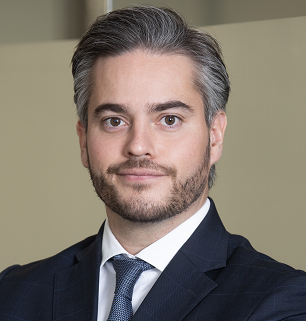
Carlos Ochoa Alonso
Head of Public Affairs, Spain
For more information about FTI’s Public Affairs services in Spain, please contact [email protected].

Ireland’s efforts to safeguard key industries amid trade uncertainty
  • Tánaiste and Minister for Foreign Affairs and Trade, Simon Harris this week wrote to EU Trade Commissioner Maroš Šefčovič, urging the exclusion of aviation, medtech, and agrifood from potential EU counter-tariffs on the US, citing the sectors’ importance to Ireland’s economy. He also raised the risk of unintended impacts on Northern Ireland amid ongoing trade negotiations.
  • In response to the current uncertainty, the Irish government is promoting market diversification, with a focus on Asia. A recent agrifood trade mission to Japan and South Korea supports efforts to reduce reliance on US exports and safeguard economic stability through expanded international partnerships.
  • Irish exports to the US have surged in recent months, led by the pharmaceutical sector. This trend reflects proactive measures by companies to mitigate potential tariff risks and maintain trade flows in the event EU-US negotiations fail.
"Ireland’s key export sectors—pharmaceuticals, medtech, aviation, agrifood, and semiconductors—are increasingly vulnerable amid EU-US trade tensions, highlighting the country’s economic exposure. Positioned between its EU partners and its largest export market, the US, the Irish Government has adopted a clear industry-first stance. Its strategy is focused on engagement and advocacy on behalf of industry, market diversification, and a renewed focus on competitiveness. This approach not only seeks to safeguard economic resilience but also offers a preview of Ireland’s likely policy direction when it takes up the EU Presidency in July 2026 — prioritising open trade and fostering innovation and competitiveness.”

Aoife Mullen
Director, Ireland

For more information about FTI’s Financial Services Public Affairs support in Ireland, please contact [email protected].

US-India Aim for Interim Deal Despite Speed Bump
  • The latest round of India-US trade talks ended on June 10 in New Delhi with no breakthrough on tariffs, especially the USA’s planned 50% duty on steel and aluminum and 10% baseline tariff on all imports from India. A USTR team was in India for nearly a week. Much of India’s USD 4.56B exports of iron, steel, and aluminum products to the US in FY25 came from labor-intensive units in key Indian states, where disruptions could lead to job losses.
  • The two sides were aiming for initial deal before July when US retaliatory tariffs become effective, and a comprehensive second phase between September and November. But Washington has stayed firm on tariffs and on its demands of access to India’s agri, dairy and pharma markets. The US is India’s largest trading partner four years in a row, with USD 132B in bilateral trade in FY25.
  • Meanwhile, India and the UK concluded their Free Trade Agreement last month, after 15 rounds of talks over three years. Under the FTA, New Delhi will halve tariffs on whisky and gin, and Indian professionals will get increased access to the UK market. PM Modi called it ‘historic milestone’, expected to unlock markets and trade for India in labor-intensive sectors such as textiles, marine products, leather, and engineering goods, along with services. India-UK trade was valued at over USD 57B in 2024. 
"With the stakes high on both sides – tariffs will hit US prices and cause supply chain disruptions and economic volatility, while hitting Indian exports of textiles, footwear, rice, and other goods and our foreign investment inflows – it is completely in the interest of both to hammer out an interim deal for now to de-escalate and avert a trade dispute, even if a full-fledged trade agreement appears remote for now. With India's FTA with UK in the bag and an EFTA trade pact on the cards, Washington too needs to close negotiations with New Delhi soon.”
Amrit Singh Deo
Senior Managing Director, India

For more information about FTI’s Public Affairs services in India, please contact [email protected].

South Korea’s New Leadership Faces U.S. Trade Deadlines and Alliance Challenges
  • Leadership Transition: On 4 June 2025, President Lee Jae-myung of the Democratic Party was inaugurated 60 days after the impeachment of former President Yoon Suk-yeol following his failed declaration of martial law and impeachment in December 2024. South Korea, recovering from a six-month leadership vacuum, is faced the urgent diplomatic tasks including finalizing the previous administration’s negotiations with the U.S. before the 8 July expiration of tariff exemptions.
  • S. Trade Strategy: Analysts note that President Trump may link non-tariff trade demands with discussions on downsizing or the presence of U.S. troops in South Korea or withdrawing them from the ally nation. Notably, Washington has officially requested that Seoul remove non-tariff barriers, including lifting restrictions on beef and genetically modified organisms (GMOs) imports and permitting the exportation of South Korea’s high-precision maps.
  • Seoul’s Response: In response, Seoul is focusing on structuring a ‘package deal’ ahead of the 8 July deadline. South Korea’s shipbuilding industry is one the country’s strongest bargaining assets, with its advanced maritime construction capabilities expected to play a critical role in trade negotiations given Washington’s desire to rebuild U.S. ship-building capacities.

"Seoul is in a unique situation where observers have underscored that trade tensions could potentially impact security as the nation aims to strengthen its alliance with the U.S. and amend its commerce-based relationship with China – two biggest export markets for South Korea. Given these dynamics, the new government will prioritize rebalancing its stance with multiple governments starting with a potential Lee-Trump meeting at the G7 Summit in Canada mid-June. While Lee, a career politician himself, has limited track record in international diplomacy, Trade Minister Yeo Han-koo has returned to the role to lead trade negotiations. We will continue to closely monitor and offer insights into Lee’s foreign policy agenda and their potential implications on the region and the key sectors of semiconductor, shipbuilding, and more.”

Seulah Han
Managing Director, Hong Kong

For more information about FTI’s Public Affairs services in South Korea, please contact [email protected]

Malaysia working towards eliminating US “reciprocal” tariffs, would accept 10% floor
  • Investment, Trade & Industry (MITI) Minister Zafrul Abdul Aziz has indicated that his government is seeking the reduction of the US’ 24% “reciprocal” tariffs on Malaysia. He expects the 10% universal tariff to be retained, an outcome which he has described as “good” for Malaysian exporters and industries.
  • Minister Zafrul has also said that Malaysia has made positive progress on negotiations with US trade authorities, which he, alongside MITI Deputy Secretary-General (Trade) Mastura Ahmad Mustafa, is leading. The Minister has also indicated that Malaysia is seeking to push the US below that 10% rate for four key sectors of key importance to both economies. He has not yet indicated which sectors these are.
  • Concurrently, Prime Minister Anwar Ibrahim, in his capacity as ASEAN Chair, is attempting to facilitate a US-ASEAN summit too coordinate an ASEAN-wide engagement to lower US “reciprocal” tariffs for ASEAN Member States, as countries such as Thailand lag behind in negotiations.
"Malaysia’s progress with engaging US trade authorities has been in large part due to the government’s careful and methodical approach that began with a fact-finding mission in Washington D.C. led by the MITI Minister. This signalled to foreign investors that economic stability is at top of mind for Anwar’s administration. A key priority for the government will be to protect Malaysia’s semiconductor industry, as the country looks to move up the value chain by designing and exporting its own chips, while drawing in additional investments in tech, particularly for data centres and Artificial Intelligence.” – Rachel Yeo, Director, Strategic Communications, Singapore."

Rachel Yeo
Director, Singapore

For more information about FTI’s Public Affairs services in Colombia, please contact [email protected].

Colombia’s China Pivot Adds Pressure to U.S. Trade Negotiations
  • In May 2025, Colombia signed a memorandum of understanding to join China’s Belt and Road Initiative. The decision aligned Colombia with Beijing’s global infrastructure strategy at a time of heightened U.S.–China tensions, increasing Washington’s attention to how Colombia manages strategic assets, financing terms, and digital cooperation frameworks moving forward.
  • That same month, Assistant U.S. Trade Representative Daniel Watson visited Bogotá to discuss trade implementation issues. The U.S. raised concerns over Colombia’s draft vehicle safety regulation, emphasizing the need for science-based justification and regulatory transparency under the FTA. Colombia committed to technical consultations and greater alignment with international standards.
  • As of June 2025, no formal actions have been taken by either government. Colombia’s simultaneous engagement with the U.S. and China places its economic decisions under intensified observation. Future cooperation and investment flows may depend on how Colombia articulates consistency across regulations, standards, and long-term strategic orientation.
""Colombia’s openness to new global alliances comes with trade-offs. While diversification is legitimate, it’s crucial to weigh how this recalibration affects access to U.S. capital, cooperation frameworks, and long-term positioning within trusted economic corridors."

Juliana Gómez
Head of Public Affairs, Colombia
For more information about FTI’s Public Affairs services in Colombia, please contact [email protected].

Further insights from our Public Affairs Experts

UK Spending Review 2025: Cash, but not a lot of flash

Taking to the despatch box to deliver Labour’s first Spending Review in 15 years, the Chancellor of the Exchequer, Rachel Reeves, was acutely aware of the importance of the moment. With growth forecasts still sluggish, she set out the government’s departmental spending and capital investment plans in the knowledge that these are the settlements through which this administration’s performance will be judged at the next election. 

Read FTI Consulting’s UK Public Affairs team’s analysis on the 2025 Spending Review.

Read here >>

The 3% Club: How much is enough to spend on defence?

Every defence review is billed as generational, but the latest feels more urgent than ever. The 2025 Strategic Defence Review provides an ambitious vision for recapitalising the British armed forces to meet the challenges of an increasingly dangerous world.

Is the new aspiration for a defence budget equivalent to 3% of GDP politically tenable, and what will it actually cost? The latest snapshot from FTI Consulting’s UK Public Affairs team seeks answers to those questions.

Read here >>

The Policy Pulse podcast: Spilling the Tea on CBAM

What kind of CBAM does the EU need in today’s shifting geopolitical landscape?

Just as the European Commission begins ironing out the initial wrinkles in the Carbon Border Adjustment Mechanism (CBAM), a new wave of global geopolitical tensions is introducing fresh complications.

In this episode of The Policy Pulse, our experts unpack the latest CBAM debates, exploring how it’s evolving and why it’s proving more controversial than ever.

Listen here >>

The GC’s broader mission in a shifting world

Today’s General Counsels (GCs) are taking on increasing responsibilities to help their organizations manage risks, as social and political volatility increases.

Brent McGoldrick, our Head of digital, analytics and insights in the Americas, emphasizes the importance for GCs to lead cross-functional teams to monitor the regulatory and legislative landscape changes to help their companies effectively navigate these risks.


View here >>

To be added to the distribution list for the Global PA Newswire, or for further information on the dedicated Public Affairs team at FTI, please contact [email protected].

The views expressed in this article are those of the author(s) and not necessarily the views of FTI Consulting, its management, its subsidiaries, its affiliates, or its other professionals.

©2025 FTI Consulting, Inc. All rights reserved. www.fticonsulting.com
Related Articles

4th Annual Shareholder Activism State of the Market

September 8, 2025—4th Annual Shareholder Activism State of the Market Request Report The 4th Annual Shareholder Activism State of the Mark...

Use It or Lose It: U.S. Hydrogen Industry Must Act To Maintain Momentum

July 12, 2025—Key takeaway: Following the passage of the “One Big Beautiful Bill Act”, time is of the essence for hydrogen produce...

Quick Analysis: ‘One Big Beautiful Bill’ Drives More Gas and Batteries, Less Renewables

July 3, 2025—With the recent passage of the “One Big Beautiful Bill” (“OBBB” or the “Legislation”),[1] FTI Consulting’s...

Done Deal – Insights from our M&A and Activism team – June 2026

June 24, 2026—Insights from our M&A and Activism team Welcome to the latest installment of Done Deal. This month, Senior Consultan...

IR Monitor – 24 June 2026

June 24, 2026—In this week’s newsletter: The stories that investor relations professionals need to read this week: IR in Kazakhstan:...

Mehr als nur Zahlen: Social Media und die Kunst der Ergebniskommunikation

June 24, 2026—Social Media Monitor 2026: Eine Analyse der Nutzung von Social Media durch DAX-40-Unternehmen in der Finanzkommunikation...