Global Public Affairs Newswire

Global Public Affairs Newswire – 28 November 2025

Market updates

Thankful for a Break: November raises tests for the Trump Administration
  • An Elusive Peace.  President Trump has intensified his efforts to advance a negotiated end to the Russia-Ukraine conflict. The administration’s original 28-point proposal encountered obstacles as Ukrainian officials raised concerns about territorial provisions and other key items viewed as aligned with Russian priorities, stalling progress. In response, the President directed Secretary of State Rubio and Secretary of the Army Dan Driscoll to continue discussions on what is now a 19-point framework. The question is what the President’s next move will be if, and likely when, Vladimir Putin rejects the terms of this plan. 
  • Party On.  After a series of setbacks in the November elections, President Trump has acknowledged that affordability and economic concerns are top priorities for voters. It is unclear what, if anything, the administration will be able to do to bring down rising costs – particularly as Congressional Republicans show increasing resistance, recently blocking the President’s effort to expand Affordable Care Act subsidies and expressing skepticism toward his proposal to use tariff revenue to provide direct payments to Americans.
“President Trump’s hold on the Republican Party is being tested following significant electoral losses in November and the defection of longtime MAGA ally Congresswoman Marjorie Taylor Greene. As cracks emerge within his coalition and international alliances face strain, is the President on the verge of securing major wins — or becoming an early lame duck?”

Jennifer Kaplan
Managing Director, U.S. Public Affairs

For more information about FTI’s Public Affairs services in the Americas, please contact [email protected].

Global auto supply chains and decoupling
  • Major U.S. automakers are accelerating efforts to reduce supply chain exposure to China. GM has instructed North American suppliers to eliminate China-sourced components by 2027, while Tesla plans to phase out Chinese parts in U.S.-built vehicles within the next one to two years – measures that coincide with ongoing U.S. tariffs aimed at reshoring production.
  • EU policymakers are reassessing vulnerabilities after the Nexperia chip disruption, which highlighted Europe’s reliance on a narrow set of suppliers for low-cost but critical components. The episode underscored how quickly supply chains can be unsettled. Brussels has engaged Chinese counterparts on easing certain export restrictions and is drafting a broader “economic security” framework to guide future sourcing.
  • China remains a central node in the global auto ecosystem, with dominant production capacity across vehicle components, critical chips, and rare earth materials. While Beijing has signaled openness to stabilizing supply flows, its scale and integration mean rapid diversification by global automakers would likely increase costs for manufacturers and consumers.
“The restructuring of global auto supply chains reflects a broader shift toward managing concentrated dependencies. U.S. and European automakers are seeking alternative suppliers to reduce exposure to policy and geopolitical uncertainty, yet replicating China’s capacity, efficiency, and integration remains challenging. China’s dominant role across critical auto inputs continues to shape global supply decisions, even as it signals readiness to ease certain restrictions. For business leaders, the core challenge is balancing diversification with cost and reliability in a landscape where supply chains are increasingly complex, contested, and central to long-term competitiveness.”

Xu Zheng
Director, China

For more information about FTI’s public affairs services in China, please contact [email protected]

Chancellor Rachel Reeves delivers 2025 Autumn Budget
  • On Wednesday, the Chancellor of the Exchequer, the Rt Hon Rachel Reeves MP, delivered the 2025 Autumn Budget to the House of Commons. An accidental leak of the Office for Budget Responsibility (OBR)’s forecasts an hour before her speech, due to a technical error, led to many policies, as well as the OBR’s underlying assumptions, entering the public domain before Reeves stood up, generating instant market movement.
  • Despite the Chancellor’s promise in 2024 that those significant tax rises would be a one off, this was another tax-and-spend Budget, with a total of £26 billion in tax rises forecast by 2030. The largest revenue raiser will be the heavily trailed freeze on personal tax and national insurance thresholds, with a 2 per cent increase planned for the non-labour elements of income tax.
  • The Budget included a “smorgasbord” of further tax rises, including confirmation that National Insurance Contributions (NICs) will be charged on salary-sacrificed pension contributions, a new mileage-based tax on electric vehicles from 2028, and reduced capital gains tax relief on disposals to employee ownership trusts. Sin taxes were also hiked, including on gambling duties, the uprating of alcohol and tobacco duties, and a widening of the soft drinks industry levy.
  • The decision to abolish the two-child benefit cap was a bid to appease an increasingly disgruntled Labour backbench, and the Chancellor confirmed, to cheers, that the cap would be scrapped in full from April and that benefits would increase in line with inflation. 
“After a long and painful gestation period, improved revenue expectations allowed the Chancellor to dodge the most difficult decisions and offer a tax-and-spend Budget that pleased the Labour back benchers and calmed markets. But the businesses and higher-paid workers shouldering an additional £26bn of tax are seeing the world differently, and should growth fail to materialise, there will be real concerns about more pain to come.”

Adrian Pascu- Tulbure
Senior Director, UK

For more information about FTI’s Public Affairs services in the United Kingdom, please contact [email protected].

Financial regulator tightens oversight on IT failures and investor protection
  • On 25 November, South Korea’s Financial Supervisory Service (FSS) reaffirmed its stringent inspection and sanctions policy for securities firms, underscoring a zero-tolerance stance toward IT and information-security incidents. During a quarterly meeting with the Korea Financial Investment Association, the FSS reviewed recurring violations and urged securities companies to strengthen internal controls, ensure swift investor compensation, and prevent recurrences of system outages or data breaches. Over the past couple months, more than 25 financial institutions – along with major telecommunication companies and government agencies – have fallen victim to cyberattacks.
  • The measures follow a high-profile trading disruption at the Korea Exchange in March 2025. In response, the FSS has developed a new integrated Business Continuity Plan (BCP), designed to ensure that securities firms and exchanges can maintain operations during IT disruptions. Key elements include real-time communication channels between exchanges and brokers, clearer investor notifications in the event of service outages, and alternative order-routing methods to maintain trading operations. The integrated BCP will be introduced in phases beginning in the first quarter of 2026.
  • In addition, the FSS briefed firms on recent cases of information leaks and electronic-financial incidents, highlighting newly strengthened penalties under the Electronic Financial Transactions Act, which now imposes tougher consequences for security breaches and programming errors. The regulator emphasized that these measures aim to enhance the stability of South Korea’s capital-market infrastructure—an increasingly important issue as financial services become more digitized and reliant on AI-enabled systems. The FSS stated that it will continue working closely with the industry to improve IT resilience and ensure prompt compensation for investors affected by system incidents.
“The FSS’s regulatory regime reflects a broader recognition that operational resilience is becoming central to market confidence in South Korea. The FSS’s message is clear: technology governance and cybersecurity can no longer be treated as back-office functions; companies need to adopt more advanced monitoring tools, strengthen incident-response capabilities, and ensure that digital infrastructure keeps pace with rising regulatory expectations.”

Seulah Han
Managing Director, Hong Kong and South Korea

For more information about FTI’s Public Affairs services in Hong Kong, please contact [email protected]

European Commission unveils Digital Omnibus package to simplify and harmonize EU digital rules
  • On 19 November, the European Commission published its Digital Omnibus package designed to simplify and harmonize the existing patchwork of EU digital rules, including those governing AI, data, and cybersecurity. The European Commission seeks to achieve this objective by I) the Reduction of Administrative Burden and Cost – it is a major simplification package that aims to reduce the red tape and complexity built up across multiple EU digital laws (like GDPR, Data Act, and AI Act).
  • This streamlining is intended to save businesses, particularly Small and Medium-sized Enterprises (SMEs), billions of euros and free up time and resources for innovation and growth. Furthermore, by II) the Harmonization of Digital Laws for Clarity – the proposal seeks to consolidate overlapping legislation and clarify inconsistent definitions and reporting requirements.
  • For instance, it consolidates several non-personal data laws into a single framework under the Data Act and addresses “cookie fatigue” by aligning cookie consent rules with the GDPR. And finally, by III) the Streamlining Cybersecurity Reporting – it introduces a practical solution to regulatory overlap by establishing a single-entry point (operated by ENISA) for reporting various cyber incidents and data breaches (e.g., under NIS2, DORA, and GDPR). This allows companies to “report once” to meet multiple legal obligations, improving the efficiency of incident management.
"It's often said that Simplicity is the ultimate sophistication – and that's what the EU executive is hoping to achieve with the digital omnibus. This isn't just about cutting red tape; it is a strategic move designed to unleash the EU's digital and technological potential.’’

Emmanouil Patavos
Senior Managing Director, Brussels

For more information about FTI’s Public Affairs services in the EU, please contact [email protected]

“A Coalition on the Brink”: Pension reform dispute tests stability of Germany’s government
  • Intergenerational Tensions Erupt: The Merz government (consisting of CDU/CSU and SPD) is facing its most serious internal conflict since the failed Federal Constitutional Court judge election this summer. At the center of the dispute is an SPD proposal to keep pension levels stable beyond 2031, which would add more than €120 billion in federal spending by 2040. The CDU/CSU’s youth organization, the Junge Union, argues that the plan places an unfair financial burden on future generations and has decided not to support the pension package in its current form in the Bundestag vote.
  • Slim Majority, High Stakes: Merz’s governing coalition holds a majority of only 12 votes in the Bundestag, leaving little room for internal dissent. If the 18 Junge Union Members of Parliament refuse to support the reform, the package will fail. However, SPD leaders insist that no further changes will be made and Merz is determined to put the package to a vote.
  • Political Risks Mount: The disagreement has sparked speculation about the government’s durability, even though Merz rejects talk of a collapse or a shift toward a minority government. Merz now faces the difficult task of bridging the gap between the younger generation within his own conservative party and his coalition partner. If the pension package fails, both sides risk significant internal backlash, raising doubts about whether the coalition still has political strength to pursue essential economic and social reforms. Yet despite the tensions, it remains unlikely that this dispute will bring down the government.
"The current stand-off is more than a dispute over fiscal policy. It is a stress test for the Merz government’s ability to drive essential economic and social reforms. If the coalition struggles to agree on pensions, one of the most predictable long-term challenges, it raises doubts about its capacity to deliver the reforms needed to strengthen Germany’s economic growth.”

Claas Bansemer
Senior Director, Germany

For more information about FTI Consulting’s Public Affairs services in Germany, please contact [email protected].

India’s new data protection rules demand consent at scale
  • On November 13, India notified the long-pending rules under its Digital Personal Data Protection (DPDP) Act of 2023, paving the way for an operational data protection regime eight years after the Supreme Court recognized privacy as a fundamental right. For global firms in India, the rules mark the beginning of a compliance regime that will require operational changes around consent management, reporting, and data flow governance. The law is lighter than GDPR, and early enforcement in 2026 will likely focus on breach handling, grievance processes, and transparency obligations.
  • The rules set out detailed requirements on user consent, notice formats, breach-reporting timelines, children’s data protections for children’s data, and accountable grievance processes. Companies will need to map data flows more rigorously, update consent mechanisms, and adopt tighter deletion and retention practices. India’s law may not be as stringent as GDPR, but the compliance pathway will be demanding, particularly for firms operating distributed cloud environments, AI-driven systems, and cross-border data architectures.
  • The rules also outline India’s approach to cross-border data transfers, a key issue for firms relying on global processing hubs. While transfers are not restricted outright, a banned countries ‘blacklist’ will be notified later and updated from time to time will now be subject to more structured oversight and conditions, limiting long-term architectural or redundancy planning. For global firms, the rules signal India’s intent to stabilize its data governance landscape after years of policy churn, even as the contours of enforcement and oversight remain evolving. Upcoming regulations on AI, cybersecurity, and platform governance will help determine how predictable the broader operating environment becomes.
"The DPDP Rules finally bring clarity, albeit with a strict compliance regime, for global firms in India. They raise the bar for operational discipline around consent, transparency, and breach management. Cross-border data transfers remain the top area of uncertainty, with a 'jurisdictions blacklist' awaited, affecting distributed cloud and data-architecture decisions. The consent-centric framework means AI-heavy firms will need to revisit training-data governance, especially for models trained on Indian personal data. Consider 2026 as a critical transition year for firms to align global data practices with India’s evolving regulatory architecture – and operationalize consent at scale, including building consent-withdrawal systems.”

Pragya Gupta
Director, India

For more information about FTI’s Public Affairs services in India, please contact [email protected].

National Assembly rejects 2026 Budget
  • On 22 November, France’s fragmented lower house almost unanimously rejected the first part of the budget bill, pertaining to State revenues, with only one lawmaker voting in favour. Centrist and right-wing forces opposed the numerous tax hikes adopted by MPs, while the left objected to spending cuts. The initial government draft will now head to the conservative-controlled senate.
  • Once the Senate completes its review, a joint committee bringing together representatives of both chambers will attempt to broker a compromise, though few expect it to succeed. Failure would trigger another reading in both chambers. Nevertheless, Parliament is constitutionally required to complete the review of the 2026 Budget by 23 December if a budget is to be adopted before the year’s end.
  • While the government confirmed last week that it would not resort to executive orders to pass the Budget, favouring instead a “special law” that would prevent a US-style government shutdown until a true Budget is adopted, the Prime Minister recently stated that a special law was not his preferred solution.
“Prime Minister Lecornu has sought to broker compromises by pledging not to invoke special constitutional powers and offering concessions to the left, a strategy that has so far succeeded with the Social Security Financing Bill but faltered in budget negotiations. With parties holding competing presidential ambitions and strong disagreements over fiscal policy, passing the 2026 Budget before year-end now appears increasingly unlikely. The use of executive orders to pass the budget would be widely perceived as undemocratic and would heighten the risk of a government collapse, while a special law would only provide very limited visibility to a country in dire need of a fiscally responsible budget. A failure of Lecornu’s approach would put significant pressure on President Macron and worsen the country’s political crisis.”

Augustin Gosset
Senior Director, Paris Public Affairs & Government Relations

For more information about FTI’s Public Affairs services in France, please contact [email protected].

From Bolsonaro’s Arrest to COP30 Diplomacy: Domestic Strain and Global Recognition
  • Former president Jair Bolsonaro was arrested on Saturday (22), after Brazil’s Supreme Court converted his house arrest into preventive detention, following an attempt to tamper with his electronic ankle monitor and a call by his supporters for a vigil outside his residence. The Court determined there was a real risk of flight and obstruction of justice. The Court’s decision highlights a continuing threat to public order and enforcement of the sentence. Politically, Bolsonaro’s detention has strengthened the perception among right-wing allies that São Paulo governor Tarcísio de Freitas is the leading opposition figure for 2026, despite resistance from the Bolsonaro family — a sign that the inner circle is losing strength – and continues to be fragmented. Bolsonaro’s endorsement remains crucial.
  • The relationship between Brazil’s Executive Branch and Congress is entering a new phase of tension after public ruptures between congressional leadership and government representatives and heightening parties divides prior to the upcoming election. Recent clashes stem from dissatisfaction with political negotiations, disputes over key appointments, and disagreements in sensitive agendas. The standoff comes at a critical moment, as the Executive seeks to advance public-security and economic measures while blocking initiatives that run counter to its interests. Congress’s readiness to move forward with the approval of the so-called “fiscal-bomb” proposals adds to the instability, even as the economic team downplays the friction and expresses confidence in passing essential legislation.
  • Although COP30 did not deliver major breakthroughs and venue struggles, Brazil’s diplomacy was widely praised for its performance, highlighting the effectiveness of President Lula’s foreign policy. The fact that there was a final agreement is a win in itself but it lacked strong commitments on deforestation and fossil fuel reduction. As a highlight, he new TFFF fund presents itself as a major shift in how the world protects tropical forests once it combines public and private capital to fund long-term tropical forest conservation, with at least 20% directed to Indigenous communities. Brazilian negotiators played a key role in building consensus and ensuring that important elements, such as the creation of global adaptation indicators and the acknowledgment of vulnerable communities, were included. However, public opinion criticized the lack of participation from civil society. The proactive efforts of Brazil’s delegation demonstrated the country’s growing capacity to influence international climate discussions, even amid a challenging geopolitical context.
“As the right remains fragmented after Bolsonaro’s detention and Lula’s Leadership is tested by Congress, there is still plenty to unpack before the 2026 election. The Lula’s administration’s poor relationship with Congress increases the probability of the approval of controversial agendas and bills and heightens political risk before the holidays recess. Nevertheless, Lula’s foreign policy is proving effective as Brazilian diplomacy leaves COP30 with a positive reputation. The combination of domestic political instability and active international engagement highlights both the challenges and the strategic capabilities of the current administration.”

Raquel Rocha, PhD
Head of Public Affairs, Brazil

For more information about FTI’s Public Affairs services in Brazil, please contact [email protected].

Environment and energy policies on the agenda for the final sitting week of 2025
  • This week saw the final sitting week for Australia’s Federal Parliament, with several politicians pushing a number of competing agendas across the line before the end of the parliamentary year. 
  • Notably, Environment Minister Murray Watt has issued a stark “now or never” ultimatum as he sought to pass sweeping reforms to Australia’s Environmental Protection and Biodiversity Conservation (EPBC) Act. Watt offered concessions to both the opposition Coalition and the Greens to secure the Bill’s passage, signalling his willingness to work with either party to get the legislation across the line. The reforms aim to strengthen protections for nature while also speeding up approvals for major projects — a balancing act between environmental priorities and business demands. 
  • Environmental and net zero policy issues continued to dominate, with the Albanese Government highlighting prolonged divisions within the opposition Coalition on climate policy, after the opposition ditched its commitment to net-zero emissions targets by 2050 and Leader of the Opposition, Sussan Ley, announced the opposition’s new energy policy last week. 
  • Last week, following the junior coalition partner, the National Party announcing their formal position removing support for net zero from its federal platform, the Liberal Party announced its policy to scrap the commitment to reach net zero emissions by 2050, but also determined to remain in the Paris Agreement and set five-yearly interim targets, though only from government.
  • Overall, the final sitting week of 2025 underscored Australia’s complex political landscape, with some of the key policy points of difference on display, setting the stage for a high-octane political environment in 2026.  
“The lengthy debate around the long-awaited EPCB Act reforms has highlighted the value of strategic business advocacy in the legislative process. Industry has been hard at work lobbying for the passage of these reforms to unlock Australia’s productivity in both the housing and infrastructure sectors, while working with the Coalition to identify and negotiate appropriate amendments. Whether the government ultimately chooses to work with the Coalition or with the Greens Party, will ultimately determine the final shape of these reforms.”

Izabela Szewczul 
Senior Director, Australia

For more information about FTI’s Financial Services Public Affairs support in Australia, please contact [email protected].

South Africa’s Historic G20 Presidency: A Diplomatic Breakthrough and Strategic Platform for Africa’s Development
  • South Africa’s successful hosting of the first G20 Summit on African soil marks a pivotal moment for both the country and the continent, elevating Africa’s role in global economic governance while reaffirming South Africa’s credibility as a diplomatic convener. President Cyril Ramaphosa’s administration delivered a highly complex geopolitical summit, characterised by the absence of the United States, heightened global tensions, and shifting alliances, yet succeeded in securing a consensus-based Leaders’ Declaration. This achievement underscores South Africa’s capacity to manage delicate negotiations and demonstrates a restored confidence in multilateralism, supported strongly by BRICS members, the EU, and several G20 partners.
  • From a substantive policy standpoint, the summit placed Africa’s development agenda firmly at the centre of global discussions. Ramaphosa effectively positioned the continent’s priorities, debt sustainability, infrastructure investment, industrialisation, just energy transitions, and climate finance, as fundamental to global stability and growth. Key gains include commitments to tackle unsustainable debt burdens, scale climate-related financing, promote inclusive energy transitions, and develop a new critical minerals approach focused on beneficiation and equitable value distribution.
  • One of the most consequential outcomes is the Africa Engagement Framework, a six-year legacy initiative designed to institutionalise Africa’s integration into global policymaking. The framework aims to coordinate international economic efforts, strengthen financial stability, expand infrastructure financing, and reinforce Africa’s participation in global financial systems. If effectively implemented, it could accelerate intra-African trade under the AfCFTA, attract diversified investment flows, and strengthen regional economic resilience.
  • The US President has announced that it will be excluding South Africa in its 2026 G20 Presidency, with South Africa expected to be part of the G20 Troika. The prospect of South Africa’s exclusion from next year’s G20 engagements signals a sharp downturn in US–SA relations with significant geopolitical implications. While the US cannot unilaterally remove South Africa from the G20, its ability to obstruct participation through visa restrictions or diplomatic pressure could erode Pretoria’s influence during a critical global governance cycle.
“The summit was more than a diplomatic win; it marked a material shift in Africa's global influence. By championing multilateralism amid geopolitical fragmentation, South Africa repositioned the continent from rule-taker to agenda-setter. Execution is now critical. Long-term impact depends on converting commitments into results: structural reforms, capital mobilisation, accelerated industrialisation, and translating visibility into jobs and trade. Though the presidency moves to the US, South Africa's strategic imprint endures. Its focus on inclusive growth and Africa-first priorities will shape G20 deliberations beyond its term - cementing the continent's role as a consequential force in the global economy.”

Lelo Skosana
Managing Director, South Africa

For more information about FTI’s Public Affairs services in South Africa, please contact [email protected].

Ireland loses EU role as Paschal Donohoe leaves politics for World Bank
  • Paschal Donohoe stepped down last week as Ireland’s Minister for Finance and President of the Eurogroup to assume a new position as Managing Director and Chief Knowledge Officer at the World Bank. The long-serving minister, who delivered ten consecutive national Budgets across his roles in the Departments of Finance and Public Expenditure, made the unexpected announcement less than a year on from the General Election and only months into his third term leading the Eurogroup.
  • Widely regarded as one of the government’s most experienced and respected figures, Donohoe’s departure is seen as a significant loss for both the coalition and Fine Gael. Fine Gael leader and Tánaiste Simon Harris has appointed himself as the new Minister for Finance. Deputy party leader Helen McEntee has moved into the role of Minister for Foreign Affairs and Trade, taking over from Tánaiste Harris, where she will oversee key priorities including preparations for Ireland’s Presidency of the Council of the EU in the latter half of 2026.
  • Donohoe’s political exit also marked the end of Ireland’s five-year tenure at the helm of the group of Eurozone finance ministers and triggers the need for a by-election to fill his seat in parliament.
“Paschal Donohoe’s departure for the World Bank leaves Ireland without one of its most experienced economic stewards at a time of uncertainty and rising spending pressures. His exit from both Cabinet and the Eurogroup leaves a gap in Ireland’s influence in the EU and an experienced hand in budgetary planning. As the new Minister for Finance, Tánaiste Harris must now establish credibility by maintaining fiscal discipline, managing surpluses from windfall corporate taxes, and safeguarding economic stability while sustaining investment.”

Aoife Mullen
Director, Ireland

For more information about FTI Consulting’s Public Affairs services in Ireland, please contact [email protected].

U.S. designates El Cartel de los Soles as a terrorist organization amid rising military activity, marking a new chapter in escalating tensions with Venezuela
  • The United States has formally designated Venezuela’s Cartel de los Soles as a Foreign Terrorist Organization (FTO), alleging that the network—described by U.S. agencies as composed of current and former military and political officials—is involved in large-scale drug trafficking and corruption. The Venezuelan regime rejected the designation, calling it a “ridiculous fabrication.” The move adds to years of U.S. indictments and sanctions targeting figures close to President Nicolás Maduro and imposes additional compliance obligations on financial institutions while expanding the legal tools available to pursue associated actors abroad.
  • The designation comes as Washington significantly increases its military presence in the Caribbean, deploying naval destroyers and intensifying counter-narcotics operations. U.S. defense officials say the FTO status opens “a whole bunch of new options,” potentially including direct-action missions, though experts caution that a terrorism designation alone does not automatically authorize large-scale incursions.This is particularly significant for Colombia, given its geopolitical position and ongoing tensions between the Petro administration and Washington, including recent OFAC sanctions. Petro claims he will support a “transition” for the Maduro regime but not an “invasion.”
  • The FTO designation further expands Washington’s legal and financial levers. For Venezuela, it adds yet another layer to an already complex sanctions landscape, with potential repercussions for oil shipments, maritime routes, and regional diplomatic alignments. Much will now depend on international responses and whether the designation influences ongoing negotiations on sanctions relief, migration, and security cooperation.
"As Washington escalates pressure on Caracas through new terrorist designations and an expanded military presence, the regional landscape enters an increasingly uncertain phase—particularly for Colombia. For companies and investors, this moment demands close monitoring of sanctions, maritime enforcement, and shifting security dynamics that could affect operations and risk exposure. Understanding how these moves interact with ongoing diplomatic negotiations will be essential for anticipating disruptions and identifying strategic opportunities.”

Julia Gomez
Head of Public Affairs, Colombia

For more information about FTI Consulting’s Public Affairs services in Colombia, please contact [email protected].

Spain takes on Big Tech
  • Last week, Pedro Sanchez used his intervention at the national forum on the future of technology to announce a parliamentary investigation into Meta’s alleged unlawful tracking of citizens, and to pledge a reinforcement of Spain’s digital-rights framework, describing social media as a “failed state” that amplifies division and harm.
  • In the sessions that followed, other senior political figures increasingly emphasised society’s vulnerabilities in today’s digital ecosystem and highlighted the need for stronger protective governance.
  • Beyond showcasing broad political alignement on the topic, the forum also revealed how rapidly digital governance is moving up Spain’s political agenda. Issues such as minors protection, algorithmic transparency, data use, and the dominance of large, foreign platforms featured prominently in almost every intervention.
"The Spanish government’s stance reflects a clear recognition that public anxiety over digital risks has become a central political issue. By confronting Meta and portraying social media as a structural threat, the Prime Minister signalled that the government intends to govern the digital space directly, with or without the cooperation of the platforms. The decision to announce the investigation so publicly, and with little prior signalling, suggests a calculated move rather than an improvised one. It positions Spain to be seen as a leader within the EU on digital oversight, and aligns the government with others pushing for stricter control of large platforms”.

Carlos Ochoa Alonso
Head of Public Affairs, Spain

For more information about FTI Consulting’s Public Affairs services in Spain, please contact [email protected].

Expert Analysis

UK Public Affairs Autumn Budget 2025 Snapshot

If last year’s Budget was the Chancellor’s opportunity to set out her economic vision for the country, the challenge today was somewhat more daunting: rebuild fiscal headroom, keep Labour MPs on side, and persuade the electorate that this is a government that can deliver economic growth. 

Read FTI Consulting’s UK Public Affairs team’s latest snapshot, with its analysis of the Budget below.

View here >>

B20 South Africa 2025 Summit

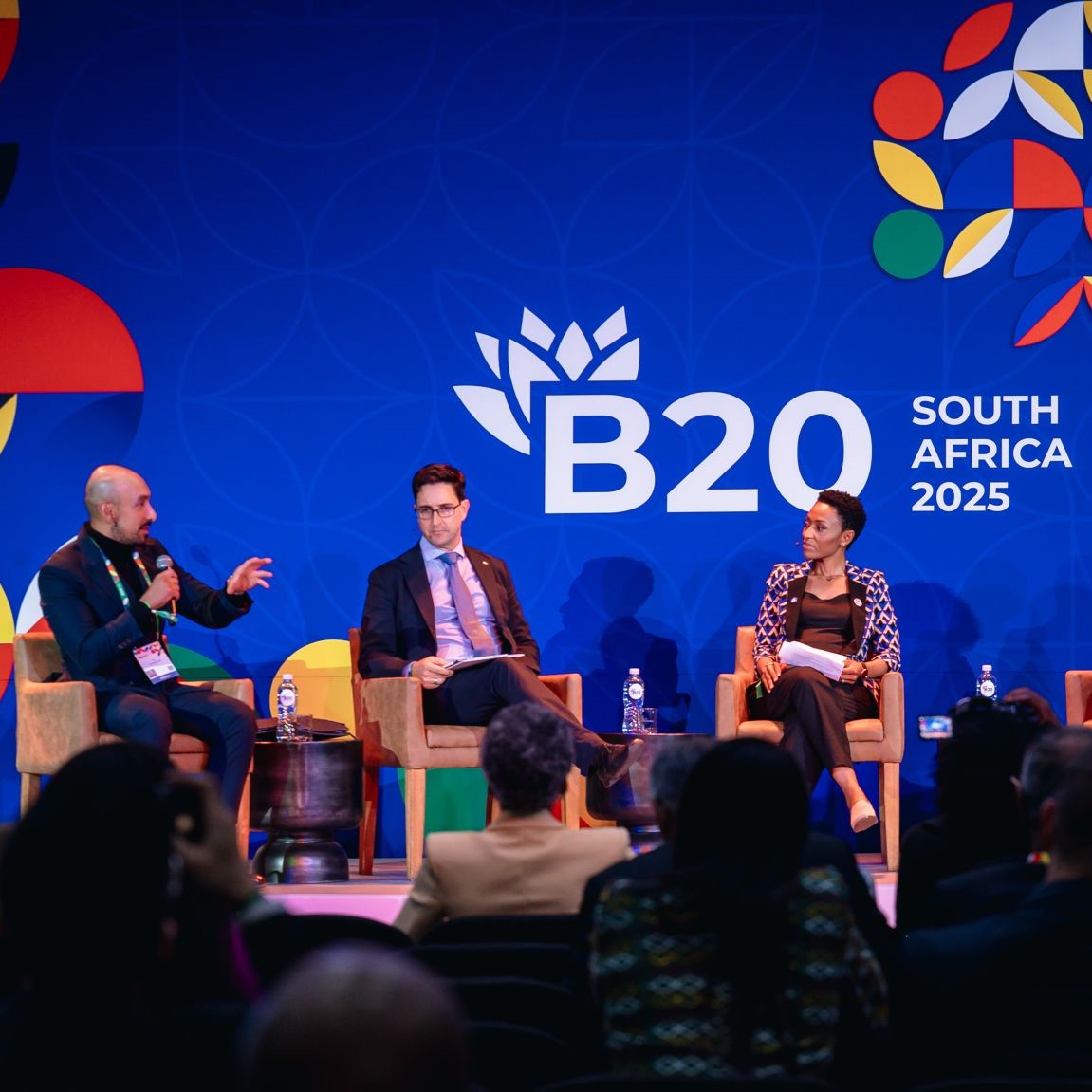
Senior Managing Director Ali Karami-Ruiz was live on the ground at the B20 South Africa 2025 Summit this week!

He moderated an expert panel event which focused on two of the most urgent questions for every corporate leader: how do we expand job creation in ways that boost both competitiveness and productivity?And how do we scale the skills that will actually sustain future growth?

View here >>

UK Public Affairs Autumn Budget 2025 Webinar

Shortly after Rachel Reeves’ Autumn Budget announcement on Wednesday, our UK Public Affairs team hosted a timely webinar breaking down the political implications of the Budget.

The session was moderated by Alex Deane and featured insights from Rt Hon Patricia Hewitt (Former Trade & Industry and Health Secretary), Daniel Hamilton, (Former Conservative Adviser), Nirmalee Wanduragala (Former External Relations Adviser to the Labour Party), Adrian Pascu-Tulbure (Former HM Treasury official) and Abdi Duale (Member of Labour’s National Executive Committee).

Sign up to our events mailing list here >>

2025 Global Public Affairs Survey

Back in 2023, Public Affairs leaders told us that their biggest external challenges were economic headwinds, regulatory pressures, and macropolitical uncertainty. Today, the political and regulatory environment is equally complex to navigate. 

Our latest report, “Risks and priorities in Public Affairs – 2025 versus 2023”, reveals meaningful shifts in what leaders view as their principal risks, and in how they are adapting to manage those risks.

View here >>

Notes from Strasbourg

What were the main takeaways from this month’s Strasbourg plenary?

Our experts Monica Adami & Sander Vanmaercke were live on the ground and share their top policy highlights! 

Read here >>

Southeast Asia’s Data Centres

Southeast Asia is rapidly emerging as a global hub for data centres, driven by rising AI adoption and accelerated digital transformation of businesses across the region. 

In their latest article, “Regulation, Geopolitics and Other Pressures on Southeast Asia’s Data Centres”, our Public Affairs experts in Singapore outline how geopolitics, power supply and water security will define southeast Asia’s data centre future.

View here >>

Upcoming Elections

  • 3-4 December: Parliamentary elections (Egypt)
  • 7 December: Legislative elections (Hong Kong)
  • 14 December: Presidential elections (Chile)

To be added to the distribution list for the Global PA Newswire, or for further information on the dedicated Public Affairs team at FTI, please contact [email protected].

The views expressed in this article are those of the author(s) and not necessarily the views of FTI Consulting, its management, its subsidiaries, its affiliates, or its other professionals.

©2025 FTI Consulting, Inc. All rights reserved. www.fticonsulting.com

Related Articles

4th Annual Shareholder Activism State of the Market

September 8, 2025—4th Annual Shareholder Activism State of the Market Request Report The 4th Annual Shareholder Activism State of the Mark...

Use It or Lose It: U.S. Hydrogen Industry Must Act To Maintain Momentum

July 12, 2025—Key takeaway: Following the passage of the “One Big Beautiful Bill Act”, time is of the essence for hydrogen produce...

Quick Analysis: ‘One Big Beautiful Bill’ Drives More Gas and Batteries, Less Renewables

July 3, 2025—With the recent passage of the “One Big Beautiful Bill” (“OBBB” or the “Legislation”),[1] FTI Consulting’s...

FTI Consulting News Bytes – 26 June 2026

June 26, 2026—FTI Consulting News Bytes Similar to the UK weather this week, things are heating up in the tech industry – here’s w...

Global Public Affairs Newswire – 26 June 2026

June 26, 2026—Welcome to the latest instalment of FTI Consulting’s fortnightly Global Public Affairs Newswire.  This week, we bring...

ESG+ Newsletter – 25 June 2026

June 26, 2026—We open this week’s ESG+ with a look at the growing momentum behind pass-through voting, as investor appetite and ...