Global Public Affairs Newswire – 24 July 2026

|
Market updates
- The Costs of War. The U.S. finds itself in a deepening Middle East conflict with real costs that are beginning to erode public support. Eighteen American deaths, $37.5 spent and a request for $67 billion more, and oil above $90 a barrel are forcing a difficult question across party lines: is preventing a nuclear Iran worth this price? Even those who share the administration’s core objective are growing skeptical. When the loss of American lives, financial burden, and kitchen-table economic pain converge, political will erodes quickly — and the administration will need a compelling case to sustain it.
- From the Pitch to the Purse. The post-World Cup goodwill between the U.S. and Canada has evaporated fast. New American tariffs on $20 billion in Canadian goods signal that economic nationalism is overriding neighborly diplomacy. Prime Minister Carney, buoyed by strong domestic approval, has little political incentive to negotiate – making a swift resolution unlikely. Meanwhile, 900 wildfires sending toxic smoke across the border serve as a reminder that some problems do not respect borders or tariff walls. The challenge is that a prolonged trade dispute with America’s largest trading partner carries real economic consequences for both sides, at a moment when neither can easily afford them.
- Sweeps, Stopgaps, and Showdowns. On Tuesday, Arizona primary elections delivered Trump a clean sweep, providing meaningful momentum at a moment Republicans badly needed it. But the death of South Carolina Senator Lindsey Graham casts a longer shadow — his relationships, institutional knowledge, and influence on foreign policy, judicial confirmations, and election security are not easily replaced. A narrower Senate majority also means every vote becomes more consequential. Meanwhile, the House’s narrow passage of a stopgap funding bill heads to the Senate and appears designed to force Democrats into a difficult position pre-midterms. Democrats must decide what battles are worth fighting when neither option is comfortable.
For more information about FTI’s Public Affairs services in the Americas, please contact [email protected].
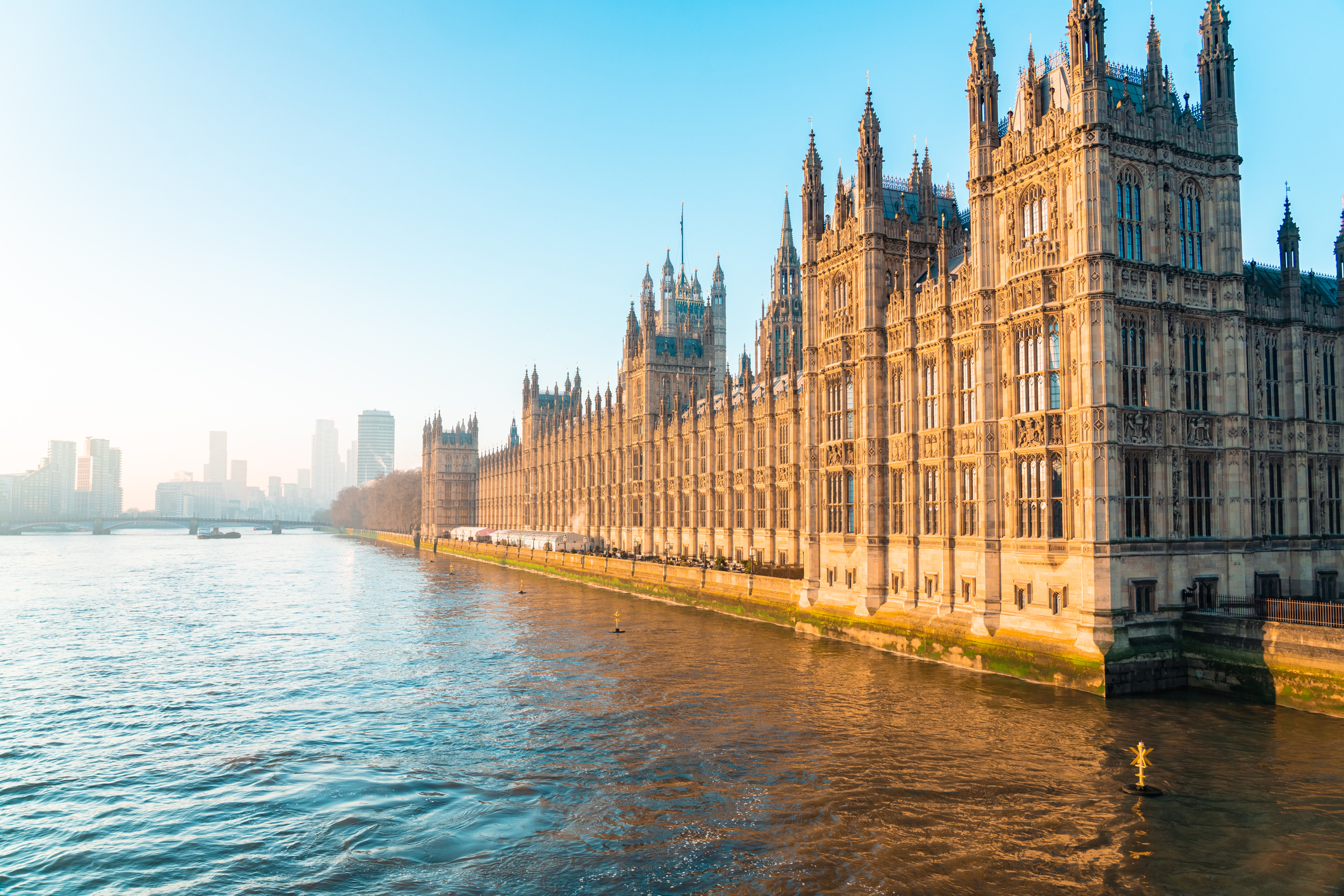
- Andy Burnham has been formally appointed as Prime Minister following Sir Keir Starmer’s resignation, marking the beginning of a new Labour administration after Burnham secured the party leadership unopposed. In his first address from 10 Downing Street, Burnham framed his premiership as an opportunity to restore political stability after a decade of frequent leadership changes, pledging the biggest political reforms in 40 years through a programme centred on devolution, reindustrialisation, and tackling the cost of living.
- Following his appointment, Burnham announced a substantially reshaped Cabinet, signalling an early shift in government priorities. John Healey was appointed Chancellor, replacing Rachel Reeves and taking responsibility for delivering Burnham’s fiscal agenda while maintaining the fiscal rules set by his predecessor. Several other senior figures departed Cabinet, including David Lammy, Liz Kendall, and Peter Kyle. Notably, Burnham has expanded Cabinet attendance to include the Ministers for Artificial Intelligence, Housing, and Intergovernmental and European Relations, underscoring the prominence these policy areas are expected to hold under the new administration.
- The Government also announced its first substantive policy intervention, confirming that VAT on domestic electricity bills will be abolished from 1 October. The measure, funded through the cancellation of the planned Digital ID programme, is expected to reduce the annual Ofgem price cap by around £45 and represents an early attempt to demonstrate progress on Burnham’s pledge to ease cost-of-living pressures.
- Politically, the appointments provide the clearest indication yet of Burnham’s governing priorities. The Cabinet balances experienced ministers with new portfolios aligned to his agenda of economic renewal, technological innovation, and constitutional reform. While the Prime Minister enters office with considerable goodwill and a united Parliamentary Labour Party, attention will now shift from rhetoric to delivery as the Government begins translating its broad programme into detailed policy over the coming weeks.
For more information about FTI’s Public Affairs services in the United Kingdom, please contact [email protected].
- President Xi Jinping attended the opening ceremony of the 2026 World Artificial Intelligence Conference and High-Level Meeting on Global AI Governance in Shanghai on July 17, calling for a fair and reasonable global AI governance system. His keynote framed AI around four priorities: open innovation, safety and control, civilizational diversity, and multilateral governance.
- The meeting comes as AI is increasingly treated not only as a technology or industrial policy issue, but also as a global governance question. China emphasized open-source cooperation, responsible innovation, risk management, and opposition to the overextension of national security concepts, while presenting AI capacity building as central to narrowing the digital and intelligence divide.
- The most concrete outcome was the signing of the agreement to establish the World Artificial Intelligence Cooperation Organization, headquartered in Shanghai. China also announced 5,000 AI training places for developing countries over the next five years, international AI application cooperation centers for major regional groupings, and broader cooperation on data, computing power, standards, ethics, and agent interoperability.
For more information about FTI’s Public Affairs services in China, please contact [email protected]
- On 17 July, the European Commission adopted its Communication on the Competitiveness of the EU Banking Sector and the Single Market in Banking, setting out the direction of the legislative Banking Package expected in Q1 2027. In its Communication, the European Commission put greater emphasis on strengthening the EU’s strategic autonomy and competitiveness, while also linking together the importance of reform of banks and capital markets. On this specific point, the Communication suggests that the banking sector and capital markets shall develop in parallel to support financing the economy, including its strategic priorities, and to reduce reliance on foreign international banks for critical financial services.
- In terms of policy initiatives more broadly, the Communication outlines measures to facilitate cross-border banking through more efficient group-wide allocation of capital and liquidity, more consistent treatment of intragroup exposures and stronger enforcement against unjustified national interference in mergers and acquisitions, while preserving safeguards for depositors and resolution. It also proposes replacing the existing European Deposit Insurance Scheme proposal, reviewing the output floor and the treatment of software assets, specialised lending and investment firms, introducing a more proportionate regime for smaller banks, simplifying prudential, resolution and macroprudential requirements, and further integrating regulatory reporting. As a reminder, the communication is non-legislative; however, it indicates what could be included in the upcoming legislative proposal in Q1 2027.
- For further context, the European Commission Communication and the upcoming legislative proposal fit into its broader SIU strategy that aims to improve how the EU channels savings into productive investments. Therefore, the European Commission intends to simplify and further integrate the European banking sector based on a single rulebook and a completed Banking Union. This overall strategy is aligned with the EU’s Competitiveness Compass; the Single Market Strategy; and the One Europe, One Market roadmap.
For more information about FTI’s Public Affairs services in the EU, please contact [email protected]
- India approved “Semicon 2.0” with an outlay of USD $13 billion to accelerate development of a domestic semiconductor ecosystem over the next six years. It builds on the initial Semicon India Programme launched in 2021, which catalysed the first wave of semiconductor investments, including fabrication, ATMP facilities and chip design support. Building on this, Semicon 2.0 broadens the ambition to develop an end-to-end semiconductor ecosystem over the next six years, structured around six pillars: chip design, semiconductor equipment and materials, fabrication, advanced packaging (ATMP/OSAT), research and development, and talent development.
- Semicon 2.0 reflects India’s ambition, from incentivising individual manufacturing projects under Semicon 1.0 to developing an integrated ecosystem spanning design, manufacturing, equipment, materials, research, and talent. The programme forms part of a broader industrial strategy to strengthen domestic capabilities across the semiconductor value chain while positioning India as a trusted partner in global semiconductor supply chains.
- India’s Ministry of Electronics & Information Technology that leads the programme has identified mature-node semiconductors (28nm and above) as a strategic opportunity, arguing that the segment offers the fastest and most commercially viable path to scale manufacturing. As companies look to diversify supply chains amid growing geopolitical uncertainty, India sees an opportunity to establish itself as an alternative manufacturing base for mature-node semiconductors before expanding into more advanced technologies.
For more information about FTI’s Public Affairs services in India, please contact [email protected].
- Germany adopts first major healthcare financing reform under the new government: Germany has formally adopted the Statutory Health Insurance Contribution Rate Stabilisation Act after approval by both the Bundestag and the Bundesrat on 10 July. The reform aims to close an estimated €19 billion financing gap in Germany’s statutory health insurance (GKV) system in the short term and prevent further increases in health insurance contributions from 2027.
- Pharmaceutical industry faces higher mandatory rebates while government promises future competitiveness measures: For the pharmaceutical industry, the legislation confirms an increase in the statutory manufacturer rebate for innovative medicines to 15.5%, while the originally proposed dynamic rebate mechanism has been abandoned. At the same time, the governing coalition adopted a parliamentary resolution committing the government to develop measures to strengthen Germany as a pharmaceutical location, including possible exemptions from the additional manufacturer rebate and further incentives for research, clinical trials and investment. An interministerial expert group involving government, industry and academia is expected to present proposals by the end of September 2026, subject to EU state aid rules and the requirement to preserve the financial stability of the statutory health insurance system.
- Reform marks the beginning, not the end, of Germany’s healthcare overhaul: The legislation represents the first major healthcare reform of Health Minister Nina Warken (CDU) and one of the first significant welfare reforms of the new CDU/CSU-SPD coalition. While the government describes the package as an essential first step to stabilise healthcare financing, criticism remains widespread. Pharmaceutical companies warn that the higher mandatory rebates could weaken Germany’s attractiveness for investment, clinical research and early access to innovative medicines. Healthcare providers and patient organisations argue that the reform places additional financial pressure on providers and patients without addressing the structural drivers of rising healthcare costs. Political attention is therefore already shifting towards the government’s next round of structural healthcare reforms and the planned pharmaceutical and medtech dialogue, where longer-term competitiveness measures are expected to be developed.
For more information about FTI’s Public Affairs services in Germany, please contact [email protected].
- The U.S. 25% additional tariffs on Brazilian exports, effective July 22, 2026, have increased pressure on Brasília to choose between retaliation and negotiation. The measure, based on a U.S. trade investigation into Brazilian policies considered restrictive to American commerce, has raised concerns among economists and companies over the risk of further escalation. While the government considered activating Brazil’s Economic Reciprocity Law, the private sector has pushed for a more cautious approach. Brazilian companies with operations in the U.S. have emphasized the importance of direct engagement with American businesses, lawmakers and stakeholders to preserve commercial ties and avoid measures that could harm both economies. The perception is that reciprocal tariffs could worsen Brazil’s position by triggering additional U.S. restrictions, while diplomacy and technical negotiations remain the preferred path.
- Brazil’s exports to the European Union increased by US$2 billion in the first two months after the provisional implementation of the Mercosur-EU trade agreement, a 26% rise compared with the same period in 2025. Beyond the immediate boost in trade flows, the figures highlight a broader strategic shift: Brazil is accelerating efforts to diversify export destinations and reduce reliance on a few major markets, particularly amid growing uncertainty in global trade and weaker sales to the United States. The agreement is already creating opportunities across Brazilian states, especially São Paulo, which has identified 127 potential export expansions, mainly in manufacturing sectors. The growth in industrial goods, machinery, chemicals, and higher value-added products suggests that tariff reductions could help Brazil move beyond traditional commodity dependence. The agreement therefore represents not only increased market access, but also a step toward a more resilient and diversified trade strategy.
- Flávio Bolsonaro’s candidacy has lost momentum in recent weeks, raising concerns among Brazil’s private sector. The Bolsonaro-aligned candidate has delayed naming a running mate, but the prevailing view is that the choice of Vice President has become secondary, as doubts surrounding the candidate himself have grown. Key figures from the right-wing political establishment have been cautious about aligning themselves with Flávio, making more difficult to nominate a vice-presidential candidate. Much of this uncertainty stems from the Bolsonaro family’s handling of tensions with the U.S. government, during which they were, on several occasions, accused of acting against national interests. In recent weeks, Flávio has intensified his questioning of Brazil’s elections and electoral system, suggesting that, in the event of a defeat, challenges to the results should be anticipated — a strategy that previously by his father, who ended up penalized for it. Meanwhile, Lula has adopted a more diplomatic and conciliatory approach toward Brazil’s private sector, acting cautiously and seeking to maintain alignment with economic interests. He has also moved to avoid conflicts with Congress, signaling that his priority is securing politically supportive candidates to ensure governability during a potential fourth term.
For more information about FTI’s Public Affairs services in Brazil, please contact [email protected].
- South Africa has secured a USD $1.5 billion (approximately R27 billion) loan from the World Bank to support critical infrastructure reforms aimed at improving the reliability and performance of the country’s energy, freight transport and logistics sectors. The financing is intended to address longstanding infrastructure bottlenecks that have constrained economic growth, investment and industrial competitiveness. The agreement aligns with the government’s broader reform agenda, including commitments made by President Cyril Ramaphosa in the State of the Nation Address and reinforced by the Minister of Finance in the 2026 Budget to accelerate infrastructure investment as a catalyst for inclusive economic growth and job creation.
- The loan represents an important endorsement of South Africa’s structural reform programme at a time when the government is seeking to restore investor confidence and unlock greater private sector participation in the economy. Reliable electricity, efficient ports and rail networks, and improved logistics remain among the country’s most significant competitiveness challenges. By supporting reforms in these network industries, the financing complements initiatives such as Operation Vulindlela and the National Infrastructure Plan, recognising that modern infrastructure is fundamental to lowering the cost of doing business, increasing productivity, and strengthening South Africa’s position as a regional investment destination.
- Beyond the immediate financing, the agreement signals continued international confidence in South Africa’s reform trajectory and long-term economic potential. If effectively implemented, the infrastructure programme could help stimulate investment, improve service delivery, create employment opportunities, and strengthen the country’s productive capacity. More broadly, the development reinforces the government’s view that sustained infrastructure investment is central to achieving higher economic growth, enhancing competitiveness, and creating the enabling environment needed for long-term private sector-led development.
For more information about FTI’s Public Affairs services in South Africa, please contact [email protected].
- France’s parliament has approved a law banning under-15s from social media from January 2027, making it the first European country to block young people from the platforms. The legislation requires all users in France to verify their age, with social media companies obliged to use tools approved by the French privacy regulator. The scope of the ban covers all social media platforms, instead of relying on a “blacklist” targeting specific social media firms.
- The ban will be implemented in two stages. From September, under-15s will be unable to open new accounts and age verification will be required for all new sign-ups. From January 2027, the rule will extend to existing accounts, meaning every user in France will need to prove they are over 15.
- France’s ban is significant as a signal of political intent, but questions remain over implementation. Australia introduced a similar measure for under-16s in December 2025, and early data suggests many young people have retained access to the platforms. France’s model, which relies on trusted third-party verification applied to all users, may prove more effective, though critics have raised concerns over privacy and data protection risks, as well as the possibility that restricting access to mainstream platforms pushes younger users towards less-regulated online spaces.
For more information about FTI Consulting’s Public Affairs services in France, please contact [email protected].
- The Australian Government announced a suite of new measures to manage the impact of data centre developments and artificial intelligence (AI) with a view to ensuring the technology works in Australia’s interest.
- The Government will establish an Office of AI within the Prime Minister’s own department to coordinate AI policy across government and create new national standards for AI that will deliver a consistent regulatory framework for large data centres and AI training.
- The new standards will set out clear rules for large data centres, including a requirement to underwrite their own new power supply, pay their share of connection costs, reduce power when needed to strengthen the grid, and be as water efficient as possible. This will also involve collaboration between all levels of government to ensure large data centres are built in appropriate locations following consultation from local communities.
- Prime Minister Antony Albanese has also reiterated the government’s commitment to protect Australian artists, musicians and journalists by helping them retain ownership and control of their works in the AI age.
- The new approaches will be considered by Australia’s state and territory leaders at a meeting of National Cabinet in August, with standards expected to be legislated early next year.
- Colombia’s new Congress (2026–2030) was sworn in on July 20, with 103 senators and 183 representatives taking office. Senator Honorio Henríquez (Centro Democrático) was elected Senate President after defeating government-backed candidate Alfredo Deluque, while Nicolás Barguil (Partido Conservador) was elected President of the House of Representatives.
- No single party holds a majority, making coalition-building essential for passing legislation. Although President-elect Abelardo de la Espriella enters office with support from several center-right parties, the Senate leadership vote exposed divisions within his coalition and highlighted the fluid, highly negotiated nature of congressional alliances.
- The new Congress now faces a demanding institutional and legislative agenda. In the coming weeks, lawmakers must appoint committee chairs, elect the Comptroller General and members of the National Electoral Council (CNE), and begin debating the incoming administration’s key priorities, including a possible tax reform, the 2026–2030 National Development Plan, public spending and fiscal adjustment measures, state restructuring, security reforms, and sector-specific regulatory proposals.
- The Spanish Government has approved a Royal Decree establishing annual obligations for transport fuel suppliers through 2040. Transposing the transport provisions of RED III, the framework covers road transport, domestic shipping and non-electrified rail, while incorporating the EU targets for sustainable aviation fuels.
- For road transport, suppliers must deliver a 17.6% reduction in greenhouse gas emissions by 2030 and 30% by 2040. Advanced biofuels, biogas and renewable fuels of non-biological origin must jointly represent 8% of supplied energy by 2030 and 22% by 2040, with additional sub-targets for specific fuels.
- The decree creates a certificate market through which renewable hydrogen producers and charging-point operators can sell credits to obligated fuel suppliers. It also introduces e-credits for renewable electricity used by electric vehicles, strengthens sustainability and traceability requirements across the value chain, and classifies non-compliance as a very serious infringement.
For more information about FTI Consulting’s Public Affairs services in Spain, please contact [email protected].
- On 17 July, the US Department of the Treasury’s Office of Foreign Assets Control announced changes to sanctions imposed on 48 Hong Kong and mainland Chinese officials following the expiry of Executive Order 13936, issued in 2020. All 48 individuals were removed from OFAC’s Specially Designated Nationals and Blocked Persons List. However, 39 were immediately added to the Non-SDN Menu-Based Sanctions List, while the remaining nine are no longer subject to OFAC sanctions.
- For the 39 transferred individuals, including senior serving and former Hong Kong officials, their property and interests in property remain blocked. Any US persons generally remain prohibited from conducting transactions with them, and financial institutions may continue to face secondary sanctions risks for significant transactions. The principal change is the legal basis and administrative classification of the measures, where now sanctions against these individuals rest on the Hong Kong Human Rights and Democracy Act of 2019 and the Hong Kong Autonomy Act of 2020, rather than Executive Order 13936. The nine individuals removed from sanctions include Secretary for Justice Paul Lam, former police commissioners Raymond Siu and Stephen Lo, and officials associated with national security bodies.
- Reactions were swift. The Hong Kong government promptly welcomed the decision as a positive adjustment and called for stronger economic and trade engagement with the U.S., while advocacy group Hong Kong Watch criticized the non-renewal and urged the US administration to reconsider.
- Zimbabwe has commissioned a USD $15 million lithium rail siding and introduced a new freight rail option connecting the Gwanda Lithium Mine to the Port of Maputo in Mozambique, strengthening the country’s mineral export infrastructure and logistics capacity. The development forms part of Zimbabwe’s broader efforts to modernise transport infrastructure, improve the movement of critical minerals to international markets, and support its ambitions to derive greater value from one of the world’s fastest-growing strategic commodities. As Africa’s largest lithium producer, the investment reinforces Zimbabwe’s position in the global battery minerals supply chain while improving the efficiency of one of Southern Africa’s key trade corridors.
- The project reflects a broader trend across Africa, where governments are increasingly investing in strategic infrastructure and pursuing public-private partnerships to unlock economic growth, strengthen regional connectivity, and support industrialisation. Reliable rail and logistics networks are becoming essential to developing regional value chains and reducing the cost of moving minerals to domestic processing facilities and export markets. For Zimbabwe, improving transport infrastructure complements wider policy efforts to encourage local beneficiation and position the country to capture greater value from its critical mineral resources.
- Beyond its national significance, the development reflects the growing strategic importance of Africa’s critical minerals in the global energy transition. With the continent holding some of the world’s largest reserves of lithium, cobalt, copper and other essential minerals, African governments are increasingly investing in the infrastructure needed to move these resources more efficiently and competitively. For Zimbabwe, strengthening rail connectivity is not only about improving exports, but also part of a broader effort to capture greater value from rising global demand, attract long-term investment, and integrate more effectively into regional and global critical minerals value chains. The project also reinforces the importance of transport corridors in enabling intra-African trade, regional industrialisation, and supply chain resilience.
For more information about FTI’s Public Affairs services in Zimbabwe, please contact [email protected].
Expert Analysis |
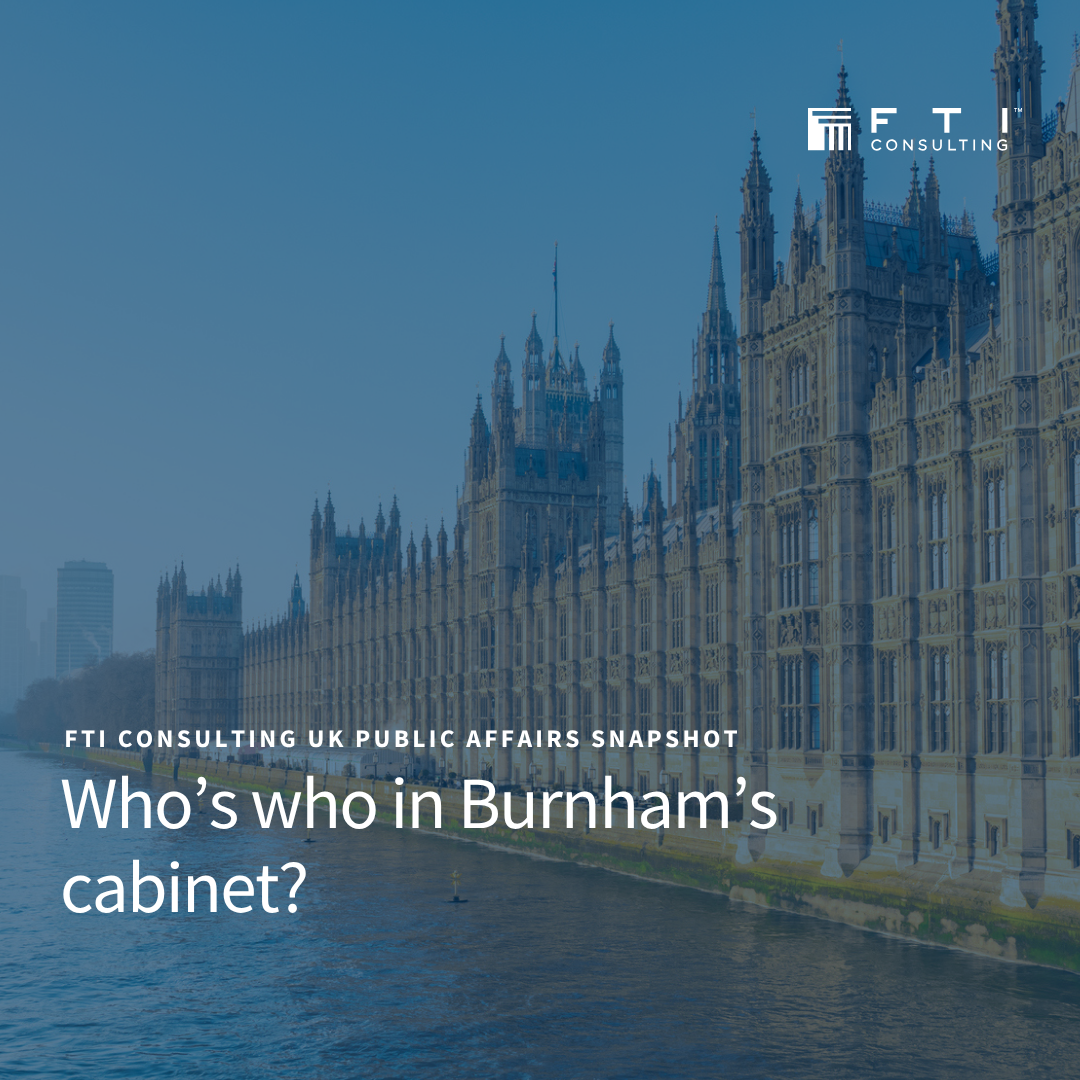
All Roads Lead North: Burnham’s Blueprint for Britain
Since his by-election win in Makerfield in June, Andy Burnham’s march towards 10 Downing Street became an increasingly straightforward one. With the overwhelming backing of the Parliamentary Labour Party, today Burnham achieved his long-standing ambition of becoming Prime Minister.
In our latest UK Public Affairs Snapshot, our experts examine the appointment of the UK’s new Prime Minister, the implications for the political landscape, and what the change in leadership could mean for government policy, business and the wider economy.
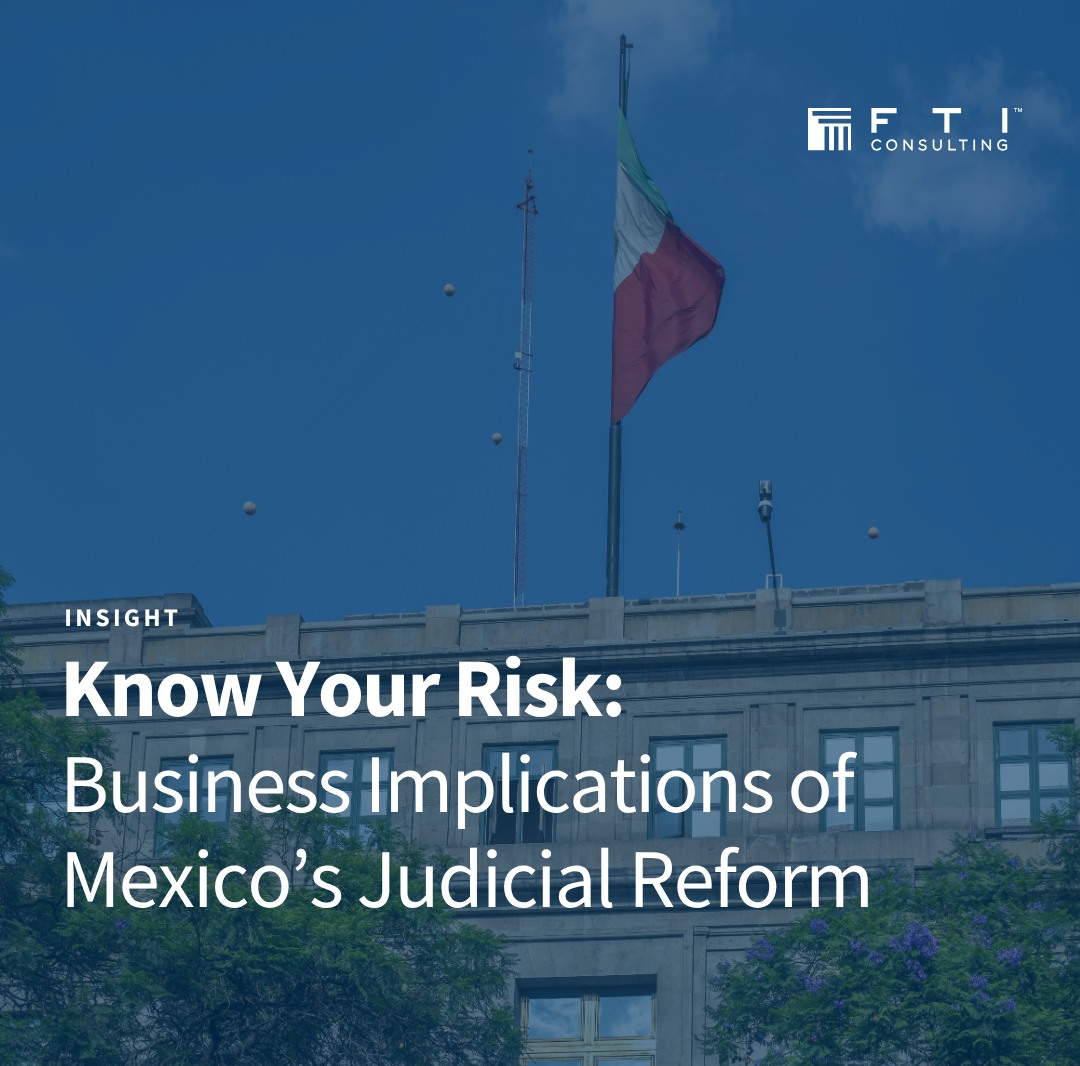
Know Your Risk: Business Implications of Mexico’s Judicial Reform
Mexico’s judicial landscape has changed and so has the risk environment for businesses operating in or entering the market.
The unprecedented popular elections of all judges in Mexico last year will have far-reaching implications for companies in terms how to approach risk assessment and mitigation. With newly elected judges and justices now taking office, businesses must proactively prepare for an evolving legal and regulatory framework.
Our experts examine what these reforms mean in practice and provide a framework for navigating the challenges and opportunities ahead.
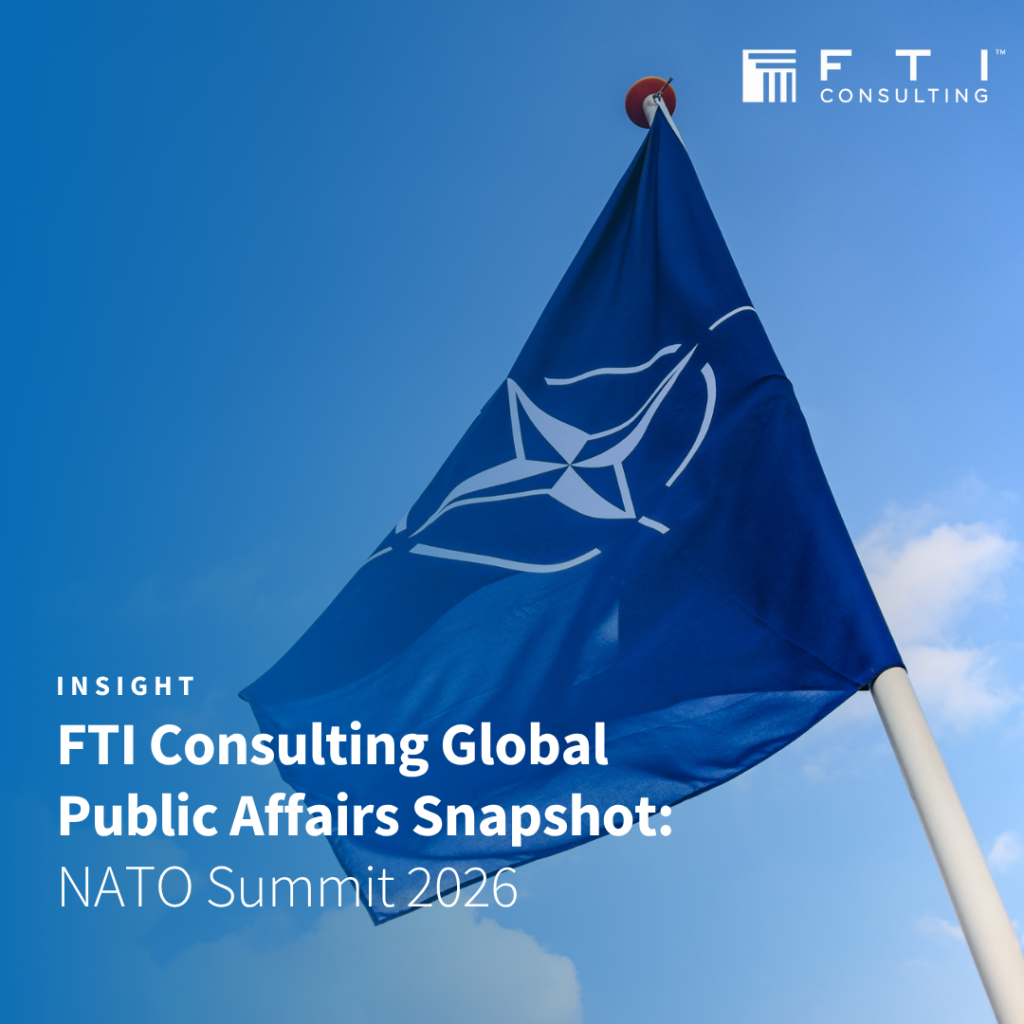
NATO Summit 2026
Last week’s NATO Summit in Türkiye marked a significant shift in how the Alliance articulates its value in a more uncertain world.
In our latest snapshot, our Public Affairs experts assess how Allies used tangible investment and evidence of concrete capability development to demonstrate greater burden-sharing and reinforce transatlantic unity, presenting NATO as a driver of both collective security and economic growth.
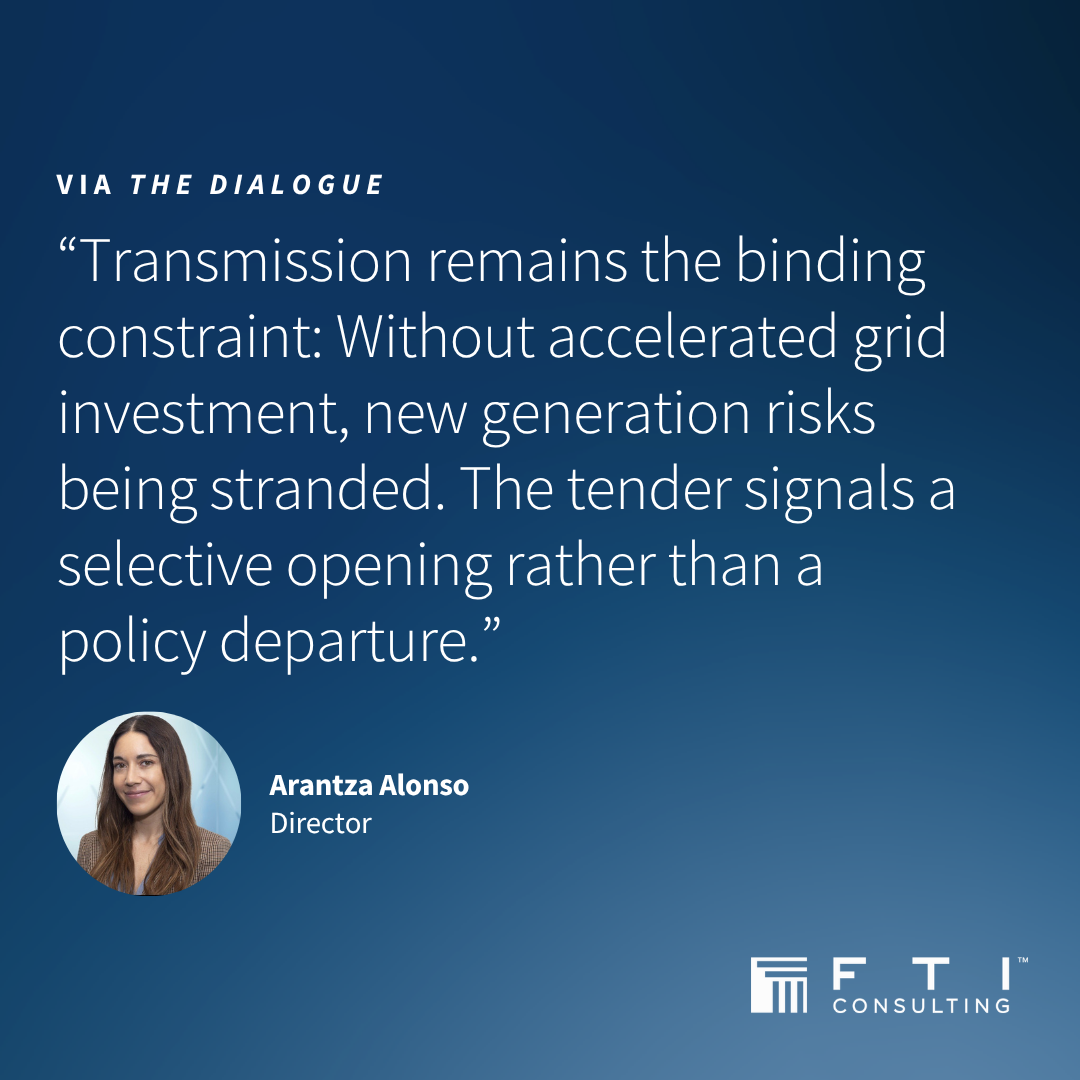
What Does a Recent Tender Say About Solar in Mexico?
Mexico’s Federal Electricity Commission (CFE) concluded its first bidding process under a new renewable energy investment scheme in early June, with solar photovoltaic projects dominating the awarded capacity, followed by wind energy.
Our own Arantza Alonso joined industry experts to share insights on what the tender signals for Mexico’s energy landscape and the future of renewable energy development in the country.
Real World Experience
Drawing on experience spanning five presidential campaigns and service in the White House, Jackson Dunn understands how clear, disciplined communication can help organizations navigate political uncertainty and high-stakes moments.
Today, Jackson advises corporations and private firms on political risk across complex transactions, crises, government investigations and regulatory change.
Who’s who in Burnham’s cabinet?
Mexico’s Federal Electricity Commission (CFE) concluded its first bidding process under a new renewable energy investment scheme in early June, with solar photovoltaic projects dominating the awarded capacity, followed by wind energy.
Our own Arantza Alonso joined industry experts to share insights on what the tender signals for Mexico’s energy landscape and the future of renewable energy development in the country.
Upcoming Elections
- 12 August: General election (Cook Islands)
- 13 August: General election (Zambia)
- 23 August: Parliamentary elections (Kazakhstan)
- 30 August: General election (Haiti)
- 13 September: General election (Sweden)
- 18-20 September: Legislative elections (Russia)
- 23 September: General election (Morocco)
- 27 September: Presidential election (São Tomé and Príncipe)
To be added to the distribution list for the Global PA Newswire, or for further information on the dedicated Public Affairs team at FTI, please contact [email protected]. |
The views expressed in this article are those of the author(s) and not necessarily the views of FTI Consulting, its management, its subsidiaries, its affiliates, or its other professionals.
©2026 FTI Consulting, Inc. All rights reserved. www.fticonsulting.com