Global Public Affairs Newswire – 23 January 2026

Welcome to the latest instalment of FTI Consulting’s fortnightly Global Public Affairs Newswire.
This week, we bring you updates from FTI Public Affairs teams across the world’s major markets, including the United States, China, India, Japan, the United Kingdom, the European Union, Germany, France, Australia, Brazil, Colombia, Canada, Singapore, Spain, South Korea, Ireland, and the United Arab Emirates. This week’s update also brings readers market insights from FTI Public Affairs experts from around the world, explaining what these updates mean for your business.
Market updates
- It’s Not Easy Being Green(land): President Trump’s renewed assertions that Greenland could join the United States — including references to coercion later walked back by administration officials — have unsettled U.S. allies and injected uncertainty into transatlantic relations. Even absent a credible military threat, the episode reinforces concerns among NATO partners that Washington is increasingly willing to frame alliance relationships in transactional and unilateral terms, raising longer-term questions about the alliance’s strategic cohesion and purpose.
- Minnesota (N)ICE? The death of a protester during a confrontation with ICE officers in Minneapolis, has intensified national scrutiny of the administration’s immigration enforcement tactics. Large-scale demonstrations across Minnesota reflect broader public unease, while the administration’s rapid launch of investigations targeting senior state and municipal officials has heightened tensions between federal and local authorities. It remains to be seen whether the administration’s multi-front approach will change or continue to deepen partisan divisions over immigration policy.
- Here We Go Again? Meanwhile, Congress faces a looming deadline tied to last year’s stopgap funding resolution, which deferred major budget decisions into 2026. With negotiations stalled and partisan divisions entrenched, the risk of another government shutdown remains significant. Taken together with foreign policy volatility and domestic unrest, the fiscal impasse underscores broader questions about the current government’s capacity to manage multiple, simultaneous governance challenges. The answers might be found in the upcoming midterm congressional elections, which continue to show the Democrats with an electoral edge.
For more information about FTI’s Public Affairs services in the Americas, please contact [email protected].
- Chinese President Xi Jinping and other senior leaders met with Canadian Prime Minister Mark Carney during his first official visit to China in eight years. The visit marked a formal thaw after nearly a decade of strained bilateral relations and produced a joint statement and a China-Canada Economic and Trade Cooperation Roadmap, signaling a shared intent to place the relationship on a more stable footing.
- The visit delivered substantive economic outcomes. Canada agreed to ease tariffs on Chinese EVs by introducing an annual quota of 49,000 vehicles subject to a 6.1% MFN tariff, while China committed to adjust anti-dumping and anti-discrimination measures affecting Canadian canola and other agricultural and aquatic products. The two sides also agreed to reset and upgrade their economic and trade dialogue mechanisms.
- Analysts view the visit as carrying broader geopolitical significance beyond bilateral economics. For Ottawa, engagement with Beijing reflects a more diversified and pragmatic strategy amid heightened uncertainty in its relationship with the United States. As Prime Minister Carney put it, Canada is “recalibrating” its relationship with China “strategically, pragmatically, and decisively”, and has found the relationship with China “more predictable” than that with the U.S.
For more information about FTI’s public affairs services in China, please contact [email protected].
- The U.S. has invited India to join “Pax Silica”, the new American-led coalition to secure semiconductor, AI and critical mineral supply chains, a month after India was conspicuously left out of the bloc’s launch. A strategic counter to China’s dominance in tech inputs, the invitation signals a softening of recent tensions. Analysts say India’s entry could “accelerate its transition from a large digital consumer to a meaningful producer—and shaper—of the global technology order.
- That invitation came via a new U.S. ambassador, Sergio Gor. Washington has finally filled its long-vacant envoy post in New Delhi, appointing a Trump confidant. His arrival (after envoy Eric Garcetti’s tenure and a prolonged gap) comes amid strained ties over trade, Russia and regional issues. Gor’s direct line to Trump may be a double-edged sword: it could expedite decisions, yet his flamboyant “MAGA”-style diplomacy may grate in protocol-driven New Delhi. A top business daily called Gor a ‘reconstructionist’ tasked with prioritizing deal-making over discord amid tariff threats.
- There is no trade deal yet, after nearly a year of U.S.-India talks. The stalemate has begun to roil markets, weakening the rupee and spooking investors. Both sides insist the deal is still “alive”, but yet another high-level call on January 13 between Secretary Rubio and minister Jaishankar did not show progress. Tariff tensions are weighing heavily on ties. Washington doubled duties on some Indian goods to 50% last summer, in retaliation for India’s purchases of Russian oil (which India cut down on)—and New Delhi hit back with its own tariffs. This tit-for-tat escalation is disrupting trade: India’s exports to the U.S. slowed, widening India’s trade deficit.
For more information about FTI’s Public Affairs services in India, please contact [email protected].
- Earlier this week, Prime Minister Sanae Takaichi held a press conference, announcing that the House of Representatives (Lower House) would be dissolved during the ordinary Diet session to be convened on 23 January. The election will be formally announced on Tuesday, 27 January, with voting and counting taking place on Sunday, 8 February. The 16 day-period from the convening of the ordinary Diet session to the election and vote counting will be the shortest since the post-war era.
- PM Takaichi cited three reasons for the dissolution and for seeking the public’s judgement:
1) Policy: Many of the bills to be deliberated in the next Diet session are entirely new policies (covering fiscal policy, national security, etc.) not presented in the previous lower house election in 2024.
2) Administration Framework: The establishment of a new coalition framework between the Liberal Democratic Party (LDP) and Japan Innovation Party (JIP) last autumn.
3) Leadership: With the ruling LDP lacking a majority in both houses of the Diet, there is a need for the public to make a judgement on LDP President Takaichi who holds the Prime Minister position. She has reiterated that victory requires the ruling coalition to secure a majority (233 seats out of the total 465) and that this election which indirectly elects the Prime Minister, will determine her own political future as prime minister.
Meanwhile, on the opposition side, the largest opposition party, the Constitutional Democratic Party of Japan (CDP), and Komeito which had been in coalition with the LDP until October, formed a new party called the ‘Centrist Reform Alliance’ (CDP + Komeito 172 seats).In this election, response to soaring prices has become the key issue. Support measures for households have emerged as a major theme, with both ruling and opposition parties already mentioning consumption tax cuts.
For more information about FTI Consulting’s Public Affairs services in Japan, please contact [email protected].
- The UK Government has confirmed that it will not be an initial signatory to US President Donald Trump’s proposed “Board of Peace”, with Foreign Secretary Yvette Cooper raising concerns over the potential involvement of Russian President Vladimir Putin. Speaking to reporters on Thursday, Cooper confirmed that the UK had been invited to participate but said the Government was not yet prepared to sign up, describing the board as a “legal treaty that raises much broader issues” than the Israel-Hamas war in Gaza, its initial focus.
- Cooper’s cautious approach follows a strained week for UK–US relations. Tensions emerged on Monday after Prime Minister Sir Keir Starmer publicly backed Denmark over the status of Greenland, a position he reaffirmed during Prime Minister’s Questions on Wednesday. Starmer said Greenland’s future was a matter for “the people of Greenland and for the Kingdom alone” to determine, adding that the use of tariff threats against allies was “completely wrong”.
- Although the immediate prospect of US tariffs being imposed on 1 February appears to have eased following President Trump’s discussions with NATO Secretary-General Mark Rutte at the World Economic Forum in Davos, Washington’s apparent willingness to target the UK has unsettled Downing Street and the Foreign Office, putting at risk the longstanding “special relationship” between the UK and the US.
For more information about FTI’s Public Affairs services in the United Kingdom, please contact [email protected].
- On 17 January, the EU and the Mercosur bloc signed a free trade agreement in Asunción, Paraguay. The deal, which had been 25 years in the making, would be the EU’s largest tariff reduction deal to date, and will create one of the biggest trade zones in the world, covering a market of around 700 million consumers.
The singing of the deal, needed to conclude the trade negotiations, met internal opposition in the EU, in particular from France, Poland and Hungary. To break the deadlock, the EU Commission managed to secure Italy’s support with concessions for farmers, who had voiced concerns about the deal’s impact on their activities. This tilted the equilibrium inside the EU in favour of signing the deal, which in turn opened the way for the formal ratification. - Yet, on 21 January the European Parliament – entitled to give its consent to the EU’s trade agreements before their finalisation – voted to submit the EU-Mercosur accord to the EU Court of Justice for it to verify that the deal complies with EU law. The decision was approved with a narrow majority of 334 votes in favour, 324 against, and 11 abstentions, also proving that major EU political groups are divided on the matter.
- The ratification is now effectively suspended until the Court delivers its opinion. The process usually takes 18 to 24 months, meaning the conclusion of the agreement could be delayed by up to two years. If the EU Court raises concerns, parts of the deal may need to be changed and renegotiated, causing further delays.
For more information about FTI’s Public Affairs services in the EU, please contact [email protected]
- Reform Ambition vs. Coalition Constraints: Chancellor Friedrich Merz (CDU) has declared 2026 a “reform year” to counter Germany’s prolonged economic weakness, citing high energy, labour and bureaucracy costs as well as an excessive tax burden as urgent priorities. The CDU/CSU is pushing a tangible relief agenda, including a potentially earlier corporate tax cut and adjustments to personal income tax. However, delivery will hinge on coalition dynamics with the SPD and on social reforms where the coalition agreement remains vague and commissions are expected to develop concrete proposals first.
- New Office Manager to Strengthen Coordination: Merz has appointed former CDU Managing Director Philipp Birkenmaier to lead the Chancellery Office, replacing Jacob Schrot, who left “by mutual agreement”. The move is widely seen as an effort to improve coordination with the party and the CDU/CSU parliamentary group, supporting smoother internal decision-making.
- State Elections as the Political Stress Test: Against this backdrop, 2026 will be shaped by a dense cycle of state elections in Baden-Wuerttemberg, Rhineland-Palatinate, Saxony-Anhalt, Berlin and Mecklenburg-Western Pomerania. While the CDU has credible chances to lead in Baden-Wuerttemberg and Rhineland-Palatinate, the outlook is more challenging in Berlin and in the eastern states, where the AfD is polling strongly and in some cases with a clear lead. Merz continues to publicly reaffirm the so-called “Brandmauer” (political firewall) against the AfD, but the post-election landscape could test its resilience if stable majorities become harder to form without it.
For more information about FTI Consulting’s Public Affairs services in Germany, please contact [email protected].
- In response to the U.S. threat of imposing additional tariffs on countries that sent troops to Greenland, including France, President Macron has proposed invoking the EU’s anti-coercion instrument. This measure would allow the Union to adopt various actions, such as restricting foreign direct investment and limiting access to the European market, including public procurement.
- Speaking at the World Economic Forum in Davos on 20 January, Macron denounced U.S. attempts to “subordinate Europe” and stressed that Europe would not yield to “bullies.” Meanwhile, Junior Minister for Europe Benjamin Haddad argued that Trump’s latest threats call into question the relevance of the EU–U.S. agreement signed in Scotland last summer.
- Criticism of the U.S. threats has come not only from the government and traditional anti-American political forces, but also from the far-right. Speaking at the European Parliament’s plenary session on the Greenland issue on 20 January, National Rally leader and presidential hopeful Jordan Bardella called for a firm response and warned that any EU “submission” to the U.S. would constitute a “historical fault.”
For more information about FTI’s Public Affairs services in France, please contact [email protected].
- This week, Australian Parliament returned two weeks early from the Summer break to urgently debate condolence motions, hate speech laws, and gun reforms following the Bondi Beach terror attack in December 2025.
- Following the attack, the Opposition, Australian Jewish community, business leaders, security, and legal experts demanded the Government establish a Royal Commission be set up to investigate the terror attack.
- Prime Minister Anthony Albanese proposed a raft of reforms spanning national security, hate speech, and gun control amongst others in a single omnibus bill last week, however after being unable to gain support from the Opposition Coalition and the Greens, the Government announced they would split the bill to separate hate speech and gun legislative reforms.
- After a series of technical amendments were put forward by Opposition leader Sussan Ley, the government secured the numbers to pass the hate speech bill through both houses of Parliament, alongside the gun reforms (supported by the Australian Greens), late on Tuesday night.
- The hate speech laws allow the government to ban extremist organisations and reduce the influence of anti-Semitic hate preachers and neo-Nazis. The new gun reforms will toughen background checks and fund a national firearms buy-back scheme.
For more information about FTI’s Financial Services Public Affairs support in Australia, please contact [email protected].
- Brazil’s timid presence at the 2026 World Economic Forum in Davos was marked by a small delegation and the absence of top leadership – represented only by a single cabinet-level minister. This highlights reduced relevance of western focused multipolar international forums in the current global stage for Brazilian policymakers, reinforcing perceptions of a country prioritizing domestic issues as the election agenda takes over decision-making. Still, international relevance has not vanished. President Lula’s invitation from Donald Trump to join a proposed Peace Council for Gaza signals continued diplomatic stature as well as Brazil’s ability to engage simultaneously with the United States, Russia, and multilateral forums confirming a long-standing skill in navigating a fragmented global order beyond Davos.
- On January 17, Mercosur and the European Union signed a landmark trade agreement, formally concluding more than 25 years of negotiations and marking a decisive step toward deeper economic integration. The deal signals a shared commitment to open, rules-based trade and sets the foundation for the world’s largest free trade area, encompassing over 700 million consumers. This has generated local optimism on positive economic impacts – specially from Urugay and Brazil – but the implementation still has a long way. The agreement must be ratified by the European Parliament and national parliaments within the EU – where MEPs have sent it for judicial review – as well as by the congresses of each Mercosur member states.
- As Brazil’s Congress prepares to resume work in early February, uncertainty over party leadership positions exposes tensions on both the left and the right ahead of the 2026 elections. As 2026 will decide the presidency and key legislative and state executive positions nationwide, major right-wing blocs have yet to define their names, reflecting internal negotiations influenced by figures like from Jair Bolsonaro and House Speaker Hugo Motta. On the center-left and left, parties and the current majority coalition’s leadership also remain to be defined, as electoral calculations discourage turnover. Together, the delays highlight a fragmented legislature, where ideological rivals are equally cautious, prioritizing political survival and electoral strategy over immediate institutional clarity.
For more information about FTI’s Public Affairs services in Brazil, please contact [email protected].
- Colombia’s external debt reached USD 239.2 billion in October 2025, equivalent to 54.9 percent of GDP, marking its highest level since mid-2024. On a year-on-year basis, external debt expanded by 9.23 percent, adding more than USD 20 billion and reflecting a growing reliance on external financing amid sustained fiscal pressures.
- This increase reflects a combination of higher government financing needs and a methodological update introduced by the central bank which now incorporates government bonds held by foreign investors into external debt statistics. Beyond this accounting adjustment, public sector external debt grew by 10.45 percent, outpacing private sector debt expansion and increasing exposure to currency depreciation and shifts in global interest rates.
- Economists emphasize that the central concern lies less in headline debt levels and more in borrowing costs. Colombia is currently issuing debt at historically elevated rates between 13 and 14 percent, exceeding those of several regional peers. This dynamic weighs on investor confidence and gradually transmits higher financing costs across the economy, including to households. As the country enters an electoral cycle, the next administration, independent of political orientation, will inherit a demanding fiscal environment that requires active and credible management. For regional and global investors, this context sharpens the focus on risk assessment, policy continuity, and Colombia’s relative positioning within Latin American investment portfolios.
For more information about FTI Consulting’s Public Affairs services in Colombia, please contact [email protected].
- Canadian Prime Minister Mark Carney met with Chinese President Xi Jinping as part of Ottawa’s effort to rebalance its trade relationship with Beijing after several years of diplomatic tension and growing uncertainty in its economic reliance on the US. Carney’s visit to Beijing on January 14-17 signaled a deliberate attempt to reopen channels with China and build greater strategic autonomy at a time when US policy—especially under Trump—has become increasingly protectionist and unpredictable. The meeting reflected Canada’s broader push to diversify away from its heavy dependence on the US market while stabilizing ties with its second-largest trading partner.
- The discussions between Carney and Xi focused on restoring predictability in trade and securing practical economic outcomes. Key deliverables included tariff cuts on major Canadian agricultural exports—most notably a reduction of canola tariffs from 84% to about 15%—and a preliminary quota allowing up to 49,000 Chinese electric vehicles into Canada at a reduced 6% tariff. Both sides also announced future cooperation on clean technology, energy, and broader diplomatic engagement, framing the talks as an early step toward a more stable and mutually beneficial relationship.
- For businesses, firms can potentially expect new commercial openings—from cheaper access to Chinese EVs to restored agricultural export channels—but also heightened competitive pressure as lower-cost Chinese products enter the Canadian market. Supply chains may need reconfiguration as tariff cuts shift sourcing economics, particularly in autos, energy technology, and agrifood. At the same time, firms should stay alert to geopolitical risk, as deeper Canada–China ties could trigger regulatory adjustments or future US scrutiny affecting market access and compliance.
- Singapore’s first Leader of the Opposition, Pritam Singh, was removed from his position on 16 January after losing his appeal against a conviction for lying under oath to a parliamentary committee. Formally appointed to the role in 2020, earlier in January Parliament voted to strip Singh of his role, with the final decision made by Prime Minister Lawrence Wong, who said that the decision was necessary to uphold the rule of law and safeguard the “dignity and integrity” of Parliament.
- Prime Minister Wong has invited the Workers’ Party to nominate a new Leader of the Opposition, a role that carries enhanced parliamentary speaking rights, confidential briefings on key national issues, and significantly higher allowances and staffing support than a regular MP.
- The episode has renewed debate over whether the position should be entrenched in law rather than left to the discretion of the executive, with some arguing that formalising the role would strengthen institutional checks and better reflect Singapore’s maturing political landscape.
For more information about FTI Consulting’s Public Affairs services in Singapore, please contact [email protected].
- On January 8th, Prime Minister Pedro Sánchez opened Spain’s annual Conference of Ambassadors in Madrid, outlining four principles for foreign policy in 2026 (coherence, commitment, cooperation and creativity) structured around three priorities: more Europe, stronger multilateralism and more democracy.
- Institutionally, Sánchez reiterated Spain’s support for deeper EU integration, including an ambitious post-2027 EU budget and progress towards a more integrated European security and defence framework, positioning Madrid as a pro-European voice amid internal EU fragmentation.
- Substantively, the speech sits alongside a diplomatic practice that has become increasingly distinctive: outspoken political solidarity with Palestine and alignment with Middle Eastern partners, open disagreement with U.S. positions on security and defence (including NATO spending) and a deliberate expansion of commercial and diplomatic ties with China, generating unease among Washington and some EU counterparts.
For more information about FTI’s Public Affairs services in Spain, please contact [email protected]
- On 13 January, South Korean President Lee Jae-myung met Japanese Prime Minister Takaichi Sanae in Nara, Japan, for their second bilateral summit, signaling continued momentum in bilateral relations despite longstanding historical tensions. In their joint remarks, both leaders emphasized that closer cooperation is increasingly important given a more complex regional security environment and agreed to sustain regular leader-level engagement through “shuttle diplomacy,” (i.e., reciprocal bilateral visits by national leaders) with Takaichi expected to visit South Korea next.
- Specifically, the summit centered around topics such as security cooperation, economic security, and coordination vis-à-vis the US. Discussions between officials covered efforts towards supply chain resilience and promoting advanced technologies—including artificial intelligence—alongside shared concerns over North Korea and broader regional tensions. While the meeting did not resolve structural disagreements such as history disputes and periodic domestic political backlash in both capitals, the tone suggested that both administrations are prioritizing collaboration and crisis coordination over symbolic disputes, at least over the near term.
- For businesses in Asia, improved relations between the two neighboring countries will likely reduce policy uncertainty in critical cross-border areas such as semiconductors, critical minerals, technology standards, and supply chains, particularly to the extent that improved relations reinforces trilateral policy coordination with Washington. At the same time, heightened regional competition—including Chinese Mainland-related sensitivities—means companies should continue to plan for episodic volatility in export controls, sanctions alignment, and geopolitical signaling even as bilateral cooperation is enhanced.
For more information about FTI’s Public Affairs services in South Korea, please contact [email protected]
- Taoiseach Micheál Martin recently returned from a high-profile visit to China, where he met senior Chinese leaders, including President Xi Jinping; the first such visit since 2012. The visit was carefully timed to strengthen economic ties and expand bilateral trade, reflecting Ireland’s growing emphasis on market diversification. During the trip, the Taoiseach and the Irish delegation engaged with Chinese business leaders and investors in sectors central to Ireland’s economy, such as healthcare and life sciences, financial services, and food and beverages.
- China represents a strategically important market for Ireland as it seeks to reduce over-reliance on traditional trading partners, including the US. For Beijing, Ireland is viewed as a constructive, non-NATO partner and a potential gateway to the wider EU market. The importance in Ireland of diversifying trade has been underscored this week by renewed tensions between the US and EU following US President Trump’s threat of additional tariffs on a number of EU member states linked to European opposition to his interest in Greenland.
- Meanwhile at home, attention has now shifted to whether the Taoiseach should travel to the White House for the annual St Patrick’s Day meeting in March with the US President, if an invitation is extended.
For more information about FTI’s Public Affairs services in Ireland, please contact [email protected]
- The United Arab Emirates and Qatar have joined the U.S.-led Pax Silica declaration, becoming part of a select group of signatories alongside Australia, Greece, Israel, Japan, the Republic of Korea, Singapore and the United Kingdom. Launched by the U.S. Department of State in December 2025, Pax Silica aims at strengthening supply chains critical to artificial intelligence and semiconductors, reflecting growing concern in Washington over the resilience and security of technology supply chains.
- The inclusion of the UAE and Qatar underscores the Gulf States’ increasing strategic relevance within global supply chains, supported by significant investment capacity, abundant energy resources and a pivotal geographic position at the crossroads of Asia, Europe and Africa.
- Both countries bring substantial financial firepower through their sovereign wealth funds — Qatar Investment Authority manages approximately US$524 billion in assets, while UAE sovereign funds collectively control more than US$1 trillion — enabling large-scale deployment of capital into next-generation technologies. This is reinforced by accelerating domestic and outbound investments in AI and digital infrastructure, including QIA’s US$20 billion joint venture with Brookfield to develop AI data centres and Abu Dhabi-based MGX’s backing of OpenAI’s Stargate initiative. As major energy producers, the UAE and Qatar are also well positioned to support the rising electricity demand associated with AI data centres, adding a further layer of strategic value to the initiative.
- Diplomatically, the move highlights closer alignment with the United States, while Gulf states continue to pursue pragmatic, multi-vector foreign policies that balance long-standing security partnerships with Washington alongside sustained economic engagement with China.
Expert Analysis |
Hispanic House Podcast
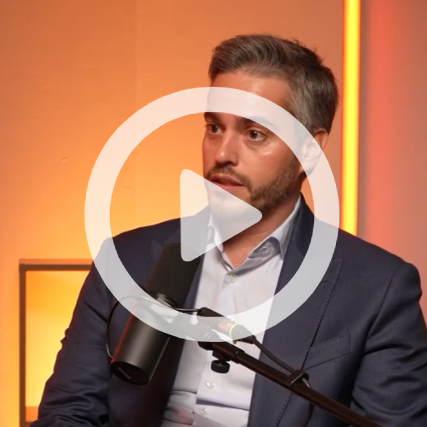
Head of Public Affairs in Spain, Carlos Ochoa Alonso, recently joined an episode of the Hispanic House podcast to discuss his professional journey and the evolving landscape of public affairs in Spain within an increasingly dynamic European context.
The episode sheds light on the evolution of Public Affairs in Spain and Europe, what the next generation can gain by learning from international best practices and the most promising emerging sectors to watch.
World Economic Forum in Davos
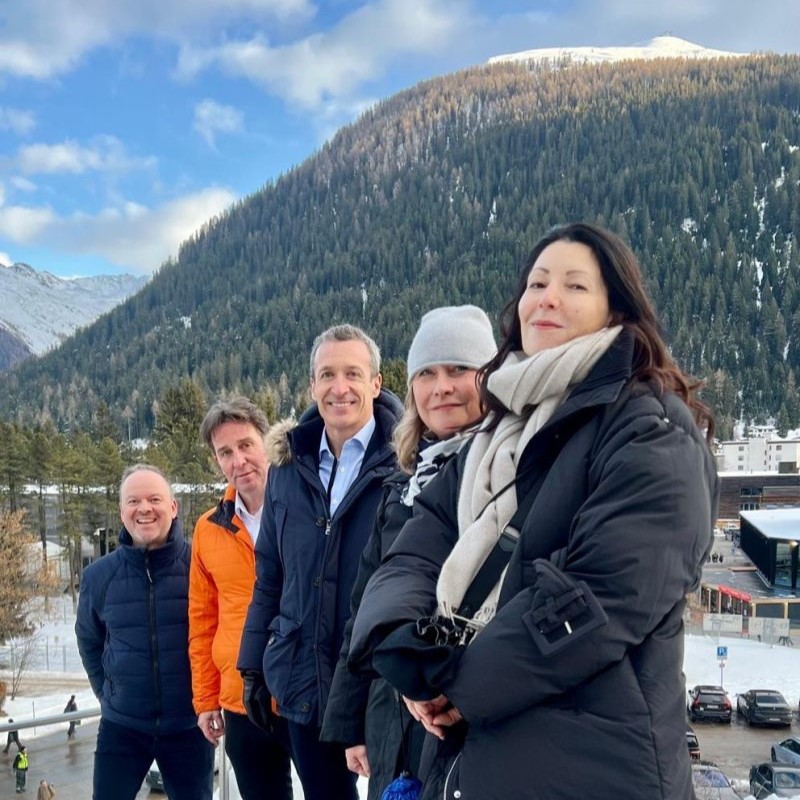
Our Strategic Communications experts from across EMEA were live on the ground in Davos this week, where the world’s decision-makers gathered in one place at the World Economic Forum.
In addition to attending insightful sessions and spin-off events, our team hosted a thought-provoking dinner with Corporate Affairs directors to discuss key trends and what to expect from the week. A big thanks to our guests who joined us!
FTI Consulting Political Panel
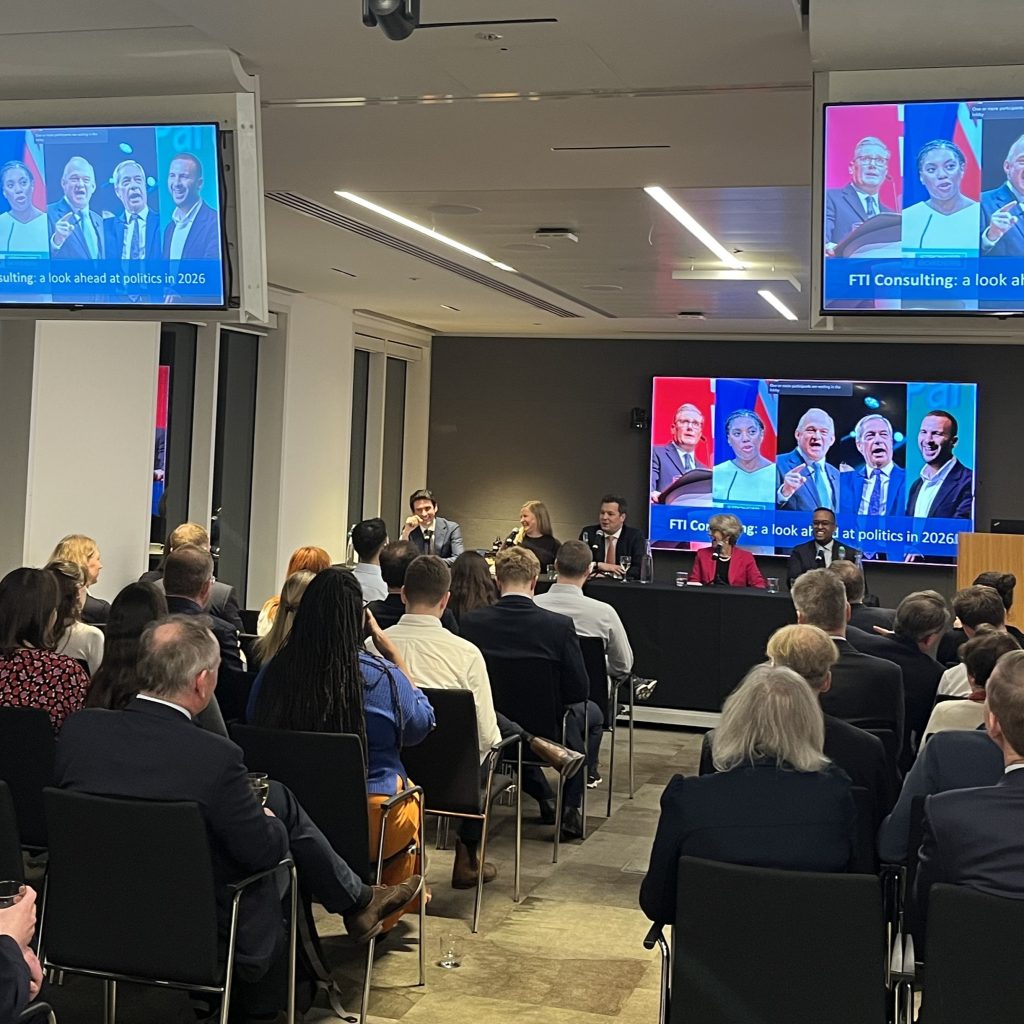
Our UK Public Affairs team hosted a thought-provoking political panel event earlier this week, providing timely insights as the political landscape begins to take shape for 2026.
The panel was made up of senior political experts, including Dame Patricia Hewitt DBE and Public Affairs experts Alex Deane, Gemma Doyle, Tom Pridham and Abdi Duale, who welcomed Public Affairs clients to our London offices to explore the major challenges facing both the Government and opposition parties as the year gets underway. Guests engaged in a lively Q&A, before the event wrapped up with drinks, providing an opportunity for networking and connection-building.
Navigating Global Uncertainty
What should corporates do amid ongoing global instability and insecurity? We put this question, and a few others, to our Brussels Head of Office, Hans Hack.
He shares his perspective on the key risks shaping 2026 and what businesses can do to navigate these turbulent times with greater confidence (and fewer surprises).
Defense Companies in Crosshairs
On 7th January 2026, the White House issued an executive order aimed at reshaping how major U.S. defense contractors manage their money and performance. However, it does more than target capital allocation decisions by defense contractors, It also directly reshapes how executive compensation can be structured under U.S. defense contracts—particularly for companies that fall behind on cost, schedule, or production commitments.
Over two insightful articles, our experts unpack the critical changes, and provide advice for what defence companies should do to act now.
Read ‘Defence companies in the crosshairs‘ here >>
Read ‘Defense Companies in the Crosshairs – Executive Compensation Comes Into Focus‘ here >>
Upheaval in Venezuela
The arrest of Nicolás Maduro and his wife, Cilia Flores, by the United States government on January 3, 2026, is an event of hemispheric significance. It not only disrupts Venezuela’s political equilibrium after 27 years of the Chavista regime, but also raises far-reaching questions spanning from energy markets, financial systems, and global geopolitics to multilateral governance.
Against this backdrop, our experts share their views on the evolving dynamics that could influence Latin America’s policy trajectories and its impact on local business environments.
Upcoming Elections
- 1 February: General election (Costa Rica)
- 22 February: Parliamentary elections (Laos)
- 5 March: General election (Nepal)
- 8 March: Parliamentary elections (Colombia)
- 15 March: Legislative elections (Vietnam)
To be added to the distribution list for the Global PA Newswire, or for further information on the dedicated Public Affairs team at FTI, please contact [email protected]. |
The views expressed in this article are those of the author(s) and not necessarily the views of FTI Consulting, its management, its subsidiaries, its affiliates, or its other professionals.
©2025 FTI Consulting, Inc. All rights reserved. www.fticonsulting.com