Public & Government Affairs

Global Public Affairs Newswire – 21 February 2025
Welcome to the latest instalment of FTI Consulting’s fortnightly Global Public Affairs Newswire.

This week, we bring you updates from FTI Public Affairs teams across the world’s major markets, including the United States, China, the United Kingdom, Singapore, France, India, Brazil, South Africa, Ireland, Colombia, Spain, and Germany. This week’s update also brings readers market insights from FTI Public Affairs experts from around the world, explaining what these updates mean for your business.

Market updates

Holding Steady, Looking Tough

Approaching the end of his first month in office, President Trump’s popular support remains steady in the mid-to-high 40s and his popularity continues to hold strong within his base. While the economy remains a top concern of the electorate, the President seems to benefit from public perception of being “tough, energetic, and focused.” (CBS News/You Gov 5-7 February) in pursuing his agenda. To that end, the President’s cabinet nominees continue to move through the confirmation process, with the Secretary of Defense Pete Hegseth, the Attorney General Pam Bondi, and the Secretary of Health and Human Services Robert F. Kennedy, Jr. now sworn in.  Additionally, the President signed an executive order Tuesday to assert his constitutional authority over regulatory agencies recognized by Congress as independent, such as the Federal Trade Commission, the Federal Communications Commission, and the Securities & Exchange Commission.

Tariffs for All My Friends!: Weeks after announcing his policy of enacting broad tariffs on imports from Mexico, Canada, and China and announcing tariffs on imported steel and aluminum, President Trump this week cited national security concerns in signaling his intent to assign tariffs of 25% or more on specific sectors, including semiconductors, automobiles, and pharmaceutical products.  All of this comes as the President has directed his agencies to review the benefit of “reciprocal tariffs” – a proposed quid-pro-quo levy with significant ramifications for existing trade agreements and tax schemes.

Anybody up for DOGE Ball?:  One of President Trump’s signature initiatives is the newly created Department of Government Efficiency (DOGE). Previous administrations have also leveraged the private sector to surface and cut government spending. However, billionaire Elon Musk’s elevated role at DOGE has guaranteed additional media scrutiny, as have the recommendations DOGE has made. In addition to shuttering USAID, DOGE has set its sights on shuttering the US Department of Education, and other grant and loan programs across the US government. In launching the new DOGE website, Musk has claimed $55 billion cuts in federal spending since the administration began. The rapid changes have invited controversy:  In addition to thousands of federal employees leaving the workforce, other senior career professionals have resigned in protest of administration’s directives, including officials at the US Department of Justice, the Food & Drug Administration, the Department of Homeland Security, and the Social Security Administration. Other DOGE-led cuts are being reviewed by the federal courts.

"One month in and backed by steady public support, President Trump continues to reshape the presidency, the federal government, and US trade strategy.”.

Jackson Dunn
Head of Public Affairs Americas
For more information about FTI’s Public Affairs services in the Americas, please contact [email protected].

China buttresses foreign investment as well as consumer spending and boosts private-sector sentiment at two key meetings

Chinese Premier Li Qiang presided over an executive meeting of the State Council on 10 February, outlining measures to bolster domestic consumption and approving a 2025 action plan to stabilize foreign investment. The meeting vowed to increase household incomes, promote reasonable wage growth, and broaden property-related income channels, stressing that consumption capacities shall be enhanced.

By avowing the important role of foreign enterprises in China’s economy, the meeting also urged more practical and effective measures to stabilize existing foreign investments while expanding new ones. It requested the optimization of the country’s service sector opening-up pilot program and an expansion of the industries that encourage foreign investment. The meeting further asked all relevant parties to treat domestic and foreign enterprises equally in government procurement while encouraging foreign capital’s equity investment in China. The executive meeting also pointed out that the healthy development and upgrading of industries should be promoted through the removal of outdated or inefficient production capacities, and to increase high-end capacities.

A week after the executive meeting, Chinese President Xi Jinping chaired a symposium on private enterprises for the first time in six years, intending to boost private-sector sentiment. The attendees are mainly entrepreneurs in the consumption and technology sectors, including Alibaba co-founder Jack Ma, Huawei founder Ren Zhengfei and DeepSeek CEO Liang Wenfeng. During the meeting, Xi underlined the importance of fair market competition, stating that China would unswervingly encourage the development of the non-public economy and defend private enterprises’ legitimate interests. On a side note, China’s lawmakers will review the draft private economy promotion law, which is the legal foundation of the private economy, at the 14th session of the Standing Committee of the 14th NPC on February 24 and 25.

"The meetings convened prior to the Two Sessions in March showcase China has been increasingly shoving up its efforts on the development of private economy and foreign enterprises amid the economic slowdown. The growing willingness and resolution for China’s opening up to foreign capital, along with the country’s support to the private sector tend to generate business growth and boost market confidence. Correspondingly, the optimization of the market environment for foreign firms also sends a positive signal, yet the implications of the array of actions remain to be testified by the market..”
Rachel Hsueh
Head of Strategic Communications, China

For more information about FTI’s Public Affairs services in China, please contact [email protected]

The United Kingdom must “Step Up” its defense efforts according to Prime Minister Sir Keir Starmer

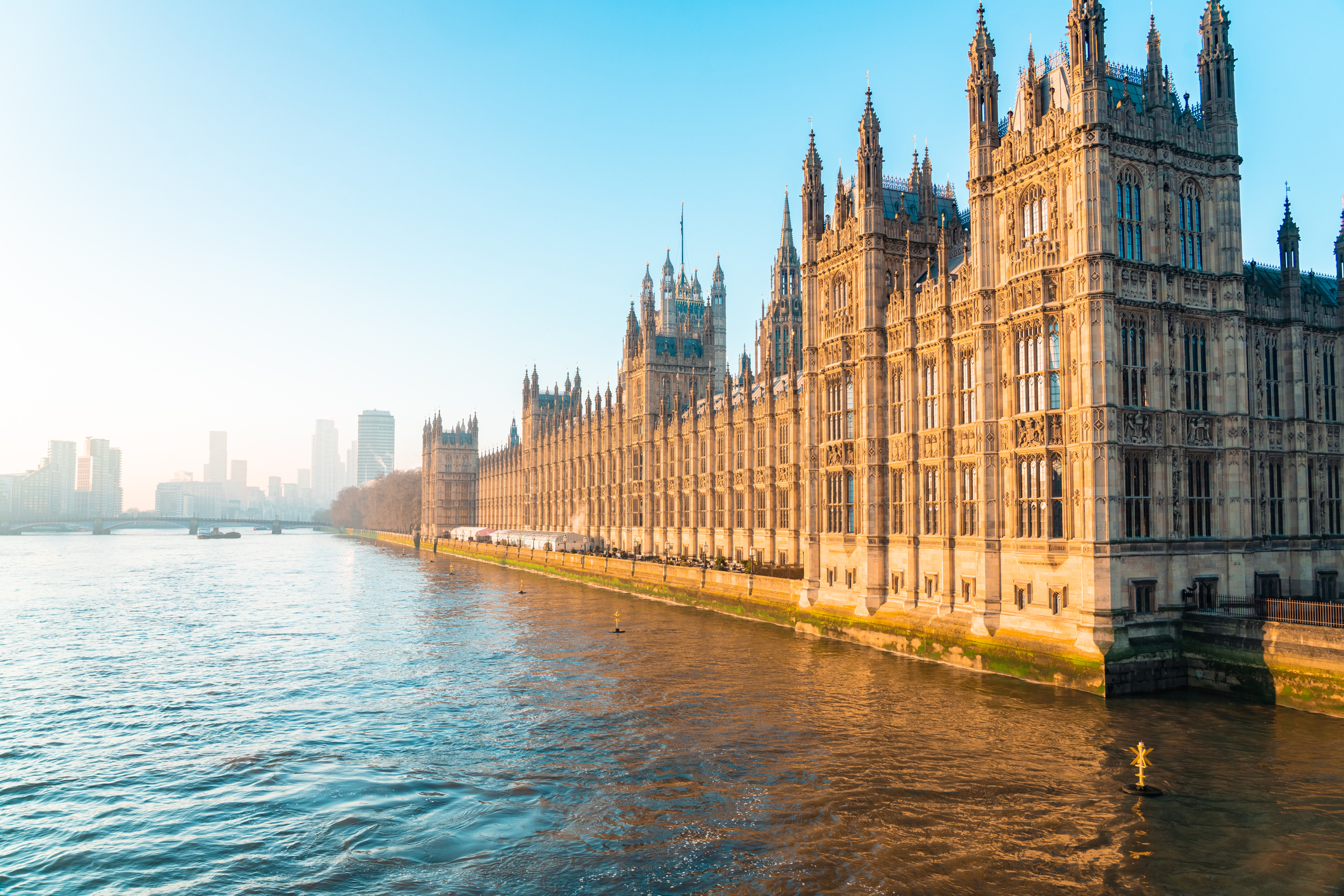
In a monumental week for global politics, Prime Minister Sir Keir Starmer has called for the United Kingdom to “step up” its efforts on defence, saying this week that “we are facing a generational challenge when it comes to national security” and that the UK must “do more and step up” its efforts on defence. Starmer’s comments came as he met with other European leaders in France on Monday, at a crisis summit to discuss Europe’s potential exclusion from US-Russia negotiations on ending the war in Ukraine. 

At these talks, Starmer suggested that there should be a European peacekeeping force deployed to Ukraine, an idea which has divided European leaders. Earlier in the week, at the pivotal 2025 Munich Security Conference, UK Defence Secretary John Healey, and Foreign Secretary David Lammy highlighted the joint desire of the UK and its European allies to step up, and made clear that “there must be no talks about Ukraine without Ukraine, and we must give (Ukrainian President) Mr Zelensky the strongest possible hand in those talks.”  

The spotlight on Ukraine has once again pushed UK national security to the top of the domestic political agenda, with Healey delivering a speech at the Institute for Government this week in which he underscored the importance of securing a just and sustainable peace in Ukraine, saying that: “The decisions that we make right now over the coming weeks will not only define the outcome of the conflict in Ukraine, but the security of our world for generations to come”. 

As Starmer heads to the US next week, where he will once again try to position the UK as the Euro-Atlantic bridge between the US and the EU, he faces what could be the most consequential security dilemma a British Prime Minister has been forced to confront in modern British history.

"Events this week have shaken the foundations of the Euro-Atlantic security alliance. For the UK, whose security interests are delicately balanced between the US and the EU, this poses a dilemma with potentially far-reaching consequences. In Washington next week, Starmer will attempt to show that the UK deserves to remain the US's foremost military partner. To the EU, he must demonstrate that the UK can be a reliable part of Europe's future defence architecture. He will hope that together, this gives renewed purpose to the UK's traditional role as the transatlantic bridge. But failure risks leaving the UK more isolated than at any time since the Second World War.”

Ollie Welch
Managing Director, United Kingdom

For more information about FTI’s Public Affairs services in the United Kingdom, please contact [email protected]

Singapore Prime Minister Lawrence Wong delivers election-year budget

On 18 February, Singapore’s Prime Minister and Finance Minister Lawrence Wong delivered a pragmatic, election-year budget – his first as Singapore’s leader. With the government required to call elections by November 2025 – though speculation suggests an earlier date, possibly May – Budget 2025 reflects both long-term economic strategy and shorter-term electoral considerations.

Noting that cost-competitiveness can no longer be Singapore’s key differentiator, Wong emphasised the need to develop high-value solutions. Budget 2025 reflects this thinking through strategic investments in innovation and sectors poised for long-term growth including a S$1b investment into research infrastructure within the biotech and semiconductor sectors; and a further top-up to the Future Energy Fund by S$5 billion – recognising that AI, semiconductors, and biopharmaceuticals require substantial clean energy. Additionally, Singapore will once again study nuclear power as a potential energy source, revisiting its 2010 assessment in light of technological advancements. Budget 2025 also introduces significant measures to support local businesses including a S$1 billion Private Credit Growth Fund to bridge the financing gap for high-growth enterprises and a S$150 million Enterprise Compute Initiative to provide AI and cloud computing resources to businesses.

Emmanuel Macron leads European Response to US moves on Ukraine

Following the sudden acceleration of US-Russia talks on a potential settlement for the war in Ukraine, President Macron convened an extraordinary meeting on 17 February, bringing together leaders from the UK, the Netherlands, Denmark, Germany, Italy, Spain, Poland, as well as representatives from NATO, the European Council, and the European Commission. The decision to limit participation to a select group of countries was intended to foster consensus among Europe’s major powers. However, the exclusion of several European nations sparked discontent, prompting Macron to organize a second meeting on 19 February, this time including 11 previously uninvited countries, such as Canada. Paris will be encouraged by the short time frame in which the meeting was agreed, which will be taken as an indication that – at least on the surface – there is willingness to craft a European response to latest US announcements. 

France has positioned itself as a leading voice in shaping Europe’s stance toward the Trump administration, frequently criticizing its foreign policy. Paris has firmly opposed US plans on Gaza and has even suggested deploying troops to Greenland to deter any US moves on the island. More recently, Foreign Minister Jean-Noël Barrot and Junior Minister for Europe Benjamin Haddad have condemned remarks by US Vice-President J.D. Vance on European democracy. Additionally, France has expressed strong dissatisfaction with Trump’s steel and aluminium tariffs, with Barrot warning that Europe would mirror any trade restrictions imposed by the United States. Emmanuel Macron—and French foreign policy more broadly—will likely feel vindicated in having long championed the concept of European strategic autonomy in relation to the United States.

“France has long been a staunch advocate of European strategic autonomy, and Macron sees this moment as an opportunity to cement France’s leadership in forging a truly independent European stance on key issues like Ukraine. With weakening commitment and increased pressure from the US, Paris wants to position itself as the driving force behind a cohesive European response. At the same time, Macron is a pragmatist—he has cultivated a strong personal rapport with Trump in the past and will likely try to leverage that relationship to ensure that Europe’s voice is heard in Washington, even as he pushes for greater European self-reliance.”

Olga Ackerman
Managing Director, France

For more information about FTI’s Public Affairs services in France, please contact [email protected]

Modi-Trump Aim for $500B India-US Trade by 2030

Prime Minister Modi’s visit to Washington on 12 February, his first under President Trump’s second term, was a business-focused ‘working visit’ without the high profile of a state visit. Modi flew in from Paris after co-chairing the AI Summit with French president Macron.

In the backdrop was tough talk by Trump on trade (“India charges tremendous tariffs… whatever they charge, we will charge them”) and illegal immigrants (“We will find you and deport you”). On 7 February, 104 Indians were detained and flown to Amritsar in the northern Indian state of Punjab in a C-17 military transport. The backlash in India from images of these deportations did not appear to affect the Modi-Trump talks

In a joint statement, India and USA announced plans to increase trade to $500B by 2030, from $190B in 2023. A trade agreement to be signed this year will aim to increase market access and reduce tariffs and other barriers and help narrow Washington’s nearly $50B trade deficit with New Delhi with sales of US oil and gas, and F-35 jets and other military equipment. The two nations agreed to explore nuclear technology transfer and localisation to build US-designed nuclear small modular reactors (SMR) in India.

Analysts expect the US to push for access to India’s controlled government procurement market, posing a challenge to Modi’s ‘Make in India’ initiative.

India’s Opposition parties slammed the deal, especially the F-35 plan, quoting Trump’s top advisor Elon Musk’s older statement mocking the F-35, and criticized Modi for not flagging the deportations with Trump. And on 15 February, a second C-17 military flight landed in Amritsar with 117 deported immigrants.

“Oil and gas exports may help the US reduce its trade deficit with India, but it’s unclear how that helps advance India’s energy security goals, which could be better served by imports of products and technology for renewables, green hydrogen, and nuclear SMRs.”
Amrit Singh Deo
Senior Managing Director, India and Secretariat Lead for India Hydrogen Alliance (IH2A)

For more information about FTI’s Public Affairs services in India, please contact [email protected]

Brazil’s Attorney General files criminal charges against former President Bolsonaro 

The Supreme Federal Court (STF) is currently reviewing charges filed by the Prosecutor General’s Office (PGR in Portuguese) against former President Jair Bolsonaro for his alleged role in attempting to overturn the 2022 election results. If the court accepts the charges, Bolsonaro will formally become a defendant and face trial. A conviction could result in a prison sentence of up to 40 years.

The PGR alleges that Bolsonaro and his allies orchestrated a series of plans to challenge the 2022 election results and undermine Brazil’s democratic institutions. Based on an extensive investigation, the evidence pointed towards an elaborate scheme, which led the PGR to charge Bolsonaro with leading an armed criminal organization. The charges include attempting to violently disrupt the democratic order and conspiring to carry out a coup.

A key element of the case is that Bolsonaro was allegedly aware of, and allegedly approved, a plot to assassinate President Luiz Inácio Lula da Silva, Vice President Geraldo Alckmin, and STF Justice Alexandre de Moraes. The plan, which allegedly involved military personnel, weapons, and a broader strategy to weaken democratic institutions and manipulate public opinion, was intended to pave the way for a more significant attack.

Furthermore, the investigation highlights Bolsonaro’s actions dating back to 2021, which involved casting doubt on Brazil’s electoral system, pressuring the military to question the election results, and challenging judicial rulings. The evidence supporting these claims includes communications, witness testimonies, and official documents.

This case marks a significant turning point in Brazil’s legal and political history, as it represents the first time a former president could be tried for attempting to subvert the democratic process. The outcome of this trial will be closely watched, as it could set a precedent for how Brazil’s political elite are held accountable for actions that threaten the country’s democratic institutions.

“The prospect of a former president standing trial, particularly with Bolsonaro's military background as well as alleged military involvement, is highly significant in Brazil, given the country’s broad amnesty scheme during its transition to democracy in the 1980s. Public concern is further heightened as the 2026 presidential elections approach, marking a period of high political risk. Companies operating in Brazil will need to exercise caution and closely monitor developments to navigate this uncertain landscape.”

Raquel Rocha
Senior Director, Brazil

For more information about FTI’s Public Affairs services in Brazil, please contact [email protected]

South Africa's new Government of National Unity postpones Budget Speech over VAT dispute amongst coalition partners

For the first time in 30 years of democracy, South Africa’s government postponed the tabling of its annual budget, reflecting the political complexities of the new Government of National Unity (GNU). The delay—driven by internal disputes over a proposed VAT increase—raises concerns over policy stability, investor confidence, and fiscal sustainability.

The GNU, formed after the ANC lost its parliamentary majority in 2024, includes 10 parties across the political spectrum, most notably the ANC and the Democratic Alliance (DA). At the core of the budget standoff is a proposal to raise VAT by 2% to address rising debt and fiscal shortfalls. The DA has rejected the increase, arguing it would burden consumers and worsen economic inequality. Without sufficient parliamentary support, Finance Minister Enoch Godongwana was unable to present the budget as scheduled.

While there is broad agreement within the GNU on the need for additional revenue, discussions now focus on scaling the VAT hike to 1% as a compromise. The budget is now expected to be tabled on 12 March 2025.

This unprecedented delay underscores the challenges of coalition governance in South Africa, where consensus-building is now essential for policy implementation. The outcome of the ongoing negotiations will shape investor sentiment and set a critical precedent for the GNU’s ability to manage economic policy effectively.

"The GNU presents an interesting and exciting political landscape and goes to show how influential South Africa’s smaller political parties have become following the 2024 election. While this postponement shows the challenges associated with grand coalitions, we are of the view that the GNU will find a workable compromise between a higher debt burden and the related cost of servicing that debt versus higher taxes or slashing essential line items in the budget. For many of our clients the complexities of the GNU and an evolving policy environment might seem daunting, but our local experts understand this market and are best positioned to advise on how to navigate the new landscape and engage with different stakeholders and policymakers. Ultimately, government, business and labour want to grow the economy - and that provides unlimited opportunities for those willing to take calculated risks, accompanied by well-informed risk mitigation strategies. We are here to provide our clients with the necessary support, helping them to focus on the daily operation of their businesses.”

Lelo Skosana
Senior Director, South Africa

For more information about FTI’s Public Affairs services in South Africa, please contact [email protected]

Three Days Ahead of the Election –Final Verdict?

It’s the final countdown! With just days to go until election day and one third of the voter base still undecided, speculations are flaring up: who will govern with whom? In our exclusive mini interviews, top politicians share their priorities for a coalition agreement and we speak with POLITICO journalist Rixa Fürsen. Meanwhile the Munich Security Conference has dominated the campaign trails for a few days questioning the transatlantic partnership and Germany’s role in Europe’s defense ramp up. We also look at final campaign moments, the timeline and examine the “invisible wall” in Germany shaping this election. Stay tuned!”

Please read our full Germany Votes update here.

Irish Ministers prepare to visit US amid looming trade war threat

As the Irish Government prepares for its annual global St Patrick’s Day Programme, nine representatives of the Irish State will travel to cities across the US over the coming weeks. The visits comes at a time when the Irish Government is attempting to mitigate any potential impact of the US’s tariffs programme and looming trade war with Europe, with many viewing it as a clear opportunity to engage with US political and business leaders to help safeguard the Irish economy.  

Ireland’s foreign direct investment policy has positioned the country as a location of choice for many US multinationals, which have accelerated Ireland’s economic growth. Any tariffs targeting this policy and US multinationals’ operations here could have a detrimental impact on the country. The US has its fourth-largest trade deficit with Ireland, with much of this due to Ireland’s significant pharmaceutical manufacturing industry, meaning the country is particularly exposed to President Trump’s plan to introduce a 25% tariff on pharmaceutical imports. 

Irish officials have signalled that the impact of any tariff will depend on how the tariff is applied – if applied at the point of sale, the hope is Irish exports won’t be impacted as the majority of pharmaceutical exports to the US are unfinished products. The large contingent travelling to the US, including Taoiseach (Prime Minister) Micheál Martin and Tánaiste (Deputy Prime Minister) and Minister for Foreign Affairs and trade, Simon Harris, will be joined by Irish officials and business and cultural representatives.

"The annual St Patrick’s Day Programme comes at a critical time for Irish-US relations and US companies with operations in Ireland. Companies with business interests in Ireland need to understand Ireland’s unique position amid global trade tensions, leveraging the Irish government’s willingness to engage with global business leaders and decision makers to support their international operations and the Irish economy."

Sam Moore
Senior Director, Ireland

For more information about FTI’s Public Affairs services in Ireland, please contact [email protected]

Emergency temporary tax impositions during the State of Internal Commotion set the stage for yet another fiscal reform

On 24 January, President Petro declared a State of Internal Commotion for the ongoing conflict in the region of Catatumbo. Amid this political turmoil, the Administration issued new and temporary tax measures seeking to address the security crisis. 

The key provisions include:

  • A special tax on the domestic sale and export of hydrocarbons and coal.
  • The reinstatement of the national Stamp Tax, applicable to public and private documents that generate financial obligations.
  • VAT on online gambling and betting activities.

According to the Ministry of Finance, these taxes, initially set to remain in effect until 31 December 2025, aim to raise COP $3 trillion to strengthen regional security efforts. However, the government has expressed its intention to make these taxes permanent through a new tax reform—resurrecting a proposal that was dismissed last year due to congressional opposition. 

Since the regulations issued under the State of Internal Commotion are subject to constitutional review, an intense legal debate is expected in the Constitutional Court that will assess both the legality of the emergency declaration, and the validity of the measures related to defense, taxation, environmental policies, and public welfare. As a result, the so-called “Catatumbo Tax” now faces a new challenge in court, where its implementation will either be upheld or struck down as unconstitutional.

Additionally, on 9 February Petro requested the resignation of his entire cabinet, triggering the fourth ministerial reshuffle of his Administration. So far, this has led to the departure of the Ministers of Environment, Labor, Culture, Defense, and Interior, intensifying tensions within the government and sparking criticism regarding its strategic direction.

"The adoption of tax measures during a state of internal commotion faces scrutiny from both Congress and public opinion, while also posing a significant legal challenge before the Constitutional Court. Recent history shows that the Court has been stringent in defining the scope of emergency powers, particularly when they impact fundamental rights and economic stability. The debate also revolves around the temporary nature of the measure and the need for legal certainty and stability. The so-called ‘Catatumbo Tax’ will serve as a litmus test for the government's ability to justify these fiscal measures as both necessary and proportional within the constitutional framework."

Juliana Gómez
Head of Public Affairs Colombia
For more information about FTI’s Public Affairs services in Colombia, please contact [email protected]

Spain’s strategy amidst US tariff uncertainty

The recent announcement by the Trump administration to reinstate tariffs on steel and aluminum imports, along with the potential imposition of other tariffs on European goods, has raised concerns across the EU, including in Spain. While the direct impact on the Spanish economy may be lower than for other European countries—given that exports to the U.S. represent just over 1% of Spain’s GDP—government officials are taking a firm stance. Spanish Foreign Minister José Manuel Albares has emphasized that “we must protect our industry,” reaffirming that Europe has the capacity to respond with countermeasures. The Spanish government, in line with EU’s collective stance, is supporting coordinated EU response that minimizes economic disruptions and protects key sectors such as agriculture, energy, and manufacturing.

Prime Minister Pedro Sánchez has warned that a trade war benefits no one, stating that Spain will be “firm in defending the interests” of its agricultural, livestock, and fishing industries. Business leaders, including representatives from the American Chamber of Commerce in Spain (AmCham Spain), are also expressing concerns over the economic implications. Many fear that an escalation of tariffs could lead to decreased foreign investment and disrupt transatlantic supply chains.

Despite these challenges, Spain could use this development as an opportunity to reinforce its economic resilience. By fostering domestic demand, supporting investment in high-value industries, and leveraging its strategic role within the EU, the country could mitigate potential negative effects.  As negotiations unfold, it is key that Spain remains proactive in securing the most favorable trade conditions while ensuring its economic stability and competitiveness in the evolving global landscape.

"The reinstatement of US tariffs and the potential for further escalation present a challenge for Spanish businesses that rely on transatlantic trade, particularly in key sectors like agriculture, energy, and manufacturing. While Spain's direct exposure is lower than other European economies, its potential impact should not be underestimated. Companies operating in Spain must stay ahead of these shifts by assessing political and policy contexts, engaging with key decision-makers, and mobilizing industry allies. Now is the time for businesses to assess their exposure and develop risk-mitigation strategies, and FTI is well-positioned to support clients in navigating these evolving trade dynamics."

Marina Cubedo Vicén
Director, Spain

For more information about FTI’s Public Affairs services in Spain, please contact [email protected].

Expert Analysis

2025 Munich Security Conference

The 61st edition of the annual Munich Security Conference last weekend was one of the most tumultuous in its history. 

As events continue to develop at a breathtaking pace, FTI Consulting’s UK and EU Public Affairs experts assess the significant implications that lie ahead for Europe’s strategic autonomy and defence industries across the continent. 


Read here >>

Global Pressures, Local Impact

Global pressures spare no sector. International decisions that may seem abstract on first glance can quickly morph into local legislation, impacting regulation, corporate reputation, and license to operate. 

Senior Managing Director Ali Karami-Ruiz investigates the top 10 global pressures that warrant tracking and engagement, given their ripple effects across geographies.


Read here >>

Notes from Strasbourg

What were the main takeaways from this month’s Strasbourg plenary?

Our Brussels-based experts travelled to Strasbourg last week for the second session of the 10th Legislature, and they’ve shared the key policy highlights here.


Read here >>

Latin America Insights 2025

We are pleased to introduce our third annual Latin America Insights series, showcasing the key trends and dynamics shaping the region’s economic and political landscape. 

This year’s report features insights from our experts in Brazil, Colombia and Mexico, each offering perspectives on how businesses can navigate and succeed amid evolving cross-border, regional and local challenges impacting Latin America. 

Read here >>

From Retaliation to Negotiation: The EU’s Likely Responses to New U.S. Tariffs

Recent EU-US developments have been marked by significant diplomatic engagements and policy shifts. But what are the key takeaways?

Our EU trade experts, Arne Koeppel and Danesh Kermabon-Haq, share a comprehensive overview of U.S. tariffs and provide their insights on the EU’s potential response scenarios.


Read here >>

Webinar: Power Shifts, Trade Wars and Tech Rifts: How Do You Respond to This New Geopolitical Era?

Join FTI Consulting’s panel of public affairs, trade policy, regulation, cybersecurity and digital experts for a webinar exploring the key geopolitical trends shaping today’s global business environment and the implications these developments have for companies and their legal advisors.

Date: Tuesday 25 February 2025

Time: 16:00 – 17:00 GMT, 17:00 – 18:00 CET, 20:00 – 21:00 GST, 11:00 – 12:00 EST

Register your interest here >>

Upcoming Conferences, Elections and Webinars

  • 23 February: Federal election (Germany)
  • 27 February: Regional election (Ontario, Canada)
  • 04 March: General election (Micronesia)
  • 08 March: Regional election (Western Australia, Australia)
  • 23 March: Snap regional election (Madeira, Portugal)

To be added to the distribution list for the Global PA Newswire, or for further information on the dedicated Public Affairs team at FTI, please contact [email protected].

The views expressed in this article are those of the author(s) and not necessarily the views of FTI Consulting, its management, its subsidiaries, its affiliates, or its other professionals.

©2025 FTI Consulting, Inc. All rights reserved. www.fticonsulting.com
Related Articles

4th Annual Shareholder Activism State of the Market

September 8, 2025—4th Annual Shareholder Activism State of the Market Request Report The 4th Annual Shareholder Activism State of the Mark...

Use It or Lose It: U.S. Hydrogen Industry Must Act To Maintain Momentum

July 12, 2025—Key takeaway: Following the passage of the “One Big Beautiful Bill Act”, time is of the essence for hydrogen produce...

Quick Analysis: ‘One Big Beautiful Bill’ Drives More Gas and Batteries, Less Renewables

July 3, 2025—With the recent passage of the “One Big Beautiful Bill” (“OBBB” or the “Legislation”),[1] FTI Consulting’s...

Done Deal – Insights from our M&A and Activism team – June 2026

June 24, 2026—Insights from our M&A and Activism team Welcome to the latest installment of Done Deal. This month, Senior Consultan...

IR Monitor – 24 June 2026

June 24, 2026—In this week’s newsletter: The stories that investor relations professionals need to read this week: IR in Kazakhstan:...

Mehr als nur Zahlen: Social Media und die Kunst der Ergebniskommunikation

June 24, 2026—Social Media Monitor 2026: Eine Analyse der Nutzung von Social Media durch DAX-40-Unternehmen in der Finanzkommunikation...