Global Public Affairs Newswire

Global Public Affairs Newswire – 17 April 2026

Welcome to the latest instalment of FTI Consulting’s fortnightly Global Public Affairs Newswire. 

This week, we bring you updates from FTI Public Affairs teams across the world’s major markets, including the United States, the United Kingdom, India, the European Union, Brazil, China, Germany, Australia, South Africa, France, Ireland, Colombia, Nigeria, and Hong Kong and Spain. This week’s update also brings readers market insights from FTI Public Affairs experts from around the world, explaining what these updates mean for your business. 

Market updates

Vice President Vance takes to the road
  • Vance in Pakistan | Vice President Vance traveled to Islamabad for high-stakes talks aimed at de-escalating the Iran conflict, but negotiations failed to produce an immediate breakthrough. In response, President Trump ordered a naval blockade of the Strait of Hormuz, raising the risk of broader regional disruption. Iran’s threatened retaliation—potentially targeting Red Sea shipping—remains unresolved, while global markets continue to absorb the shock.  The recent pause in hostilities between Israel and Hezbollah could help the White House get the conflict “close(r) to over” though no credible off-ramp has emerged.
  • Vance in Hungary | Vance also made a political stop in Hungary, intervening in support of Prime Minister Viktor Orbán, a favorite among the MAGA base. The effort—echoing Steve Bannon’s characterization of Orbán as “Trump before Trump”—failed to shift the trajectory of the race. Orbán’s loss marks a visible setback for President Trump, whose direct involvement proved ineffective.
  • Trump in Hot (Holy) Water | President Trump triggered backlash this week among conservative Catholics—traditionally a reliable bloc—following attacks on the American-born Pope Leo XIV, continued escalation in Iran, and a social media post featuring an AI-generated, Christ-like image of himself. Church leaders have taken the unusual step of publicly rebuking the President, signaling emerging fractures within a key segment of his coalition.
“Vice President JD Vance seemed to be everywhere this week:  working for a resolution to the Iran conflict in Islamabad, campaigning for foreign leaders in Hungary.  It is clear the White House had seen the Vice President as a diplomatic and political asset in high profile moments.”

Jackson Dunn
Head of Public Affairs, Americas

For more information about FTI’s Public Affairs services in the Americas, please contact [email protected].

Chancellor Rachel Reeves delivers the 2026 Mais Lecture, focussing on AI, regional growth and a closer EU-UK relationship
  • Prime Minister Sir Keir Starmer is planning legislation to enable the UK to adopt new EU laws without requiring a full parliamentary vote each time. The measure is designed to support the Government’s “dynamic alignment” with the EU, by adhering to the EU rules necessary to deliver new trade deals in areas such as food standards, carbon pricing, and electricity trading. The Government has cited the Iran war and resulting global and fiscal uncertainty as evidence of the need for greater EU alignment.
  • The new legislation, expected later this year, would grant ministers fast-track powers to introduce draft laws aligning with European standards through secondary legislation. This approach mirrors pre-Brexit procedures but, given the UK no longer holds voting rights to shape EU legislation, will prove more controversial now.
  • The proposals have drawn strong opposition from across the political spectrum. The Shadow Secretary of State for Business and Trade, Andrew Griffith, warned that Parliament would be “reduced to a spectator while Brussels sets the terms,” whilst Reform UK leader Nigel Farage pledged to oppose the legislation “every step of the way,” calling it “a backdoor attempt to drag Britain back under European Union control.” 
“There are two important drivers here. The first is the Government’s conviction that making trade easier translates into lower prices - important given the cost-of-living squeeze. The second is the political desire to get a little closer to Europe at a time of shifting geopolitical alliances. With the Conservatives and Reform warming up to attack this, and little guarantee of Green or Liberal Democrat support, we expect the UK-EU relationship to shoot back up the political agenda.”

Adrian Pascu-Tulbure
Senior Director, United Kingdom

For more information about FTI’s Public Affairs services in the United Kingdom, please contact [email protected].

Generic semaglutide approvals create new pharma growth avenues
  • India’s drugs regulator has approved multiple generic semaglutide-based therapies following the expiry of key patents, a milestone for accessible treatments for obesity and diabetes. This reflects policy support for affordable chronic care, and positions India as a key market for Glucagon-Like Peptide (GLP-1) therapies. India’s obesity drugs market is projected to exceed USD 850 million by 2030, with rising physician interest and patient demand driven by dropping price points. 
  • Following the expiry of its semaglutide patent in India, Novo Nordisk has cut prices by up to half for its diabetes and weight-loss drugs Ozempic and Wegovy. Low-cost generics are expected to accelerate adoption and drive market growth. For the pharmaceutical sector, this creates opportunities across the value chain, including API manufacturing, formulation, and large-scale production. India’s established generics ecosystem, coupled with its cost advantages, also positions it as a competitive global hub for export-oriented manufacturing, beyond the large domestic market.
  • This shift is expected to grow outsourced manufacturing and integrated supply partnerships, as global pharma firms look to leverage India’s scale and cost efficiencies. Collaboration across development, manufacturing, and distribution will support faster market entry and export growth. With intense competition, companies will need to differentiate through scale, regulatory compliance, and robust distribution. Growing regulatory scrutiny around promotion and usage will remain a key consideration for market players. 
“India’s evolving approach to both pricing and generics signals a structural shift in the pharma landscape. While affordability measures may tighten margins in the near term, they are also likely to unlock significant volume growth and strengthen India’s role in global supply chains. Companies that can balance cost efficiency with scale and regulatory compliance will be best positioned to capitalize on this next phase of growth in chronic care therapeutics.”
Amrit Singh Deo
Senior Managing Director, India

For more information about FTI’s Public Affairs services in India, please contact [email protected].

EU Political and Policy responses to the Middle East Crisis
  • The conflict involving the United States, Israel, Iran, and the broader Gulf region has evolved into a sustained and multidimensional crisis with far-reaching global implications. Six weeks after the initial US-Israeli strikes, the situation is defined by continued military escalation, fragile diplomatic efforts, and significant disruption across commodity markets, geopolitical alignments, and financial systems. While a temporary ceasefire has provided limited respite, structural divergences between the parties suggest a high likelihood of renewed hostilities. Against this backdrop, commodity price dynamics, particularly across energy, minerals, and agricultural inputs, have emerged as the most immediate transmission channel of risk to the global economy. 
  • The European Union is seeking to balance energy security, inflation control, and political sustainability amid a potentially protracted disruption. Member states have shifted into a precautionary response mode to emerging fuel market pressures, stopping short of crisis intervention. Governments are reviewing strategic reserves and coordinating closely with international partners, while favouring targeted, reversible measures such as potential tax relief and sector-specific support over broad price controls. At the same time, contingency planning on the demand side has intensified, with early-stage preparations for prioritization mechanisms and voluntary reductions. EU Energy Commissioner Dan Jørgensen has warned that Europe should prepare for a prolonged energy shock, including the potential need for fuel rationing and additional releases from strategic reserves. In parallel, finance ministers from Germany, Italy, Spain, Portugal, and Austria have called for an EU-wide windfall tax on energy firms benefiting from elevated prices, signaling growing political pressure to redistribute crisis-driven gains. At the macro level, the European Central Bank is closely monitoring second-round effects on inflation and price stability. 
  • The conflict is reshaping geopolitical alignments across multiple regions. Gulf states are moving toward closer alignment with US objectives, while simultaneously reassessing their long-term strategic positioning. Europe faces internal divisions over energy strategy and limited appetite for direct military involvement, highlighting broader transatlantic tensions. It is no longer confined to direct military exchanges but increasingly incorporates economic and infrastructural domains. This evolution signals a shift toward a more integrated form of warfare, where economic leverage and physical disruption are deployed in parallel, raising the likelihood of prolonged instability. Depending on how the conflict evolves, it could have significant implications for the strategic balance between the US, Russia, and China in the region, shaping each power’s relative influence. More importantly, it is likely to inform the architecture of future regional agreements across energy, defense, and other strategic sectors. 
“For businesses, the operating environment will be defined by elevated input costs, supply chain uncertainty, and increased regulatory intervention. Strategic resilience, including diversification of supply chains and proactive risk management, will be critical in navigating the evolving landscape.” 

Sergio Rojas
Director, Brussels

For more information about FTI’s Public Affairs services in the EU, please contact [email protected]

When governing becomes campaigning, every political achievement turns into an electoral narrative
  • Electoral polls indicate that President Lula is entering the pre-election phase in an unusual position, marked by a tie with opposition candidate Flávio Bolsonaro – a stark contrast to his historical trajectory of more comfortable leads in past races showing that his leadership no longer appears as a given. There is a noticeable erosion in the president’s public image, reflected in the difficulty of translating government actions into political support during his current term as well as lack of ability from his party to offer new leadership and options. Significant measures in the area of public security, in particular, seem to fall short of generating the expected impact on public opinion, suggesting a disconnect between what is delivered and how it is perceived by voters. At the same time, anti-Workers Party sentiment is regaining strength and playing a central role in the political debate, shaping how part of the electorate views the government – especially corruption-related narratives linked to current investigations. Unlike in previous runs, social policies alone have proven to be no longer sufficient to sustain strong political ties, as voters now demand broader and more tangible results. In this context, the race becomes more balanced and complex than previously forecasted, requiring new strategies, alliances, and narratives to rebuild support and strengthen electoral standing. 
  • Recent cases of corruption involving both private and public banks, as well as alleged fraud in the local pension program led the Senate to install a committee to investigate organized crime, intensifying the institutional clash between Congress and the Judiciary. The final report from the committee calls for the indictment of three Supreme Court justices along with Prosecutor-General – under the allegation of misconduct such as bias, conflicts of interest, and omission. It argues that judicial decisions hindered investigations, limiting the Senate’s powers. In turn, it depicts the Judiciary as overstepping or shielding actors tied to financial schemes like the “Master Bank case.” While lawmakers push to expand oversight and accountability, the Judiciary asserts its legal boundaries. This tension underscores competing claims over excess authority in confronting organized crime and corruption. 
  • Brazil and the US have signed a cooperation deal to expand joint efforts on cross border crime, illustrating the Brazilian Executive will to position Lula’s administration in transnational security issues. This progress unfolds alongside a key diplomatic divergence while Brazil’s Foreign Affairs Ministry, resists US discussions about designating Brazilian organized crime as terrorist organizations. The episode highlights a structural limit of executive diplomacy, while it can deliver operational agreements and even de-escalate tensions, it can only stall unilateral sovereign decisions on sensitive political issues. It didn’t take long for the Lula administration to politically capitalize on the agreement: in the week following the announcement, a Bolsonaro clan ally, who had been a fugitive from Brazilian justice convicted for involvement in an attempted coup, was arrested by ICE in a joint intelligence operation with Brazil’s Federal Revenue Service. 
"Brazil’s pre-election environment is increasingly shaped by the perception that virtually every political, economic, or public security-related development is filtered through an electoral lens rather than evaluated on its own merits. In this context, the position of President Lula reflects not only a more competitive political landscape, but also a broader struggle over the administration reputation and narrative control, where public opinion is formed less by policy outcomes and more by how events are interpreted within opposing political groups. Government actions, institutional disputes, and public policy challenges are quickly absorbed into competing stories about competence, legitimacy, or failure, reinforcing polarization and limiting the stabilizing effect of concrete policy delivery – in a scenario where the electors that will be decisive are still choosing a candidate. As a result, even initiatives that produce operational progress are often measured by their symbolic and electoral impact, rather than their technical effectiveness. These dynamics turn governance into a continuous perception contest, where the ability to shape meaning and sustain credibility becomes as important as governing itself in determining electoral advantage.”

Raquel Rocha
Senior Director, Brazil
For more information about FTI’s Public Affairs services in Brazil, please contact [email protected].

China and the US sharpen rulemaking around supply chains and technology competition
  • China’s State Council has introduced new regulations on safeguarding the security of industrial and supply chains, further institutionalizing the issue within a dedicated regulatory framework. Building on existing tools such as export controls and countermeasures, the regulation strengthens risk monitoring, early warning, and emergency response mechanisms, while clarifying investigative procedures and accountability, with provisions that may extend to extraterritorial application in specific circumstances. 
  • In parallel, China has issued regulations on countering foreign improper extraterritorial jurisdiction, consolidating existing legal tools into a more coherent and operational framework covering identification, notification, countermeasures, exemptions, and enforcement. The mechanism provides a legal basis for designating entities involved in implementing such measures and, where appropriate, subjecting them to countermeasures, reinforcing what Beijing characterizes as a defensive response to external legal overreach. 
  • In the US, lawmakers have proposed the Multilateral Alignment of Technology Controls on Hardware (MATCH) Act, which aims to tighten export controls on semiconductor manufacturing equipment and align these measures with those of allies. The bill would build on existing US restrictions by encouraging – and potentially requiring – partner governments to adopt comparable controls, underscoring a more coordinated approach to technology competition with China.
“Recent policy developments in China and the US underscore a broader shift toward embedding competition within legal and regulatory frameworks governing supply chains and technology flows. China’s latest measures aim to strengthen risk management and safeguard policy autonomy, while the MATCH Act reflects US. efforts to multilateralize technology controls among allies. Against this backdrop, a potential Xi-Trump meeting may offer space for tactical stabilization but is unlikely to alter the underlying trajectory. For businesses, the operating environment is becoming more codified – but also more fragmented – where compliance exposure and supply chain decisions are increasingly shaped by formal regulatory instruments rather than discretionary policy shifts.”  

Xu Zheng
Director, China

For more information about FTI’s Public Affairs services in China, please contact [email protected]

Coalition tensions rise as policy divisions become more visible
  • Growing friction within the coalition: Internal disagreements within the federal government are becoming increasingly visible, particularly on economic and fiscal policy. Diverging positions between key ministries on issues such as energy price relief and industrial support are exposing underlying fault lines and complicating coordinated policy-making. 
  • Leadership balancing act under pressure: Chancellor Friedrich Merz (CDU) is seeking to contain tensions and maintain government cohesion, while avoiding open escalation between coalition partners. However, recent public disputes between Minister for Economic Affairs and Energy Katherina Reiche (CDU) and Finance Minister Lars Klingbeil (SPD) point to limited message discipline and highlight challenges in aligning political priorities across the coalition. At the same time, a cabinet reshuffle is currently not expected. 
  • Policy delivery progressing despite tensions: Following several days of negotiations, the governing coalition agreed on an energy emergency package to provide short-term relief from rising energy costs. Measures include a temporary fuel tax cut, a €1,000 tax-free bonus for employees, and stronger regulatory powers for the Federal Cartel Office. The package reflects a compromise between differing coalition positions and signals the government’s ability to act. Furthermore, it is widely seen as an initial step, with further economic reforms and key budget decisions expected later this year. 
“The agreement delivers short-term relief, but more comprehensive structural reforms remain outstanding. The continued delay in advancing broader economic and fiscal packages risks constraining growth momentum in an already weak German economy and prolongs uncertainty for businesses, particularly regarding energy costs, investment conditions, and regulatory complexity.” 

Nicola Duensing
Director, Germany 

For more information about FTI Consulting’s Public Affairs services in Germany, please contact [email protected].

Middle East conflict dominates Australian policy debate
  • With the challenges accessing fuel due to the conflict in the Middle East emerging as a key issue in Australia, Prime Minister Anthony Albanese released a National Fuel Security Plan in early April. The Plan contemplates four levels: Plan and prepare, Keeping Australia moving, Taking targeted action and Protecting critical services for all Australians. 
  • With Australia currently in the ‘Keeping Australia moving’ level, the federal government is underwriting additional fuel cargoes and other vital strategic reserves. 
  • Following the National Cabinet meeting that endorsed the plan, Albanese announced a halving of the excise on fuel and pausing the heavy-vehicle road user charge for a three-month period. 
  • Last week, Albanese secured guarantees from Japan, South Korea and Singapore for shipments of fuel from these countries to continue as normal to Australia. 
  • Albanese has also flagged an expansion in local gas production, while considering higher taxes on gas exports to capture profits driven by the current global tensions. After meeting last week, Singapore Prime Minister Lawrence Wong, warned that Singapore will diversify its energy sources if Australian gas becomes too expensive, despite relying on Australia for around one-third of its gas. 
  • A foreshadowed road user tax for EV drivers, is now being reconsidered, after the government said it “may not be the time” to discourage the ownership and use of EVs. 
  • With preparations for the Federal Budget due to be handed down in early May well underway, forecasting the impact and the necessary targeted measures that will ease the cost-of-living pressure on consumers, while also slowing Australia’s rising inflation, will be key challenges for Treasurer Jim Chalmers and the federal government in the coming weeks. 
"As the impacts of the Middle East conflict start to develop and embed in the Australian economy it is critical that industries, businesses and stakeholders adjust their government relations strategy accordingly. Many voices will be seeking to ensure they are heard by government, and it is imperative that engagement strategies account for geopolitical realities and local implications of the conflict, and the emerging and changing priorities of government. There will be short, medium and long-term local consequences to the conflict, and it is important government relation strategies have regard for these.” 

Miriam Phillips
Senior Director, Australia

For more information about FTI’s Financial Services Public Affairs support in Australia, please contact [email protected].

South Africa reignites investment momentum to position itself as Africa’s premier gateway for global capital
  • South Africa has relaunched its flagship investment drive with the sixth iteration of the South Africa Investment Conference, following a two-year break. Convened under the theme “Invest, Partner and Prosper,” the conference remains the country’s premier platform for mobilising capital, showcasing pledges committed by local and multinational firms, bankable opportunities, and converting investor interest into tangible economic outcomes such as job creation. This renewed push is closely aligned with President Cyril Ramaphosa’s 2026 State of the Nation Address, which set an ambitious target of attracting R2 trillion in investment over the next five years. The initiative underscores a clear policy focus on infrastructure expansion, industrialisation, and inclusive growth, with early investment pledges reinforcing confidence in South Africa’s reform trajectory and its position as a leading investment destination on the continent. 
  • Amid heightened geopolitical uncertainty, including ongoing instability in the Middle East, South Africa is deliberately positioning itself as both a gateway into Africa and a relatively stable alternative for global capital allocation. The participation of delegates from more than 31 countries highlights sustained international interest, not only in the conference itself but in South Africa’s broader economic prospects. Investors increasingly view the country as a strategic partner within the developing world, offering both market access and influence within global economic discussions. This positioning strengthens South Africa’s appeal as a conduit for accessing high-growth African markets while operating within a comparatively sophisticated and diversified economy. 
  • Looking ahead, sustained investment inflows have the potential to unlock large-scale infrastructure development, deepen supply chains, and significantly accelerate employment creation, a critical priority given persistently high unemployment levels. Beyond immediate economic gains, increased capital deployment will enhance resilience and solidify South Africa’s role as a regional hub for investment and business expansion. Crucially, the real test will lie in the effective execution of pledged commitments. Should these translate into implemented projects, South Africa stands to not only strengthen its domestic economy but also offer global firms a stable, scalable platform for long-term growth across the African continent. 
“At the South Africa Investment Conference, the country reaffirmed its role as a gateway to Africa, leveraging its advanced financial systems, infrastructure, and regional influence to attract a diverse pool of global investors. The conference underscored South Africa’s deliberate push to diversify trade partnerships, evidenced by the elevation of relations with Germany to a strategic partnership and the expansion of zero-tariff trade arrangements with China. These developments highlight a pragmatic, outward-looking approach to trade and investment, positioning South Africa as a resilient and competitive hub for capital deployment, market access, and long-term growth across the African continent.” 

Lelo Skosana
Head of Public Affairs, South Africa

For more information about FTI’s Public Affairs services in South Africa, please contact [email protected].

France moves beyond EU law in major electrification push
  • In a speech delivered on 10 April, Prime Minister Sébastien Lecornu unveiled the first major measures of France’s electrification strategy, presented as a response to rising energy insecurity linked to the Middle East crisis. He stressed the need to reduce dependence on fossil fuels, noting that fossil fuels still account for 60% of consumption despite France’s abundant, low-cost, low-carbon electricity mix. 
  • Lecornu announced that public support for electrification will be doubled to €10 billion annually by 2030. In housing, he confirmed a ban on gas boilers in all new buildings from 2027, including the exclusion of hybrid systems otherwise permitted under the EU’s Energy Performance of Buildings Directive (EPBD). He also set out the creation of 100 pilot “zero gas” territories to accelerate implementation at local level. 
  • In transport, Lecornu set a target of two-thirds of new car sales being electric by 2030, supported by a renewed “social leasing” scheme for 50,000 low-income households and additional targeted aid for essential workers. Purchase subsidies for electric vehicles and vans will rise to €9,500, while support for electric lorries could reach €100,000. 
“The government’s decision to go further than the EPBD testifies to its commitment to electrification. However, it has also triggered strong criticism from the far-right, which argues that these measures are disconnected from everyday economic realities. Energy remains highly polarised in France and is expected to be a central dividing line in the 2027 presidential election. The publication of France’s multi-year energy roadmap (PPE3) earlier in the year was also met by strong criticism, particularly around cost, nuclear strategy, and renewable targets. With the far-right National Rally still leading in the polls for the presidential elections, measures announced by the government may be subject to reversal or revision as early as next year.”

Estelle Forfert
Senior Director, France

For more information about FTI’s Public Affairs services in France, please contact [email protected].

Irish Government survives no confidence vote amid nationwide fuel cost protests

  • On 14 April, Ireland’s coalition government survived a no confidence vote, prevailing 92-78, triggered by several days of nationwide fuel cost protests. The motion followed coordinated demonstrations by farmers, hauliers and transport workers over the last week, which disrupted fuel depots, ports and supply routes across the country. Demonstrations were driven by anger over soaring fuel costs, and broader cost-of-living pressures, which farmers and transport workers said were making their businesses and livelihoods unsustainable. Protesters called for urgent government intervention, including tax reductions and temporary price controls. The protests came despite energy supports introduced by the government on 24 March worth €250 million to counter inflationary pressures as a result of the conflict in the Middle East. 
  • The confidence debate in the Dáil was fractious and extended over three hours, during which the prospect of a general election was raised by opposition parties. While the Government retained a comfortable numerical majority, the vote exposed visible political strain highlighted by the resignation of Minister of State at the Department of Agriculture, Michael Healy-Rae, less than an hour before the vote. 
  • Alongside the confidence motion, the Dáil passed the Government’s second package of fuel relief measures, valued at €505 million. The measures include further cuts to excise duty on petrol and diesel and a delay to the planned carbon tax increase until October. Ministers described the package as the most comprehensive set of consumer energy supports currently in place in Europe, though several opposition parties voted against it. 
  • Although the Government secured sufficient parliamentary support to remain in office, critics argue the response focuses on short term cost relief rather than addressing Ireland’s structural exposure to energy price volatility. 
  • In other news, the European Commission appointed Irishman Anthony Whelan, a former aide to President von der Leyen, as Director General of the European Commission’s Directorate-General for Competition (DG COMPET), one of the most important positions in the EU executive body. Whelan’s appointment to the post was warmly welcomed by the Government and the Department of Foreign Affairs and Trade, where there has been some concern about losing influence inside Brussels as many senior Irish-born EU civil servants are set to retire in the coming years. 

For more information about FTI’s Financial Services Public Affairs support in Ireland, please contact [email protected].

Colombia signals intent to withdraw from investor protection treaties
  • The Colombian government announced its intention to withdraw from investor-state dispute settlement mechanisms, arguing that disputes involving foreign investors should be addressed primarily through domestic courts or alternative multilateral tribunals. This represents a structural change in how Colombia manages investment-related conflicts and redefines the balance between national jurisdiction and international arbitration. 
  • Authorities justify the move by citing concerns over the impact of ISDS (Investor-State Dispute Settlement) on public policy autonomy and the significant fiscal exposure linked to ongoing arbitration cases. Support from a group of international economists reinforces the view that current mechanisms may constrain governments’ ability to regulate in areas such as environmental and social policy. 
  • Business associations and private sector representatives argue that exiting ISDS could increase uncertainty, emphasizing that the root issue lies in regulatory instability rather than arbitration itself. They highlight that predictable rules, institutional coordination, and legal certainty are key factors influencing investor confidence, regardless of the dispute resolution mechanism in place. 
  • This development adds to broader fiscal uncertainty, particularly amid the government’s ongoing controversy with the central bank regarding interest rate increases to manage inflation and follows the decision by S&P Global Ratings to downgrade Colombia’s sovereign rating from BB to BB- with a stable outlook, citing fiscal imbalances.
“At this stage, the announcement signals policy direction rather than immediate legal change, but it increases perceived regulatory and legal uncertainty. Companies should closely track developments, reassess exposure under existing treaties, and strengthen contractual protections. Greater emphasis on local legal strategy, dispute prevention, and government engagement will be key. Incorporating scenario planning and political risk analysis can help anticipate potential shifts in the investment protection framework.” 

Jorge Del Castillo
Managing Director and Head of Strategic Communications, Colombia

For more information about FTI Consulting’s Public Affairs services in Colombia, please contact [email protected].

From vulnerability to leverage: Nigeria’s strategic bet on energy partnerships amid global supply shocks
  • The escalation of the US–Israel–Iran conflict has triggered one of the most severe global energy shocks in decades, with disruptions to the Strait of Hormuz constraining roughly a fifth of global oil flows. This has tightened global supply, intensified competition for crude, and amplified inflationary pressures worldwide. Within this context, the crisis has reinforced a strategic reality: energy security is no longer just about production dominance, but about diversification of supply and resilience of supply chains. It is precisely this shift that underpins Nigeria’s argument that global producers, particularly in the Gulf, should view African oil economies not as competitors, but as critical partners in safeguarding supply during periods of geopolitical disruption. 
  • As Africa’s largest oil producer, Nigeria is theoretically well positioned to benefit from elevated prices and increased global demand for alternative supply. However, structural constraints, including underinvestment, production inefficiencies, debt pressures, and infrastructure gaps, have limited its ability to scale output and exports. It is within this gap that Nigeria’s foreign policy positioning becomes significant: rather than competing in a constrained environment, it is actively seeking external capital and strategic partnerships to unlock production, expand infrastructure, and reposition itself as a reliable and scalable supplier in a fragmented global energy system. 
  • Paradoxically, Nigeria continues to face rising domestic fuel costs, up approximately 65%, despite elevated global prices, due to its continued exposure to imported refined products and global price benchmarks. This underscores a deeper structural vulnerability: without sufficient domestic capacity and efficiency, oil wealth can exacerbate, rather than mitigate, economic instability during global shocks. However, the current environment also presents a clear inflection point. If Nigeria can align its reform agenda with its external investment drive, leveraging partnerships to boost upstream production, expand refining capacity, and reduce import dependence, it can transition from a price-taker exposed to volatility into a strategic energy hub that enhances both domestic stability and global supply resilience. 
“In a world increasingly defined by geopolitical energy disruptions, Nigeria is repositioning itself not as a peripheral producer, but as a strategic partner in global supply resilience. By inviting investment and collaboration, the country is seeking to transform its vast resource base into both a stabilising force for international markets and a catalyst for domestic economic security. The challenge now lies in translating this ambition into execution, where reform, infrastructure, and policy certainty will determine whether Nigeria can truly shift from vulnerability to influence in a volatile energy landscape.”

Lelo Skosana
Head of Public Affairs, South Africa 

For more information about FTI’s Public Affairs services in Nigeria, please contact [email protected].

Beijing urges business sector to drive innovation and Northern Metropolis development
  • On 15 April, Xia Baolong, Director of the Hong Kong and Macau Affairs Office, called on Hong Kong’s business community to demonstrate “patriotism through concrete actions” by investing in innovation and the Northern Metropolis, while positioning the private sector as a “main force” in driving the city’s economic development. Speaking at the opening of National Security Education Day, Xia emphasized the need for Hong Kong to align more closely with national development priorities under China’s forthcoming 15th Five-Year Plan (2026–2030), which includes strengthening the city’s role as an international financial center, expanding offshore renminbi business, and accelerating large-scale infrastructure and innovation initiatives. 
  • He also warned that national security risks persist despite recent stability, citing the politicization of the Tai Po fire as an example of potential threats to social order. The remarks were reinforced by Chief Executive John Lee, who pledged to enhance public safety governance following the Tai Po fire. Lee reiterated that safeguarding national security remains integral to governance. 
  • Together, the statements signal Beijing’s expectation that economic development, infrastructure expansion, and national security will advance in parallel, with the business sector playing a more active role in supporting policy priorities and long-term strategic planning. 
“The messaging from Beijing reflects a continued integration of economic policy with national security priorities, with the private sector expected to play a more proactive role in delivering on both fronts. For businesses, this points to growing alignment between commercial investment decisions and government-led strategic initiatives, particularly in areas such as infrastructure development, and cross-border development. Companies operating in Hong Kong will need to navigate an environment where participation in national development agendas increasingly shapes access to opportunities, while policy clarity around major projects such as the Northern Metropolis may provide new avenues for investment and growth.” 

Seulah Han
Managing Director, Hong Kong and South Korea

For more information about FTI’s Public Affairs services in Hong Kong, please contact [email protected].

Spain deepens strategic engagement with China
  • Prime Minister Pedro Sánchez travelled to China on 11–15 April 2026, where both governments agreed to elevate bilateral relations through the creation of a permanent Strategic Political Dialogue. This new mechanism institutionalises regular high-level exchanges and formal coordination on trade, EU–China relations and multilateral governance, marking the highest level of structured political engagement between the two countries in over 50 years. 
  • During the visit, Spain and China signed 19 bilateral agreements and Memorandums of Understanding spanning industrial cooperation, economic policy dialogue and market access. Key instruments include frameworks on supply chain integration and sustainable investment, a structured dialogue with Chinese economic planners, and enhanced export promotion mechanisms targeting sectors such as agro-food, renewables and technology, with a stated objective of reducing Spain’s trade deficit with China. 
  • The visit included multiple engagements with Chinese and Spanish companies across strategic sectors such as energy, mobility and digital infrastructure. Notably, Spain confirmed a €400 million battery project by Hithium in Navarre, alongside discussions with firms including Xiaomi and Mingyang Smart Energy. The government emphasised attracting high-value investment linked to reindustrialisation, job creation and integration into European value chains. 
"Spain’s deepening engagement with China reflects a deliberate and sustained foreign policy positioning under Pedro Sánchez, who has prioritised high-level political and economic ties with Beijing more consistently than most Western counterparts. While this approach has generated some concern among transatlantic partners, it increasingly aligns with a broader EU shift toward more pragmatic engagement with China amid rising global trade fragmentation. At the same time, Spain’s positioning reinforces its role as a potential bridge between Brussels and Beijing. The key challenge will be maintaining alignment with evolving EU and NATO frameworks while preserving the economic and political benefits of this intensified bilateral relationship.” 

Diego Gago
Managing Director, Spain
For more information about FTI’s Public Affairs services in Spain, please contact [email protected]

Expert Analysis

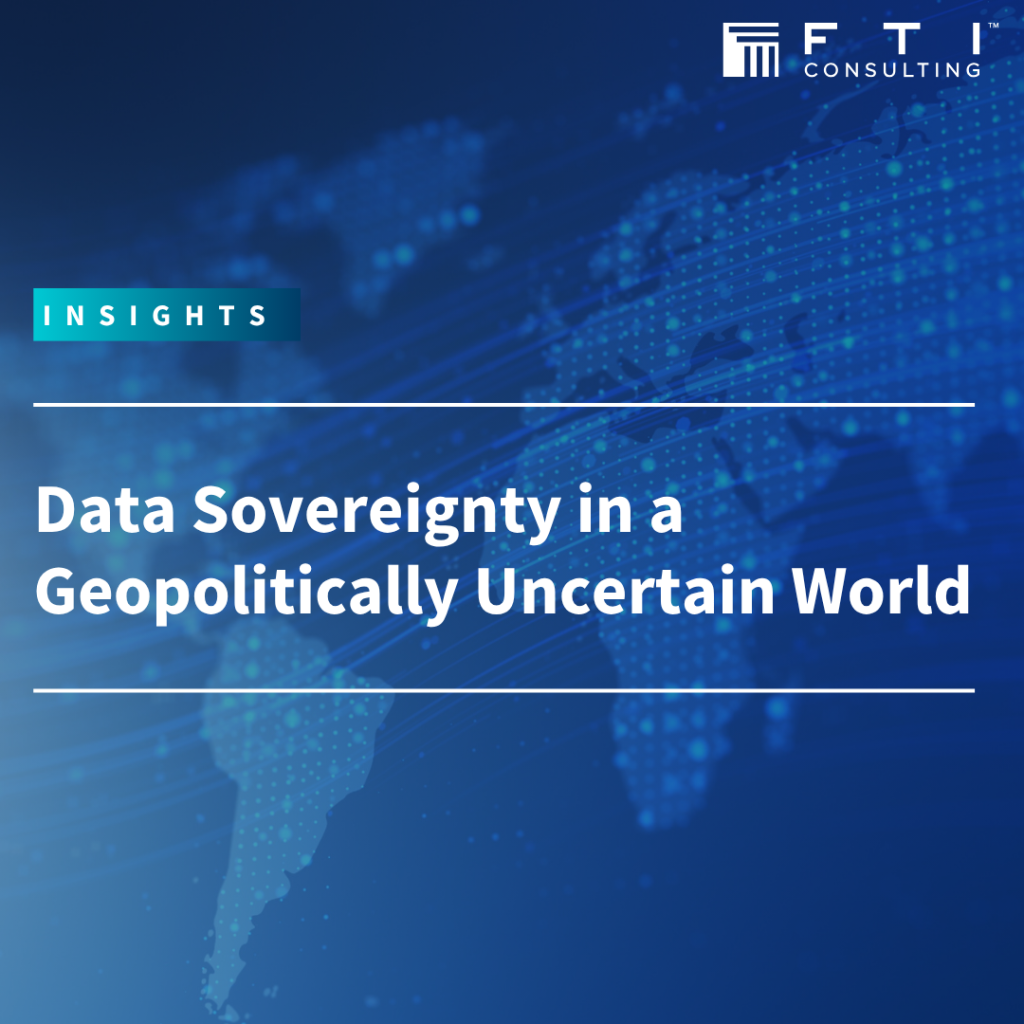
Data Sovereignty in a Geopolitically Uncertain World

The global tech landscape is no longer driven by innovation alone. It’s shaped by political divides, where alliances influence success and technology serves state strategy.

Our latest article explores how tech has become a strategic battleground, and how Europe, led by Spain, is taking greater control of its digital future.

View here >>

Event: What’s Next for the Trans-Atlantic Relationship?

We would like to invite you to an exclusive lunch debate with Payne Griffin, former Deputy Chief of Staff to US Trade Representative (USTR) Robert Lighthizer (2017-2021), and the current USTR Jamieson Greer.

The discussion will explore the Administration’s evolving trade policy following the recent Supreme Court case, as well as the White House’s strategy to rebuild its reciprocal tariff system.

When: Thursday 14th May 2026 | 12:00 – 1:30pm
Where: FTI Consulting London Offices

Register your attendance here >>

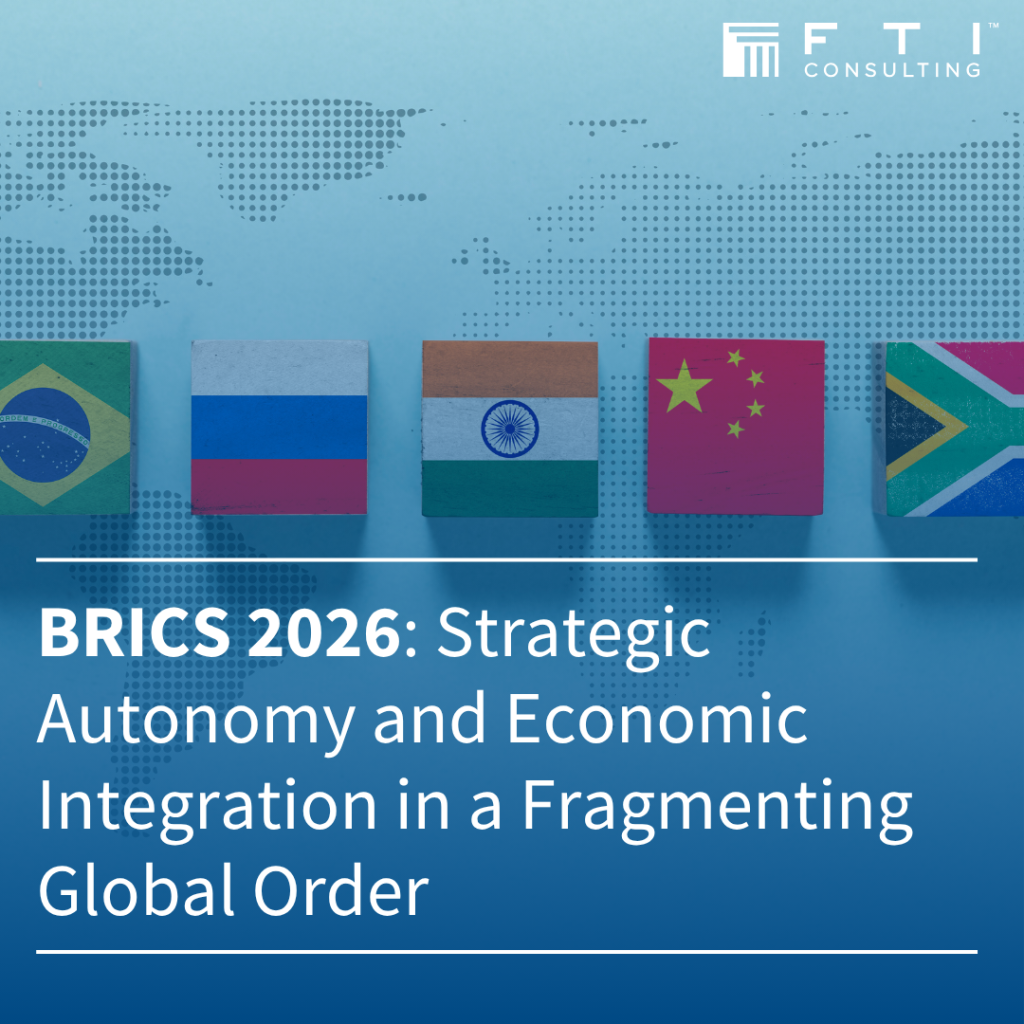
BRICS 2026

In a fragmenting global order, BRICS underscores a fundamental truth: it is not a monolithic geopolitical alliance, but a pragmatic economic platform.

Our dedicated BRICS working group delivers localized insights to help clients identify practical pathways across sectors, while navigating regulatory complexity, supply chain diversification, and market access strategies throughout BRICS economies.

Read their latest article below.

View here >>

Policy Pulse Podcast

In our latest conversation on the Policy Pulse Podcast, our Public Affairs experts  unpack the latest Council Conclusions and what these reveal about the most recent European Council meeting. 

The focus? Two of the most closely watched priorities in Europe right now: the Savings and Investment Union (SIU) and defence. We break down what was agreed, why it matters, and how these developments could shape the future of global coalitions.

View here >>

Upcoming Elections

  • 19 April: Parliamentary elections (Bulgaria) 
  • 30 April: General elections (Antigua and Barbuda) 
  • 7 May: Local elections (United Kingdom) 
  • 17 May: Parliamentary elections (Cabo Verde) 
  • 24 May: Parliamentary elections (Cyprus) 
  • 31 May: Presidential election (Colombia) 
  • 1 June: General election (Ethiopia) 
  • 3 June: Local elections (Republic of Korea) 
  • 7 June: Parliamentary elections (Armenia) 

To be added to the distribution list for the Global PA Newswire, or for further information on the dedicated Public Affairs team at FTI, please contact [email protected].

The views expressed in this article are those of the author(s) and not necessarily the views of FTI Consulting, its management, its subsidiaries, its affiliates, or its other professionals.

©2025 FTI Consulting, Inc. All rights reserved. www.fticonsulting.com
Related Articles

4th Annual Shareholder Activism State of the Market

September 8, 2025—Shareholder Activism State of the Market – 2025 Request Report The Shareholder Activism State of the Market –...

Use It or Lose It: U.S. Hydrogen Industry Must Act To Maintain Momentum

July 12, 2025—Key takeaway: Following the passage of the “One Big Beautiful Bill Act”, time is of the essence for hydrogen produce...

Quick Analysis: ‘One Big Beautiful Bill’ Drives More Gas and Batteries, Less Renewables

July 3, 2025—With the recent passage of the “One Big Beautiful Bill” (“OBBB” or the “Legislation”),[1] FTI Consulting’s...

Done Deal – Insights from our M&A and Activism team – July 2026

July 27, 2026—Insights from our M&A and Activism team Welcome to the latest instalment of Done Deal. In this edition, Edward Knigh...

FTI Consulting News Bytes – 24 July 2026

July 24, 2026—FTI Consulting News Bytes This week, we kick off with news coming out of the annual Farnborough International Airshow, w...

ESG+ Newsletter – 23 July 2026

July 23, 2026—We open this week’s ESG+ with EFRAG’s 2026 State of Play Report, which examines the disclosures of over 900 ...