Global Public Affairs Newswire – 11 July 2025

Global Public Affairs Newswire
Welcome to the latest instalment of FTI Consulting’s fortnightly Global Public Affairs Newswire. This week, we bring you updates from FTI Public Affairs teams across the world’s major markets, including the United States, the European Union, China, the United Kingdom, India, Germany, Brazil, Spain, Australia, Colombia, South Africa and France. This week’s update also brings readers market insights from FTI Public Affairs experts from around the world, explaining what these updates mean for your business.
Market updates
On July 4, President Trump signed into law a sweeping tax and spending package—dubbed by the White House as “One Big Beautiful Bill.” The legislation extends the tax cuts from his first term while introducing additional reductions, including exemptions on tipped income, overtime pay, and expanded deductions for small businesses. The bill narrowly passed the Senate, requiring Vice President Vance to cast a tie-breaking vote, and cleared the House under intense pressure from Republican leadership and the White House. Democrats sharply criticized the legislation for making deep cuts to safety net programs and significantly increasing the deficit through expanded tax breaks. Still, the rapid passage highlighted President Trump’s continued political leverage over Congress.
TRADE RETURNS TO CENTER STAGE: Following his domestic policy win, President Trump swiftly pivoted back to trade. On Monday, he issued letters to the leaders of fourteen countries, setting a firm deadline to renegotiate trade agreements with the United States. Failure to comply, the letters warned, would result in substantial tariffs on imports to the U.S. in early August.
U.S. TO RESUME ARMS SHIPMENTS TO UKRAINE: Despite campaign pledges to swiftly end the war in Ukraine, President Trump is reportedly losing confidence in negotiations with Russia. As a result, his administration is preparing to resume military aid to Ukraine, signaling a renewed commitment to supporting the country’s defense against continued Russian aggression.
For more information about FTI’s Public Affairs services in the Americas, please contact [email protected].
SAVING THE COALITION: the president of the European Commission, Ursula von der Leyen, faced a no-confidence vote in the European Parliament this week. The second European Commission mandate under Ursula von der Leyen is supported by a so-called grand coalition of centre right, centre left and liberal groups in the European Parliament. The liberal and left side of this coalition has grown increasingly frustrated with winding back green legislation under the competitiveness agenda. Sometimes outvoted by the Centre right group teaming up with the far right, the social democrats and liberals gave of a strong signal of disapproval. Yet, they did not go as far as voting in favour of the no-confidence motion put forward by the farright. Von der Leyen came out swinging, defended her agenda strongly and stressed that a vote against her would destabilise the EU at a time where the EU needs to stand together to face Russia and tough trade negotiations with the US.
NONETHELESS, MAINTAINING SUPPORT FOR THE AGENDA REMAINS COMPLEX: Enhancing the competitiveness of the EU requires simplifying EU legislation and reducing red tape, yet that means decreasing some of the landmark legislation that is still strongly supported by the centre left and liberals such as sustainability reporting, preventing greenwashing and due diligence of the supply chain. Von der Leyen is asked by EU heads of state to progress the competitiveness agenda, yet on specific legislation is pushed back by parliamentary groups and specific ministerial councils responsible for legislation in their remit. Finding the right balance and making progress will remain a challenge.
In Brussels, Foreign Minister Wang Yi co-chaired China-EU Strategic Dialogue with his EU counterpart and held separate meetings with Presidents Costa and von der Leyen. While Chinese accounts emphasized coordination ahead of the upcoming China-EU summit and efforts to stabilize bilateral ties, European concerns centered on rare earth export controls, EV trade imbalances, and the conflict in Ukraine – issues increasingly shaping the bilateral dynamics.
In Berlin, Wang Yi met with Chancellor Merz and Foreign Minister Wadephul, co-chairing China-Germany Strategic Dialogue on Diplomacy and Security. Wang underscored that China’s rare earth export controls “have never been and should never become an issue” for Europe, highlighting a “fast track” mechanism designed to facilitate legitimate exports.
In Paris, Wang Yi met with President Macron and Foreign Minister Barrot, co-chairing China-France High-Level People-to-People Dialogue. Wang highlighted China’s acceptance of price undertakings from major French producers, which could exempt compliant companies from recent anti-dumping duties imposed on EU brandy.
For more information about FTI’s Public Affairs services in China, please contact [email protected]
- Vulnerabilities of the Labour Government were highlighted last week when it was forced to remove key savings measures and reforms within its welfare bill, following a major rebellion amongst Labour MPs. Taking place a year into Labour’s tenure in No 10, the climbdown exposed brewing tensions between the Government’s economic ambition to tighten public spending and the traditional social justice values of the Party. Attention now turns to how the Government mitigates backbencher concerns regarding potential cuts to special educational needs and disabilities (SEND) support in schools, an issue some raised directly with the Deputy Prime Minister, Angela Rayner, earlier this week.
- The recent concession will add pressure to the spending planning of Chancellor Rachel Reeves, particularly as the Office for Budget Responsibility (OBR) on Wednesday warned that public finances are in an “unsustainable position” and stated that the UK cannot afford the range of promises it has made to the public. This comes ahead of the Chancellor’s Mansion House speech next week and the release of the Government’s awaited Financial Services Growth and Competitiveness Strategy. Reeves is expected to unveil policy measures seeking to kickstart investment and reassure industry that the Government is prioritising growth in capital markets.
- On the international stage, Prime Minister Sir Keir Starmer welcomed French President Emmanuel Macron to London this week to resume discussions of key strategic priorities for the two nations. With unauthorized Channel crossings rising, undocumented migration is one of the most immediate political challenges for Starmer’s premiership and, crucially, a test of the Government’s ability to negotiate a sustainable solution while simultaneously providing an effective rebuttal to the arguments of Reform UK – which the Welsh First Minister, Baroness Eluned Morgan, branded this week as a “very serious threat” to the Labour Party.
For more information about FTI’s Public Affairs services in the United Kingdom, please contact [email protected].
In his latest warning to BRICS nations, President Trump on July 8 reiterated that members of the bloc would face a 10% tariff if he sees any “anti-American policies”. The bloc, originally Brazil, Russia, India, China and South Africa, and now expanded to include Iran, the UAE, and Indonesia, concluded its 17th summit in Rio de Janeiro on July 6 and 7.
BRICS, which now accounts for 45% of world population and over 35% of the world’s GDP, had earlier mulled a new common currency alternative to ‘derisk’ from dollar-based global financial systems, a red flag for Trump. The US president’s statement comes at a sensitive moment, ahead of an India-US trade deal with an August 1 deadline.
At Rio, India cautiously prioritized Global South issues, focusing on AI, critical supply chains, and green technologies. The group’s solidarity on countering terrorism (including condemnation of the April terror attack in Kashmir’s Pahalgam), infrastructure finance, and digital cooperation also aligned well with India’s national interests. The Rio declaration backed India as host and chair of the 18th BRICS summit in 2026, as New Delhi’s bid for a UN Security Council seat, as well its bid to host COP 33 in 2028.
For more information about FTI’s Public Affairs services in India, please contact [email protected].
- This Friday, the Bundestag will conduct a secret ballot on three nominees for the Federal Constitutional Court. The parliamentary selection committee approved all three candidates—Günter Spinner (CDU/CSU), Frauke Brosius Gersdorf, and Ann Katrin Kaufhold (bothSPD)—with the required two-thirds majority.
- Crucially, Brosius-Gersdorf’s and Spinner’s fates hinge on the Left Party’s votes. CDU/CSU has formally ruled out negotiations with the Left, which it continues to classify as a radical party. Without Left support, CDU/CSU and SPD would need AfD backing. An option the coalition seeks to avoid. The Left has firmly opposed such a deal, warning against any “ideological rigidity” from CDU/CSU.
- Brosius-Gersdorf’s nomination also remains politically sensitive within the coalition. CDU/CSU members have raised concerns, especially about her advocacy for a liberal abortion law. Nonetheless, the parliamentary leadership has struck a compromise with the SPD: she will not be positioned as vice-president.
For more information about FTI Consulting’s Public Affairs services in Germany, please contact [email protected]
The tension between President Lula and Congress escalated further as the Supreme Court was called to mediate over a vetoed decree — one that, among other provisions, increases the tax on financial transactions (IOF). This move signals a shift away from conciliation, following a recent defeat in which even parties allied with the president voted against a measure considered crucial to Lula’s administration economic agenda. The decision to involve the Judiciary reinforces the opposition’s argument that Brazil’s Supreme Court has become increasingly politicized in recent years and can hinder Lula’s popularity even more
As expected, Lula used the BRICS meeting in Rio de Janeiro as a platform to promote his political agenda. Despite the president’s efforts, the meeting highlighted the biggest challenge facing the expanded BRICS: reaching consensus among countries with diverse interests and political contexts. Although Brazil’s Foreign Affairs Minister, Mauro Vieira, attempted to downplay the notion that BRICS is an anti-Western bloc, Lula’s criticisms of the IMF, urgent call for UN reform and to consolidate it as bloc suggest otherwise. The actions faces political resistance from the US, which could hinder potential negotiations as the Liberation Day deadline approaches in August. So far, Brazil has shown little interest in engaging with the US on this matter.
Trump issued a personally toned letter imposing a 50% tax imposition on all Brazil’s exports for the upcoming month – making Brazil collateral damage as a supporter of China and Russia while they dispute hegemony. The letter explicitly linked the tariff measure to the trial of former Brazilian President Jair Bolsonaro for the alleged coup, which he sees as a “witch hunt”, trade imbalances and accusations on the government hindering free elections. And, the letter has a direct relation to Eduardo Bolsonaro’s political advocacy within the US, as a way to influence his father’s trial from the outside in.
For more information about FTI’s Public Affairs services in Brazil, please contact [email protected]
Following the April 28 blackout, Spain has approved Royal Decree-Law 7/2025 to strengthen grid stability and operational control. It enhances CNMC and REE oversight, mandates regulatory updates on voltage and system security, and sets a structured process to identify and implement improvements to avoid future large-scale system failures.
The regulation streamlines access and connection for industrial electricity demand, revises the validity of access rights, and sets biennial updates to grid planning. It reinstates fee exemptions for electro-intensive users and allows for more adaptive use of the transmission network to support electrification of key economic sectors.
Storage is repositioned as a core component of system stability, no longer a complementary asset. Hybridised projects are prioritised and fast-tracked, permitting is simplified, and small-scale storage is exempted from some licensing. Combined with flexibility tools like demand aggregation, the regulation marks a structural shift in how storage integrates into the market.
For more information about FTI’s Public Affairs services in Spain, please contact [email protected].
While navigating relations with China and the US, Australian Prime Minister Anthony Albanese is now more than ever, placing the interest of Australians at the forefront of decisions.
In a major speech on Saturday night, Albanese said “speaking for ourselves, as a sovereign nation. We needed an Australian foreign policy anchored in strategic reality, not bound by tradition” hinting at his willingness to continue upholding the US alliance, yet without endorsing co-dependency on the Trump administration.
- At the same time, Albanese has focused on revitalising Australia’s trade ties with China, highlighting the restoration of over $20 billion in exports and the resumption of agricultural exports to China. Albanese is set to visit President Xi Jinping this week.
For more information about FTI’s Financial Services Public Affairs support in Ireland, please contact [email protected].
On July 3, 2025, diplomatic tensions between Colombia and the United States peaked after investigations surfaced alleging U.S.-based efforts to destabilize the Petro administration. In response, Secretary of State Marco Rubio recalled the chargé d’affaires in Bogotá, dismissing the Colombian government’s accusations as “baseless and reprehensible.”
President Petro countered by summoning Colombia’s ambassador in Washington, Daniel García-Peña, to report on the state of the bilateral agenda. Petro reaffirmed his government’s commitment to six pillars of cooperation with the U.S., including energy transition, Amazon protection, transnational crime, fair migration policies, global financial reform, and regional peace.
Amid the foreign policy rift and Sarabia’s resignation, U.S. visa revocations reflect strained ties and challenge post-conflict cooperation frameworks. Though Petro sent a conciliatory letter to Washington, tensions remain high. Future collaboration will require renewed political and institutional commitments to preserve the bilateral agenda and stabilize long-term diplomatic relations.
For more information about FTI Consulting’s Public Affairs services in Colombia, please contact [email protected].
- South Africa’s President Cyril Ramaphosa has firmly come out against US President Trumps’ threat to impose an additional 10% tariff on countries aligned with the BRICS grouping, which President Trump alleges to be “Anti-America”. President Ramaphosa’s response also comes after the US imposed a 30% tariff increase on South African goods and products. South Africa alongside several Sub-Sahara African countries have appealed to the Trump administration for an extension as the 1st of August deadline looms closer.
- President Ramaphosa has cautioned against punitive actions aimed at states pursuing peaceful cooperation and multilateralism. President Ramaphosa defended BRICS as a constructive and inclusive global platform, not a rival to the UN or G20, and reiterated calls for global governance reform, especially at the UN Security Council.
- Ramaphosa’s response to US tariff threats reflects a growing assertiveness in South Africa’s foreign policy, rooted in non-alignment, multipolar engagement, and advocacy for Global South interests, shying away from its quiet diplomacy. Ramaphosa has repeatedly reject getting into a public spat with President Trump and using megaphone diplomacy when engaging with his US counterpart as South Africa attempts to recalibrate its strained relations with the US. His rejection of Trump’s punitive rhetoric positions BRICS as a counterweight to unilateralism and underscores the bloc’s legitimacy in shaping a more inclusive global order. While SA remains open to dialogue with the US, geopolitical strains risk disrupting critical trade ties.
For more information about FTI’s Public Affairs services in South Africa, please contact [email protected].
- Over the past few weeks, energy policy has dominated the parliamentary agenda, with a pivotal energy bill undergoing its second reading in the Senate on 8 July 2025. Originally introduced in April 2024, this bill outlines France’s national energy and climate strategy for 2025–2035. It aims to address the uncertainty caused by the government’s delay in presenting a formal energy programming law, which has left energy stakeholders seeking clarity.
- The legislation promotes the revitalisation of the nuclear sector, sets ambitious renewable energy targets, and proposes measures to reduce fossil fuel dependency, lower transport emissions, and accelerate home energy renovations. It also streamlines nuclear project regulations and strengthens consumer protections in the electricity and gas markets.
- Parliamentary debates have exposed deep partisan divides, particularly over renewable energy. Right-wing MPs temporarily secured a moratorium on renewable energy development in the bill’s first reading at the National Assembly, triggering tensions within the government coalition. Conservative Interior Minister and potential 2027 presidential candidate Bruno Retailleau faced pushback from centrist colleagues and a direct rebuttal from President Macron for supporting this moratorium. The National Assembly ultimately rejected the bill on 24 June. Although the Senate passed the bill on 8 July after removing its most contentious provisions, including the moratorium on renewable energy development, the upcoming second hearing in the lower house in September is expected to reignite these disputes.
For more information about FTI’s Public Affairs services in France, please contact [email protected]
Expert Analysis |
POLITICO Event: “Young. Female. In Politics.”
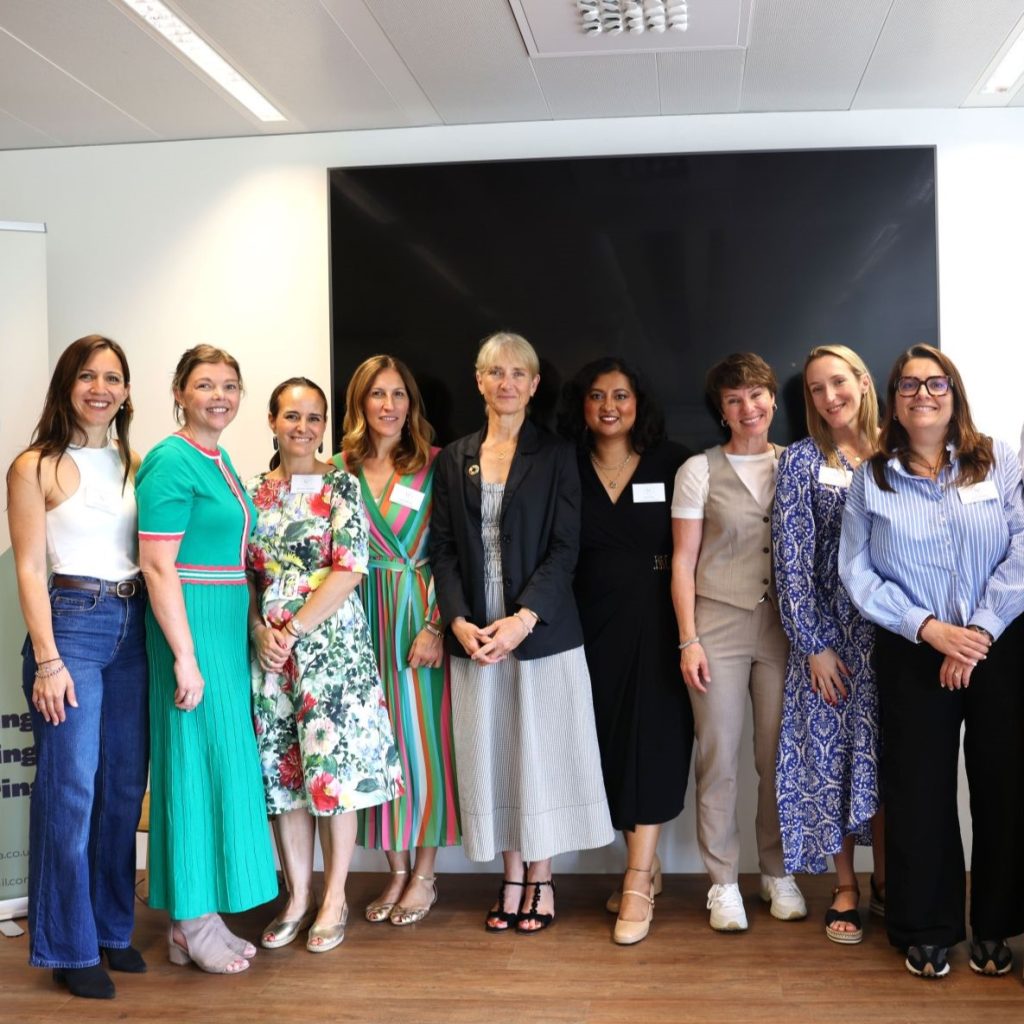
This week, we were thrilled to collaborate with POLITICO in launching the ‘Young. Female. In Politics’ event series in Berlin. The event brought together inspiring women from politics, business, and media under the theme ‘Power. Policy. Public Opinion.’ We discussed the course change under the new CDU/CSU-SPD coalition government and its implications for the economy, public sector, and civic dialogue. Thank you to POLITICO and our panelists for contributing to its success. |
Intelligence Monitoring During Disruption
GCs of today are under tremendous pressure to manage risks in an increasingly risky and unstable environment.
Brent McGoldrick, our Head of digital, analytics, and insights in the Americas, emphasizes the importance of equipping General Counsels and their organizations with resources to monitor, analyze, and confidently message around political, regulatory, and legislative changes, ensuring awareness of downstream impacts and strategic targeting of messages to relevant audiences.
Women in Public Affairs Brussels
Last week saw the official launch of Women in Public Affairs Brussels (WiPA Brussels) – a new professional network focused on empowering women across the EU public affairs landscape.
Brussels-based Senior Consultant Divya Singh serves on the WiPA Brussels Executive Committee, where she co-leads the organisation’s events portfolio. The launch event featured keynote remarks from Camilla Brückner, Director of the UN Office in Brussels, and brought together professionals from across the EU institutions, corporate sector, and civil society.
CBAM Breakfast Briefing
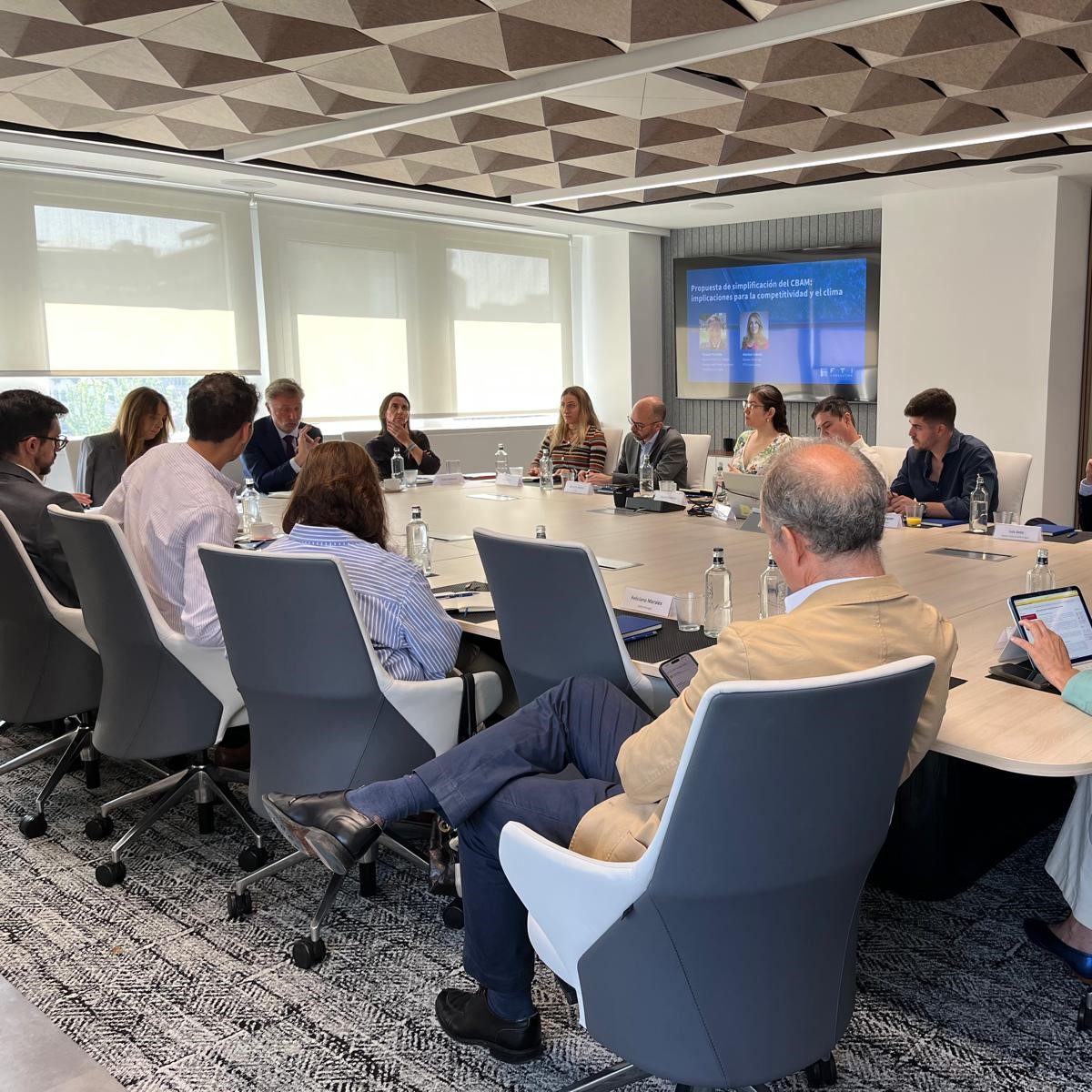
Our Public Affairs team in Madrid recently hosted an exclusive breakfast meeting with Vicente Hurtado, Head of Unit for “CBAM, Energy and Green Taxation” at the Directorate-General for Taxation and Customs Union (European Commission). The panel was attended by a selected group of senior representatives from leading industry sectors in Spain.
The session offered an opportunity to discuss the latest developments in the Carbon Border Adjustment Mechanism (CBAM) and the challenges and opportunities it presents for European industry.
Tariff Talk: Global Experts on Risk, Policy, and Preparedness
Join us for a practical, panel-style webinar featuring seasoned experts who will analyze the current tariff landscape, provide actionable guidance for navigating complex issues, and offer relevant risk mitigation strategies.
- Date: Thursday 17th July 2025
- Time: 17:00 – 18:00 BST
Breaking Silos to Tackle Complex Challenges
Global challenges force corporations to become more adaptive and strategic as they navigate disruptions.
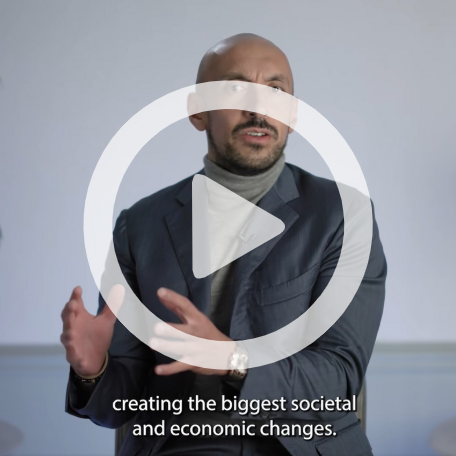
Senior Managing Director Ali Karami Ruiz shares how FTI Consulting transforms complexity into clarity by breaking down silos and uniting teams to tackle big challenges, together.
Upcoming Elections
- 20 July: House of Councillors election (Japan)
- 17 August: General election (Bolivia)
- 08 September: Parliamentary elections (Norway)
- 14 September: State elections (Russia)
- 16 September: General election (Malawi)
- 27 September: General election (Seychelles
To be added to the distribution list for the Global PA Newswire, or for further information on the dedicated Public Affairs team at FTI, please contact [email protected]. |
The views expressed in this article are those of the author(s) and not necessarily the views of FTI Consulting, its management, its subsidiaries, its affiliates, or its other professionals.
©2025 FTI Consulting, Inc. All rights reserved. www.fticonsulting.com