ESG+ Newsletter – 12 June 2025
In this week’s ESG newsletter, we begin by reviewing a potentially overlooked risk in AI deployment. We also cover the latest developments on EU reporting standards, the ESRS, and potential issues with ISSB scope 3 guidance. Finally, as risks of greenwashing and greenhushing grow, we analyse guidance from Canada and the impact of the political landscape on US reporting.
This week’s poll
Would any of the following ESG-related issues make you reconsider the use of AI?
- Environmental impact
- Lack of worker protections in the value chain
- Impact on the future of work
- Privacy and data concerns
- I would continue to use AI tools regardless
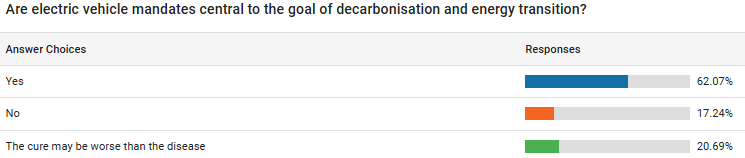
Last week’s poll results
Rights of workers powering AI under the spotlight
This week, Raconteur reported that the often-overlooked “invisible” workforce behind AI systems may be facing widespread exploitation, according to the Fairwork Project – a labour rights initiative hosted at the Oxford Internet Institute. Each year, the Fairwork Project evaluates leading online gig work platforms, and its latest report reveals that millions of gig workers, primarily based in Low-and Middle-Income Countries, are carrying out essential tasks such as software development, data annotation, and content moderation. Despite being critical to the functioning of AI platforms, these workers frequently earn low wages and lack fundamental workplace protections. The Fairwork report scores platforms out of 10 based on their performance across key criteria, including mitigation of precarity, fair pay, access to communication and appeals channels, and mechanisms to address health and safety risks. Alarmingly, many platforms continue to fall short of meeting even these minimum standards. While many of the concerns regarding AI have looked at its potential negative impacts on privacy, the future of work and the environment, over time, we may also be starting to see greater scrutiny on its value chain, with companies potentially exposed to labour risks when ramping up AI deployment.
ESRS updates set to be published in June
According to Responsible Investor, the EU Commission will receive an update on the simplification of the European Sustainability Reporting Standards (ESRS), which form the foundations of the CSRD, on June 20th. The European Financial Reporting Advisory Group (EFRAG), which is responsible for developing EU standards on financial and sustainability reporting, will deliver the update. EFRAG has stated that it aims to release a first draft version of the simplified standards by mid-June and a second version in mid-July. A public consultation will then run until September. Changes to the ESRS aim to significantly “streamline” reporting obligations for in scope companies, while simultaneously reduce the number of companies included in the CSRD’s regulatory obligations.
While the push for a reduction in regulatory and reporting burdens facing businesses seems to have won out, any consultation on updates to the CSRD may be forced to balance the simplification agenda with demands from investors and other users of sustainability information for detailed disclosures which provide meaningful insight on company sustainability performance. Hitting the sweet spot in amending the regulation may prove a tricky task; the issuance of the first draft version of the ESRS and the ensuing consultation may show how well EFRAG is positioned to balance these competing priorities.
ISSB changes may impact financed emission guidance
The Partnership for Carbon Accounting Financials (PCAF) has warned that the International Sustainability Standards Board’s (ISSB) proposal to change disclosure standards and allow for the omission of Scope 3 emissions linked to facilitated emissions in the financial services sector, could disrupt the progress made on sustainability reporting by financial institutions. The ISSB is currently consulting on their decision to remove disclosure requirements for Scope 3 emissions associated with investment banks and insurance companies. Environmental Finance emphasises the progress made by the industry to improve the complex, nebulous landscape of emission disclosure standards for financial institutions, particularly in administering the use of data to measure financed emissions. PCAF executive director Angélica Afanador, expressed concern that the consultation could lead to “a growing gap between ISSB’s position and the global expectations”, creating further uncertainty for financial institutions over the sustainability disclosure on a global scale, limiting accountability over their emission contribution.
Canada releases Anti-Greenwashing guidance
Canada has taken the step of providing greater greenwashing guidance for companies. ESG Today writes that the Competition Bureau’s new guidelines are designed to ensure that any environmental claims made by businesses, and their products and services, are credible and verifiable. Under the rules, companies must be able to back up their environmental statements with “adequate and proper” substantiation. In practice, claims will need to be supported by actual testing or by using internationally recognised methodologies. The new regulations follow a series of new anti-greenwashing rules and amendments to the Competition Act’s Deceptive Marketing Practices section that were passed last year.
The guidance is particularly strict on future-focused claims, such as net zero targets. If a company says it plans to reach net zero by a certain date, it is obligated to have a concrete, realistic plan in place, complete with interim targets and meaningful steps that have already been taken. The Bureau made it clear that vague promises or aspirational statements without substance could be considered greenwashing. The penalties for non-compliance are substantial. Companies found to be in breach of these provisions could face fines of up to $10 million and the impact is already being felt in the market. As the world of ESG evolves, actions by regulators may have impacts in different directions: greater clarity for companies taking substantive action; and a higher bar for companies who have been opportunistic in communicating their progress. As the dust settles over the period ahead, candid disclosures and communication will remain the least risky in terms of potential regulatory punishment or litigation from stakeholders.
Impact reports delayed amid shifting political pressures
On the subject of corporate responses to the latest views of ESG, as proxy season draws to a close and Q2 ends, a growing number of major U.S. companies are delaying or cancelling impact reports amid mounting political and legal pressures. According to Bloomberg, the shifting political climate, coupled with increased legal risks and heightened scrutiny, are key drivers behind the delays.
While anti-DEI and anti-ESG sentiment has been building, recent developments have shifted perceptions of ESG and DEI related disclosures, from reputational assets aligned to financial performance to legal liabilities amidst executive orders, marking a broader change in how companies weigh transparency against political and regulatory risk. The trend underscores growing tension between corporate caution and stakeholder demands for accountability. Ultimately, the current backlash represents a pivotal moment where firms must now navigate a fragmented ideological landscape balancing legal risk, brand identity, and long-term sustainability goals – with pressure coming both from those in favour of quicker progress, as well as those who are fervently against greater action on sustainability.
ICYMI
- The US SEC was successful in seeing a lawsuit challenging its tighter rules on shareholder proposals dismissed, reports Reuters. The lawsuit had argued that the SEC had made it more difficult for shareholders to file resolutions at investee companies.
- The EU is closing in on its 2030 climate and energy targets, reports ESG News. The Commission’s latest review of Member States Energy and Climate Plans found that, since 1990, emissions are down 37%, while the economy has grown nearly 70%, with the Commission arguing that this indicates climate action and growth can go hand in hand.
- 87% of institutional investors globally are retaining commitments on sustainable investing, according to a BNP Paribas survey, covered by ESG Today. However, while less than 3% of investors reported scaling back on their ESG objectives, almost half noted that they have become less vocal about their processes and achievements.
| The views expressed in this article are those of the author(s) and not necessarily the views of FTI Consulting, its management, its subsidiaries, its affiliates, or its other professionals.
©2025 FTI Consulting, Inc. All rights reserved. www.fticonsulting.com |