2025 U.S. Hospital Operations Survey Report
Hospitals Continue Facing Rising Costs, Rising Demands
Table of Contents
Hospitals and health systems are under mounting pressure to deliver in several capacities spanning clinical excellence, financial sustainability, and rapidly evolving digital environments. Still reeling from external economic stressors, hospitals and health systems are confronting regulatory and legislative proposals that are gaining traction on the state and federal stages that can severely impact their operations and financial stability.
The second annual U.S. hospital operations outlook survey conducted by FTI Consulting investigates how hospital and health system executives are taking action to shape the national healthcare landscape. Between March 3 and March 12, 2025, FTI Consulting surveyed more than 200 hospital executives who identified significant challenges for their institutions, including patient wait times, employee retention issues, and cybersecurity threats. They also provided insights into how their organizations are addressing these issues and shared the solutions that have proven successful.
KEY CONTACTS
LAUREN CRAWFORD SHAVER
Senior Managing Director, U.S. Healthcare & Life Sciences
[email protected]
REBECCA AYER PITT
Managing Director, U.S. Healthcare & Life Sciences
[email protected]
JAMES CONDON
Managing Director, Digital & Insights
[email protected]
Executive Summary
In 2025, hospitals continued to navigate a complex landscape of clinical, financial, and digital challenges, with executives balancing patient care, operational efficiency, and emerging technologies.
Clinical Operations: Quality and Efficiency Remain Paramount
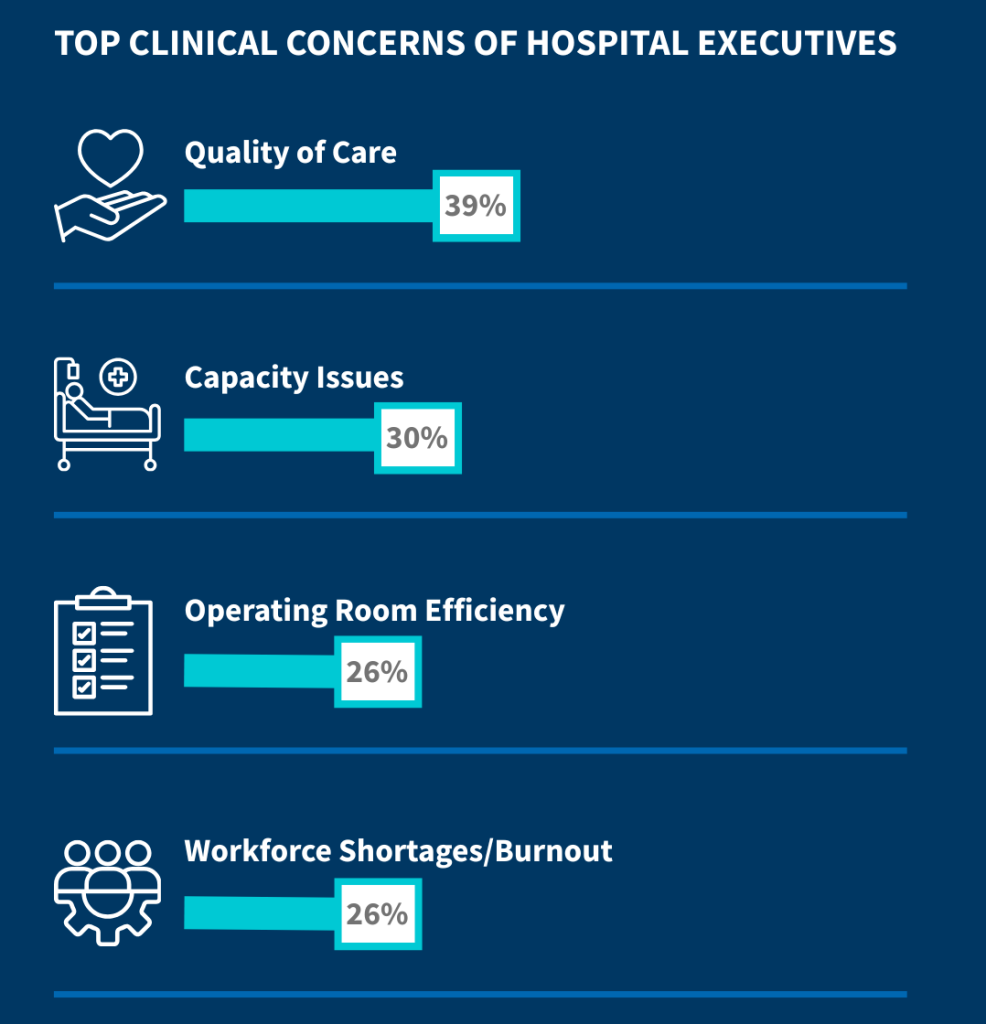
- Maintaining quality patient care continues to be the most pressing clinical concern, which was identified by 39% of hospital executives as their primary focus. Close behind are capacity challenges, with low average daily census (ADC) and extended average length of stay (ALOS) significantly impacting hospital operations, a concern cited by 30% of leaders. Operating room efficiency and workforce shortages and burnout also remain pressing issues, each highlighted by 26% of executives.
Financial Pressures: Workforce Costs Continue to Rise
- The financial landscape is dominated by workforce management costs, with 34% of executives pinpointing recruitment and retention challenges, high overtime expenditures, and reliance on temporary agency staffing as critical financial stressors. Supply costs (24%) and operating room efficiency (21%) also remain substantial cost drivers, compelling hospitals to implement targeted strategies to manage expenses while preserving high-quality patient outcomes.
Digital Imperatives: Cybersecurity and Emerging Technologies
- Digital transformation also remains top of mind, with cybersecurity threats leading hospital technology concerns. Fifty percent of executives highlighted security and privacy risks as their greatest digital challenge. Concurrently, hospitals continue to navigate the opportunities and uncertainties surrounding AI and automation, which 45% of executives said was a significant consideration for them and their organizations. Modernizing system infrastructure is also increasingly important, with 36% focused on enhancing their digital platforms to improve operational resilience and patient outcomes.
Diving in Deeper
Hospitals Shift Strategies to Address Persistent Staffing Challenges
The healthcare sector continues to grapple with critical workforce shortages. Nearly half (48%) of hospital executives believe that their hospitals are not fully equipped to handle current patient volumes, echoing our findings from last year.
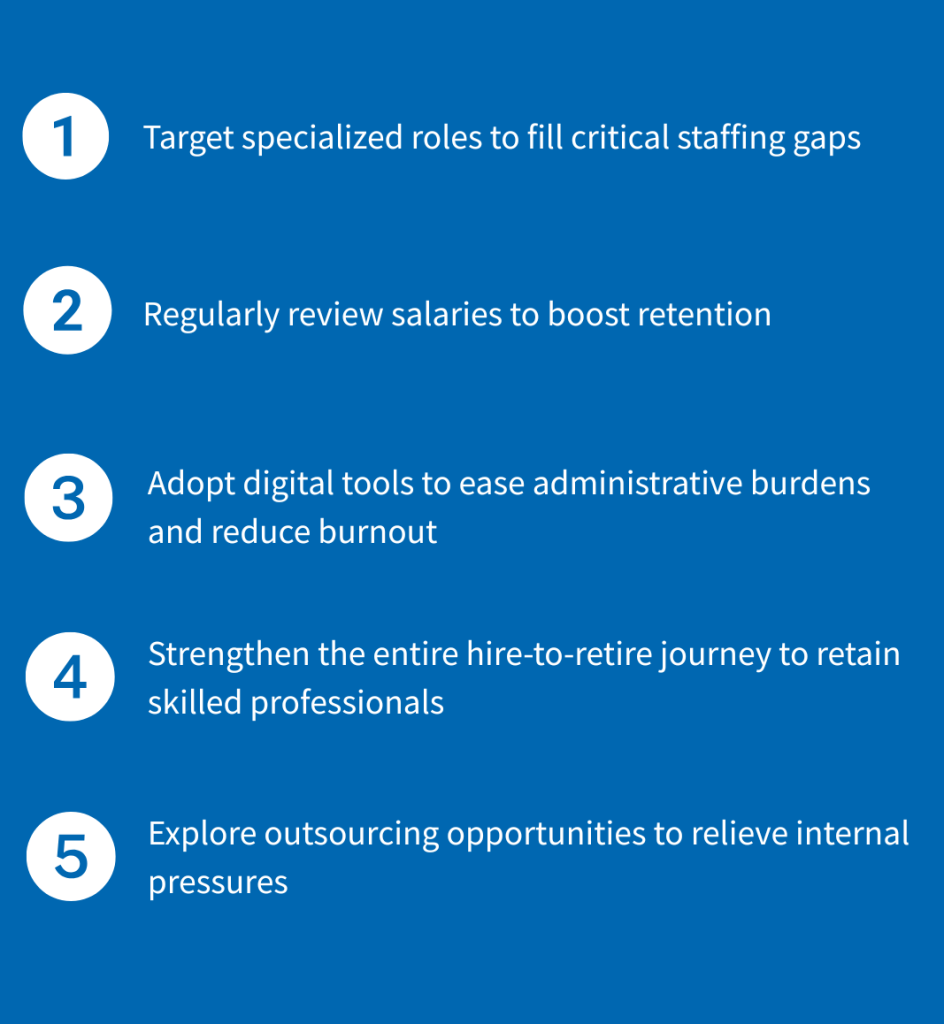
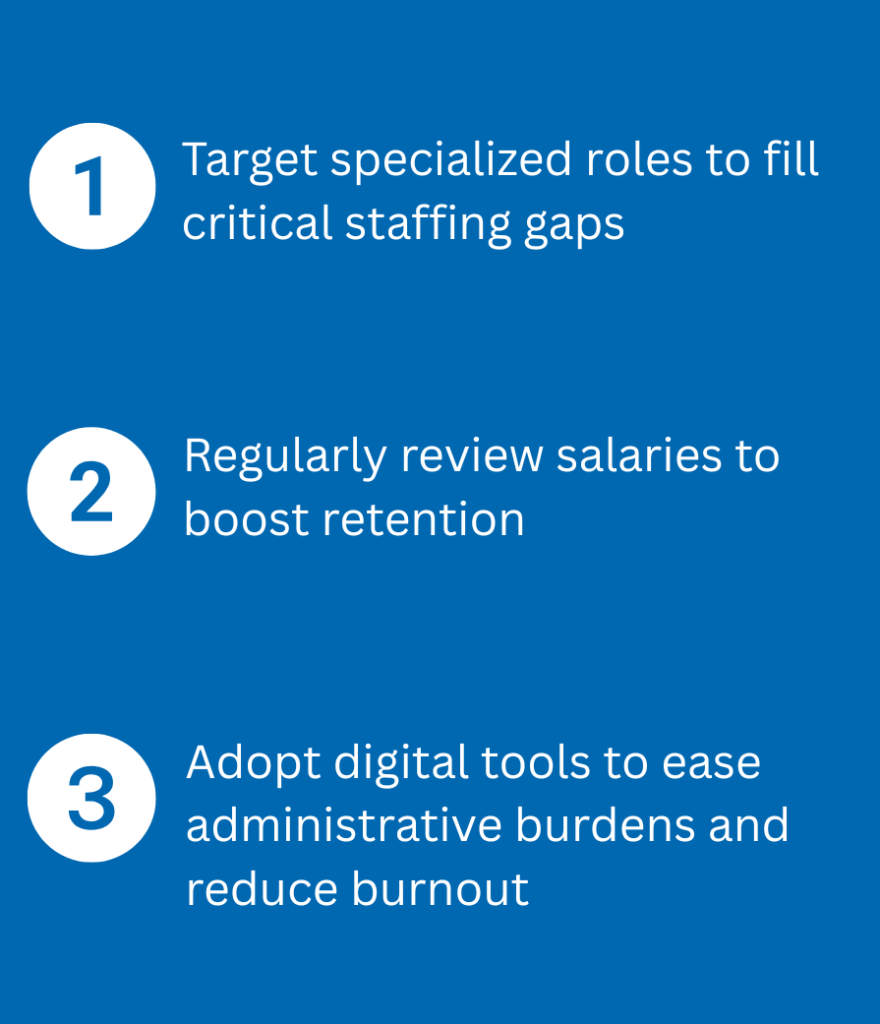
Executives report that the most significant gaps this year were found to be in specialists (49%), followed closely by nursing (46%). Mental and behavioral health providers (45%), and advanced practice providers (45%) were also highlighted as experiencing shortages. This underscores the growing need to recruit specialized professionals beyond physicians.
To combat this, nearly 7 in 10 hospital executives (69%) report increased agency utilization in the past 12 months, reflecting a 13% increase from the year prior. Of the 15% who have maintained steady agency staffing, the majority (61%) attribute this stability to regular salary reviews, followed by professional development opportunities (55%). This signals a major shift away from retention bonuses (29%), which were the top strategy last year but have dropped in utilization by 40% year-over-year.
Building on our findings from the previous year, healthcare organizations are continuing to prioritize proactive operational changes to improve full-time staff job satisfaction as a means to addressing staffing challenges. Around 8 in 10 hospital executives report having implemented or planning to implement long-term strategies aimed at ensuring workforce sustainability. Key initiatives include the adoption of digital tools to reduce administrative burdens (84%), restructuring their operating models (83%), and establishing clear hire-to-retire strategies (82%). Additional efforts focus on combating provider burnout (81%) and enhancing benefits offerings (79%).
Around 8 in 10 hospital executives report having implemented or planning to implement long-term strategies aimed at ensuring workforce sustainability.
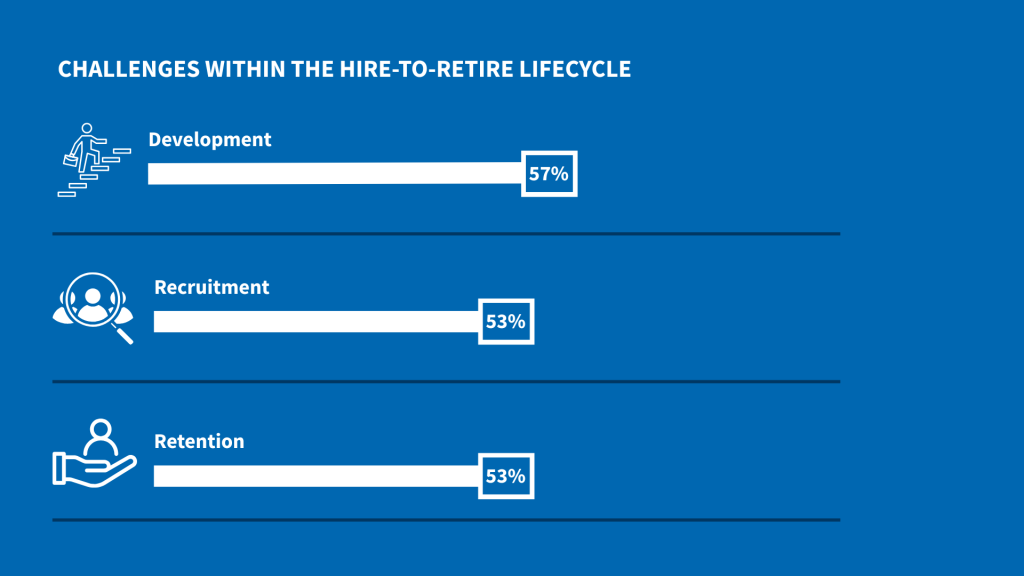
Though adopting hire-to-retire strategies is a popular approach, hospital leaders continue to face substantial challenges within the hire-to-retire lifecycle, particularly in professional development (57%), recruitment (53%), and retention (53%). Recruitment serves as the foundational step in a hospital’s hire-to-retire strategy, ensuring the organization attracts and selects qualified talent aligned with its long-term goals and care standards. Additionally, 84% of executives acknowledge the difficulty in recruiting full-time physicians or hiring physicians on contract, with one-third (31%) finding this task very challenging.
In addition to these efforts to alleviate workforce pressures, many hospital executives are increasingly turning to outsourcing as a solution. Forty-five percent have already outsourced certain functions, while another 45% are considering doing so. The most commonly outsourced areas include nutrition services (56%), supply chain (49%), and technology services (48%).
Value-Based Care: Enhancing Patient Outcomes and Coordination
Hospitals continue to strongly embrace value-based care models, seeing significant gains in the quality and effectiveness of patient care. Executives highlight notable benefits, particularly around improved care coordination (91%) and enhanced patient outcomes (91%), underscoring the model’s effectiveness.
On average, hospitals report that about 42% of their patient populations now fall under value-based care arrangements. Among the standout features driving success in these models are preventative disease management (70%) and chronic disease management (64%), both crucial areas where value-based care clearly excels.
While quality improvement initiatives (45%) remain the leading driver behind the shift toward value-based care, hospitals are also increasingly motivated by patient-centered care approaches (34%), financial incentives (32%), competitive market pressures (27%), and evolving regulatory requirements (26%).
Healthcare Risk Management & Advisory
Accelerating Digital Health Amid Rising Patient Wait Times
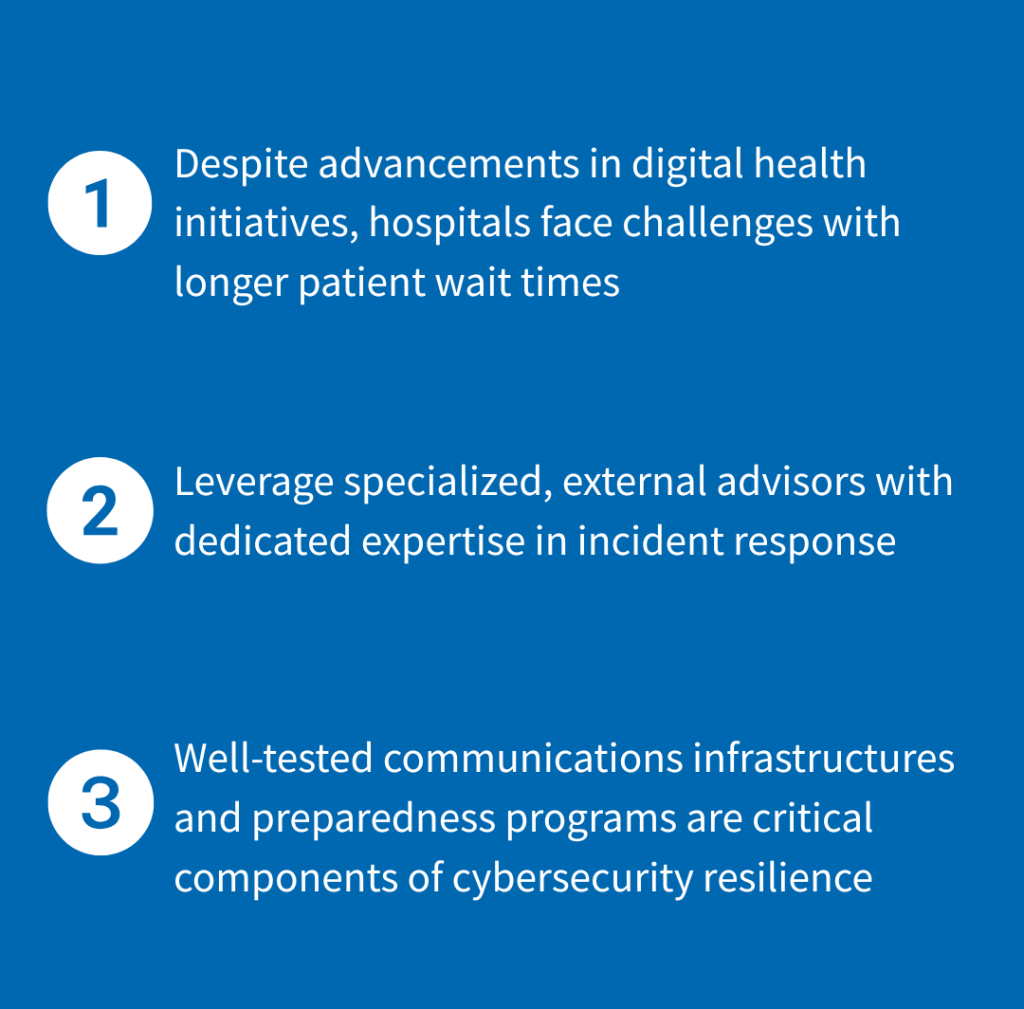
As hospitals continue to advance their digital health initiatives, they are grappling with the challenge of increasing patient wait times. Telehealth usage has seen a significant post-pandemic surge, with 69% of hospitals reporting a 5% year-over-year (YoY) increase in telehealth services. This mode of care remains most prevalent for primary care visits (47%), behavioral health visits (45%, up 4% YoY), and specialty consultations (44%, also up 4% YoY).
In tandem with telehealth growth, 75% of hospitals maintain call centers, and among those, 85% have adopted a centralized model, reflecting a 4% rise from the previous year. This is supported by heightened executive satisfaction; over half (56%) of hospital leaders report being very satisfied with their centralized call center operations, an impressive 8% increase year-over-year. This satisfaction is driven by improved coordination and streamlined communication, which are both essential for enhancing patient experiences.
Most hospitals (81%) also employ a digital front door strategy, leveraging technology to facilitate easier patient access to care. While last year saw average wait times drop to under an hour, this year has presented new challenges. Many executives (68%) report that wait times have lengthened, with patients experiencing delays ranging from less than an hour to up to 3 hours. This increase in wait times poses a significant hurdle as hospitals strive to balance the convenience offered by digital solutions with the urgency of patient needs.
Healthcare Business Transformation
Cyber Threats Persist
Hospital leaders are acutely aware of the risks and rewards of digital transformation. Fifty percent of surveyed leaders identified security and privacy risks as their greatest challenge, and recognize potential fallouts from cyber incidents, particularly data loss (40%), business interruption (30%), and associated financial repercussions (30%). But at the same time, finding solutions through digital transformation remains top of mind for executives. Hospitals are navigating the opportunities and uncertainties of AI and automation, cited by 45% of executives, and modernizing infrastructure, with 36% prioritizing enhancements to digital platforms for improved resilience and outcomes. Investment patterns in cybersecurity reflect evolving strategic priorities:
- Technical and security assessments remain prevalent, though they’ve declined by 8% year-over-year to 51%, suggesting a need for hospitals to continue improving foundational preparedness.
- Adoption of cyber insurance continues to climb, reaching 42%, which was a 4% increase from the year prior, reflecting heightened prioritization for financial protection.
- The selection of specialized cyber counsel has surged significantly to 41% of hospitals, a 9% increase year-over-year. This underscores a growing emphasis on the importance of engaging specialized, external advisors in managing cyber threats. (See additional insights here from Chambers and Partners Crisis Management 2025 Guide.)
When hospitals experience cyber incidents, proactively and transparently communicating is essential to regaining stakeholder trust, doubling down on the hospital’s commitment to patient safety, operational excellence, and resilience in an evolving digital landscape. Subsequent investments in innovative technologies can help meet these commitments, rebuilding confidence from communities and stakeholders while enhancing the health system’s reputations and positioning themselves as forward-thinking leaders or early adapters.
Final Thoughts
As hospitals navigate the complex landscape of state and federal regulatory and legislation action, rising costs, increased patient demand, workforce shortages, and rapidly evolving digital and cybersecurity challenges, proactive adaptation and communication remains critical. Now, more than ever, hospitals need to ensure they’re staying in close contact with their key stakeholders to protect and promote their reputation – by living, communicating, and affirming their values.
By embracing value-based care, strategic digital innovations, targeted workforce investments, and robust cybersecurity measures, hospital leaders can effectively balance quality patient care with operational efficiency. Continued strategic planning, informed by executive insights and evolving best practices, will be essential to successfully managing these multifaceted pressures, ensuring hospitals can sustainably fulfill their mission of delivering high-quality care to their communities.
Meet Our Team
REBECCA AYER PITT
Managing Director
+1 240 761 7426
[email protected]
LAUREN CRAWFORD SHAVER
Senior Managing Director
+1 202 870 2586
[email protected]
JAMIE SINGER
Senior Managing Director
+1 847 414 1377
[email protected]
KENDALL PELANDER
Senior Managing Director
+1 240 968 6048
[email protected]
ALEXANDRA PRIOLA
Managing Director
+1 312 553 6726
[email protected]
JAMES CONDON
Managing Director
+1 646 912 1280
[email protected]
PAUL DIOGUARDI
Managing Director
+1 202 257 0344
[email protected]
ERIN PEZZA
Senior Director
+1 347 237 2043
[email protected]
MICHAEL ADEYANJU
Senior Director
+1 240 554 7076
[email protected]
RONELLE GREEN
Senior Research Analyst
+1 929 317 3211
[email protected]
Please contact us with questions and feedback on the report. Our Healthcare & Life Sciences team looks forward to being your solutions partner to tackle the challenges facing your organization.
Related Expertise
The views expressed in this article are those of the author(s) and not necessarily the views of FTI Consulting, its management, its subsidiaries, its affiliates, or its other professionals. ©2025 FTI Consulting, Inc. All rights reserved. www.fticonsulting.com |