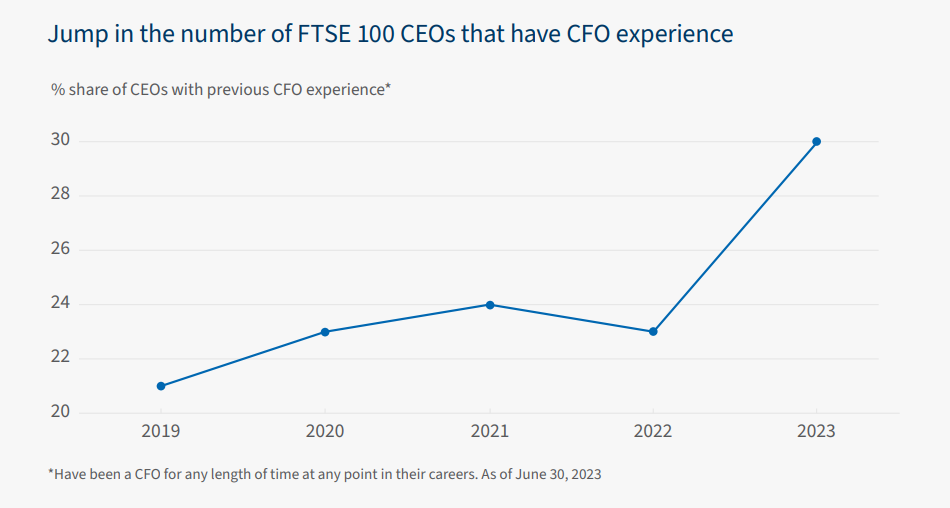
CFOs are increasingly expected to take on more responsibility, including at a strategy level, and to reach further into their businesses. As the demands of this critical executive role grow, and with many leaders aspiring to become – or expected to become – the CEOs of the future, our analysis reveals that many CFOs are unprepared for the challenges of reputation management and personal profile building. They also often underestimate the significance of their contributions in effectively communicating their companies’ strategies and performance to external audiences.

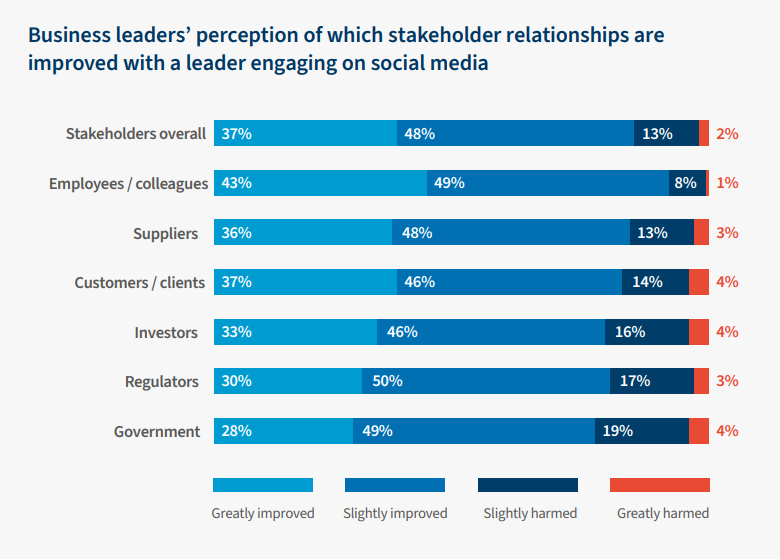
In fact, 82% of CFOs say that their role has grown significantly in the past five years, with additional requirements of the role including ESG; M&A & Corporate development; Corporate strategy; and Risk management.1 Far from being a distraction from the growing to-do list, it’s clear that prioritising communications and external visibility can help modern CFOs succeed in today’s complex business environment.

85% of FTSE 100 CFOs have a LinkedIn profile but only 32% are actively posting on the platform.

2/3 of senior leaders say they require support from social media experts to further drive their digital impact.

Who is Getting It Right?

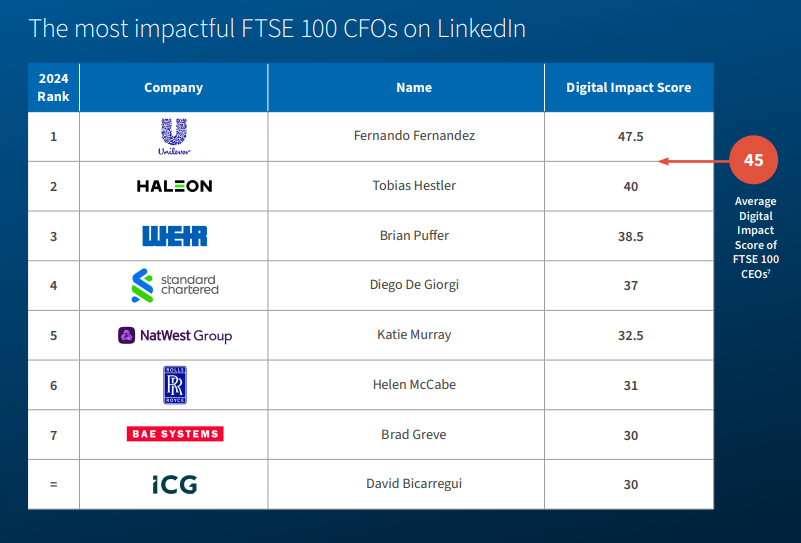
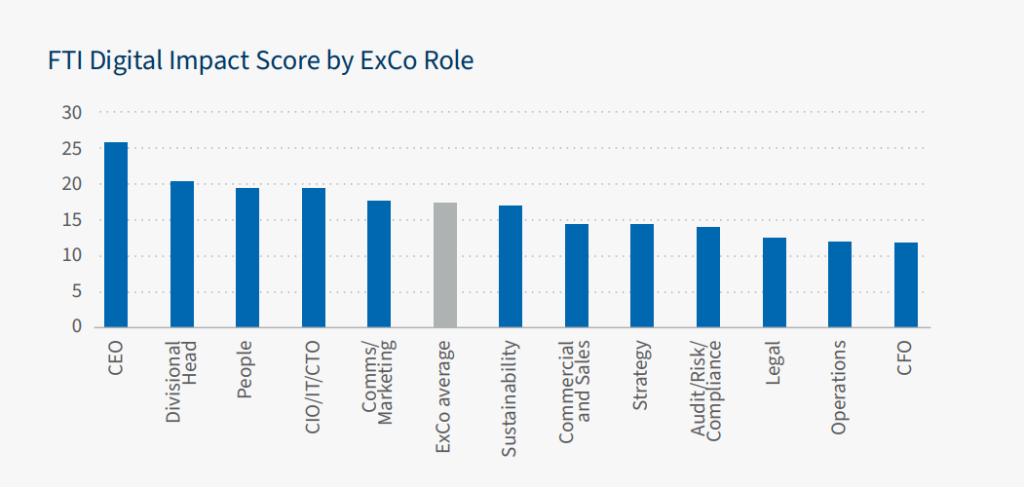
Using the FTI Digital Impact Score model, we ranked the FTSE 100 CFOs who are generating the greatest impact on LinkedIn. While Unilever’s Fernando Fernandez ranks as the top scoring CFO, when taken in a wider context, the CFO group still stands far behind other ExCo roles. For example, the FTSE 100 CEO driving the largest impact on LinkedIn, M&S’ Stuart Machin, has a Digital Impact Score of 87.5 in comparison to Fernandez’ 47.5. Similarly, the average score amongst FTSE 100 CEOs is 45, higher than all CFOs bar Fernandez.

Connect with FTI